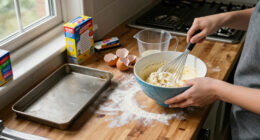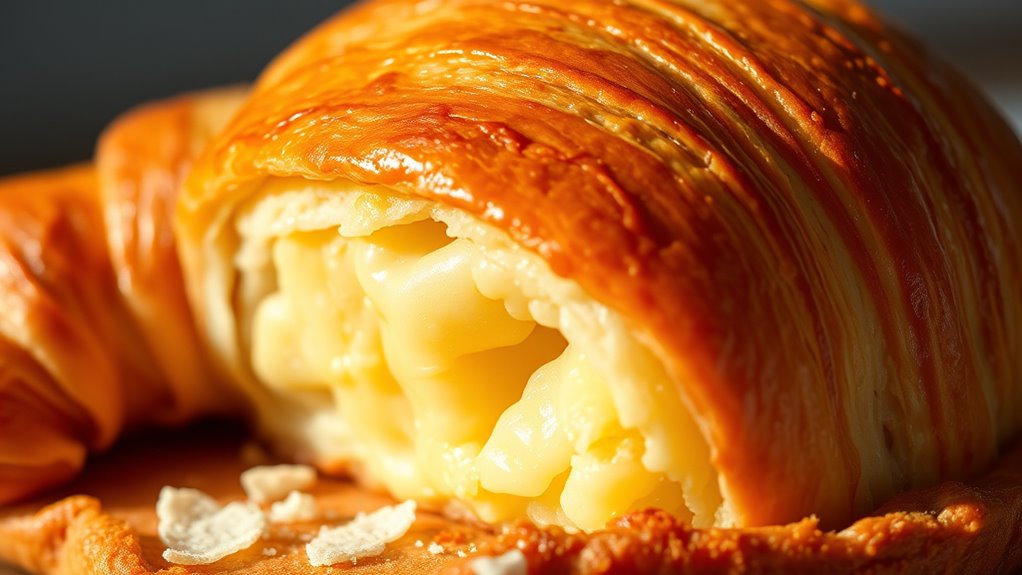

Butter is vital for achieving flakiness in your pies and croissants. Using cold, unsalted butter allows you to control the salt content and enhances texture. The key is to keep your butter chilled; this prevents it from melting into the dough, creating those desirable layers. Proper handling and temperature management are essential to elevate your pastry-making skills. Master these techniques, and you’ll reveal the secret to perfect pastries that impress every time. Discover more tips for your baking journey!

Get kitchen staples and gadgets delivered free with Prime
- Fast, free delivery on millions of items
- Prime Video, Amazon Music and more included
- Member-only deals all year
Key Takeaways
- The choice of butter, particularly unsalted or European-style, significantly affects the flakiness and richness of pastries.
- Using cold butter during preparation is essential to create steam and achieve flaky layers in pies and croissants.
- Proper handling and temperature control of butter prevent it from melting into dough, ensuring distinct pastry layers.
- Experimenting with different types of butter can enhance flavor and texture, contributing to a superior finished pastry.
- Mastering butter management techniques is crucial for achieving professional-quality flakiness in baked goods.

Have you ever wondered what makes pastry so irresistibly flaky and rich? The secret often lies in the butter you choose and how you handle it. Butter is the heart of many pastries, and its qualities can determine whether your pie crust or croissant turns out perfectly. When you’re baking, it’s essential to understand the different butter types available and how proper butter storage can enhance your results.
The key to flaky, rich pastries lies in selecting the right butter and handling it with care.
First off, let’s talk about butter types. You’ll typically encounter unsalted and salted butter in your kitchen. For pastry, unsalted butter is generally the preferred choice. It allows you to control the salt content of your pastry, which is *crucial* for achieving the perfect flavor balance. You might also come across European-style butter, which has a higher fat content than regular butter. This fat gives your pastry that luxurious, flaky texture you crave. Some bakers swear by using a blend of butter types, like incorporating a bit of clarified butter for added richness. Experimenting with different kinds can lead to delightful discoveries in your baking journey.
Now, let’s *dive in* to butter storage. Proper storage is *vital* to maintaining the quality of your butter, especially since its flavor and texture can be affected by temperature and exposure to air. Ideally, you should keep your butter in the fridge, tightly wrapped to prevent it from absorbing odors from other foods. If you’re not using it right away, consider freezing it. Freezing butter doesn’t change its properties, and when you thaw it, you’ll still have that creamy goodness ready for your pastry needs. Just remember to cut it into smaller portions before freezing, so you can easily grab what you need without defrosting the entire block.
When preparing your pastry, it’s *crucial* to work with cold butter. Cold butter creates steam when it melts, leading to those beautiful flaky layers you admire in a well-made croissant or pie. So, keep your butter chilled until you’re ready to incorporate it into your dough. Remember, the key to flakiness is in the handling and temperature of the butter.
unsalted European-style butter for baking
As an affiliate, we earn on qualifying purchases.
As an affiliate, we earn on qualifying purchases.
Frequently Asked Questions
Can I Use Margarine Instead of Butter for Flakiness?
You can use margarine instead of butter for flakiness, but it might not deliver the same results. Margarine’s texture can mimic butter, but the flavor differences are significant. Butter provides a rich, creamy taste that enhances pastries, while margarine may lack that depth. If you choose margarine, look for a high-fat version to maintain some flakiness. Just remember, the end product might not taste quite the same as with butter!
How Does Temperature Affect Butter in Pastry?
When you’re baking, think of butter as a team player that needs proper temperature control. If you keep butter at a cool temperature, its melting point allows it to create those delightful pockets of steam in your pastry. If it warms up too much, it melts before it can work its magic, leading to a dense texture instead of the flakiness you crave. So, keep it chilled for the best results!
What Types of Butter Are Best for Pastries?
You’ll want to choose high-quality European-style butter for your pastries. It has a richer butter flavor and a higher fat content, which enhances your baked goods. When sourcing butter, look for brands that use grass-fed cows, as they produce cream with better flavor and color. Avoid margarine or low-fat options, since they can compromise the texture and taste of your pastries. Always prioritize quality for the best results in your baking!
Is Salted or Unsalted Butter Better for Baking?
Unsalted butter’s usually better for baking, as it gives you full control over your dish’s saltiness. While salted butter can add a nice flavor, it might mask the true essence of your pastries. When considering butter quality, choose high-fat content for the best results. Don’t forget about butter storage; keep it cold to maintain its texture and flavor. Ultimately, you want your creations to shine without overpowering saltiness!
How Can I Tell if My Pastry Is Flaky Enough?
You can tell if your pastry is flaky enough by checking its crust thickness and observing the layers. When you bake it, look for a golden-brown color and a crisp texture. If you’ve used layering techniques properly, you should see distinct layers when you cut into it. A well-made flaky pastry will crumble slightly and have a light, airy feel. Trust your instincts, and you’ll know when it’s just right!
Conclusion
Incorporating butter into your pastry is like using the secret ingredient in grandma’s famous recipe—it’s what gives your pies and croissants that irresistible flakiness. Remember, the cold butter creates steam during baking, separating the layers and adding that delightful texture. So, the next time you’re whipping up a treat, don’t skimp on the butter! Embrace its magic and enjoy the delicious results—after all, who doesn’t want their pastry to be as flaky as a vintage rock band’s comeback?
Halloween Picks
halloween
As an affiliate, we earn on qualifying purchases.