In the U.S. and EU, regulatory standards classify butter based on a minimum of 80% dairy fat content, ensuring quality and consistency. The FDA and European Commission enforce these standards to protect consumers and promote fair competition. This means you can trust that products labeled as butter meet specific requirements, allowing for informed choices in your diet. If you’re curious about butter classifications or labeling practices, there’s even more to explore!

Get kitchen staples and gadgets delivered free with Prime
- Fast, free delivery on millions of items
- Prime Video, Amazon Music and more included
- Member-only deals all year
Key Takeaways
- The U.S. FDA and EU European Commission establish legal definitions and standards for butter to ensure product consistency and consumer protection.
- Both regions mandate a minimum dairy fat content of 80% for products to be labeled as butter.
- EU regulations define classifications for salted and unsalted butter, aiding consumer differentiation and preventing mislabeling.
- Accurate labeling reflects compliance with dairy fat standards, fostering consumer trust and distinguishing butter from margarine or spreads.
- Adherence to these standards promotes high-quality dairy fats, supporting healthier consumer choices in nutrition and dietary decisions.
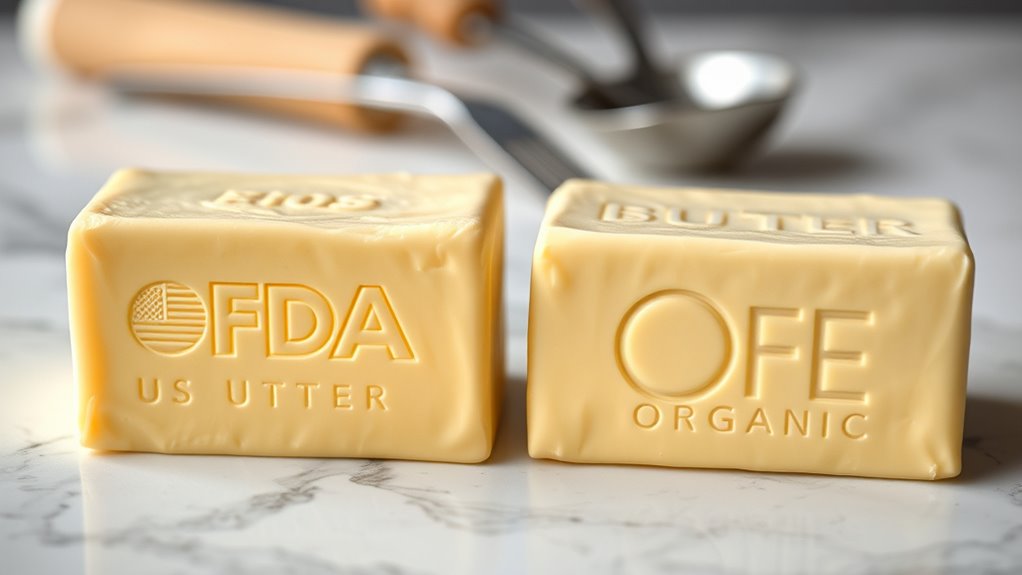
When it comes to butter, understanding the regulatory standards is paramount for both producers and consumers. You might not realize it, but these standards play a key role in ensuring the quality and safety of the butter you purchase. In both the U.S. and the EU, butter classification criteria help define what can legally be labeled as butter. This means you can trust that the product you’re choosing meets specific requirements regarding dairy fat composition and other quality measures.
In the U.S., the Food and Drug Administration (FDA) lays down regulations that classify butter as a solid emulsion of dairy fats. To be labeled simply as “butter,” a product must contain at least 80% milk fat. This standard guarantees that when you buy butter, you’re getting a product rich in the natural fats derived from milk. Additionally, any additives, like salt or flavorings, must comply with the regulations without compromising the primary dairy fat composition.
Over in the EU, the European Commission has its own set of guidelines, which share similarities with the U.S. standards. EU regulations also stipulate that butter must contain a minimum of 80% milk fat. However, they go a step further by incorporating specific definitions for different types of butter, such as salted or unsalted variants. These butter classification criteria not only help consumers make informed choices but also protect producers from unfair competition.
Understanding these standards can empower you as a consumer. For instance, if you’re scanning labels at the grocery store, knowing that butter must have a certain dairy fat composition helps you distinguish between high-quality butter and margarine or spreads that may not contain the same fat content. It’s imperative to be aware that while margarine might be labeled as “butter-like,” it doesn’t meet the same regulatory standards.
Moreover, these regulations encourage transparency in labeling, which is beneficial for both you and producers. When producers adhere to these standards, they foster trust in their products, knowing that you, the consumer, can rely on the quality of what you’re buying. This trust is critical in a market where consumers are increasingly concerned about health and nutrition. Additionally, being informed about nutritional quality can help you make healthier choices for your family.
As an affiliate, we earn on qualifying purchases.
Frequently Asked Questions
What Types of Butter Are Most Popular in the U.S. and EU?
In the U.S., you’ll find popular butter types like salted, unsalted, and whipped. Salted butter’s great for cooking, while unsalted’s preferred for baking, allowing you to control flavor. In the EU, you’re likely to encounter varieties like European-style butter, which has a higher fat content, and cultured butter, known for its tangy flavor. Each type enhances your culinary creations, so experiment with different butter varieties to see what you enjoy most!
How Is Butter Typically Used in Cooking and Baking?
You typically use butter in cooking and baking for its rich flavor and versatility. In cream applications, it adds a creamy texture to sauces and soups. When baking, you rely on butter to provide moisture and enhance flavors in cookies, cakes, and pastries. Its ability to enrich both sweet and savory dishes makes it a staple in your kitchen, elevating your culinary creations with its delightful taste and mouthfeel.
Can I Substitute Margarine for Butter in Recipes?
Yes, you can substitute margarine for butter in recipes. When it comes to margarine versus butter, keep in mind that margarine often has a different flavor and texture, which can affect your dish. If you’re baking, choose a margarine that’s high in fat for the best results. Just remember to adjust any other liquids in the recipe, as margarine may contain more water than butter. Enjoy experimenting with your recipes!
What Are the Health Benefits of Consuming Butter?
You might think butter’s unhealthy, but it actually offers several health benefits. It’s rich in essential nutrients like vitamins A, D, E, and K, which support your immune system and promote healthy skin. Plus, butter contains healthy fats that can help with nutrient absorption. Consuming it in moderation allows you to enjoy its flavor while benefiting from its nutrient content. So, don’t shy away; embrace butter as part of a balanced diet!
How Can I Tell if Butter Is Fresh or Spoiled?
To tell if your butter’s fresh or spoiled, check for freshness indicators like color and smell. Fresh butter should be pale yellow and have a creamy scent. If you notice a sour smell, off-color, or mold, it’s likely spoiled. You can also do a taste test; if it tastes rancid or off, discard it. Always store butter properly to minimize spoilage and maintain its freshness for longer.
Conclusion
In summary, understanding the regulatory standards for butter in the U.S. and EU helps you appreciate the quality and safety of the products you consume. By knowing the differences, you can make informed choices about what ends up on your table. So, when you spread that creamy butter on your toast, don’t you want to know exactly what’s behind its production? Staying informed not only benefits your palate but also supports responsible practices in the butter industry.
NFL season / tailgating Picks
team gear
As an affiliate, we earn on qualifying purchases.