
Leaving butter on the counter can be safe for 1-2 weeks if it’s unsalted and up to a month for salted butter. Its high-fat content helps prevent spoilage, but you should keep it covered and in a cool, shaded area. Watch for signs of spoilage like mold or off smells, which mean it’s time to toss it out. Want to know the best storage methods and more tips? There’s plenty to learn!

Get kitchen staples and gadgets delivered free — and shop member deals
- Fast, free delivery on millions of items
- Access to Prime Big Deal Days deals on October 6–7
- Prime Video, Amazon Music and more included
Key Takeaways
- Unsalted butter is safe at room temperature for about 1-2 weeks, while salted butter can last up to 1 month.
- Proper storage in covered dishes or butter bells prevents contamination and extends freshness.
- Keep butter in a cool, shaded area to minimize spoilage risk, especially in warm environments.
- Signs of spoilage include mold growth and off smells; discard if these occur.
- If unsure about freshness, refrigerate and only take out small portions as needed.
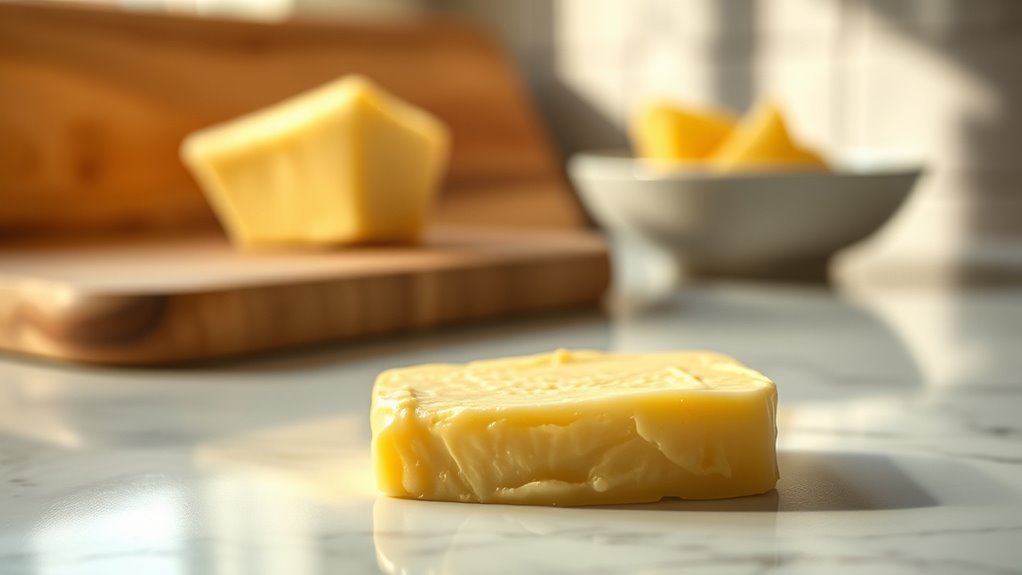
Have you ever wondered why leaving butter on the counter has become such a popular practice? It seems like everyone has their own take on it, but the truth is, there are a few key reasons why you might want to give it a try. For one, having butter at room temperature makes it easier to spread on your toast or use in recipes. No one likes wrestling with cold, hard butter! But before you delve in, let’s talk about storage safety and how long it’s actually safe to keep butter on the counter.
You might be surprised to learn that butter is relatively stable when stored properly. The high-fat content, combined with low moisture levels, means it doesn’t spoil as quickly as other dairy products. However, that doesn’t mean you can leave it out indefinitely. The general rule of thumb is that unsalted butter can be safely stored at room temperature for about one to two weeks. Salted butter, on the other hand, can last a bit longer—up to a month—thanks to the preservative qualities of salt.
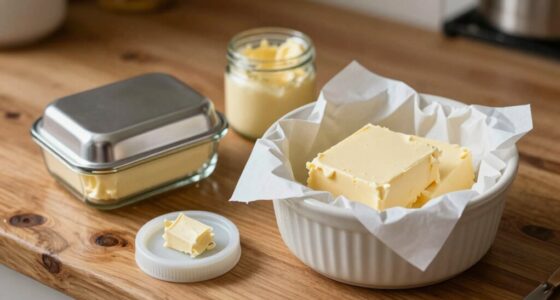
To maximize storage safety, consider how you’re storing the butter. Make sure it’s in a covered dish or a butter bell to protect it from dust and contaminants. This not only helps prevent mold growth but also keeps it fresh and flavorful. If your kitchen tends to be warm, you might want to limit how long it sits out, as higher temperatures can encourage spoilage.
If you start to see any signs of mold growth or an off smell, it’s time to toss it. While butter might be more forgiving than other dairy products, it’s still best to be cautious. If you’re unsure, you can always store it in the fridge and just take out a small portion to keep on the counter. This way, you’ll have the best of both worlds: perfectly spreadable butter and peace of mind regarding storage safety. Additionally, proper storage methods can significantly extend the freshness of your butter and prevent spoilage.
As an affiliate, we earn on qualifying purchases.
Frequently Asked Questions
Can I Use Salted Butter Instead of Unsalted for Counter Storage?
Yes, you can use salted butter instead of unsalted for counter storage. Salted butter alternatives offer a longer shelf life due to the preservative qualities of salt. However, if you’re baking, unsalted butter benefits your recipes by allowing you to control the salt content precisely. So, while salted butter works for spreading, keep in mind the impact on flavor in your baked goods when you choose which type to use.
Does the Type of Container Affect Butter’s Shelf Life?
Yes, the type of container you use does affect butter’s shelf life. If you store your butter in airtight containers, like glass or plastic, it helps keep out air and moisture, extending freshness. Avoid storing it in its original packaging, especially if it’s paper or cardboard, as these materials can let in odors and moisture. Choose a container that’s clean and dry to make certain your butter stays delicious for longer.
How Should I Store Butter in Hot Climates?
Store your butter in a cool, dark spot to keep it fresh in hot climates. Picture a sturdy ceramic dish, sealed tight, protecting it from rising humidity levels and temperature control issues. Avoid leaving it out in the open, where heat can turn it into a greasy mess. Instead, use a butter bell or a butter dish with a lid to shield it from the elements, ensuring it stays spreadable and delicious!
Can I Freeze Butter After It’s Been on the Counter?
Yes, you can freeze butter after it’s been on the counter. Just keep in mind that the butter texture might change slightly once thawed. If it’s melted or softened too much, it may not spread as easily. Butter’s melting point is low, so if it’s been warm, it’s best to use it soon. Freezing helps preserve its freshness, so don’t hesitate to pop it in the freezer if you need to!
Is There a Specific Type of Butter Best for Counter Storage?
You’ll find that salted butter is the best choice for counter storage. Its higher salt content acts as a natural preservative, keeping it fresh longer. Look for butter packaging that seals tightly to protect against air and light, which can affect flavor profiles. If you prefer unsalted butter, use it within a week to ensure it maintains its taste. Always check for any off smells or discoloration before using.
Conclusion
So, next time you leave that butter out, remember: it can stay fresh for about a week, but what happens if it sits longer? The creamy goodness could turn into a breeding ground for bacteria, and you wouldn’t want that! Keep an eye on it, and trust your senses—smell, taste, and look for any signs of spoilage. After all, a simple slice of bread could lead to a culinary delight or a risky bite. Choose wisely!
NFL season / tailgating Picks
team gear
As an affiliate, we earn on qualifying purchases.