TL;DR

Get kitchen staples and gadgets delivered free with Prime
- Fast, free delivery on millions of items
- Prime Video, Amazon Music and more included
- Member-only deals all year
A Good Housekeeping report on 2027 kitchen design identifies five trends drawn from interviews with designers: bolder colors, layered materials, durable choices, integrated cooking technology and planning the kitchen as the center of the home. These are expert observations, not measured industry-wide data, and the report does not quantify how widely homeowners are adopting them.
A Good Housekeeping report on 2027 kitchen design identifies five directions its interviewed designers say are gaining attention, including darker colors, layered finishes, durable materials, integrated cooking technology and planning the kitchen as the organizing point for the rest of the home. The report offers expert observations rather than survey data, making it a snapshot of design perspectives, not a measure of adoption across the housing market.
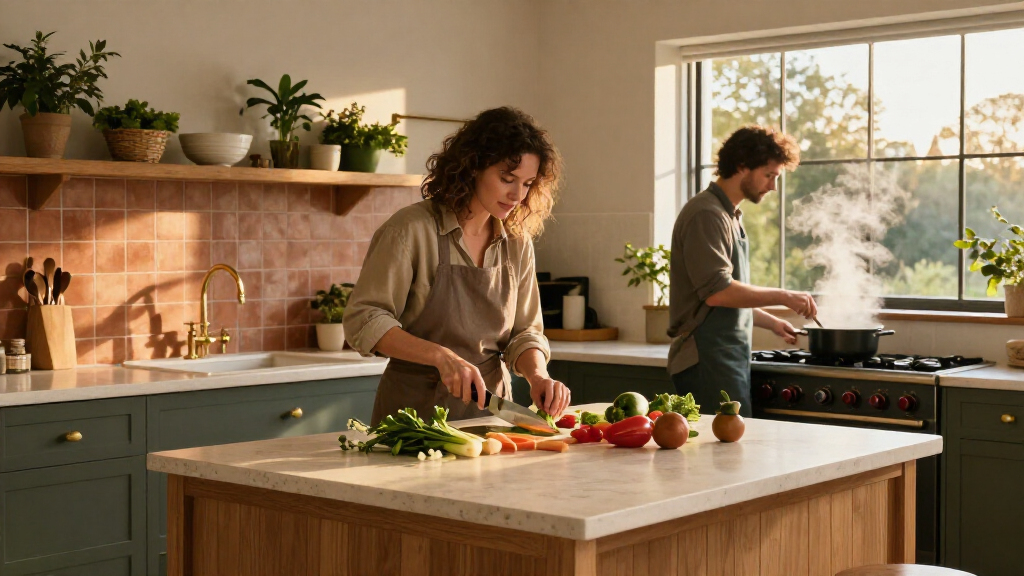
The first two trends concern appearance and how a kitchen is used. Designers describe a move away from stark, all-white rooms toward deeper, more individual color palettes, alongside a preference for combining cabinet finishes, wood, stone and metal instead of matching every surface. Leyden Lewis, a Miele Master and founder of Leyden Lewis Design Studio, says clients are also asking for functional details, including built-in cutting boards and workstation sinks, that can support cooking while contributing to the room’s look.
The report’s third trend is a “futureproofing” approach: selecting materials, craftsmanship and appliances with an eye to long-term use and changing household needs. Interior designer Mick De Giulio, founder of de Giulio Design, points to real stone and wood as materials that can develop a patina over time. The report notes that this approach may involve a higher initial investment, but does not provide cost comparisons or evidence about how long particular products last.
Technology is another focus, with examples including ovens with interior cameras, guided or automated recipes, and combination steam and speed ovens. The fifth trend is spatial: De Giulio says the kitchen increasingly guides decisions about materials, circulation, views and neighboring rooms, particularly in open-plan homes. Together, the trends link the kitchen’s appearance to cooking functions and the broader layout rather than treating it as an isolated room.
Designing Beyond the Cabinetry
The forecast matters to homeowners planning a renovation because its themes suggest decisions about a kitchen are being considered together: color and material choices, appliance capabilities and the relationship between the kitchen and adjoining spaces. That can affect which decisions need to be made early. In an open-plan home, for example, the kitchen’s finishes and circulation may shape the design of nearby areas as well as the kitchen itself.
The emphasis on durability also puts the upfront cost versus expected use into view. De Giulio’s comments frame lasting materials and performance-focused appliances as long-term choices, but the report does not establish that they will save money or remain desirable for every household. The practical value depends on individual budgets, cooking habits, maintenance needs and how long residents expect to stay in the home.
Integrated appliances may offer new cooking features, according to the designers, but they also raise questions about whether people will use those features and how they fit into the room. The report describes a design direction, not proof that technology produces better meals or a particular return on investment.
Products Worth Considering

Le Creuset Signature 6.5-Quart Deep Round Dutch Oven with Light Gold Crucible Knob, Enameled Cast Iron, Bleu Riviera

Ninja Flip Toaster Oven & Air Fryer, Large Capacity, Stainless, SP151

Ninja Crispi Glass Air Fryer (Stone) – 4‑in‑1
As an affiliate, we earn on qualifying purchases.
How the Five Trends Connect
The report bases its forecast on interviews with design professionals, including Kristin Harrison, a Miele Master and founder of Georgia & Hunt Design House; Leyden Lewis; and Mick De Giulio. Their comments cover both visual choices and practical planning, from cabinetry and work surfaces to appliances and the layout of adjacent rooms.
Harrison describes a changing idea of what counts as a neutral kitchen color, while Lewis discusses a more layered look and tools for hands-on cooking. De Giulio’s comments address durability and the kitchen’s role in shaping a whole-home plan. The source presents these ideas as trends taking hold in 2027, but supplies no homeowner survey, sales figures or comparison with previous years. Its evidence is qualitative and attributed to the interviewed experts.
“The safe bet has always been white or cream, but there is a yearning for something that looks much more customized now.”
— Kristin Harrison, Miele Master and founder of Georgia & Hunt Design House
How Widely Will Homeowners Adopt Them?
The report does not say how many homeowners are choosing these designs, whether interest varies by region or budget, or which trend is growing fastest. It gives no market data, survey results or sales figures, so “taking hold” should be read as a description from the interviewed designers rather than a quantified industry-wide shift.
It is also unclear how appliance features such as interior cameras and automated recipes will affect everyday cooking, or how their cost and maintenance compare with simpler options. The report does not provide price ranges, product comparisons or long-term performance evidence. Its claims about durable materials are similarly presented as design guidance, not guarantees that a particular finish will last or stay in style.
What Renovation Plans Should Track
The report does not announce a product launch, regulation or scheduled industry milestone. For readers considering a renovation, the next step is to translate the forecast into household priorities: decide which cooking functions are useful, compare materials and appliance specifications, and set a budget before committing to finishes or technology. Costs, maintenance and installation requirements should be checked with suppliers and qualified professionals rather than inferred from a trend forecast.
Whether these ideas become broader market patterns will require evidence beyond the designers’ observations, such as future homeowner surveys, sales data and project trends. Until such information is available, the five themes are best treated as design directions to evaluate, not a checklist every kitchen needs to follow.
Key Questions
What are the five kitchen design trends identified for 2027?
The report lists darker color palettes, layered finishes, futureproofing, integrated technology and treating the kitchen as the organizing point for the home’s design.
Does the report prove these trends are widespread?
No. It draws on interviews with design experts but includes no survey or market data measuring how many homeowners are adopting the ideas.
What does a layered kitchen look like?
Designer Leyden Lewis describes mixing cabinet finishes, warm wood, stone and metal, with practical features such as built-in cutting boards and workstation sinks.
What does “futureproofing” mean in the report?
It means prioritizing durable materials, craftsmanship and appliance performance with changing household needs in mind. The report says this may cost more upfront but does not quantify long-term savings.
What kitchen technology does the report mention?
Examples include ovens with interior cameras, guided or automated recipes, and combination steam and speed ovens. The report does not compare specific products or their costs.
Source: goodhousekeeping.com