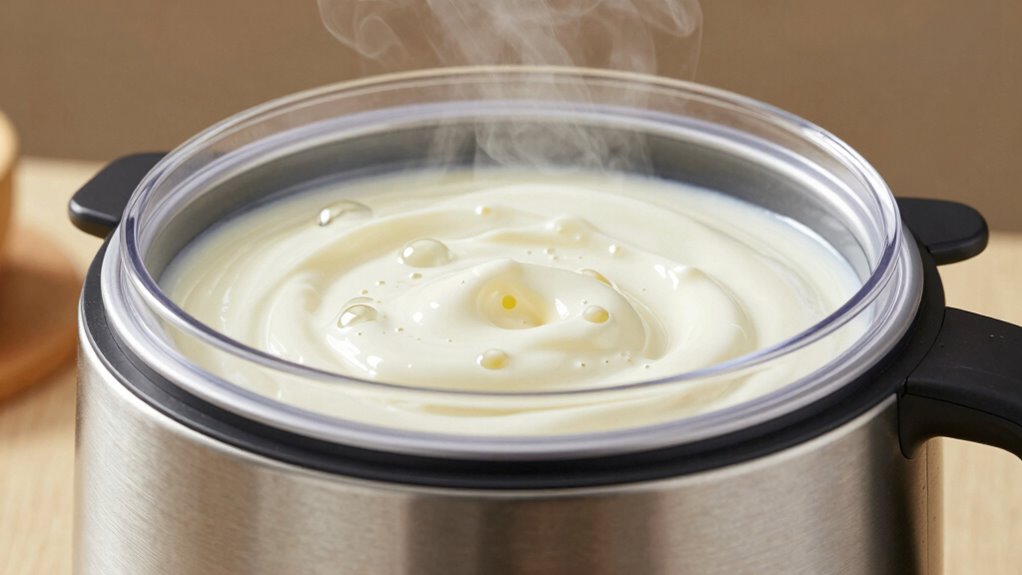

To make thick, creamy yogurt in your yogurt maker, keep the temperature between 110°F and 115°F. Staying within this range supports the probiotics that create texture and flavor. Temperatures too low will result in thinner yogurt, while too high can kill beneficial bacteria. Monitoring and maintaining a consistent heat guarantees the best results. If you want expert tips and techniques for perfect yogurt, you’ll find helpful insights as you continue.
Key Takeaways
- Maintain a temperature of 110°F to 115°F (43°C to 46°C) for thick, creamy yogurt.
- Consistent temperature control fosters probiotic activity, essential for texture and health benefits.
- Use a reliable thermometer to monitor and prevent fluctuations during fermentation.
- For Greek yogurt, ferment at 115°F to 120°F for increased thickness.
- Avoid drafts and open lids to keep the temperature steady and ensure optimal yogurt consistency.
Amazon Product B0FP3PV7CZ
As an affiliate, we earn on qualifying purchases.
What Is the Ideal Temperature for Thick Homemade Yogurt?
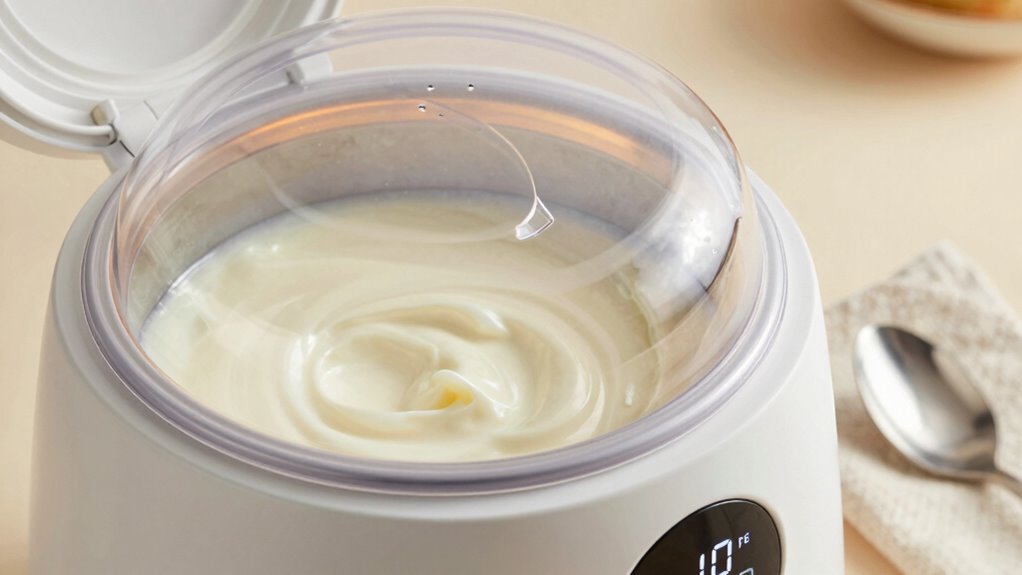
To achieve thick, creamy homemade yogurt, maintaining the right temperature during incubation is crucial. The ideal temperature range is between 110°F and 115°F (43°C to 46°C). This range provides excellent conditions for your yogurt culture to ferment effectively. When the temperature stays within this zone, the yogurt culture activates fully, promoting good probiotic benefits. Too low, and fermentation slows, resulting in thinner yogurt with fewer probiotics. Too high, and you risk killing the beneficial bacteria, compromising both texture and health benefits. Consistency is key—using a reliable thermometer helps you monitor and keep the temperature steady. By maintaining this ideal range, you ensure your homemade yogurt becomes thick, creamy, and packed with the probiotic benefits you’re aiming for.
Amazon Product B0CQB317VK
As an affiliate, we earn on qualifying purchases.
How Temperature Influences Yogurt Thickness and Creaminess
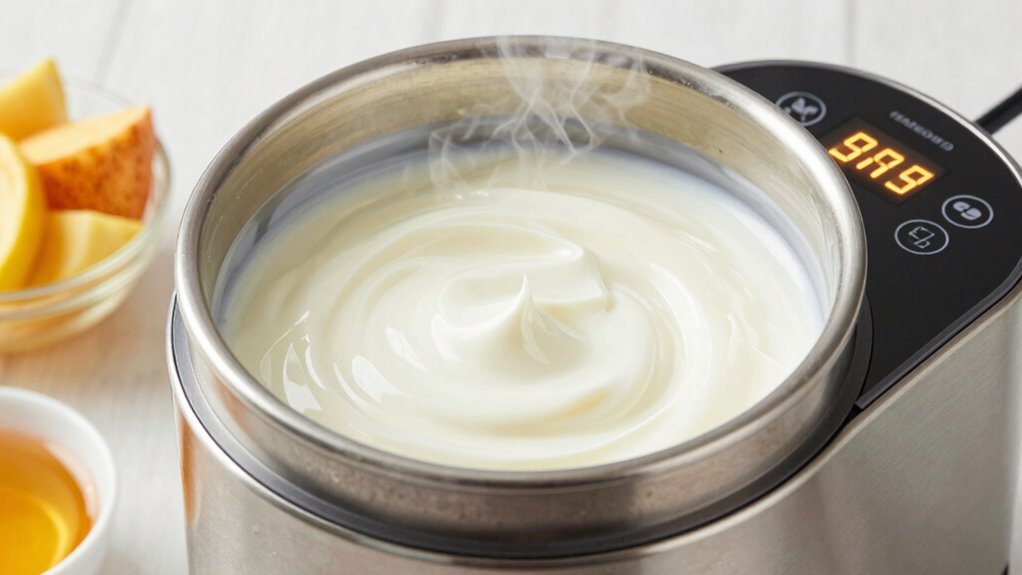
Temperature plays a vital role in determining the thickness and creaminess of your homemade yogurt. When you keep the temperature just right, you promote the growth of beneficial probiotics that contribute to a smooth, rich texture. Too low, and the culture won’t ferment properly, resulting in thinner yogurt. Too high, and you risk killing off probiotics, leading to a less creamy consistency. The temperature also influences how well flavors meld, making fruit pairings more vibrant and enjoyable. Proper temperature control directly impacts both texture and health benefits of your homemade yogurt. Additionally, using technological tools like incubators or digital thermometers can help maintain consistent incubation temperatures for optimal results. Maintaining precise temperature control ensures your yogurt develops the ideal thickness and creaminess every time. Regularly monitoring the fermentation temperature is essential to achieve consistent quality in your yogurt.
Amazon Product B0DZX56NYT
As an affiliate, we earn on qualifying purchases.
What Are the Best Temperature Ranges for Different Types of Yogurt?
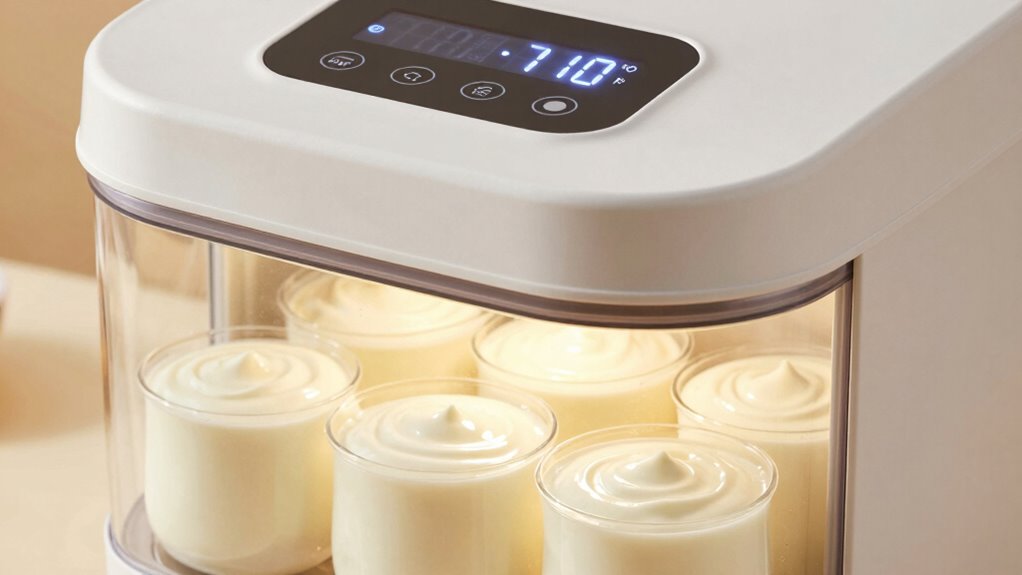
Different types of yogurt thrive within specific temperature ranges that optimize their texture and probiotic content. For classic yogurt, maintain your yogurt maker between 110°F and 115°F to encourage a balanced fermentation duration of 6 to 12 hours. If you’re making Greek yogurt, aim for slightly higher temperatures around 115°F to 120°F to achieve the desired thickness, with a fermentation time of about 8 to 12 hours. For probiotic-rich kefir-style yogurt, keep temperatures closer to 105°F to 110°F, allowing a shorter fermentation of 8 to 10 hours. Using the right starter culture is essential, as it influences the ideal temperature and fermentation duration. Adjusting these temperature ranges ensures your yogurt develops the perfect texture and probiotic potency. Energy-efficient cloud servers can support smart kitchen appliances, including yogurt makers, by providing reliable and sustainable computing power. Additionally, monitoring the temperature accuracy of your yogurt maker helps ensure consistent results and can be enhanced through smart appliance integration for real-time adjustments. Proper temperature control is crucial for preventing overfermentation or spoilage, especially in home setups. Furthermore, understanding the regulatory standards for food safety can help you maintain optimal conditions and prevent contamination.
Amazon Product B019XOZYEA
As an affiliate, we earn on qualifying purchases.
How to Monitor and Maintain the Perfect Yogurt Fermentation Temperature
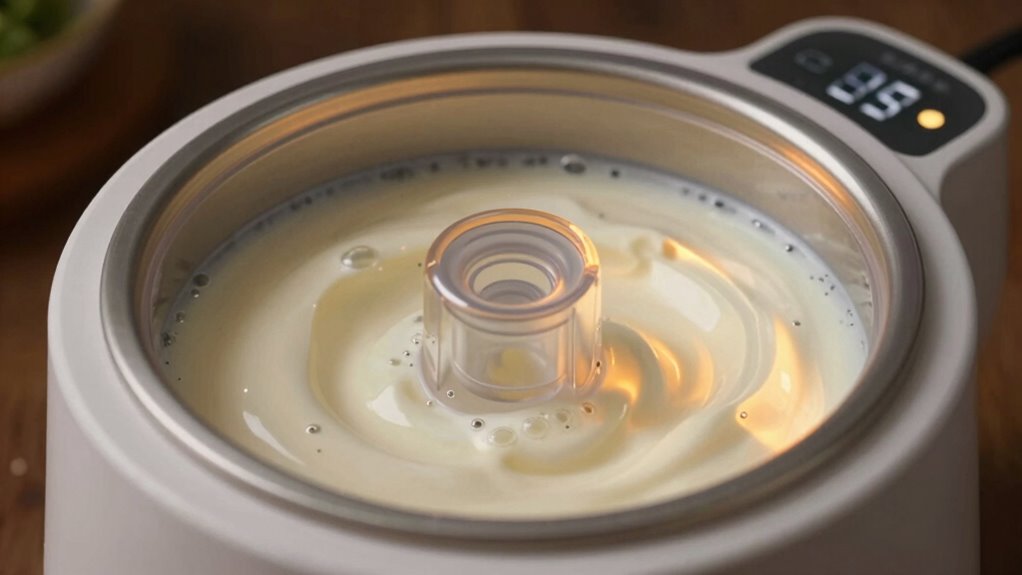
To get perfect yogurt, you need to keep the temperature steady within the ideal fermentation range. Regularly monitoring your maker guarantees the environment stays consistent, preventing unwanted bacteria or spoilage. Maintaining precise control helps you achieve the creamy texture and tangy flavor you want. Temperature stability is essential for consistent, high-quality results in homemade yogurt. Additionally, understanding the ideal fermentation temperature can help you tailor the process to your taste preferences and ensure optimal bacterial activity. Proper equipment calibration can further enhance home yogurt fermentation, leading to more reliable and delicious outcomes. Controlling water temperature during fermentation can also influence the final product’s texture and flavor.
Ideal Fermentation Range
Have you ever wondered how to guarantee your yogurt ferments perfectly? The key is maintaining the ideal fermentation range, typically between 110°F and 115°F (43°C to 46°C). Within this temperature window, your starter cultures thrive, producing the best flavor and texture. Keep in mind that fermentation duration varies—usually 6 to 12 hours—depending on your desired thickness and tanginess. Too low or too high a temperature can inhibit bacterial activity, leading to inconsistent results. Use a reliable thermometer to regularly check your yogurt maker’s temperature, ensuring it stays within the perfect range. Temperature control is essential for achieving optimal fermentation outcomes, especially when considering cultures’ activity at different temperatures. Proper airflow management can also help maintain a consistent temperature and prevent hot spots that might hinder fermentation. Monitoring and adjusting the temperature as needed can prevent fermentation issues and ensure consistent quality. Additionally, maintaining consistent temperature helps in achieving uniform fermentation across batches.
Consistent Temperature Control
Maintaining a consistent temperature during yogurt fermentation is essential for achieving reliable results. Temperature fluctuations can disrupt the fermentation process, leading to inconsistent yogurt texture or thin, runny yogurt. To monitor and control the temperature, use a reliable thermometer to check your maker’s settings regularly. Keep the yogurt in a stable environment, away from drafts or direct heat sources, which can cause unwanted variations. If you notice temperature spikes, consider insulating your yogurt maker with a towel or placing it inside a cooler. Consistent temperature control ensures the bacteria ferment evenly, resulting in thick, creamy yogurt. Additionally, understanding fermentation science can help you optimize conditions for better results. Being aware of microbial activity is crucial for understanding how temperature influences bacterial growth during fermentation. Proper temperature regulation is also crucial for preventing spoilage and ensuring food safety during fermentation. Maintaining an optimal environment supports beneficial bacteria growth, leading to a consistently desirable texture. Paying attention to maintaining steady temperatures can also help prevent unwanted contamination, ensuring your yogurt remains safe and delicious.
Tips for Achieving Thick, Creamy Yogurt Every Time
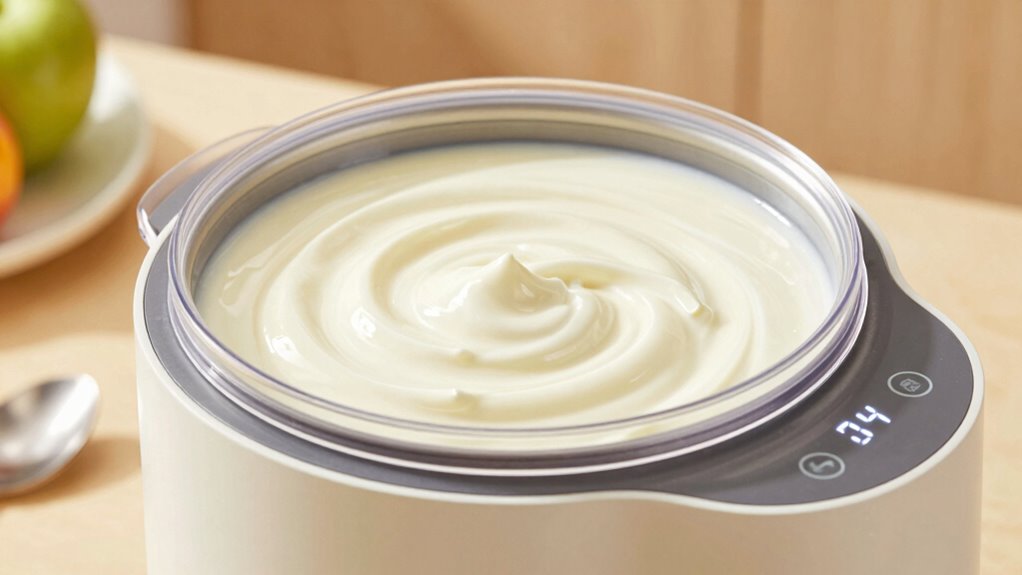
Achieving thick, creamy yogurt consistently depends on paying close attention to temperature and technique. Start with high-quality yogurt culture or probiotic supplements to ensure strong fermentation. Maintain the ideal temperature range for your yogurt maker, typically around 110°F to 115°F, to promote optimal bacterial activity. Use fresh milk and consider adding a small amount of milk powder to boost creaminess and thickness. Stir the mixture gently to evenly distribute the culture, avoiding overmixing that can disrupt the texture. Keep the yogurt undisturbed during incubation, and give it adequate time—usually 6 to 10 hours—for the cultures to develop fully. Proper temperature control is essential for consistent results, as fluctuations can hinder bacterial growth and affect the final texture. Ensuring consistent incubation conditions helps you harness the probiotic benefits while achieving the rich, thick consistency you desire every time.
Common Temperature-Related Yogurt Problems and How to Fix Them
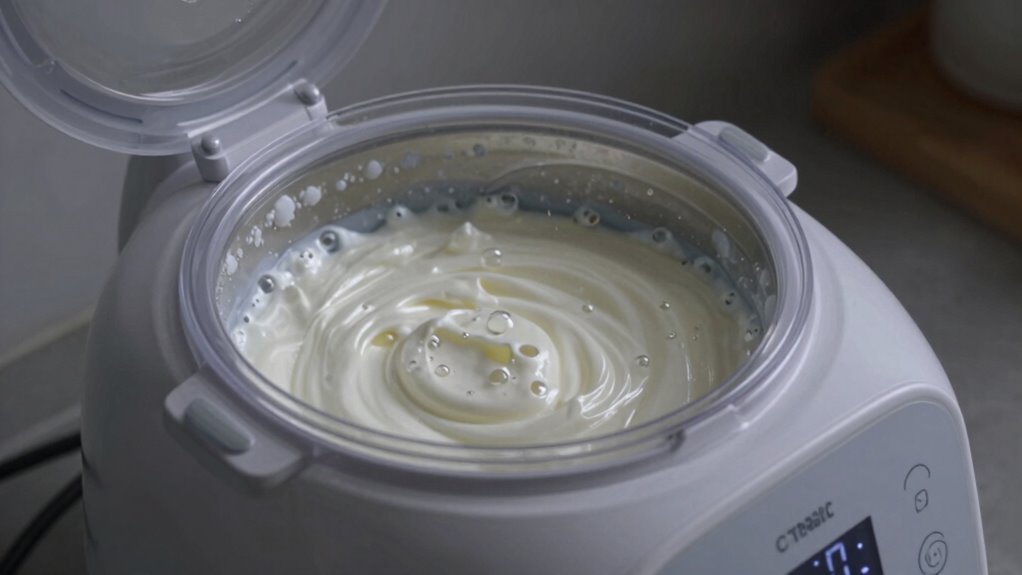
Inconsistent fermentation temperatures can cause your yogurt to turn out uneven or off-textured. Overcooked or thin yogurt often results from temperature issues that are too high or too low during incubation. Understanding how to identify and fix these problems helps you achieve perfect, creamy yogurt every time.
Inconsistent Fermentation Temperature
When your yogurt fermentation temperature fluctuates, it can lead to unpredictable results and a tangy or overly sour flavor. Maintaining fermentation stability is key to achieving consistent, thick yogurt. Temperature fluctuations disrupt the process and can cause uneven fermentation. To fix this, you should:
- Check your yogurt maker’s lid seals for proper insulation
- Avoid placing the maker near drafts or direct sunlight
- Use a reliable thermometer to monitor temperature accuracy
- Keep the environment stable and at the recommended temperature range
- Minimize opening the lid during fermentation to prevent heat loss
Overcooked or Thin Yogurt
If your yogurt turns out overcooked or too thin, temperature control is likely the culprit. Overheating can kill beneficial probiotic strains, resulting in weak fermentation and a runny texture. Conversely, insufficient heat may prevent the yogurt from setting properly, especially when adding fruit additives that can interfere with thickening. To fix this, guarantee your yogurt maker stays within the ideal temperature range—usually around 110°F to 115°F. Using a thermometer helps monitor this precisely. When adding fruit, do so after fermentation to avoid disrupting the culture. Proper temperature regulation preserves probiotic strains, ensuring a thick, creamy consistency. Adjust your settings if needed, and avoid opening the lid during fermentation to prevent temperature fluctuations that lead to overcooked or thin yogurt.
Adjusting Your Yogurt Process for Different Recipes and Preferences
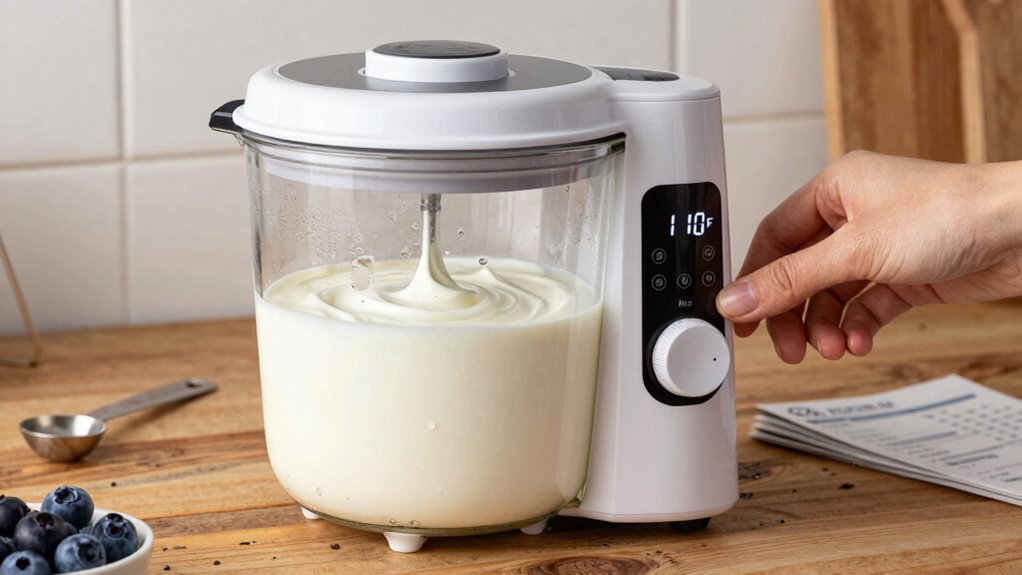
Adjusting your yogurt process allows you to customize the texture and flavor to suit different recipes and personal preferences. You can experiment with flavor variations or ingredient substitutions to create unique results. For a creamier yogurt, try increasing incubation time or adjusting the temperature slightly. To add flavor, mix in fruit, honey, or vanilla after fermentation. For tangier yogurt, extend the fermentation period; for milder taste, shorten it. You might also swap out milk types—dairy or plant-based—to influence creaminess and flavor. Consider adding probiotics or starter cultures for different probiotic profiles. Keep track of adjustments to refine your process.
- Try different sweeteners or flavorings
- Swap milk types for texture changes
- Adjust incubation times for tanginess
- Use various starter cultures
- Incorporate mix-ins after fermentation
Frequently Asked Questions
Can I Make Yogurt Without a Yogurt Maker?
Yes, you can make yogurt without a yogurt maker. All you need is a good yogurt starter and some storage containers. Heat milk to the right temperature, add your starter, and keep it warm for several hours—using a warm spot or oven with the light on works well. Once set, transfer it to containers and refrigerate. This simple process yields thick, homemade yogurt without a maker.
How Long Should I Ferment Yogurt at Optimal Temperatures?
You should ferment your yogurt for about 6 to 12 hours at a stable temperature of around 110°F (43°C). Keep the temperature consistent to guarantee proper fermentation duration, which helps develop the desired thickness and flavor. If your temperature fluctuates, it can affect the quality of your yogurt. Check it periodically and aim for steady heat, so your yogurt turns out creamy and delicious without over-fermenting.
Does the Type of Milk Affect Ideal Fermentation Temperatures?
Yes, the milk variety affects the ideal fermentation temperature. Different types, like whole milk, skim milk, or plant-based options, have unique properties that influence how fermentation proceeds. You should adjust your fermentation temperature based on the milk you use to achieve the best results. For instance, thicker dairy milk may require slightly different temps than lighter or alternative milk types to produce creamy, thick yogurt.
Can Fluctuating Temperatures Ruin My Yogurt Batches?
Fluctuating temperatures can definitely ruin your yogurt batches, risking inconsistent textures and spoilage. You need temperature stability to guarantee proper fermentation, maintain quality, and avoid spoilage risks. When the temperature swings, beneficial bacteria struggle to thrive, leading to weak or sour yogurt. To get consistently thick, delicious results, keep your yogurt maker steady, monitor the temperature regularly, and prevent fluctuations that could compromise your batch.
What Are the Signs of Over-Fermentation in Yogurt?
If you notice your yogurt has a strong, sour smell and a tangy, bitter taste, it’s likely over-fermented. Fermentation indicators include excessive sourness and a slimy or grainy texture. Spoilage signs like mold or an off-putting odor also point to over-fermentation. Trust your senses; if the yogurt seems overly sour or develops unusual textures, it’s best to discard it to avoid health risks.
Conclusion
Just like a master chef perfects their signature dish, mastering yogurt temperatures guarantees every batch is thick and creamy. By monitoring and adjusting your settings, you’ll turn your kitchen into a yogurt haven, reminiscent of a cozy bakery at dawn. Remember, patience and precision are your best ingredients. With a little practice, you’ll create homemade yogurt that delights with every spoonful—your culinary masterpiece in the making.