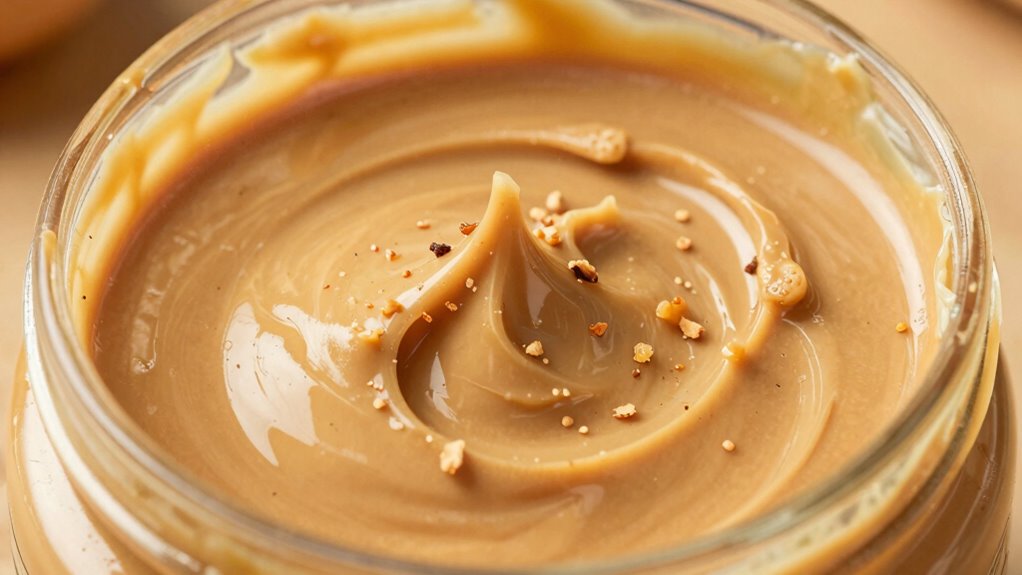

Grittiness in peanut butter often comes from lower-quality ingredients, like broken peanuts or husks, and how it’s processed. Natural peanut butters with minimal grinding or added stabilizers tend to be grainy because they retain more peanut pieces and natural oils. Cheaper brands usually add stabilizers or use fewer natural oils, making the texture less smooth. If you want to understand more about how ingredients and processing impact texture, keep exploring this topic.

Get kitchen staples and gadgets delivered free with Prime
- Fast, free delivery on millions of items
- Prime Video, Amazon Music and more included
- Member-only deals all year
Key Takeaways
- Lower-quality peanuts with shell fragments or husks increase grittiness in peanut butter.
- Less refined processing results in coarser grinding, leading to a grainier texture.
- Natural oils in high-quality peanuts create a smoother mouthfeel, while low-quality ingredients cause graininess.
- Absence of stabilizers and additives allows oil separation, making the texture feel gritty.
- Products with minimal processing and fewer additives tend to be creamier and less gritty.
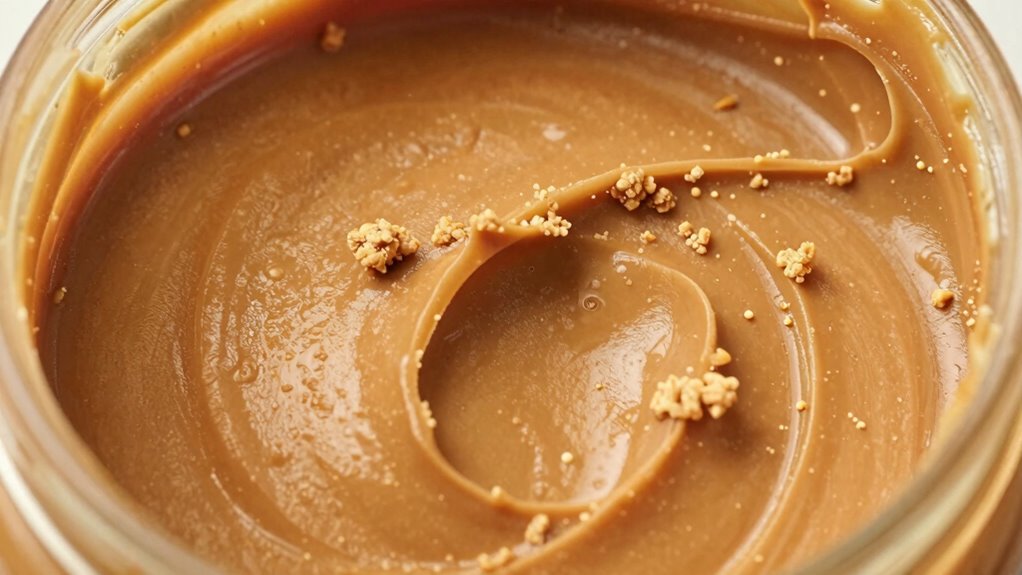
If you’ve noticed that some peanut butters feel grainier than others, you’re not imagining it. Texture differences are real, and they’re often rooted in the ingredient quality and how the peanut butter is processed. When you pick up a jar and feel that gritty texture, it’s usually because of the way the peanuts are roasted, ground, and combined with other ingredients. Not all peanut butters are made the same, and those subtle differences in texture can markedly impact your eating experience.
Grainy peanut butter results from ingredient quality and processing methods, affecting taste and texture.
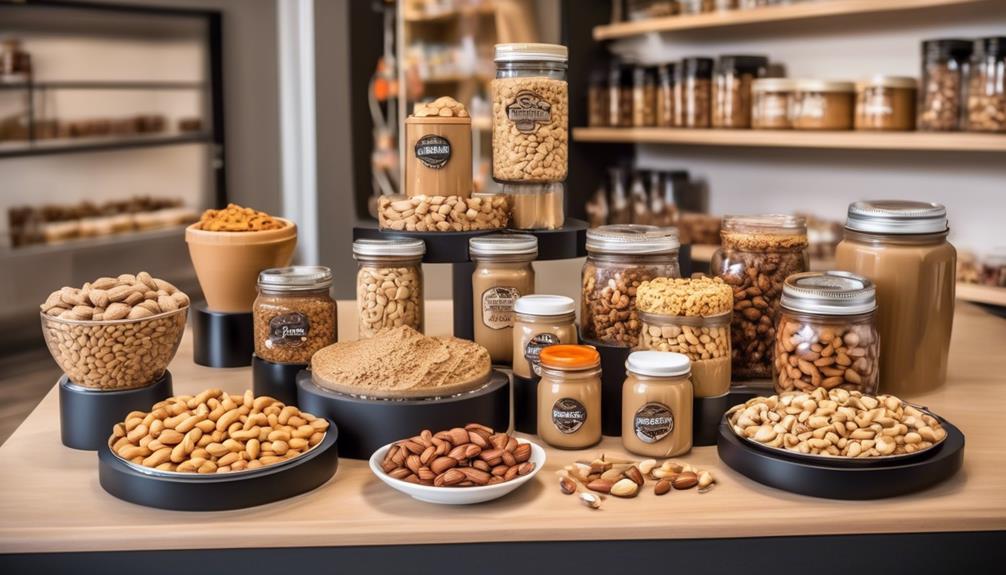
One of the primary reasons for a grainier feel comes down to ingredient quality. Lower-quality peanuts, or those that aren’t fresh, can lend a gritty texture because they contain more shell fragments, husks, or broken pieces that aren’t fully ground down during processing. Conversely, higher-quality peanuts tend to be smoother because they’re carefully selected, cleaned, and roasted to bring out their natural oils, which helps create a creamier consistency. When the ingredients list includes additives like stabilizers or hydrogenated oils, it can also affect the texture, sometimes making it feel less gritty and more uniform, but at the expense of natural richness.
The way peanut butter is processed plays a big role too. Natural or traditional peanut butters rely solely on grinding roasted peanuts, which can result in a more textured, gritty feel if the peanuts aren’t processed to a fine consistency. Some brands intentionally leave the peanut pieces larger, giving you that signature crunch but also a grainier mouthfeel. On the other hand, commercial varieties often undergo more refined processing, sometimes using industrial grinders that break the peanuts down to a fine, smooth paste, reducing the gritty feel considerably. Processing methods significantly influence the final texture and mouthfeel of the product. Additionally, processing techniques like temperature control during grinding can impact how smooth or gritty the final product feels.
Moreover, the ingredient selection can influence how much natural oil is retained in the peanut butter, affecting its overall texture and stability over time. The oil content in the peanut butter influences its texture. Natural peanut butters tend to separate over time because they contain minimal stabilizers, which can make the oil rise to the top. When you stir it back in, the texture can become uneven—sometimes grainy, sometimes smooth—depending on how well the oils are incorporated. Cheaper peanut butters with lower-quality ingredients might not have enough natural oils to create that silky, smooth mouthfeel, leading to a more pronounced graininess.
Furthermore, the presence of additives and stabilizers in commercial peanut butters can alter the texture, sometimes making it feel more uniform and less gritty, which can be appealing to some consumers. Ultimately, if you prefer a smoother peanut butter, look for options with higher ingredient quality—peanuts with minimal processing, fewer additives, and a good balance of natural oils. Understanding these factors helps you make better choices and appreciate why some peanut butters just feel grittier than others.
natural peanut butter smooth and creamy
As an affiliate, we earn on qualifying purchases.
As an affiliate, we earn on qualifying purchases.
Frequently Asked Questions
Does the Type of Peanuts Affect the Gritiness?
Yes, the type of peanuts affects the grittiness, especially depending on the peanut shell and roasting level. Peanuts with thicker shells or more fibrous shells can lead to a grittier texture. Additionally, a lighter roast preserves more of the natural peanut skin and fibrous parts, making the butter feel grainier. Conversely, darker roasting breaks down fibers and skins, resulting in a smoother butter. So, your choice of peanuts and roasting process directly impacts the gritiness.
Can Storage Methods Influence Peanut Butter Texture?
You might notice that storage methods influence peanut butter’s texture more than you’d expect. When you store it in a warm place or leave the jar open, it can cause oil separation, impacting flavor consistency and making the spread seem grainier. Packaging effects, like using airtight containers, help preserve its smoothness. So, keeping your peanut butter in a cool, sealed spot guarantees it stays creamy and flavorful, just as intended.
Are Natural Peanut Butters Typically Grittier?
Yes, natural peanut butters are typically grittier because they lack stabilizers that create a smooth texture. You’ll notice more flavor variation and a less uniform texture because the natural oils separate, requiring stirring. The texture consistency varies based on how much oil is stirred back in. If you prefer a smoother spread, store it in the fridge and stir thoroughly before use.
How Does Processing Speed Impact Texture?
Processing speed plays a vital role in determining peanut butter’s texture consistency. Faster processing often results in smoother, creamier textures by breaking down peanuts more thoroughly, with some machines processing in under 10 minutes. Conversely, slower methods preserve more of the natural grit. Processing techniques, like roasting and grinding, influence this, making some peanut butters naturally chunkier or creamier. Understanding these factors helps you choose the right peanut butter for your preferred texture.
Does the Addition of Ingredients Change Smoothness?
Yes, ingredient additives and flavor enhancers can change peanut butter’s smoothness. Additives like oils or stabilizers make the texture creamier, while others may cause grittiness if they don’t blend well. Flavor enhancers might also impact smoothness by altering how ingredients meld together. When you choose peanut butter with these added ingredients, you’re fundamentally influencing its overall texture, making it either silkier or grainier depending on what’s included.
Conclusion
Think of peanut butter like a well-tuned orchestra—smooth, harmonious, and pleasing to the senses. When some jars feel gritty, it’s like a musician hitting a sour note, disrupting the experience. But understanding the ingredients and processing methods helps you choose the perfect tune. So, next time you open a jar, remember: you’re the conductor, and with a little knowledge, you can guarantee your peanut butter plays just the way you like it—smooth and satisfying.
Fall Picks
fall essentials
As an affiliate, we earn on qualifying purchases.