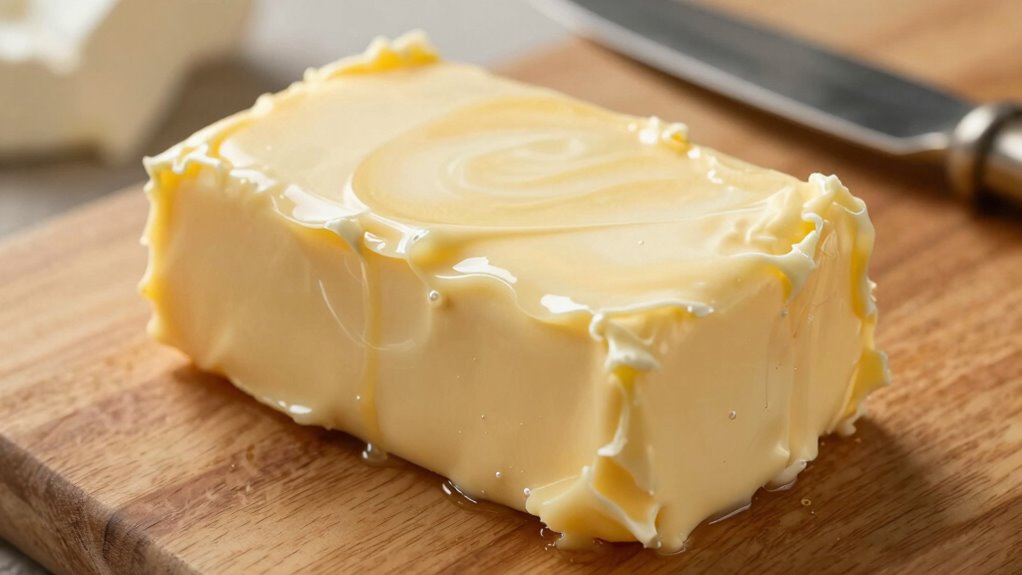

You’ll notice that cultured butter has a deeper flavor because of its natural fermentation process, which allows bacteria to produce complex acids and aromatic compounds. This fermentation develops subtle tangy and nutty notes that standard butter doesn’t have. The longer the fermentation, the richer and more developed the flavor becomes. By controlling fermentation time and conditions, craft producers create unique, nuanced flavors. Stay with us as we explore how this traditional process truly enhances butter’s character.
Key Takeaways
- Extended fermentation allows bacteria to produce complex aromatic compounds, enhancing flavor depth.
- Natural bacterial activity creates subtle sourness that adds richness and character to the butter.
- Longer fermentation periods intensify tangy notes, contributing to a more pronounced flavor profile.
- Traditional fermentation techniques ensure precise control over bacterial growth, influencing flavor complexity.
- The fermentation process develops unique flavors that balance well with both sweet and savory ingredients.

Fermentation techniques are at the heart of creating this rich flavor profile. By allowing the cream to ferment for a specific period, the bacteria produce acids and aromatic compounds that contribute to the butter’s complexity. This isn’t a quick process; it requires patience and attention to detail, which is why many artisanal producers still rely on traditional fermentation techniques. As the cream ferments, it develops a subtle sourness, a nuance that’s absent in standard butter. This tang isn’t just a flavor; it’s an indication of the natural fermentation process at work, making the butter more than just a fat—it’s an ingredient with character. The natural bacteria involved in fermentation are responsible for developing these unique flavors, highlighting the importance of fermentation techniques in achieving such depth. You’ll notice that the longer the fermentation, the more pronounced the flavor becomes. This is a direct result of the fermentation techniques—controlling temperature, timing, and bacterial cultures—that influence the final taste. When you choose cultured butter, you’re opting for a product that’s been crafted with care, respecting farmhouse traditions and natural processes. The result is a butter with a deeper, more complex flavor, perfect for enhancing cheeses, pastries, or simply spreading on bread. Its tangy notes balance beautifully with sweet or savory ingredients, elevating your cooking and baking. In essence, the deeper flavor of cultured butter is no accident. It’s a product of time-honored farmhouse traditions and meticulous fermentation techniques that allow natural bacteria to do their work. By understanding and appreciating these methods, you can truly savor the richness and complexity that make cultured butter a standout ingredient. It’s not just butter—it’s a taste of tradition, crafted through patience and natural fermentation, that brings depth and character to every dish.

Vermont Creamery® Cultured Butter Sea Salt, 8 oz in 2 Sticks
Made in Vermont by Vermonters: we use the best ingredients and take the time to make things right
As an affiliate, we earn on qualifying purchases.
As an affiliate, we earn on qualifying purchases.
Frequently Asked Questions
How Long Does Cultured Butter Take to Develop Its Flavor?
Cultured butter generally takes about 12 to 24 hours of fermentation to develop its flavor complexity. During this fermentation duration, beneficial bacteria work on the cream, creating tangy, rich, and nuanced notes. You’ll notice the deeper flavor becoming more pronounced as the bacteria produce acids and other compounds. The longer you allow the fermentation to proceed within this window, the more complex and developed the flavor will become, enhancing your butter’s taste.
Does the Type of Milk Affect Cultured Butter’s Flavor?
Yes, the milk source dramatically influences cultured butter’s flavor. Imagine milk from lush, grass-fed cows giving your butter a rich, almost wild taste, while cream from goats or sheep creates a unique, earthy aroma. This flavor variation can transform your butter into a sensory adventure, making each batch a different masterpiece. The type of milk you choose shapes your butter’s personality, turning simple ingredients into extraordinary culinary experiences.
Can Cultured Butter Be Made at Home Easily?
Yes, you can make cultured butter at home easily using artisanal techniques. Start by warming fresh cream and adding a small amount of buttermilk or a starter culture to initiate the fermentation process. Allow it to ferment at room temperature until it thickens. Then, churn the fermented cream until butter forms. This simple process lets you create rich, flavorful cultured butter right in your kitchen, connecting you to traditional methods.
How Does Aging Influence Cultured Butter’s Taste?
Aging influences cultured butter’s taste by enhancing its flavor complexity through the aging process. As you let it sit, the natural fermentation develops deeper, richer notes, making the butter more nuanced. This coincidence of time and fermentation allows the flavors to meld, resulting in a more sophisticated profile. The longer the aging, the more pronounced the depth, transforming simple butter into an indulgent, flavorful experience you can truly savor.
Are There Regional Differences in Cultured Butter Flavor Profiles?
Yes, regional terroirs shape cultured butter’s flavor profiles distinctly. In different areas, factors like local grasses, climate, and dairy practices introduce unique flavor nuances. For example, butter from mountainous regions may have a richer, nuttier taste, while coastal areas might produce a more saline, briny flavor. By exploring various regions, you’ll notice how terroirs influence the depth and complexity of cultured butter’s flavor, making each variety a delicious reflection of its origin.

Lucas Papaw Ointment 15g Tubes with Lip Applicator — 2 Pack — Fermented Papaya Lip Balm for Dry, Chapped Lips, Pocket Size, Made in Australia
TWO LIP APPLICATOR TUBES — Keep one Lucas Papaw 15g tube in your bag and one on your…
As an affiliate, we earn on qualifying purchases.
As an affiliate, we earn on qualifying purchases.
Conclusion
So, next time you spread cultured butter on your toast, savor its richer, more complex flavor. Its development process brings out deeper, tangier notes that standard butter just can’t match. Isn’t it worth exploring how a simple fermentation step can transform your everyday butter into something extraordinary? Once you experience cultured butter’s depth, you’ll never look at a pat of regular butter the same way again. Why settle for less when you can indulge in a richer, more nuanced taste?

Vermont Creamery® Cultured Butter Unsalted, 8 oz in 2 Sticks
VERMONT CREAMERY UNSALTED CULTURED BUTTER STICKS: Two, 4-ounce sticks of
As an affiliate, we earn on qualifying purchases.
As an affiliate, we earn on qualifying purchases.

Yours Family Butter Million Layer Bread, Artisan Sourdough, Natural Fermentation, 4 Count, 90g
BUTTER MILLION LAYER BREAD: Yours Family's artisan bread features countless delicate, flaky layers with a rich, indulgent buttery…
As an affiliate, we earn on qualifying purchases.
As an affiliate, we earn on qualifying purchases.