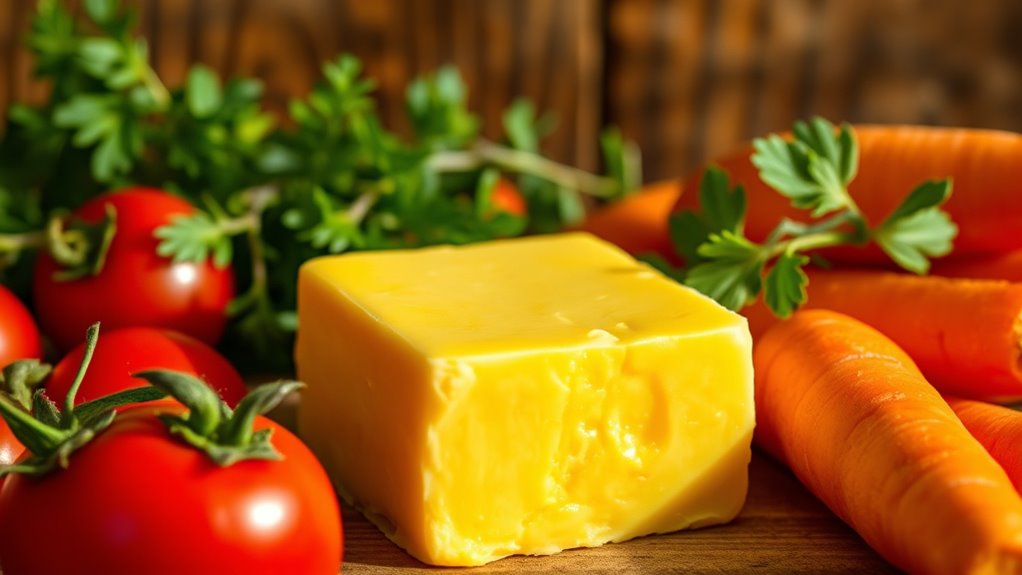

The color of butter varies mainly due to the cows’ diet, particularly their carotenoid intake. Cows that graze on lush grass produce milk rich in carotenoids, which gives butter a vibrant yellow hue. In contrast, grain-fed cows, often kept in confinement, result in paler butter due to lower carotenoid levels. These dietary differences directly affect not just the color but the nutritional quality of the butter. Discovering more about these factors can reveal even more fascinating insights.

Get kitchen staples and gadgets delivered free with Prime
- Fast, free delivery on millions of items
- Prime Video, Amazon Music and more included
- Member-only deals all year
Key Takeaways
- Butter color varies due to the cow’s diet, with grass-fed cows producing richer yellow butter from higher carotenoid levels.
- Carotenoids are natural pigments in plants that enhance the yellow hue of butter, particularly in milk from grass-fed cows.
- Seasonal variations impact butter color, with spring and summer diets leading to more vibrant butter due to increased grass consumption.
- Industrial farming practices, which involve grain feeding, result in paler butter due to lower carotenoid content in the milk.
- Sustainable grazing methods enhance milk quality and pigment retention, resulting in more colorful and nutritious butter.

Have you ever wondered why some butter is a richer shade of yellow than others? The color of butter is largely influenced by what cows eat, and that boils down to specific dairy farming practices and animal feed composition. When you take a closer look, you’ll see that the diet of dairy cows plays a pivotal role in determining the final hue of the butter you spread on your toast.
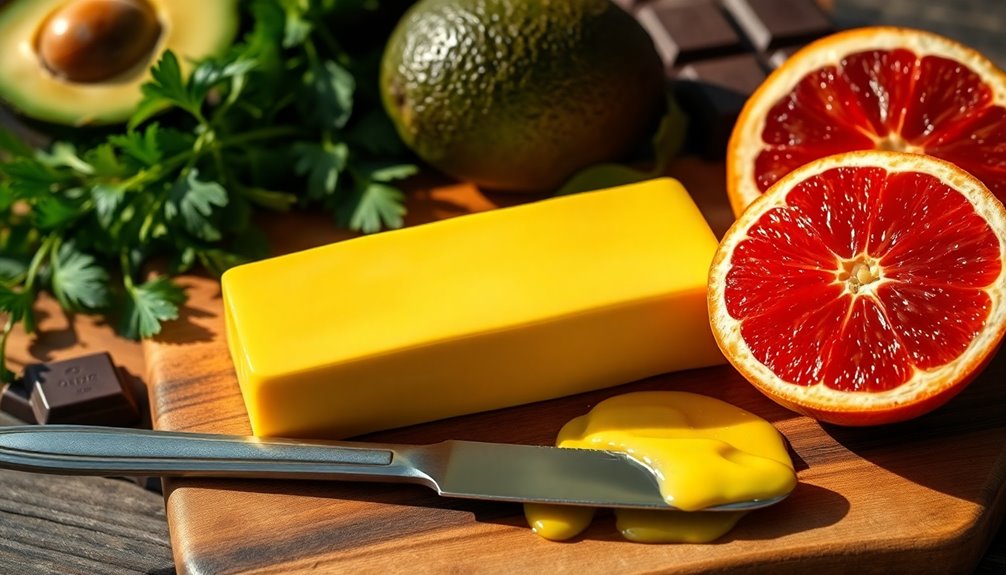
Cows that graze on fresh grass tend to produce milk with a higher concentration of carotenoids, which are natural pigments found in plants. These carotenoids are responsible for the vibrant yellow color you see in some butters. On the other hand, cows that are fed a diet heavy in grains, like corn, typically produce milk that lacks these pigments, resulting in paler butter. So, when you choose butter, you’re not just picking a flavor; you’re also selecting the nutritional quality influenced by the cows’ diets.
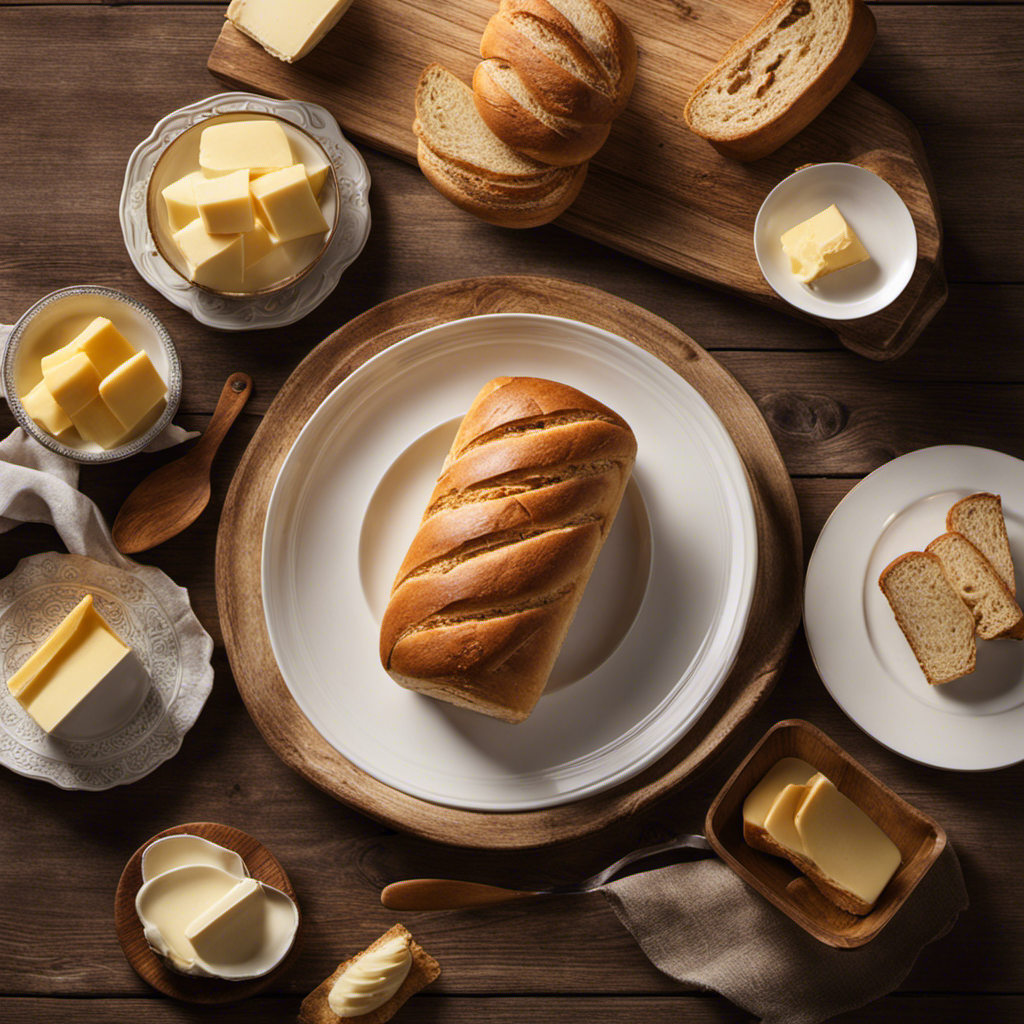
The color of butter reflects the cows’ diets; grass-fed cows produce richer, more vibrant hues than grain-fed ones.
Dairy farming practices can vary widely, and some farmers prioritize sustainable grazing practices that allow cows to roam freely on pasture. This not only benefits the cows but also enhances the carotenoid content in their milk, leading to more colorful butter. Other farmers may rely on more industrialized methods, where cows are kept in confined spaces and fed processed feed, diminishing the natural pigments in the milk. The choice of farming method can markedly impact the quality and color of the butter you buy.
Moreover, the season can also play a role. In spring and summer, when grass is plentiful, cows generally consume more carotenoid-rich forage. This results in butter that’s richer in color during these months. Conversely, in winter, when they’re often fed dried hay or grain, the butter can appear paler. Additionally, regular audits of dairy farming practices can help ensure that sustainable methods are being employed to enhance the nutritional quality of the milk.
As an affiliate, we earn on qualifying purchases.
Frequently Asked Questions
Does the Color of Butter Affect Its Taste?
The color of butter doesn’t directly affect its taste, but it can influence your perception of butter flavor. When you see a rich yellow hue, you might associate it with a creamier, more flavorful product. This consumer perception can lead you to enjoy the butter more, regardless of its actual taste. Ultimately, while the color might impact your expectations, the flavor comes down to the butter’s ingredients and quality.
Can I Find Yellow Butter in All Grocery Stores?
You won’t find yellow butter in every grocery store, as its availability often depends on the brand and the animal diet that influences carotenoid levels. Think of it as a treasure hunt; some stores stock rich, golden butter while others may offer paler options. If you’re looking for that vibrant hue, check specialty shops or local dairies, where the cows might munch on carotenoid-rich feeds that enhance the butter’s color and flavor.
Is Yellow Butter Healthier Than White Butter?
Yellow butter isn’t necessarily healthier than white butter; it mainly reflects butter pigmentation influenced by the cow’s diet. If cows eat more grass or forage, their butter contains carotenoids, which give it that yellow hue. While these carotenoids can offer some health benefits, the overall nutritional profile of butter remains similar regardless of color. So, whether you choose yellow or white, moderation is key for a balanced diet.
How Does Butter Color Relate to Its Nutritional Value?
The color of butter can indicate its nutritional value, particularly through beta carotene levels, which come from the livestock’s diet. When cows consume grass rich in carotenoids, their milk—and consequently, the butter—becomes more yellow. This yellow butter often contains higher levels of vitamins A and D, making it more nutritious than paler varieties. So, if you’re choosing butter, consider its color as a clue to its potential health benefits.
Are There Artificial Colorants Used in Butter Production?
You might think butter’s golden hue comes straight from nature, but yes, some producers do use artificial colorants in butter production. It’s ironic how something so simple can be enhanced with synthetic dyes, all in the name of appealing aesthetics. While these colorants can make butter look more enticing, they don’t add any nutritional value. So, next time you spread that bright yellow butter, consider what went into its vibrant appearance.
Conclusion
In the world of butter, color tells a story. The vibrant yellows, like sunbeams captured in a creamy spread, reveal the cow’s diet rich in carotenoids, painting each pat with nature’s artistry. So, when you choose that golden butter, you’re not just savoring flavor; you’re indulging in a tapestry of health and happiness. Remember, the hues of your butter reflect the love and care behind it, making each bite a celebration of life’s simple joys.
Fall Picks
fall essentials
As an affiliate, we earn on qualifying purchases.