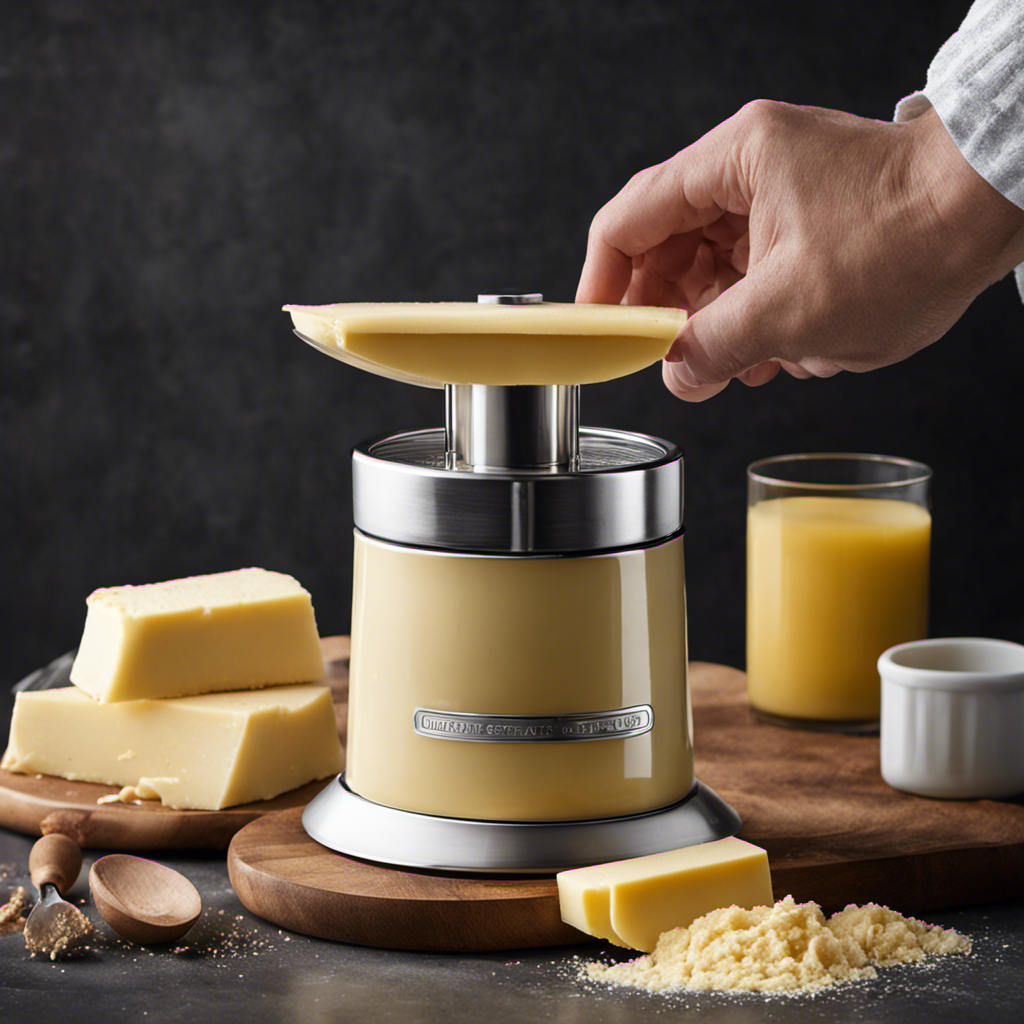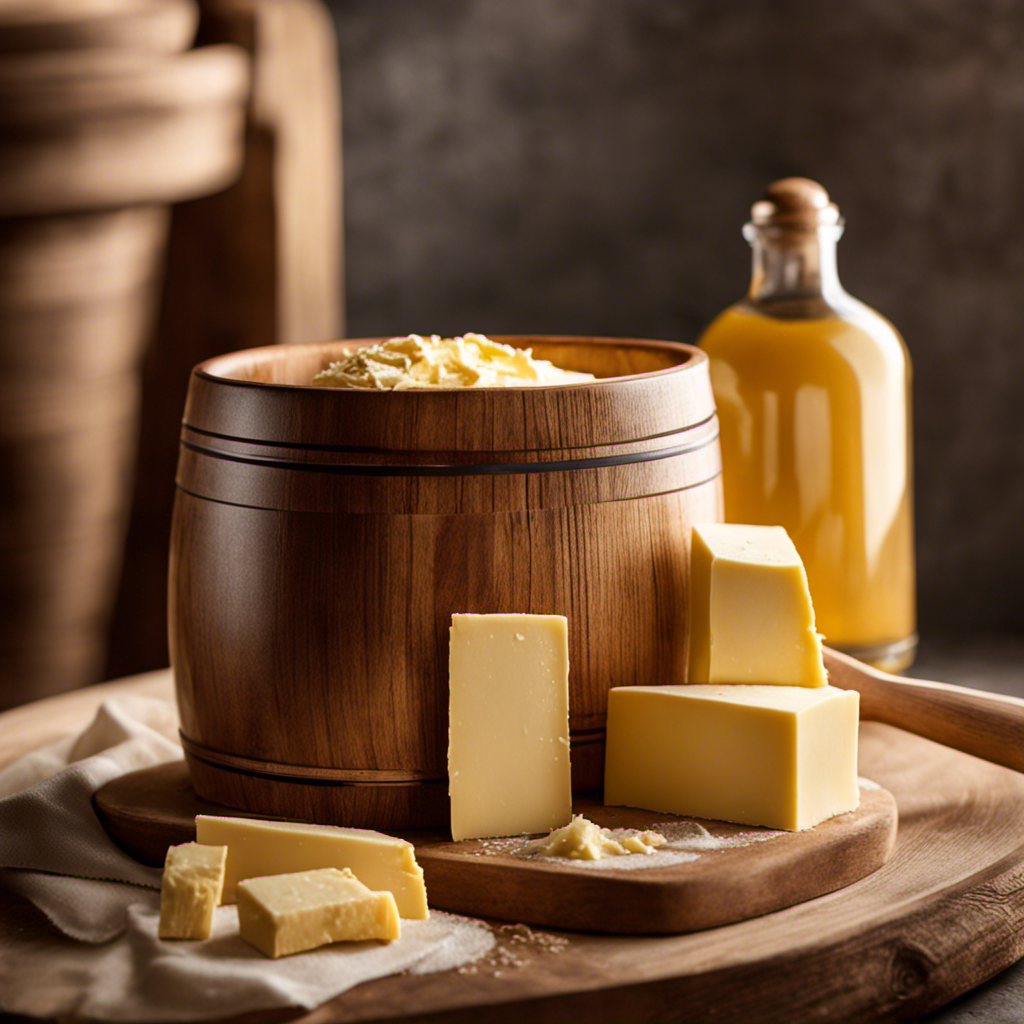
Whey butter and creamery butter have key differences in production and use. Whey butter, made from leftover whey, has a lower fat content and a lighter, tangy flavor, making it great for light dishes. In contrast, creamery butter is churned from cream, offering a rich flavor and higher fat content, perfect for baking and sautéing. Each type shines in different culinary contexts. Discover how these distinctions can enhance your cooking experience further.
Key Takeaways
- Whey butter is made from leftover whey after cheese production, while creamery butter is produced by churning cream.
- Whey butter has a lower fat content and a lighter texture compared to the rich, creamy mouthfeel of creamery butter.
- The flavor of whey butter is slightly tangy and lighter, making it ideal for lighter dishes, whereas creamery butter offers a classic, rich flavor.
- Creamery butter performs better in high-heat cooking and baking, contributing to tender textures, while whey butter is suited for sautéing and light sauces.
- The choice between whey butter and creamery butter depends on the desired dish outcome, cooking method, and flavor profile.
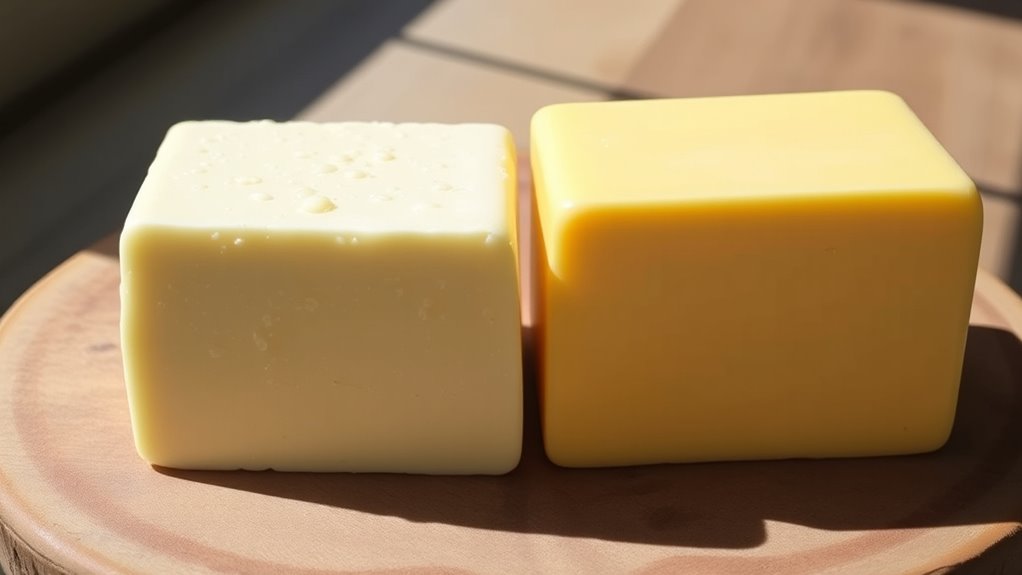
When you’re choosing between whey butter and creamery butter, it’s essential to understand their differences and unique qualities. Both types of butter come from the dairy processing industry, but they offer distinct characteristics that can impact your cooking and baking. Knowing these differences will help you pick the right butter for your culinary needs.
Whey butter is made from the leftover whey after cheese production. This means it has a lower fat content compared to creamery butter, which is made from churning cream until it reaches a solid state. As a result, whey butter tends to have a lighter texture and a slightly tangy taste. This flavor profile can bring a unique twist to your recipes, especially if you’re looking for something different. Because it’s less rich, whey butter works well in lighter dishes or when you want to keep the calories down.
On the other hand, creamery butter is known for its rich, creamy flavor that many people crave. With a higher fat content, it provides a luxurious mouthfeel and enhances the taste of baked goods. When you think of classic buttery flavors in cookies, cakes, and pastries, creamery butter is usually what comes to mind. Its robust flavor profiles can elevate your dishes and make them feel indulgent.
When deciding which butter to use, consider the cooking method and the desired outcome of your dish. If you’re sautéing vegetables or making a sauce, whey butter might work just fine. However, if you’re baking a cake or whipping up a batch of cookies, creamery butter is likely the way to go. The richness of creamery butter helps create a tender, flaky texture that can be hard to replicate with whey butter.
Also, think about how each type of butter reacts to heat. Creamery butter can withstand higher temperatures without breaking down, while whey butter may not perform as well in high-heat scenarios. This can affect the final texture and flavor of your dish, so keep that in mind when making your selection. Additionally, understanding the butter’s composition can help you appreciate how these differences influence the cooking process and the final dish.
Frequently Asked Questions
Is Whey Butter Suitable for Lactose-Intolerant Individuals?
Yes, whey butter can be suitable for lactose-intolerant individuals. It typically has lower lactose content compared to regular dairy products, which means many people with lactose intolerance can digest it more easily. However, individual digestive tolerance varies, so it’s best to try a small amount first. If you notice any discomfort, it might be wise to avoid it. Always consult a healthcare professional if you’re unsure about your dietary choices.
How Is Whey Butter Made From Cheese Production?
Whey butter’s made by utilizing the cheese byproduct from cheese production. After you create cheese, whey separation occurs, leaving behind the liquid whey. You then collect this whey and process it further to extract the fat content, transforming it into whey butter. This process involves concentrating the fats and removing excess moisture, resulting in a unique butter with distinct flavor and texture. So, whey butter provides a delicious option derived directly from cheese-making!
Can Whey Butter Be Used for Baking?
Yes, you can use whey butter for baking! It’s a great baking substitution, especially if you’re looking to experiment. Its flavor profile tends to be milder than creamery butter, which can complement your baked goods without overpowering them. Just keep in mind that the texture might differ slightly, so adjust your recipes accordingly. Overall, whey butter can bring a unique twist to your favorite treats!
What Is the Shelf Life of Whey Butter?
Whey butter can last up to six months when stored properly. To maximize its storage stability, keep it in an airtight container in the freezer. For spoilage prevention, always check for off smells or discoloration before using. If you’re unsure about its freshness, it’s better to err on the side of caution. By following these tips, you’ll enjoy your whey butter in its best condition, ready for all your culinary creations!
Are There Any Health Benefits to Consuming Whey Butter?
Yes, consuming whey butter can offer some nutritional advantages. It contains essential fatty acids and vitamins that may boost your overall health. You’ll also find it lower in lactose, making it easier to digest for some people. When considering dietary considerations, it’s important to remember that moderation is key. Incorporating whey butter into a balanced diet can enhance your meals while providing beneficial nutrients without excessive calories or unhealthy fats.
Conclusion
In choosing between whey butter and creamery butter, you’re not just picking a spread; you’re selecting flavor, texture, and nutritional benefits. Whey butter offers a lighter option rich in protein, while creamery butter delivers that classic, creamy taste you love. Both have their unique place in your kitchen, enhancing your dishes in different ways. So, whether you’re baking, cooking, or spreading, consider what you want on your plate—lighter goodness or rich indulgence—and enjoy the best of both worlds!