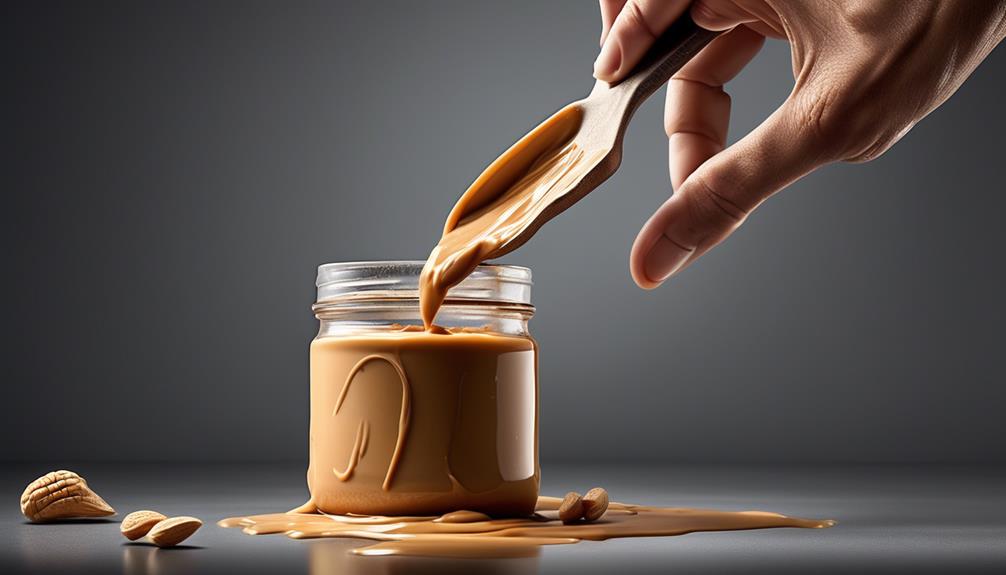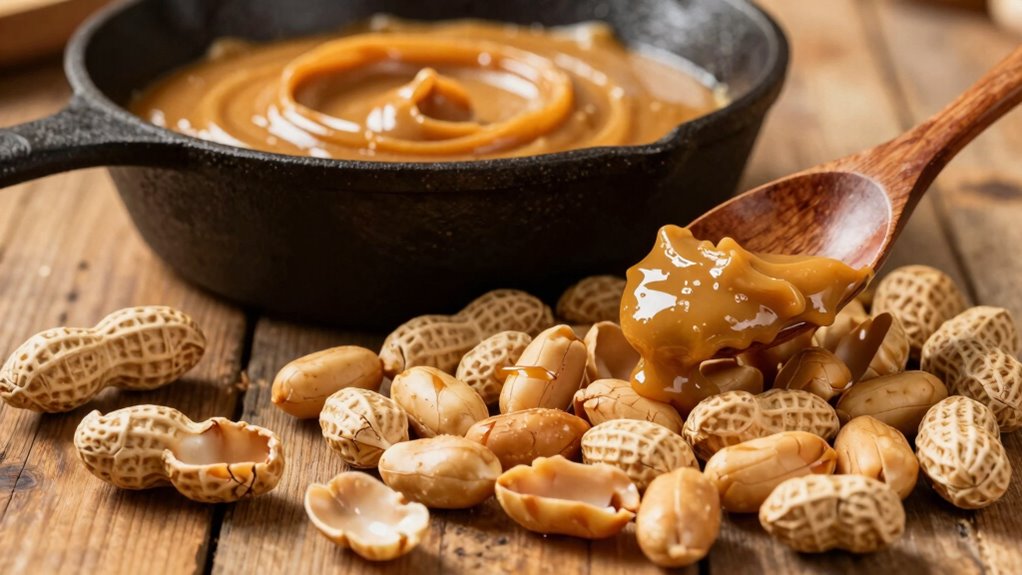

Roasting enhances your peanut butter’s flavor by triggering chemical reactions that deepen its aroma, richness, and crunch. As you roast, heat breaks down fats and proteins, releasing complex flavor compounds. It also creates appealing toasted and caramel-like scents that boost your sensory experience. Proper roasting balances these changes for a robust, inviting taste. If you keep exploring, you’ll discover how these processes reveal the full potential of your peanut butter’s flavor.

Get kitchen staples and gadgets delivered free — and shop member deals
- Fast, free delivery on millions of items
- Access to Prime Big Deal Days deals on October 6–7
- Prime Video, Amazon Music and more included
Key Takeaways
- Roasting enhances natural peanut flavors through chemical reactions, creating richer, more robust taste profiles.
- It develops complex aromas that increase anticipation and improve overall flavor perception.
- Maillard reactions during roasting add toasted, caramel-like flavors and depth to the peanut butter.
- Proper roasting achieves a crunchy texture that complements and elevates flavor experience.
- Over- or under-roasting can result in bitterness or flat flavors, impacting overall quality.
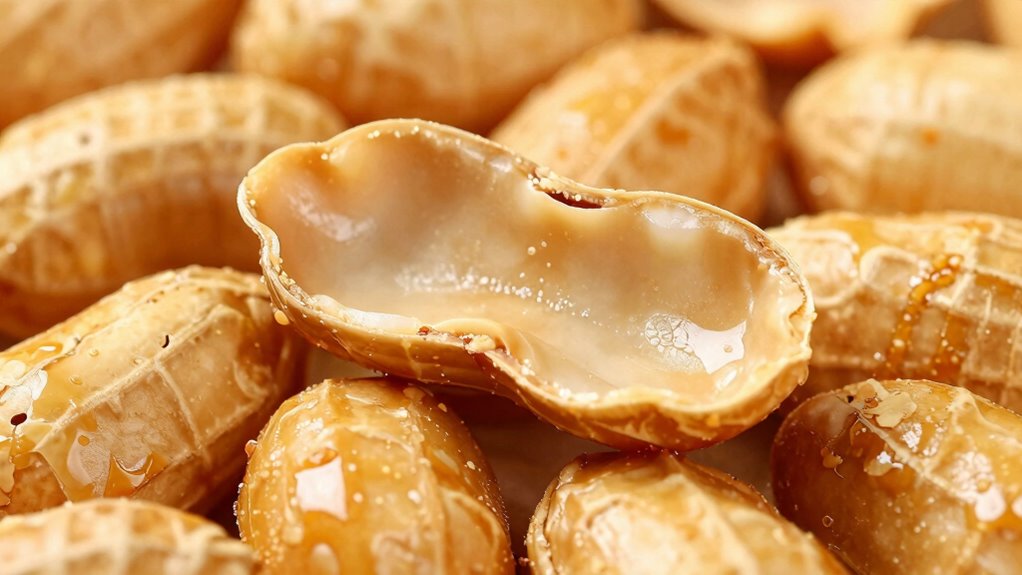
Have you ever wondered how roasting transforms peanuts into the rich, nutty flavor we love in peanut butter? When you roast peanuts, you’re initiating a complex series of chemical reactions that elevate their natural qualities. This process isn’t just about cooking; it’s about unlocking and amplifying flavors that would otherwise stay dormant. Roast just enough, and you’ll notice a significant flavor enhancement. The heat breaks down fats and proteins, releasing compounds that deepen the nutty profile and add layers of complexity. As a result, the roasted peanuts develop a richer, more robust taste that’s impossible to achieve with raw nuts. This flavor enhancement is what makes roasted peanuts so appealing and what gives peanut butter its distinctive, inviting taste.
Aroma development plays a crucial role during roasting, too. When heat interacts with the peanut’s natural oils and sugars, it creates volatile compounds responsible for the enticing aroma that wafts from freshly roasted nuts. This smell isn’t just pleasant; it’s a signal to your senses that the nuts are reaching their full flavor potential. As roasting progresses, the aroma intensifies, becoming warm, toasted, and slightly caramel-like. This aroma development influences how you perceive the flavor, making the final peanut butter taste richer and more satisfying. You might notice that the smell alone can make your mouth water, increasing anticipation and enjoyment. Additionally, flavor compounds formed during roasting contribute significantly to the complexity of the final taste. The process of Maillard reactions during roasting is especially important in creating those rich, toasted flavors and aromas that define high-quality roasted nuts.
The roasting process also affects the texture of the peanuts, which in turn impacts the flavor experience. Proper roasting yields a crunch that complements the deep, toasted taste. Over-roasting, however, can lead to bitterness, while under-roasting might leave the flavor flat. Finding that perfect balance ensures that both flavor enhancement and aroma development reach their peak, resulting in a peanut butter with a well-rounded, inviting profile.
In essence, roasting transforms peanuts into something much more than raw nuts. It’s a delicate dance of heat and chemistry that enhances flavor and develops a rich aroma, making the final product irresistibly flavorful. The chemical reactions involved in roasting are key to unlocking the full potential of peanuts, resulting in a complex and satisfying taste. Your enjoyment of peanut butter hinges on this process—without it, you’d miss out on the deep, toasted notes and the warm, comforting smell that makes peanut butter so beloved. So next time you indulge, appreciate the roasting that brought those complex flavors and enticing aromas to life, elevating a simple nut into a culinary delight.
As an affiliate, we earn on qualifying purchases.
Frequently Asked Questions
How Does Roasting Time Affect Peanut Butter Flavor?
You’ll notice that longer roasting time boosts flavor complexity and aroma enhancement in peanut butter. As you roast the peanuts longer, they develop richer, deeper flavors, adding a toasted, nutty profile. However, over-roasting can lead to bitterness and burnt notes, so finding the right balance is key. Shorter roasting preserves a fresher, milder taste, while extended roasting amplifies aroma and creates a more intense, layered flavor experience.
Can Different Roasting Temperatures Change the Nutty Notes?
Yes, different roasting temperatures can change the nutty notes in peanut butter. Higher temperatures enhance aroma and add depth to flavor complexity, making the nutty notes more pronounced. Conversely, lower temperatures preserve a lighter, fresher taste. By adjusting roasting temps, you control how rich or subtle the nutty flavor becomes, allowing you to craft a peanut butter with the precise aroma enhancement and flavor profile you prefer.
Does Roasting Influence the Smoothness of Peanut Butter?
Did you know that roasting can considerably influence peanut butter’s smoothness? It enhances texture by breaking down fats and proteins, leading to better spreadability. Roasting promotes flavor development, which can mask any graininess, resulting in a creamier mouthfeel. By controlling roasting time and temperature, you can achieve a peanut butter with a silky texture and richer flavor, making your spread more enjoyable and luxurious each time.
How Does Roasting Impact the Shelf Life of Peanut Butter?
Roasting can slightly reduce peanut butter’s shelf life because it encourages oil separation, making it prone to rancidity sooner. If you’re concerned about peanut allergy, roasted nuts might trigger reactions more intensely, so storing peanut butter properly is essential. Keep your jar tightly sealed and in a cool, dark place to slow down spoilage. Remember, the more oil separation, the quicker it might go bad, especially if exposed to heat or light.
Are There Health Benefits Linked to Roasted vs. Raw Peanuts?
Surprisingly, roasting peanuts reveals health perks that raw peanuts hide—like enhanced peanut skin benefits, which boost antioxidants. While raw peanut nutrition offers more intact nutrients, roasting releases flavor and makes some nutrients more accessible. Ironically, roasting can diminish certain vitamins but also increases compounds that support heart health. So, if you’re after maximum benefits, enjoy roasted peanuts for their richer flavor and added health perks, despite some nutrient loss.
Conclusion
Just like a sunrise transforms a plain landscape into a vibrant scene, roasting awakens peanut butter’s true flavor, revealing its rich, complex character. It’s a reminder that patience and heat can turn simple ingredients into something extraordinary. Embrace the process, knowing that each level of roast adds depth and personality, just as life’s challenges shape who we are. So, when you enjoy that perfect spoonful, celebrate the journey of transformation behind every taste.
Halloween Picks
halloween
As an affiliate, we earn on qualifying purchases.