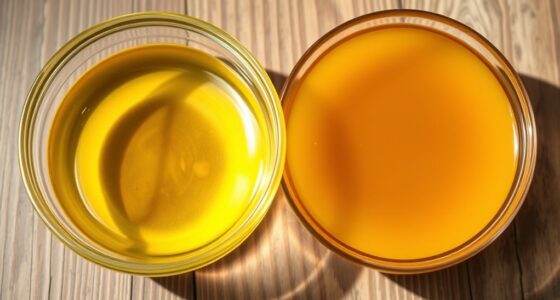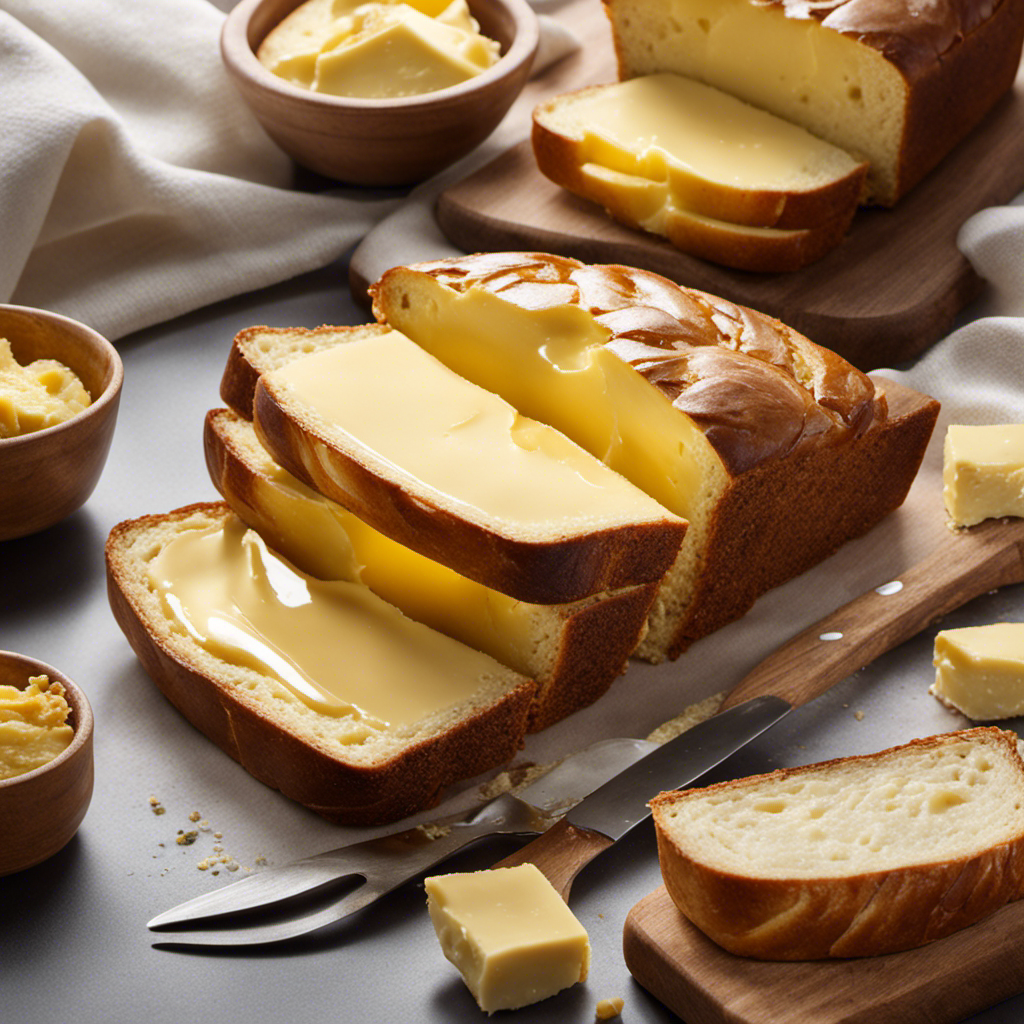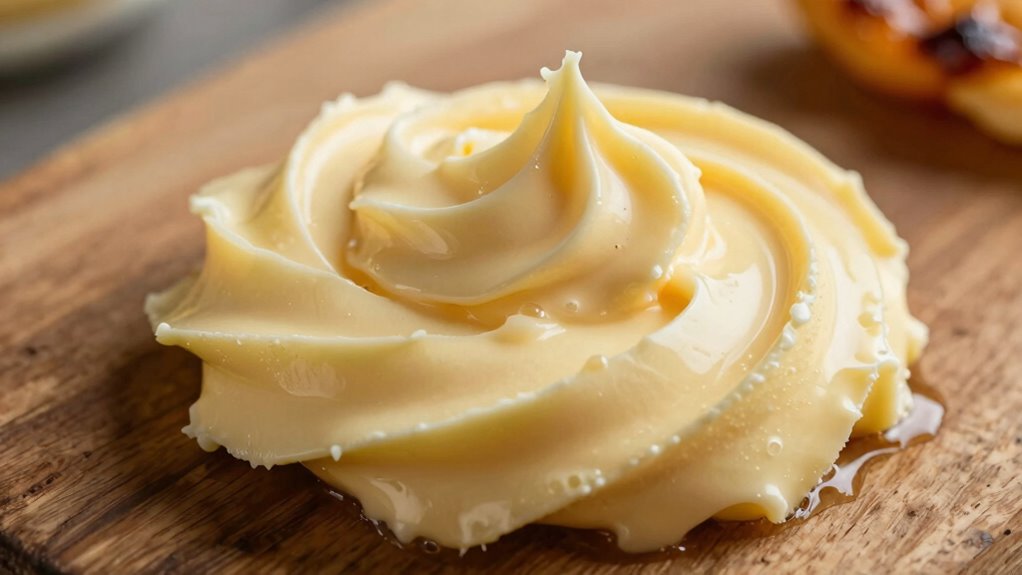

The flavor of your butter depends on its fermentation process, fat content, and microbial environment. Richness comes from higher fat levels, giving it a creamy, indulgent taste. Sweetness is often due to fresher cream with fewer microbes, while tanginess develops from longer fermentation, where beneficial bacteria produce lactic acid. The type of cream and how it’s handled also influence flavor nuances. Keep exploring to discover how these factors come together to create the perfect butter flavor.
Key Takeaways
- The fermentation process produces lactic acid, contributing to tangy flavors in butter.
- Higher fat content enhances richness and amplifies natural sweetness and flavor intensity.
- The type of cream (raw, fresh, or cultured) influences the complexity and specific flavor notes.
- Longer fermentation increases acidity, producing a tangy taste in the final butter.
- Microbial diversity from fermentation enriches flavor complexity, affecting sweetness and tanginess.
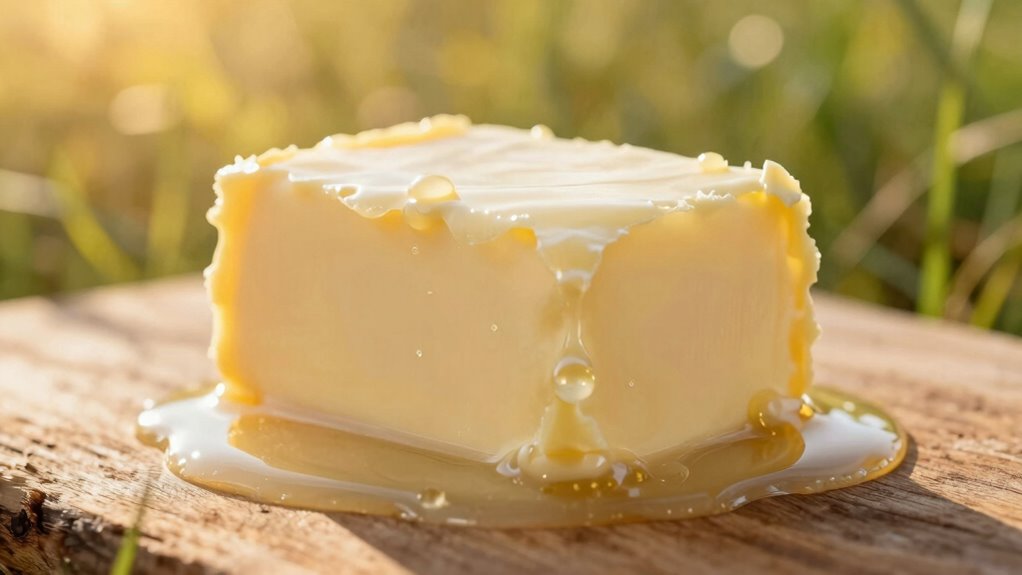
Have you ever wondered what gives butter its distinctive flavors—whether it’s rich, sweet, or tangy? The answer lies in the complex interplay of factors during its production, especially cream fermentation and fat content. When you start making butter, you typically begin with cream, which is the fatty layer skimmed from milk. The characteristics of this cream, including its initial microbial composition, play a crucial role in shaping the final taste. Cream fermentation is a key process here, where beneficial bacteria convert lactose into lactic acid. This fermentation not only thickens the cream but also imparts a tangy flavor that can range from subtle to pronounced, depending on how long and at what temperature fermentation occurs. The longer the cream ferments, the more lactic acid builds up, giving the butter a distinctive tangy note. This sourness is especially evident in traditional European butters, which often undergo a natural fermentation process. Additionally, the fermentation process influences the microbial diversity present in the cream, further affecting flavor complexity. The microbial diversity can lead to a wider variety of flavor compounds, enriching the butter’s profile. The microbial environment during fermentation can also be affected by the handling and storage, influencing the final flavor outcome. It is also worth noting that fermentation duration directly impacts the intensity of tanginess and overall flavor development. The fat content is another vital factor influencing butter’s flavor profile. The higher the fat content in the cream you use, the richer and creamier your butter will taste. Butter made from cream with a fat content of around 80% or higher tends to have a more concentrated, luxurious flavor. This concentrated fat carries and amplifies the flavors developed during fermentation and churning. It also affects the texture; richer butter feels more indulgent on your palate. When the fat content is lower, the butter might taste lighter and less intense, with subtler flavor nuances. Additionally, the type of cream used—whether it’s fresh, cultured, or raw—can introduce different flavor notes. Raw cream, for example, often contains a broader spectrum of microbes, leading to more complex flavors, including nutty or grassy undertones. The process of churning also influences flavor development. As you churn, fat globules collide and separate from the liquid, and the residual buttermilk’s acidity can subtly affect the taste of the butter. If the cream was fermented for a longer period, this acidity remains present, giving the butter its characteristic tang. Conversely, fresh, unfermented cream produces a milder, sweeter butter. Ultimately, it’s the combination of cream fermentation—how long and at what temperature the cream is cultured—and the fat content that determines whether your butter leans toward being rich, sweet, or tangy. Understanding these factors and controlling fermentation conditions empowers you to craft butter tailored to your flavor preferences, whether you want a subtly sweet spread or a tangy, cultured delight.

Vermont Creamery® Cultured Butter Sea Salt, 8 oz in 2 Sticks
Made in Vermont by Vermonters: we use the best ingredients and take the time to make things right
As an affiliate, we earn on qualifying purchases.
As an affiliate, we earn on qualifying purchases.
Frequently Asked Questions
How Does the Breed of Cow Affect Butter Flavor?
The breed of cow directly influences butter flavor through its unique milk composition. Different cow breeds produce milk with varying fat, protein, and nutrient levels, which impact butter’s richness and taste. For example, Jersey cows give milk with higher fat content, making butter creamier and more flavorful, while other breeds may produce milk with a lighter, milder flavor. Your choice of cow breed shapes the butter’s overall taste profile.
Can Storage Methods Alter Butter’s Taste Profile?
Imagine you’re a time traveler, and storage methods can indeed alter butter’s taste profile. Proper storage effects, like keeping butter in an airtight container, prevent it from absorbing unwanted flavors, enhancing its natural richness. Conversely, exposure to light or air can cause oxidation, dulling flavor or adding tanginess. For flavor enhancement, refrigerate or freeze butter, but avoid long storage to preserve its sweet, creamy qualities.
Do Regional Differences Influence Butter’s Flavor?
Yes, regional differences considerably influence butter’s flavor. You’ll notice that regional terroirs, like local pasture types and climate, shape the butter’s richness and tanginess. Cultural preferences also play a role, as traditional methods and flavor additions vary across areas. This creates unique tastes, from creamy and sweet to tangy and robust, making butter a reflection of its local environment and culinary history.
How Does Fermentation Impact Butter’s Taste?
Fermentation acts like a flavor symphony, transforming butter’s taste through a delicate dance of bacteria and enzymes. This process develops complex, tangy, and sometimes nutty notes, enriching the overall flavor. During fermentation, bacteria break down milk sugars and fats, creating new compounds that deepen the butter’s character. The longer the fermentation, the more pronounced these flavors become, making your butter uniquely vibrant and memorable.
What Role Do Additives Play in Butter Flavor?
Additives play a significant role in shaping butter’s flavor by acting as flavor enhancers and producing additive effects. You might notice added salt, which boosts overall taste, or natural flavorings like herbs or spices that give butter a unique twist. These additives can intensify or complement butter’s natural richness, sweetness, or tanginess, making the flavor more complex and appealing. Just remember, the quality of additives influences the final taste.

Kickin’ Korean BBQ Pretzels – 6 Oz Sweet n’ Tangy Bite-Sized Snacks with Bold Fermented Seasoning & Sweet Pepper Heat – Crunchy, Addictive, Perfect for Parties or Anytime Snacking (Pack of 4)
Bold Kickin’ Korean BBQ Flavor: Get ready for a snack that packs a punch! Our seasoned pretzels deliver…
As an affiliate, we earn on qualifying purchases.
As an affiliate, we earn on qualifying purchases.
Conclusion
Think of butter’s flavor as a symphony, with each note—rich, sweet, or tangy—played by different ingredients and processes. When you understand how these elements come together, you hold the conductor’s baton to craft your perfect butter. Whether you’re savoring its decadence or adding a tangy twist, you’re orchestrating a culinary masterpiece. So, embrace the dance of flavors—your butter’s unique melody is waiting to be discovered.

Organic Valley, Organic Low Fat Cultured Buttermilk, Pasteurized, Quart, 32 Ounces
Package contains one 32 ounce quart of Organic Valley, Organic Pasteurized Low Fat Cultured Buttermilk
As an affiliate, we earn on qualifying purchases.
As an affiliate, we earn on qualifying purchases.

Yellow Brick Road 100% Raw Unrefined Shea Butter-African Grade a Ivory 1 Pound (16oz)…
Custom Orders any size from 1lb to a truck load (through Amazon) are accepted and welcomed. Simply contact…
As an affiliate, we earn on qualifying purchases.
As an affiliate, we earn on qualifying purchases.