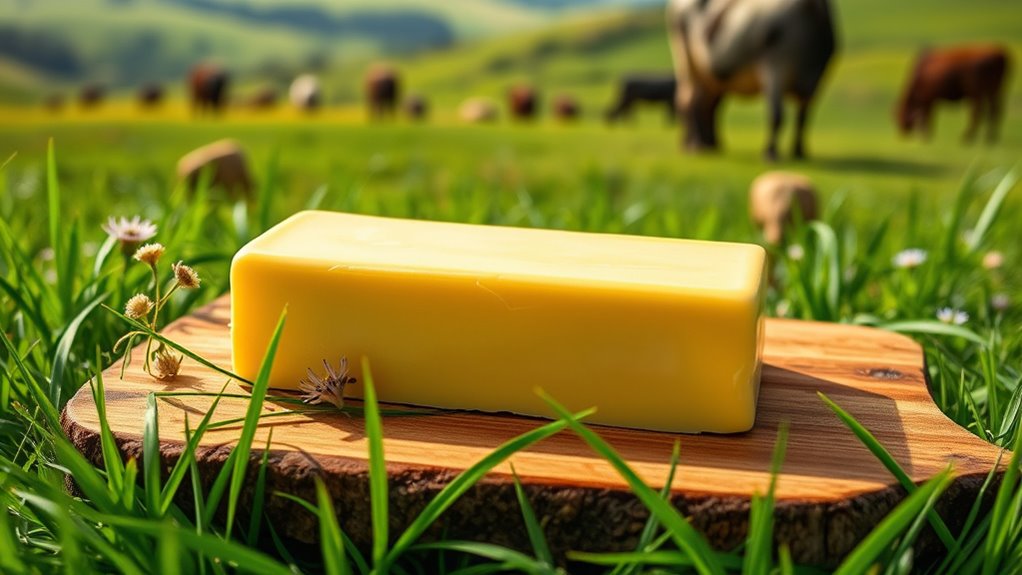

When you see “grass-fed” on butter, it means the cows primarily graze on grass rather than being fed grains. This natural diet results in butter that’s richer in omega-3 fatty acids and conjugated linoleic acid, which promote heart health. Grass-fed practices also support sustainable farming, improve soil health, and enhance animal welfare. So, the next time you choose butter, consider how these factors might influence your options. There’s more to discover about the benefits of choosing grass-fed products.
Key Takeaways
- Grass-fed butter comes from cows that primarily graze on grass and forage, reflecting a natural diet for dairy cattle.
- It contains higher levels of omega-3 fatty acids and conjugated linoleic acid (CLA), promoting better heart health.
- The diversity of the cows’ diets enhances the flavor and nutritional profile of the butter produced.
- Grass-fed practices support sustainable farming, improving soil health and reducing greenhouse gas emissions compared to grain-fed operations.
- Choosing grass-fed butter connects dietary choices with ethical farming practices and animal welfare considerations.
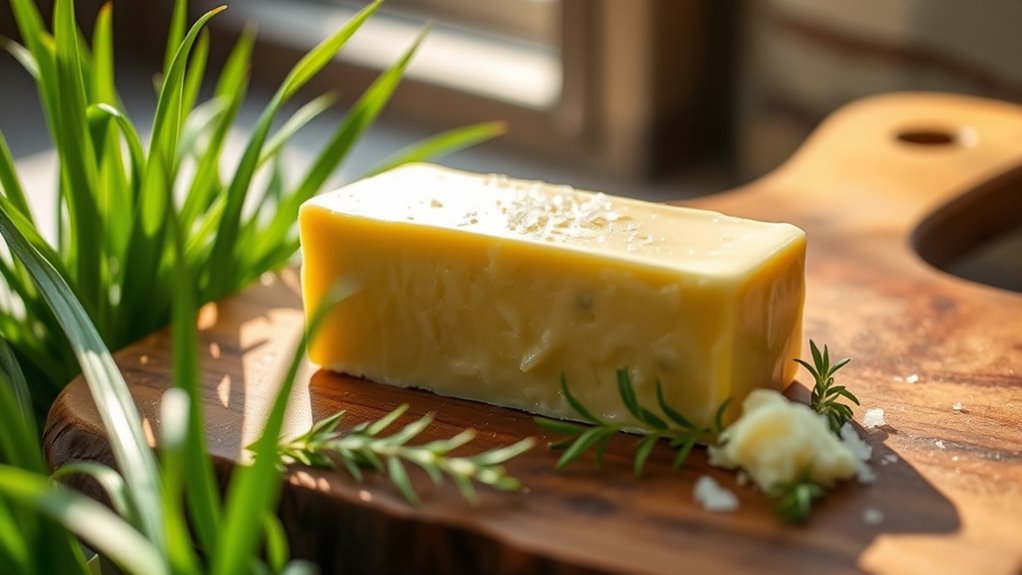
When you choose grass-fed butter, you’re not just opting for a richer flavor; you’re also embracing a product that’s often healthier for you and the environment. Grass-fed butter comes from cows that primarily graze on grass and forage rather than grain. This simple dietary choice can profoundly impact the quality of the butter you consume. By opting for grass-fed, you’re supporting dairy farming practices that prioritize animal welfare and sustainability.
Cows that are grass-fed enjoy a more natural diet, which leads to a diverse range of nutrients in the milk they produce. You’ll find that this butter often contains higher levels of beneficial omega-3 fatty acids and conjugated linoleic acid (CLA). These nutrients not only contribute to better heart health but also aid in weight management and overall wellbeing. When you incorporate grass-fed butter into your diet, you’re getting more than just a tasty ingredient; you’re also fueling your body with a superior nutritional profile.
Grass-fed butter is a nutritional powerhouse, rich in omega-3s and CLA, promoting heart health and overall wellbeing.
Moreover, animal diet diversity plays a vital role in the benefits of grass-fed butter. When cows graze on a variety of grasses and forage, they consume a broader spectrum of nutrients, which translates to a richer and more complex flavor in the butter. This variety in their diet also promotes better animal health, which is essential for ethical dairy farming practices. By choosing grass-fed, you’re supporting farms that prioritize the animals’ natural behaviors and diets, resulting in healthier cows and better-quality products.
The environmental impact of grass-fed dairy farming is another important factor to weigh. These sustainable practices often lead to improved soil health and reduced greenhouse gas emissions compared to conventional grain-fed operations. By selecting grass-fed butter, you’re contributing to a more sustainable food system, which is vital for future generations. It’s essential to recognize that your food choices can influence the broader agricultural landscape. Additionally, the nutritional benefits of grass-fed butter can enhance your overall health and wellbeing, which is an important aspect of effective wall organization in your kitchen.
Frequently Asked Questions
Are All Grass-Fed Butters Created Equal in Quality?
Not all grass-fed butters are created equal in quality. When you’re choosing butter, consider the sourcing and grass-fed standards of the cows. Some brands may follow strict grass-fed practices, ensuring the cows eat a diet rich in grass, while others might only meet minimal requirements. Always check labels and do your research to find high-quality options that prioritize animal welfare and nutritional value, so you can enjoy the best butter for your needs.
How Does Grass-Fed Butter Compare Nutritionally to Regular Butter?
Grass-fed butter generally offers more nutrients than regular butter. It’s richer in omega-3 fatty acids and vitamins A and E, thanks to the dairy cows’ health benefiting from a natural, pasture-based diet. You’ll also notice seasonal feeding variations, which can enhance the flavor and nutritional profile during certain times of the year. Overall, you’re getting a product that not only tastes better but supports better health for both you and the cows.
What Specific Diets Are Best Complemented by Grass-Fed Butter?
If you’re following a paleo or ketogenic diet, grass-fed butter can be a fantastic addition. It complements these diets well due to its higher fat content and beneficial nutrients. You’ll also find it aligns with pasture-raised concerns, as grass-fed butter typically comes from cows raised on sustainable dairy farm practices. This guarantees you’re getting healthier fats and vitamins while supporting ethical farming. So, enjoy that rich flavor while sticking to your dietary goals!
Can Grass-Fed Butter Be Used in Baking Recipes?
Yes, you can definitely use grass-fed butter in baking recipes! Its rich flavor profiles enhance the taste of your baked goods, making them more delicious. Plus, the melting properties of grass-fed butter are fantastic. It creates a lovely texture in cookies, cakes, and pastries. Just remember, since it has a slightly different fat content than regular butter, you might need to adjust your measurements for the best results. Enjoy baking!
Is Grass-Fed Butter More Expensive Than Conventional Butter?
You won’t believe the price differences when you compare grass-fed butter to conventional butter! Generally, grass-fed butter is indeed more expensive due to its higher production costs and the quality of the feed. You’re looking at a notable cost comparison, as the cows graze on natural pastures instead of being grain-fed. While the price might make you gulp, many people swear the flavor and nutritional benefits are worth every penny!
Conclusion
So, next time you reach for that golden jar of grass-fed butter, remember it’s more than just a spread; it’s a taste of nature’s bounty on your toast. With cows grazing under open skies, you’re not just savoring flavor—you’re indulging in a story of sustainable farming and rich nutrition. Let each creamy bite take you on a journey back to the pasture, where the grass is greener and the butter is truly better. Enjoy the experience!