Your cookies likely bake unevenly because of factors beyond the recipe, such as oven hot spots, improper bakeware, or inconsistent dough temperature. Hot spots cause some cookies to brown faster, while dark or uneven bakeware can lead to uneven heat distribution. Also, placement on the baking sheet and cookie thickness matter. If you want to get perfect results, understanding these factors will help you troubleshoot and improve your baking process. Keep exploring to learn more.
Key Takeaways
- Hot spots in your oven cause uneven browning; regular calibration and rotation can mitigate this.
- Using improper bakeware materials, like dark or glass pans, can lead to uneven heat distribution.
- Incorrect oven temperature or uneven heat circulation affects cookie baking consistency.
- Placement of cookies on the baking sheet and rack position influence exposure to hot zones.
- Improper dough temperature, resting, or uneven ingredient distribution can cause inconsistent baking results.
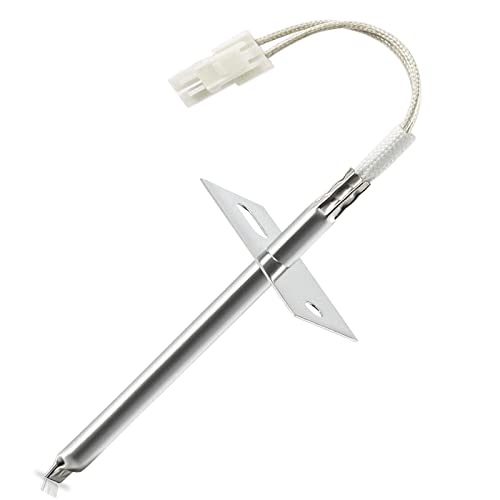
【2026 Upgraded】 DG32-00002B EBG61305805 Range Oven Temperature Sensor Probe – Exact for Sam.Sung and L.G Oven Parts # EBG61305805 DG32-00002A 6322B62214A PS4240743 PS11732697 by TOMOON
PERFECT FIT: 2026 Upgraded DG32-00002B temperature sensor can exact for Sam.sung and L.G oven .Equal with oven parts:…
As an affiliate, we earn on qualifying purchases.
As an affiliate, we earn on qualifying purchases.
Why Do Cookies Bake Unevenly?

Cookies can bake unevenly for several reasons, often related to how they’re prepared or baked. One key factor is cookie ratios; if the dough isn’t balanced—such as too much butter or sugar—baking becomes inconsistent. Uneven spreading can result from improper ratios, causing some cookies to flatten more than others. Additionally, ingredient freshness plays a role. Fresh ingredients, especially butter and eggs, influence how evenly cookies bake. Old or stale ingredients might cause uneven spreading or inconsistent texture. Ensuring your cookie dough has the right ratios and uses fresh ingredients helps promote uniform baking. Properly measuring ingredients and checking ingredient freshness before mixing can make a significant difference in achieving evenly baked cookies, leading to better texture, appearance, and taste. Moreover, understanding the baking process and how heat distribution affects your oven can help you troubleshoot and improve your results. Being aware of your oven’s heat distribution can help you place cookies more effectively on the baking sheet and prevent uneven baking. Adjusting baking temperatures and using baking mats or parchment paper can also improve baking consistency.

GoodCook BestBake Nonstick Textured Carbon Steel Cookie Sheet, 11" x 17", Large Baking Sheet, Even Heating, Scratch-Resistant, Non-Toxic, Durable, Ideal for Baking and Sheet Pan Dinners
QUALITY LARGE BAKING SHEET: Ensures a perfect bake every time for larger batches of your favorite recipes, from…
As an affiliate, we earn on qualifying purchases.
As an affiliate, we earn on qualifying purchases.
How Oven Hot Spots Impact Your Cookie Baking
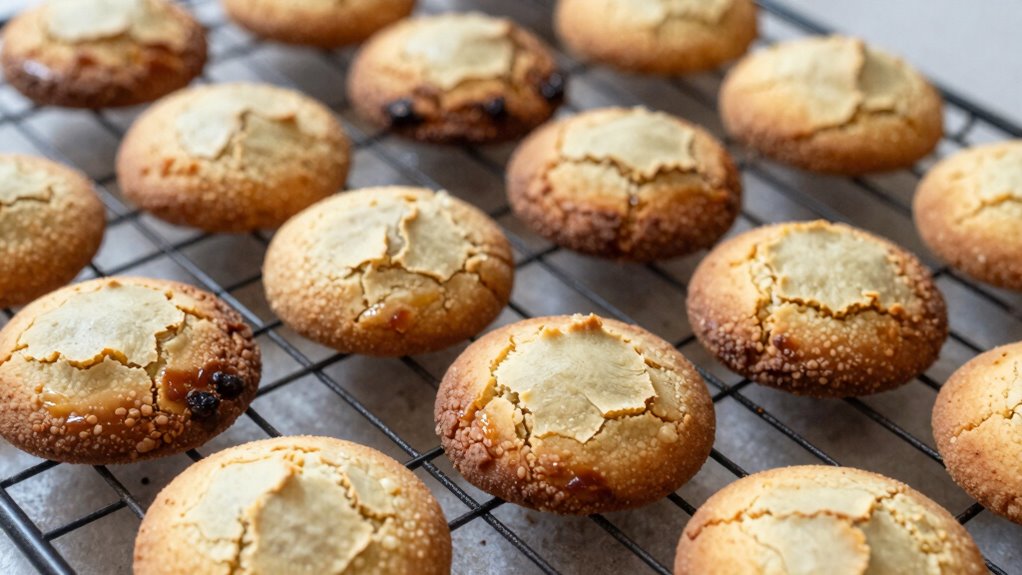
You’ll notice that hot spots in your oven cause some cookies to brown faster than others. These uneven heat zones disrupt the goal of even baking, leading to inconsistent results. Understanding hot spot locations helps you adjust your baking process for more uniform cookies. Modern kitchen technology such as oven sensors and smart thermostats can help identify and mitigate these hot spots for better baking outcomes. Additionally, knowing the hot spot positions in your specific oven allows you to rotate your baking sheets accordingly for more consistent results. Implementing performance cookies can also provide insights into how your oven heats and help improve baking consistency. Being aware of oven calibration can further ensure your oven maintains the correct temperature across all zones.
Hot Spot Locations
Oven hot spots are areas inside your oven that tend to be markedly warmer than the surrounding surfaces, and they can cause uneven baking results. These hot spots often occur near the back or sides of the oven, where poor oven ventilation can trap heat. When you place your baking rack in these zones, cookies may bake faster or burn prematurely, while other areas remain underdone. To minimize this, rotate your baking sheet during baking, ensuring even heat exposure. Also, avoid placing cookies directly in hot spots by shifting racks or repositioning your oven racks. Understanding where these hot spots are helps you better control the heat distribution, leading to more consistent cookie baking and avoiding the frustration of uneven results. Additionally, using an oven thermometer can help you identify temperature variations and improve your oven calibration, which is crucial for consistent results. Knowing the hot spot locations allows you to adjust your baking strategy accordingly and achieve perfectly baked cookies every time. Recognizing heat distribution patterns in your oven can further enhance your baking consistency and precision.
Even Heat Distribution
When hot spots exist inside your oven, they cause uneven heat distribution that directly impacts how your cookies bake. This uneven heat can cause certain areas of your baking sheet to be hotter, leading to over-baked or burnt edges while the centers remain underdone. Adjusting your oven temperature can help, but hot spots often persist regardless of settings. The choice of baking sheet materials also matters—dark, heavy pans tend to absorb more heat and can intensify hot spots, while lighter or reflective pans distribute heat more evenly. To improve results, rotate your baking sheet halfway through baking, and consider using an oven thermometer to monitor actual temperature. These steps help guarantee your cookies bake more uniformly, regardless of hot spots. Oven hot spots are a common issue, but understanding how to manage heat distribution can make a big difference. Additionally, selecting the right baking sheet materials can significantly reduce the impact of hot spots during baking. Proper oven calibration and investing in quality bakeware can further help in achieving consistent baking results.

AcuRite 00620A2 Stainless Steel Oven Thermometer (150°F to 600°F)
Oven and grill safe for leave-in use while cooking
As an affiliate, we earn on qualifying purchases.
As an affiliate, we earn on qualifying purchases.
Does Oven Temperature Calibration Affect Cookie Results?
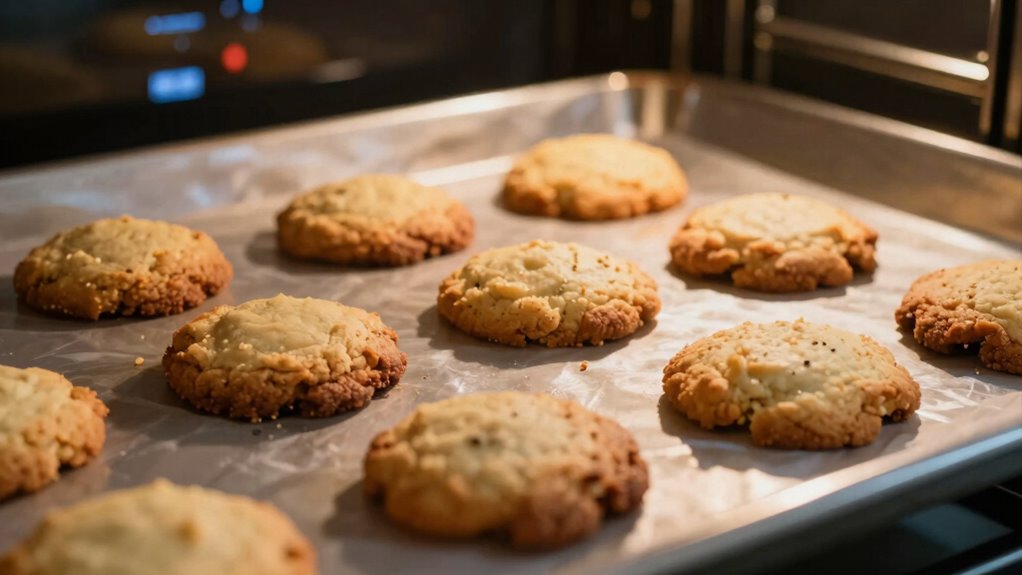
If your oven isn’t properly calibrated, your cookies may turn out unevenly or burn easily. Ensuring your oven maintains consistent baking temperatures helps you get more reliable results. Calibrating your oven can make a noticeable difference in the quality of your cookies. Additionally, oven temperature calibration is essential for maintaining accurate heat levels, which directly impacts baking success. Regularly verifying your oven’s temperature using an oven thermometer helps you identify discrepancies and maintain proper baking accuracy.
Oven Calibration Accuracy
Since oven temperature calibration can drift over time, it’s essential to verify your oven is accurately calibrated before baking cookies. If your oven’s temperature accuracy is off, your cookies may bake unevenly, even with a good recipe. To test calibration, place an oven thermometer inside and preheat. Check the reading against your set temperature. If there’s a discrepancy, recalibrate your oven or adjust your baking time accordingly. Here’s a quick comparison:
| Oven Setting | Actual Temperature | Resulting Cookie Texture |
|---|---|---|
| 350°F | 340°F | Undercooked, pale |
| 375°F | 385°F | Overbaked, crispy |
| 400°F | 395°F | Slightly burnt edges |
Regular calibration ensures your oven’s temperature accuracy, leading to consistently baked cookies.
Consistent Baking Temperatures
Maintaining a consistent baking temperature is essential for achieving evenly baked cookies. Your oven temperature directly impacts how your cookies spread and brown. Even slight fluctuations can cause uneven results, so regularly calibrate your oven to guarantee accuracy. Additionally, the materials of your baking sheet influence heat transfer; metal sheets typically conduct heat more evenly than glass or silicone. Thin, dark baking sheets tend to absorb and radiate heat quickly, which can lead to overbaking or burning edges. Using the right baking sheet material helps maintain uniform heat, preventing hot spots that cause uneven baking. By controlling your oven temperature and choosing appropriate baking sheets, you can achieve consistent, perfectly baked cookies every time.
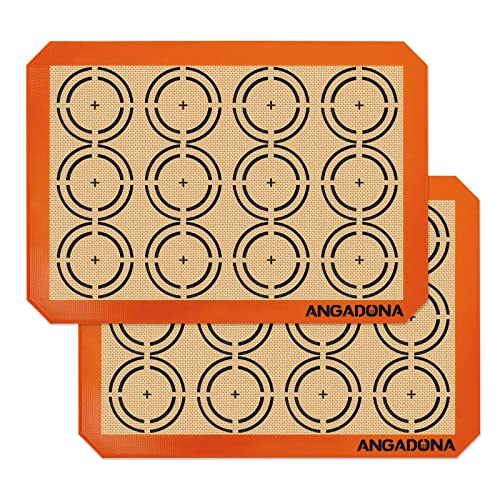
Silicone Baking Mat Sheets Set, Easy Clean &Non-Stick Food Grade Reusable Baking Mat, 2 Half Sheet Cookie Baking Mats Silicone for Oven, Make Macarons, Cookies and Pastry Mat
【NON-STICK & EASY TO CLEAN】– Angadona Baking mats silicone for baking sheets are no stick surface for all…
As an affiliate, we earn on qualifying purchases.
As an affiliate, we earn on qualifying purchases.
How Baking Sheet Materials Influence Cookie Evenness

The material of your baking sheet plays a crucial role in how evenly your cookies bake. Different baking sheet materials, such as aluminum, steel, or silicone, conduct heat differently, affecting cookie coloration and doneness. Aluminum sheets heat quickly and distribute heat evenly, promoting uniform baking, while darker sheets can cause the bottoms to brown too fast. Steel pans are durable but may retain heat longer, leading to uneven baking if not monitored. Silicone baking mats provide a non-stick surface but may insulate cookies slightly, affecting browning. To guarantee consistent results, also check your oven temperature calibration regularly. Proper calibration ensures your oven’s heat matches the set temperature, complementing the effects of your baking sheet material for evenly baked cookies. Additionally, understanding the baking sheet materials can help you select the best option for your specific baking needs. For best results, consider the heat conduction properties of different materials to optimize your baking outcomes. Being aware of heat transfer mechanisms can further enhance your ability to troubleshoot uneven baking issues. Recognizing how thermal conductivity varies among materials can help you choose the ideal baking sheet for consistent cookies.
Why Cookie Thickness and Placement Matter

Cookie thickness and placement directly impact how evenly they bake, regardless of the baking sheet material. Thicker cookies retain heat longer, risking overbaking or uneven centers. Proper cookie placement ensures consistent heat exposure; spacing them too close causes uneven baking. To help, consider this table:
| Cookie Thickness | Placement Distance | Baking Tip |
|---|---|---|
| Thin | Close together | Watch for quick browning |
| Thick | Far apart | Rotate sheets halfway |
| Varies | Random | Use uniform sizes |
| Uniform | Evenly spaced | Bake in the center |
Adjusting cookie thickness and placement helps you control baking results and avoid uneven cookies. Proper spacing and consistent thickness are key to achieving evenly baked treats.
How Dough Temperature and Resting Time Help Achieve Uniform Bies

Maintaining an even dough temperature guarantees your cookies bake uniformly. Resting the dough allows the fats to relax and the flavors to develop, leading to more consistent edges. When you control both, you’ll achieve cookies with beautifully even bies every time. Understanding heat transfer in your oven can also help optimize baking results.
Even Dough Temperature
Achieving evenly baked cookies starts with controlling the dough’s temperature and resting time. If your dough is too warm or cold, cookies will bake unevenly, with some edges overdone and centers undercooked. To guarantee consistent results:
- Use a reliable thermometer to measure dough temperature accurately.
- Chill dough if it’s too warm before baking.
- Check your oven calibration to prevent temperature fluctuations.
- Allow dough to come to an even temperature prior to baking.
- Understanding oven heat distribution helps you identify and address hot spots that can cause uneven baking.
Maintaining the right dough temperature helps cookies bake uniformly, preventing hot spots or undercooked centers. Proper oven calibration ensures your oven heats as shown on the dial, eliminating one common cause of uneven baking. By paying attention to these factors, you set the stage for perfectly baked cookies every time.
Proper Resting Time
Controlling the dough’s temperature isn’t the only factor in baking evenly; allowing it to rest properly also plays a vital role. Proper dough resting gives gluten time to relax, which helps prevent spreading and uneven baking. During dough resting, chilling techniques are essential—they firm up the dough, making it easier to handle and shape uniformly. Resting also allows flavors to develop and ingredients to meld, contributing to consistent texture and color. To achieve the best results, refrigerate your dough for at least 30 minutes or up to overnight, depending on your recipe. This step guarantees even heat distribution during baking, reducing hot spots, and promoting uniform browning. Don’t skip this step; patience with resting times leads to better-baked, more evenly colored cookies.
How to Properly Space and Rotate Cookies During Baking

To guarantee your cookies bake evenly, start by spacing them properly on the baking sheet so they have enough room to spread without touching each other. Proper cookie spacing assures even heat distribution and prevents uneven baking. During baking, rotate your cookies halfway through to promote uniform color and texture. Keep these tips in mind:
- Space cookies evenly, maintaining at least 2 inches apart.
- Use a ruler or template for consistent cookie spacing.
- Rotate the baking sheet 180 degrees halfway through baking.
- Switch the sheet between racks if you’re using multiple oven racks.
This simple practice of cookie rotation and proper spacing helps cookies bake uniformly, preventing overbaked edges or undercooked centers. Consistent spacing combined with rotation guarantees every cookie turns out perfectly baked.
Tips for Picking the Best Bakeware for Even Cookies
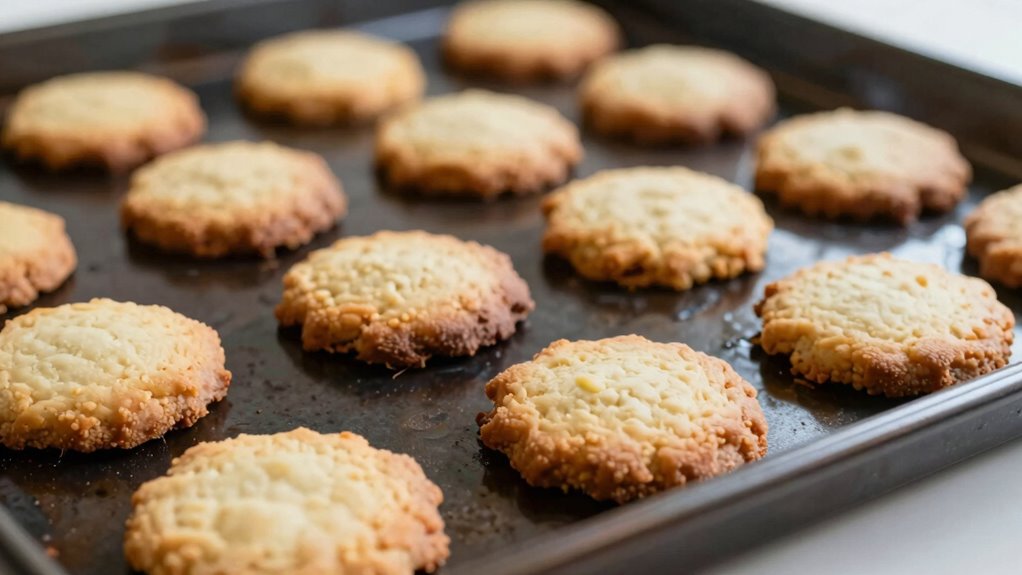
Choosing the right bakeware is vital for baking cookies that turn out evenly every time. When selecting bakeware, opt for heavy-duty, aluminum or ceramic pans, which distribute heat more evenly than thin or dark-colored pans. Avoid glass or non-stick surfaces that can cause hot spots. Proper bakeware selection also involves maintaining your oven; regular oven maintenance ensures consistent heat, reducing uneven baking. Keep your oven clean and calibrated for accurate temperature control. Using a light-colored or matte finish bakeware helps reflect heat uniformly, promoting even cookie browning. Remember, the quality and material of your bakeware, combined with diligent oven maintenance, play an essential role in achieving perfectly baked, evenly browned cookies every time.
Troubleshooting Common Causes of Uneven Baking
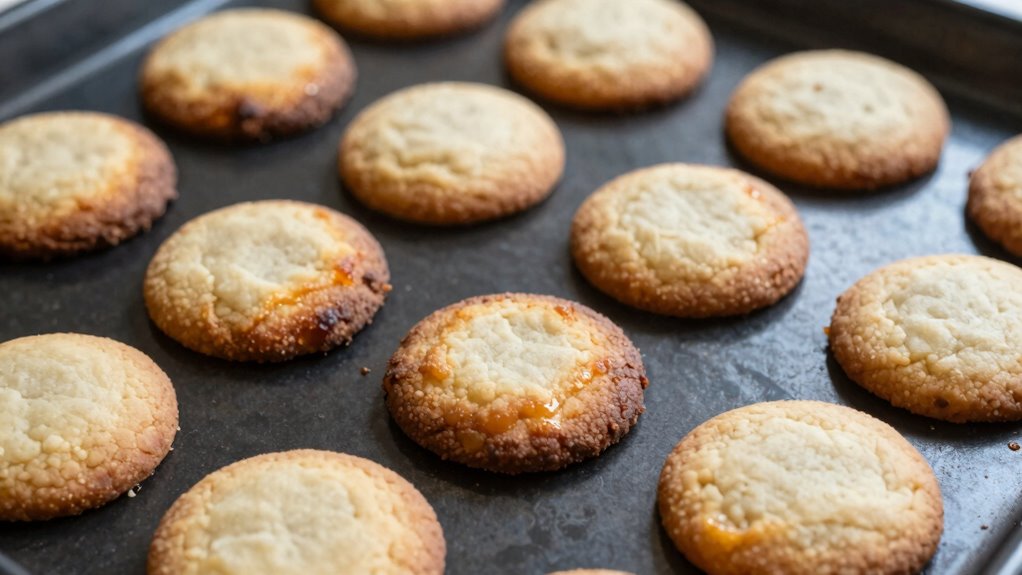
Uneven baking often stems from common issues that can be easily overlooked. One key factor is uneven oven temperature, so always check oven safety and calibration. Also, inconsistent ingredient substitutions, like replacing butter with margarine, can cause uneven heat distribution. Make sure your oven rack placement is even; placing cookies too close to heat sources can cause hot spots. Additionally, avoid crowding the baking sheet, which hampers heat circulation. Using the right bakeware matters—dark pans absorb more heat, leading to uneven baking. Lastly, preheating your oven fully guarantees consistent temperature. By paying attention to these simple factors, you can troubleshoot and prevent uneven cookies without changing your recipe. Small adjustments go a long way in achieving perfectly baked cookies every time.
When to Adjust Your Baking Method Instead of Blaming the Recipe

Sometimes, despite following the recipe exactly, your cookies still turn out uneven or disappointing. When this happens, it’s time to adjust your baking method rather than blame the recipe. First, check your oven maintenance—uneven baking often results from hot spots or inaccurate temperature settings. Use an oven thermometer to verify your oven’s accuracy and rotate your baking sheets halfway through. Additionally, consider ingredient adjustments, like reducing or increasing fat or sugar, to improve heat distribution. If your oven runs hot or cold, adjusting the temperature or baking time can help. These small method tweaks often fix uneven baking issues, saving you from unnecessary recipe changes. Remember, understanding your oven’s quirks and making strategic ingredient adjustments can make all the difference.
Frequently Asked Questions
Can Altitude Affect How Cookies Bake Evenly?
Altitude effects can definitely influence how your cookies bake evenly. At higher altitudes, the air is thinner, which can cause baked goods to rise faster and then fall, leading to uneven cookies. You should make recipe adjustments, like reducing flour and sugar or increasing liquids, to counteract these effects. These tweaks help make certain your cookies bake more uniformly, regardless of altitude.
Do Different Oven Brands Have Varying Hot Spot Issues?
Yes, different oven brands can have hot spots that cause uneven baking. You should check your oven calibration regularly to guarantee accurate temperatures. Adjust rack placement to avoid hot spots and promote even heat distribution. Using an oven thermometer helps identify uneven heating areas. By calibrating your oven and positioning racks correctly, you can prevent hot spots from affecting your cookies, leading to consistent, perfectly baked treats every time.
How Does Humidity Influence Cookie Baking Results?
Humidity effects can considerably impact your cookie baking results. High humidity introduces extra moisture, making dough sticky and harder to work with, while low humidity can dry out ingredients, leading to crisper cookies. To guarantee consistent results, focus on moisture control by storing ingredients properly and adjusting recipes slightly based on the environment. You might need to reduce or increase liquid ingredients depending on the humidity levels to achieve your perfect cookie texture.
Does the Type of Sugar Impact Cookie Browning?
When it comes to cookie browning, the type of sugar you use truly makes a difference. Different sugars influence sugar crystallization and the caramelization process, which affects how golden or dark your cookies turn out. Brown sugar, with its molasses content, promotes richer caramelization, leading to darker cookies. White sugar results in lighter browning. So, choose your sugar wisely to control that perfect golden finish—it’s a recipe for success!
Can Using Convection Mode Improve Cookie Uniformity?
Using convection mode can definitely improve cookie uniformity. The convection benefits come from the oven circulation, which distributes heat evenly across your baking sheet. This consistent heat helps cookies bake more evenly, preventing hot spots and undercooked areas. By activating convection, you guarantee your cookies brown and cook uniformly, resulting in a perfect batch every time. Just remember to lower the temperature slightly to account for the increased efficiency of convection baking.
Conclusion
So, next time your cookies come out looking like a Picasso masterpiece, remember—it’s not your recipe’s fault. Maybe your oven’s playing favorites, or your baking sheet has commitment issues. With a little tweaking—perhaps a new bakeware or rotating those cookies—you’ll be the master of evenly baked treats. Who knew that the real secret to perfect cookies was just a bit of patience and a dash of troubleshooting? Happy baking, or should I say, perfectly even cookies!