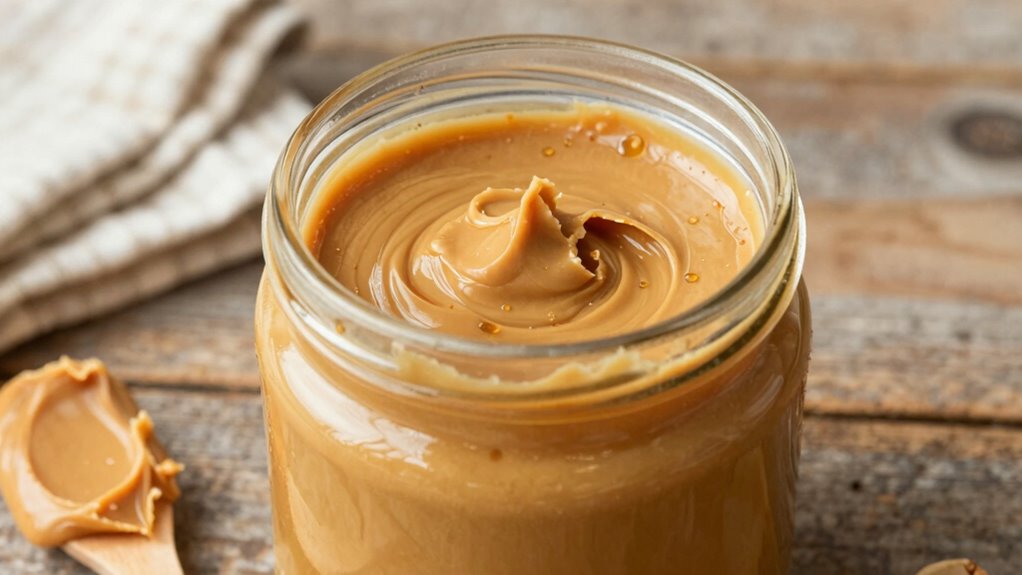

To store homemade peanut butter without losing its smooth texture, use an airtight glass container and keep it in a cool, dark place, like your pantry. Stir the oil back in before storing and occasionally during storage to prevent separation. Avoid refrigeration unless necessary, as cold temps can solidify oils and make spreading difficult. For longer storage, bring it to room temperature before use. Keep these tips in mind to maintain freshness and texture; more ideas follow.

Get kitchen staples and gadgets delivered free with Prime
- Fast, free delivery on millions of items
- Prime Video, Amazon Music and more included
- Member-only deals all year
Key Takeaways
- Use airtight glass containers to prevent air exposure and preserve smoothness.
- Stir thoroughly before storage and occasionally during to maintain even oil distribution.
- Store in a cool, dark place, avoiding refrigeration unless for long-term storage.
- Keep the jar upside down initially to help oils distribute evenly and reduce separation.
- Allow refrigerated peanut butter to reach room temperature before use to maintain a creamy texture.

Storing homemade peanut butter properly is vital to maintain its smooth texture and fresh flavor. When you keep it in the right way, you help prevent the common issues of oil separation and flavor loss that can occur over time. The key is to choose the proper container and storage conditions to guarantee your peanut butter stays fresh and delicious for as long as possible.
One of the main concerns when storing homemade peanut butter is flavor preservation. Unlike store-bought versions, homemade peanut butter often lacks preservatives, making it more susceptible to oxidation and spoilage. To keep the flavor vibrant, store it in an airtight container that minimizes exposure to air, which can cause it to become rancid. Glass jars with tight-fitting lids are ideal because they don’t react with the oils and help lock in freshness. When sealing your peanut butter, make sure the lid is secure, and consider pressing a piece of plastic wrap directly onto the surface before sealing to create an extra barrier against air.
Ingredient separation is another common challenge you’ll face with homemade peanut butter. Natural oils tend to rise to the top, creating a layer of oil that can make the texture seem inconsistent. To prevent this, give your homemade peanut butter a good stir before storing it and occasionally during storage to redistribute the oils evenly. However, if separation occurs despite your efforts, don’t worry—simply stirring the oil back in will restore its creamy consistency. To slow down separation, you can store the jar upside down initially, which helps distribute the oils throughout the mixture naturally, or keep it in a cool, dark place where temperature fluctuations are minimized. Additionally, understanding how ingredient separation occurs can help you implement better storage techniques. Also, choosing the right storage environment can significantly extend its shelf life and maintain quality. Proper temperature management is essential, as fluctuations can accelerate spoilage or affect texture.
Temperature plays a vital role in maintaining the quality of your homemade peanut butter. Keep it in a cool, dark pantry or cupboard rather than the fridge, as refrigeration can cause the oils to solidify and make spreading more difficult. If you prefer longer storage, especially in warmer climates, a refrigerator is acceptable, but expect some changes in texture. When you do refrigerate, bring the peanut butter to room temperature before use to restore its smoothness. Additionally, understanding storage techniques can help you optimize the longevity and quality of your homemade spread.
Ultimately, proper storage involves a combination of airtight containers, temperature control, and regular stirring. By paying attention to these details, you’ll preserve the flavor and prevent ingredient separation, guaranteeing every spoonful of your homemade peanut butter remains fresh, smooth, and delicious.
airtight glass food storage containers
As an affiliate, we earn on qualifying purchases.
As an affiliate, we earn on qualifying purchases.
Frequently Asked Questions
Can I Freeze Homemade Peanut Butter to Extend Its Shelf Life?
Yes, you can freeze homemade peanut butter to extend its shelf life. Use proper freezing techniques like airtight containers or freezer-safe jars, leaving some headspace for expansion. To preserve texture, consider stirring the peanut butter before freezing, and thaw it in the fridge before use. Freezing helps prevent spoilage and maintains flavor, but avoid keeping it frozen too long to ensure best texture preservation when you enjoy it later.
What Is the Ideal Container for Storing Homemade Peanut Butter?
A picture is worth a thousand words, so choose your storage container wisely. Use airtight sealing containers made of glass or BPA-free plastic to keep your homemade peanut butter fresh and prevent it from absorbing other odors. Make certain the lid seals tightly to maintain texture and prevent spoilage. Proper storage containers help lock in flavor, keep the peanut butter creamy, and extend its shelf life, so your homemade spread stays delicious longer.
How Long Does Homemade Peanut Butter Stay Fresh Without Refrigeration?
Homemade peanut butter typically stays fresh for about 2 to 3 weeks without refrigeration if stored properly. For ideal shelf life, keep it in an airtight container in a cool, dark place, following good storage tips. Be sure to check for signs of spoilage, like an off smell or mold, before consuming. If you want it to last longer, consider refrigerating it, which can extend freshness up to 3 months.
Should I Add Preservatives to Preserve Texture and Freshness?
You don’t need to add preservatives to maintain texture and freshness because natural preservatives like honey or salt can help stabilize it. Proper storage in an airtight container at room temperature or in the fridge can also prevent spoilage. To further stabilize texture, consider stirring in a small amount of oil if it becomes too thick. This way, you keep your homemade peanut butter fresh and smooth without artificial additives.
How Does Temperature Affect the Texture of Homemade Peanut Butter?
Did you know that peanut butter can lose up to 50% of its oil content within a few weeks if not stored properly? Temperature considerably impacts its texture; higher temperatures cause oil separation, making it runny, while cooler temperatures improve stability. To maintain its creamy consistency, keep your homemade peanut butter in a cool, stable environment, avoiding temperature fluctuations that can compromise its texture and cause oil separation.
Conclusion
Storing your homemade peanut butter properly keeps it fresh and maintains its texture. Remember to use an airtight container and keep it in the fridge to prevent oil separation and spoilage. Did you know that homemade nut butters can last up to a month when stored correctly? By following these tips, you’ll enjoy smooth, delicious peanut butter anytime without sacrificing quality. Proper storage truly makes all the difference in preserving that perfect, creamy consistency you love.
NFL season / tailgating Picks
team gear
As an affiliate, we earn on qualifying purchases.