
To store ghee for the longest shelf life, keep it in airtight, food-grade glass or metal containers that fit the quantity you’ll use. Store the containers in a cool, dark place at temperatures around 70-75°F, avoiding heat and sunlight. Always seal tightly, use clean utensils, and keep it away from strong odors. Refrigeration can extend its freshness, especially in warm or humid environments. For more tips, you’ll discover how to maintain its flavor and safety over time.

Get kitchen staples and gadgets delivered free with Prime
- Fast, free delivery on millions of items
- Prime Video, Amazon Music and more included
- Member-only deals all year
Key Takeaways
- Use airtight, food-grade glass or metal containers to prevent air and moisture exposure.
- Store ghee in a cool, dark place at 70°F to 75°F, avoiding heat and direct sunlight.
- Refrigerate in warm or humid environments to extend shelf life, but allow solidified ghee to reach room temperature before use.
- Always use a clean utensil to scoop ghee, avoiding contamination and spoilage.
- Regularly inspect for signs of rancidity or spoilage and keep containers tightly sealed.
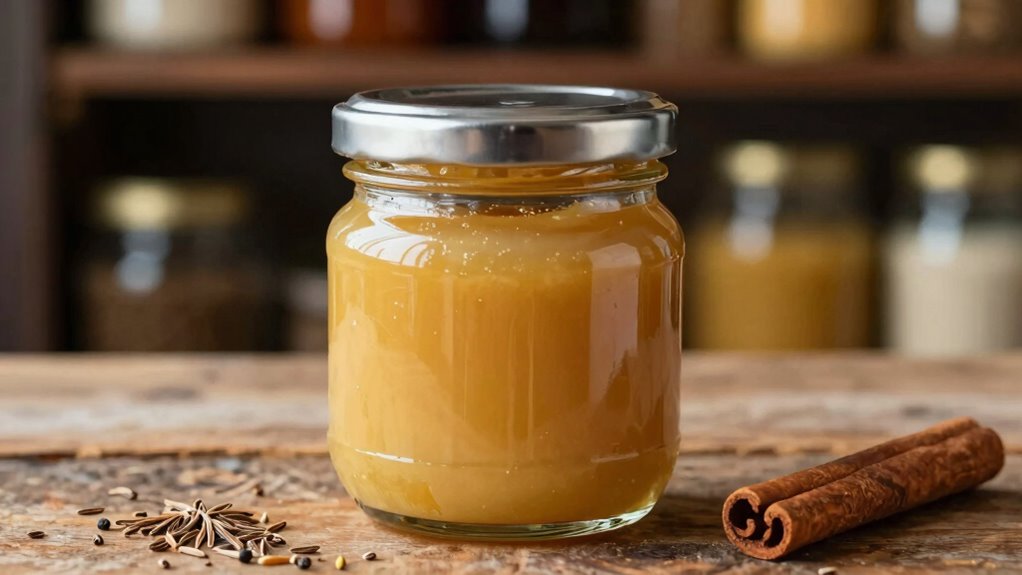
Ghee, prized for its rich flavor and long shelf life, can last for months or even years if stored properly. The key to preserving its freshness lies in choosing the right ghee storage containers and maintaining proper temperature control. When selecting storage containers, opt for airtight options made of glass or metal. These materials prevent air and moisture from seeping in, which are primary factors in spoilage. Avoid plastic containers unless they are food-grade and airtight, as they can sometimes absorb odors or leach chemicals over time. Make sure the container fits your ghee quantity; a smaller container can help reduce exposure to air each time you open it, prolonging its shelf life. Additionally, storing ghee in a properly sealed container helps prevent contamination and maintains its quality over time. Proper sealing also helps prevent oxidation, which can lead to rancidity and spoilage. Using airtight containers is essential in keeping ghee fresh, especially in environments with fluctuating humidity levels. Temperature control plays a vital role in preserving ghee’s quality. Ghee is quite stable at room temperature, especially in cool, dark places, but extreme heat can accelerate spoilage. Ideally, keep your ghee in a pantry or cupboard that maintains a consistent temperature between 70°F and 75°F (21°C to 24°C). Avoid storing ghee near heat sources like stoves, ovens, or direct sunlight, as fluctuations in temperature can cause it to become rancid more quickly. If your home tends to be warm or humid, consider storing ghee in the refrigerator. While refrigeration can extend its shelf life even further, note that it may cause ghee to solidify, which is perfectly normal. Simply let it sit at room temperature for a few minutes before use if you prefer it in a softer state. Another tip for long-term storage is to keep ghee away from moisture and contaminants. Always use a clean spoon or utensil when scooping out ghee, never dip fingers into the jar. Moisture or bacteria introduced this way can spoil ghee faster. Remember, the more airtight your ghee storage containers are, the less likely it is to absorb odors from other foods in your pantry or fridge. Also, store ghee away from strong-smelling foods like onions or spices, which can transfer odors and affect its flavor. Regularly inspecting your stored ghee for any signs of spoilage can help ensure it remains safe and fresh for use over time.
As an affiliate, we earn on qualifying purchases.
Frequently Asked Questions
Can Ghee Be Stored at Room Temperature Indefinitely?
Ghee can’t be stored at room temperature indefinitely. You should keep it in airtight Ghee packaging, away from direct sunlight, and at a consistent storage temperature of around 70°F (21°C). Proper storage prevents spoilage and rancidity, ensuring it stays fresh longer. If you notice any off smell or discoloration, discard it. For extended shelf life, refrigeration is recommended, especially in warm climates.
Does Storing Ghee in the Refrigerator Affect Its Quality?
Storing ghee in the refrigerator can impact its quality by causing it to harden and develop a grainy texture, which may make it less appealing but doesn’t spoil it. Ghee storage in the fridge extends its shelf life, particularly in warm climates, but you should be aware of possible changes in consistency. To maintain its flavor and texture, keep ghee in an airtight container and consider room temperature storage if you prefer a softer, scoopable product.
How Does Sunlight Exposure Impact Ghee’s Shelf Life?
Sunlight exposure causes ghee to degrade faster, leading to sunlight degradation that reduces its shelf life. When ghee is exposed to direct sunlight, it loses some of its nutrients, compromising nutrient preservation. To keep your ghee fresh longer, store it in a cool, dark place away from sunlight. This minimizes nutrient loss and prevents spoilage, ensuring your ghee stays flavorful and nutritious for an extended period.
Is It Safe to Reuse Old Ghee Storage Containers?
Did you know that using contaminated storage containers can reduce ghee’s shelf life considerably? Reusing old ghee storage containers can be safe if they’re thoroughly cleaned and dried, but many container types, like porous or unsealed ones, risk contamination. Glass or airtight metal containers are best, as they won’t harbor bacteria or odors. Always inspect and disinfect before reuse to keep your ghee fresh and safe.
What Are Signs of Spoiled Ghee to Watch For?
If your ghee develops a sour or rancid odor, it’s a clear sign it’s spoiled. Also, check for any mold growth on the surface or inside the container, which indicates spoilage. Sometimes, ghee can change color or develop a strange taste, but the odor and mold are primary indicators. If you notice these signs, it’s best to discard the ghee to avoid health risks.
Conclusion
Storing ghee properly guarantees it stays fresh longer, much like preserving a treasured keepsake. While it’s tempting to leave it out in the open, a sealed, cool, and dark place keeps impurities at bay. Think of ghee as a delicate jewel—exposed to light and heat, it ages faster. So, treat your ghee like a prized possession, and it’ll reward you with rich flavor and long-lasting quality, even when time isn’t on your side.
Fall Picks
fall essentials
As an affiliate, we earn on qualifying purchases.