
To keep your fresh flour flavorful longer, store it in airtight, light-proof containers in a cool, dark place between 50°F and 70°F. For extended freshness, consider refrigerating or freezing, especially in warm or humid areas. Make sure to label your containers with purchase dates to track freshness. Avoid temperature fluctuations and exposure to light and air, as these can cause flavor to fade. For more tips on preserving your flour’s quality, keep exploring.

Get kitchen staples and gadgets delivered free with Prime
- Fast, free delivery on millions of items
- Prime Video, Amazon Music and more included
- Member-only deals all year
Key Takeaways
- Store flour in airtight, light-proof containers to prevent oxidation and UV damage.
- Keep flour in a cool, dark place at consistent temperatures between 50°F and 70°F.
- For long-term storage, refrigerate or freeze flour to preserve flavor and nutrients.
- Label containers with purchase dates to monitor freshness and prevent flavor loss over time.
- Minimize exposure to heat, light, and air to slow flavor degradation and extend shelf life.
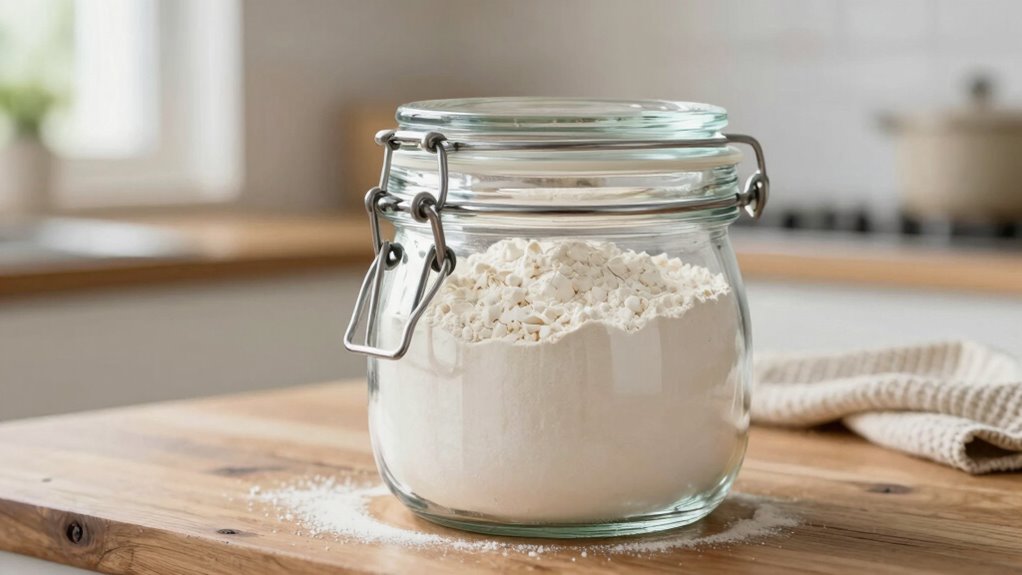
Storing fresh flour properly is essential to maintain its freshness and prevent spoilage. When you keep flour in the right environment, you help preserve its natural qualities, including gluten development and nutritional retention, which are vital for baking and health. If flour sits exposed to heat, light, or air for too long, these qualities can degrade, resulting in baked goods that don’t rise as well or lose valuable nutrients. Hence, understanding how to store your flour correctly guarantees you get the best flavor, texture, and nutritional benefits from it.
Proper flour storage preserves freshness, nutrients, and gluten quality for better baking results and flavor.
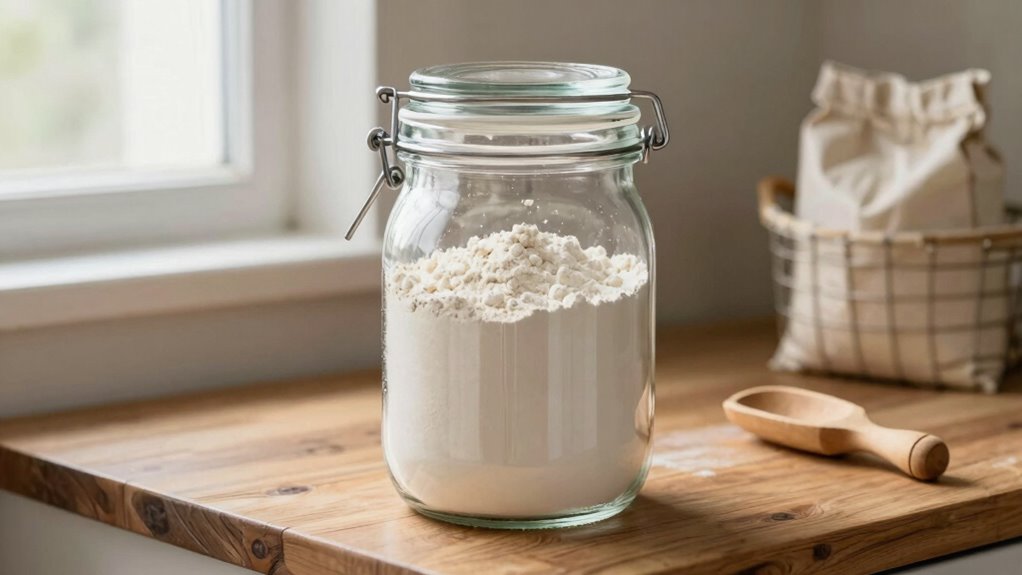
First, consider the storage container. Using an airtight container is key because it keeps moisture, pests, and contaminants out. Glass jars, plastic bins with tight-fitting lids, or food-grade plastic bags work well. When you seal flour tightly, you prevent oxygen from accelerating spoilage and protect the flour’s gluten development potential. Gluten is essential for creating the structure in baked goods, and exposure to air can weaken its ability to develop properly during mixing. By maintaining a sealed environment, you also help retain the flour’s natural oils, which are responsible for flavor and aroma, ensuring your baked items taste fresh and vibrant. Additionally, choosing containers that are light-proof can further extend the shelf life of your flour by preventing UV damage. Proper storage practices also help prevent the growth of mold and bacteria, which can occur if moisture is present. Maintaining the right environment can also minimize the risk of rancidity, which can occur when flour’s natural oils oxidize over time. Keeping flour in a consistent environment is also recommended, as temperature fluctuations can accelerate spoilage.
Temperature plays a significant role in flour storage. You should store your flour in a cool, dark place—ideally between 50°F and 70°F—such as a pantry or cupboard. High temperatures accelerate oxidation and spoilage, which diminishes both flavor and nutritional content. If you live in a warm or humid climate, consider refrigerating or freezing your flour. Cold temperatures slow down the degradation process, helping preserve the flour’s nutritional retention and gluten quality over a longer period. Proper storage conditions are crucial for maintaining flour’s freshness and quality over time, especially when storing for extended periods. Just make sure to bring it back to room temperature before baking, as cold flour can affect dough consistency. To further extend freshness, some bakers opt to freeze flour, especially for long-term storage, as it effectively halts spoilage. Properly labeling your stored flour with the date of purchase can also help you keep track of its freshness and ensure you use it within its optimal period.
airtight flour storage container
As an affiliate, we earn on qualifying purchases.
As an affiliate, we earn on qualifying purchases.
Frequently Asked Questions
How Long Can Fresh Flour Be Stored Without Losing Quality?
Fresh flour typically lasts about 3 to 6 months if stored properly, but its shelf life depends on storage conditions. Follow these storage tips: keep it in an airtight container in a cool, dark place, away from sunlight and moisture. If you refrigerate or freeze it, your flour can last up to a year or more. Regularly check for signs of spoilage like off smells or pests to maintain quality.
Is It Better to Store Flour in the Refrigerator or Freezer?
Think of your flour as a delicate treasure, waiting to be preserved. Storing it in the freezer extends its shelf life more than the refrigerator, keeping it fresh and flavorful longer. Use airtight storage containers to safeguard against moisture and odors. When you freeze flour, you’re locking in its essence, ensuring every baking moment remains pure and delicious. Keep it frozen for peak freshness, and enjoy baked goods that taste just as vibrant as the day you bought the flour.
Can Flour Be Stored in Plastic Containers Long-Term?
Yes, you can store flour long-term in plastic containers, but make certain they’re airtight to prevent moisture from getting in. Airtight containers keep the flour dry and free from pests, preserving its freshness and flavor. Make sure the containers are clean and sealed tightly after each use. Properly stored flour in airtight plastic containers can last months or even up to a year, maintaining quality and preventing spoilage.
How Do I Know if Flour Has Gone Bad?
You’ll know your flour has gone bad when it no longer smells fresh or has a sour or off odor—ironically, the easiest flour shelf life indicator is your nose. If it clumps, has tiny bugs, or shows discoloration, toss it. Flour freshness indicators include changes in texture and smell. Usually, stored properly in an airtight container, flour stays good for about six to eight months. When in doubt, it’s better to be safe than sorry!
Does Storage Temperature Affect Flour Flavor Preservation?
Yes, storage temperature greatly affects flour flavor retention. Keep your flour in a cool, consistent environment, ideally below 70°F, to prevent the oils from turning rancid and losing flavor. Proper storage conditions slow down the degradation process, preserving freshness longer. Avoid heat, humidity, and direct sunlight, as these factors accelerate flavor fading. By maintaining ideal storage conditions, you guarantee your flour stays flavorful for as long as possible.
Conclusion
Storing fresh flour securely guarantees its flavor stays fresh and fabulous. Keep it in a cool, airtight container, away from heat and humidity, to prevent spoilage and preserve its pure, pleasing quality. Regularly check for signs of spoilage, like smell or discoloration, and use it promptly for peak freshness. Properly storing your flour not only prolongs its life but also promises perfect pastries and pancakes every time. Protect, preserve, and enjoy the prized, pristine flour in your pantry!
Halloween Picks
halloween
As an affiliate, we earn on qualifying purchases.