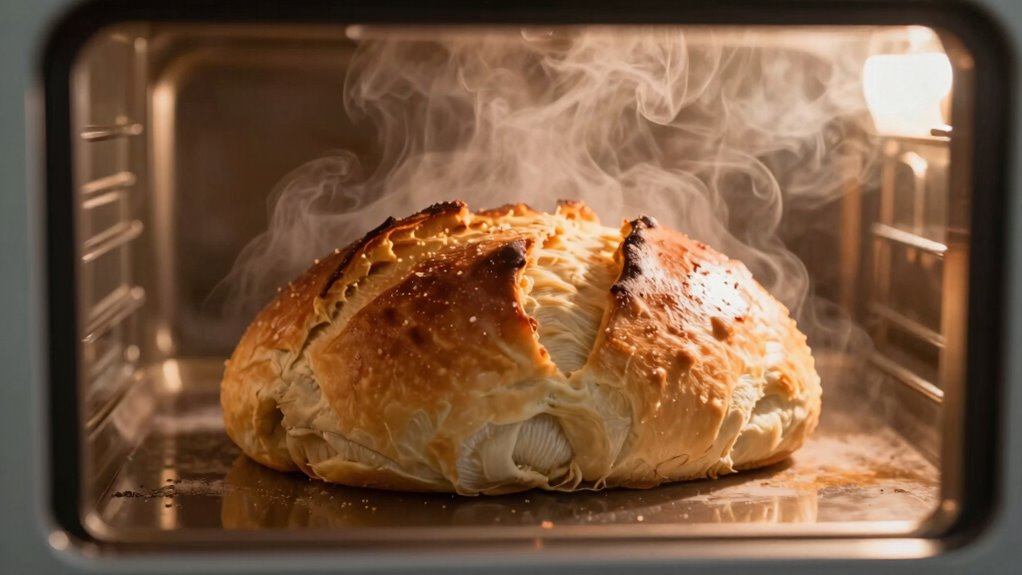

Steam is essential for creating bakery-quality bread at home. It helps your dough expand fully by maintaining moisture during baking, leading to a better oven spring and an open, airy crumb. Steam also develops a shiny, crisp crust by controlling browning and caramelization, while keeping the crust tender inside. If you want to discover how to harness steam effectively and achieve professional results, there’s more to uncover ahead.
Key Takeaways
- Steam creates a glossy, golden crust by promoting caramelization and uniform browning.
- It supports oven spring, allowing dough to expand fully and develop an airy, well-open crumb.
- Moisture delays crust formation, keeping the surface soft and pliable for better expansion and texture.
- Steam enhances crust resilience and prevents it from setting prematurely, resulting in a crisp, shiny exterior.
- Proper steaming ensures even heat transfer, consistent baking, and bakery-quality bread with attractive appearance and texture.
Why Use Steam in Bread Baking? Benefits Explained
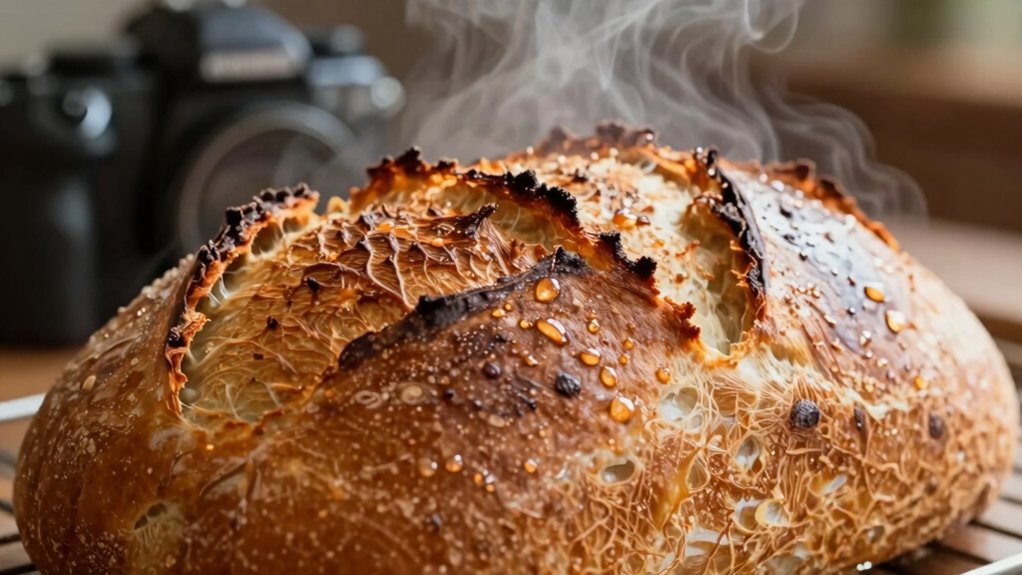
Using steam in bread baking is essential because it helps create the perfect crust and improves the overall texture of your loaf. When you add steam, you help maintain ideal oven temperature and prevent the dough from drying out too quickly. This allows the dough to expand fully during the initial bake, resulting in better oven spring. Additionally, high dough hydration levels benefit from steam because they produce a more open crumb structure. The moisture slows the formation of a thick crust early on, giving your bread more time to develop a glossy, crisp exterior. Properly using steam ensures consistent results, enhances flavor, and elevates your baking game. Proper steam application is a key factor in achieving professional-quality bread at home, especially when considering temperature control and its impact on bread development. Incorporating baking techniques that utilize steam can help you master the art of artisan bread baking with more reliable success, especially when you understand how moisture retention influences crust formation. Additionally, understanding the science behind oven spring can further improve your bread’s rise and texture.
How Steam Creates a Perfect Crust and Better Appearance
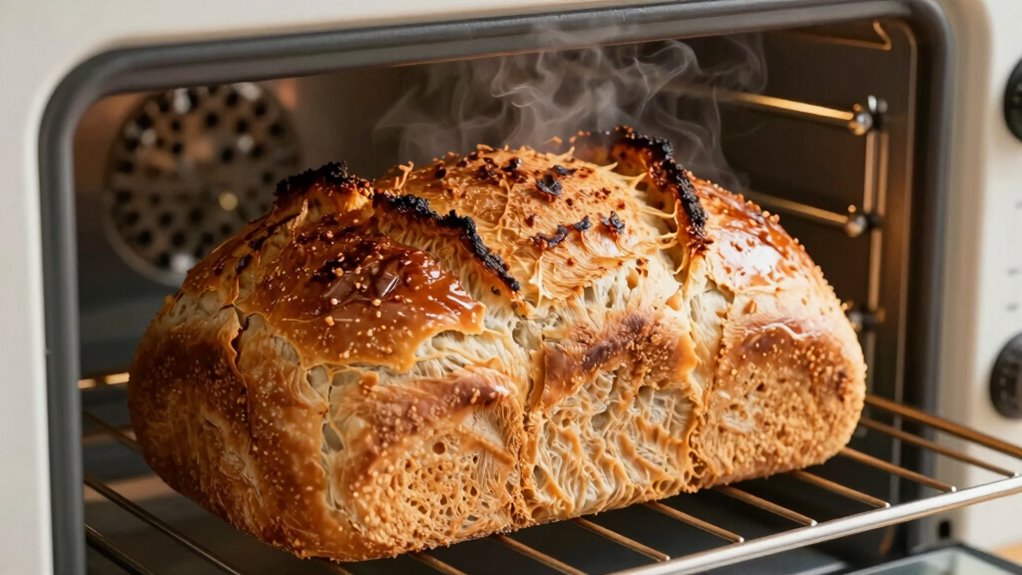
Steam plays a key role in shaping the crust and appearance of your bread. It helps develop a glossy, golden-brown crust by controlling oven temperature and dough hydration. When steam is present, the crust remains moist longer, allowing it to expand fully before setting. This results in a better rise and more uniform surface. Additionally, steam enhances caramelization and browning, giving your bread a more appealing look. The table below highlights how these factors work together:
| Factor | Effect on Crust | Result |
|---|---|---|
| Oven Temperature | High heat promotes browning | Attractive, crisp crust |
| Dough Hydration | More moisture yields better crust | Shiny, well-developed surface |
| Steam Presence | Delays crust setting | Better expansion and appearance |
The presence of steam also influences the development of the bread’s crust texture, making it more satisfying to bite into. It also aids in achieving a crisp crust that enhances the overall eating experience. Proper application of steam can also help in uniform crust formation, ensuring your bread looks as good as it tastes. These factors work together to create a delicious crust and a mouthwatering appearance. Additionally, understanding how different baking techniques impact steam application can help you achieve bakery-quality results at home.
The Science of Steam: How It Helps Dough Rise and Develop
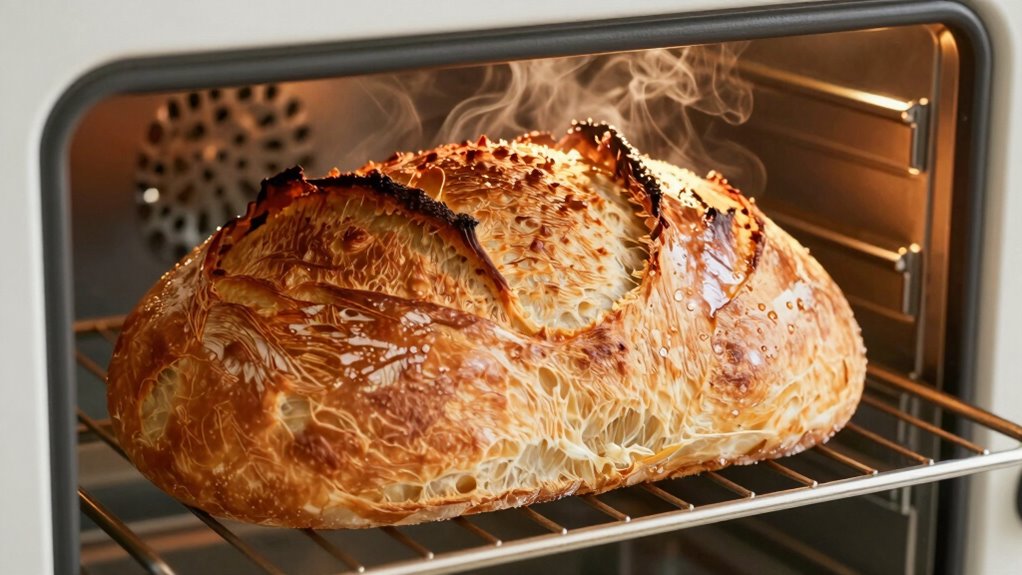
When you add steam during baking, the moisture helps gas form inside the dough, making it rise more effectively. It also strengthens the crust, giving your bread a better structure and appearance. Plus, heat transfers evenly through the steam, ensuring the dough develops uniformly from the inside out. Additionally, understanding air-based cooking fundamentals can help you control moisture levels for optimal results. Incorporating essential oils in baking can also influence flavor and aroma, enhancing the overall bread experience.
Moisture Boosts Gas Formation
Moisture plays a crucial role in encouraging gas formation within dough, which is essential for good rise and texture. During dough fermentation, yeast produces carbon dioxide, creating bubbles that help the bread expand. When you introduce oven humidity through steam, it prevents the dough’s surface from drying out prematurely, allowing gas bubbles to grow larger. This moisture-rich environment enhances gas retention, promoting even fermentation throughout the dough. Proper moisture levels are key to achieving optimal fermentation and gas development. Without sufficient oven humidity, the crust can form too quickly, trapping less gas inside and resulting in a dense loaf. By maintaining ideal moisture levels, steam ensures that gas formation continues effectively, giving your bread a better rise, lighter crumb, and improved overall structure. Moisture truly acts as a fermentation catalyst for effective fermentation and gas development. Additionally, consistent steaming techniques help maintain the necessary humidity levels throughout baking, ensuring optimal results. Proper oven safety practices are also important to ensure safe steaming techniques and consistency.
Steam Strengthens Crust Formation
As the oven heats, steam interacts with the dough’s surface, creating a dynamic environment that promotes crust development. The moisture keeps the outer layer hydrated, delaying crust formation just enough to allow oven spring. This effect, combined with high oven temperature, encourages a stronger, thicker crust once the moisture evaporates. Proper dough hydration ensures enough water is available for steam generation, amplifying its crust-strengthening role. The steam’s heat causes rapid gelatinization of surface starches, forming a resilient crust. Here’s how the process works:
| Aspect | Effect |
|---|---|
| Dough hydration | Provides moisture for steam, enhances crust strength |
| Oven temperature | Facilitates rapid crust formation and caramelization |
| Steam exposure | Promotes even crust development and resilience |
Additionally, understanding the science of steam helps bakers optimize their baking techniques for the best bread texture and appearance.
Heat Penetrates Dough Evenly
Steam’s ability to promote even heat distribution plays a key role in how dough rises and develops. When your oven maintains precise temperature control, steam helps heat penetrate the dough uniformly, ensuring consistent rising and internal structure. This even heat transfer is crucial for ideal oven spring, preventing uneven baking or undercooked centers. Additionally, the moisture from steam keeps the dough hydrated during the initial baking phase, allowing gluten to stretch and trap gases efficiently. Proper dough hydration combined with steady heat penetration results in a well-risen loaf with a tender crumb. Steam also helps create a shiny, crackly crust that enhances the overall texture of your bread. By delivering consistent warmth throughout, steam ensures your bread develops evenly, achieving a balanced texture and a beautiful crust. This synergy of temperature control and dough hydration is essential for professional-quality baking at home. Proper steam application can also influence crust texture, leading to a more desirable crust appearance and mouthfeel. Moreover, the controlled moisture environment can improve the overall oven spring, resulting in a loftier loaf with better volume.
Why Does Steam Make Your Bread’s Interior Softer?
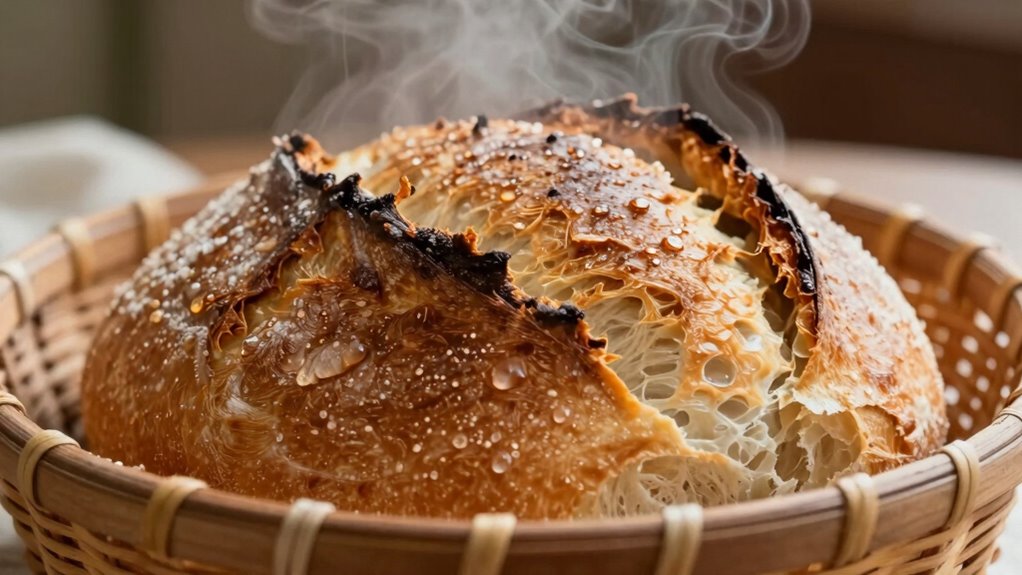
When you bake with steam, the added moisture helps your bread retain more water inside. This keeps the interior softer and prevents it from drying out too quickly. Additionally, steam delays crust formation, allowing the bread to expand fully before the crust sets. Incorporating proper water management techniques during baking can further optimize the bread’s texture. Understanding how moisture retention works can help bakers achieve more consistent results.
Moisture Retention During Baking
Steam helps keep the interior of bread moist by creating a humid environment during baking. This moisture prevents the bread from drying out too quickly, ensuring a softer, more tender crumb. When steam surrounds the dough, it slows down moisture loss, allowing the bread to retain more of its internal moisture. This process also influences the crust color; with steam, the crust develops a glossy, golden hue without over-hardening. Additionally, the presence of steam allows you to bake at higher oven temperatures without sacrificing moisture, which helps develop a better structure inside. The result is a bread with a moist, airy interior and a beautifully colored crust. Overall, moisture retention is key to achieving that desirable, soft interior in your baked bread.
Delayed Crust Formation
The presence of moisture during baking delays the formation of a firm crust by keeping the surface of the dough soft and pliable longer. This crust delay occurs because steam prevents the surface from drying out too quickly, which is essential for a rapid crust formation. As a result, the texture change is more gradual, allowing the interior to expand fully before the crust hardens. Without steam, the crust sets early, trapping steam inside and creating a thicker, crunchier exterior. With steam, the crust remains softer longer, giving your bread a delicate, airy crumb. This delayed crust formation not only affects the texture but also enhances the overall appearance, producing a shiny, beautifully blistered surface that highlights the bread’s artisanal quality.
How Steam Contributes to a Bakery-Quality Crust

Harnessing steam during baking plays a crucial role in creating a bakery-quality crust. It boosts oven moisture, which helps the dough expand fully and develop a shiny, crisp exterior. Steam also influences crust texture by delaying starch gelatinization, allowing the crust to remain flexible longer. This results in a beautifully caramelized, golden-brown finish.
Consider these benefits:
- Enhances oven moisture for better rise
- Promotes a shiny, attractive crust
- Delays crust formation for better oven spring
- Improves crust texture—crisp outside, tender inside
- Encourages even browning and caramelization
Baking Bread With vs. Without Steam: What’s the Difference?

When you bake bread with steam, the crust develops more evenly and becomes crispier, thanks to better crust development dynamics. Without steam, the crust can be dull and thick, affecting the overall texture. You’ll also notice that steam influences the crumb, making it lighter and more open.
Crust Development Dynamics
Adding steam during baking considerably influences how the crust develops, creating a more desirable, glossy exterior. It promotes even crust formation, enhances bread flavor, and allows the oven temperature to work more effectively. When steam is present, the crust remains moist longer, delaying browning and enabling better oven spring. Without steam, the crust tends to form quickly, leading to a thicker, tougher crust. Steam helps distribute heat evenly, resulting in a more balanced crust and improved flavor. It also allows the baker to fine-tune crust color by controlling moisture levels.
- Delays crust setting for better oven spring
- Produces a shiny, attractive crust
- Enhances bread’s overall flavor profile
- Prevents uneven browning
- Allows higher oven temperatures without burning
Crumb Texture Impact
The presence of steam during baking not only impacts the crust’s appearance and flavor but also fundamentally alters the bread’s internal structure. It promotes a better crumb structure, resulting in a lighter, more open texture. Without steam, the crumb tends to be denser and less uniform, sacrificing texture variation. Steam delays the setting of the gluten network, allowing gases to expand fully and create larger, irregular holes. This improves the overall mouthfeel and visual appeal. The table below highlights key differences:
| Aspect | With Steam | Without Steam |
|---|---|---|
| Crumb Structure | Open, airy, irregular holes | Dense, uniform, tight crumb |
| Texture Variation | More diverse, tender bites | Consistent, less tender |
| Gas Expansion | Enhanced, larger pores | Limited, smaller pores |
| Moisture Content | Higher, keeps crumb moist | Drier, crumb can be stiff |
| Overall Quality | Superior crumb and texture | Less desirable crumb quality |
Using steam elevates the bread’s internal quality, creating a superior crumb.
Simple Techniques to Add Steam at Home
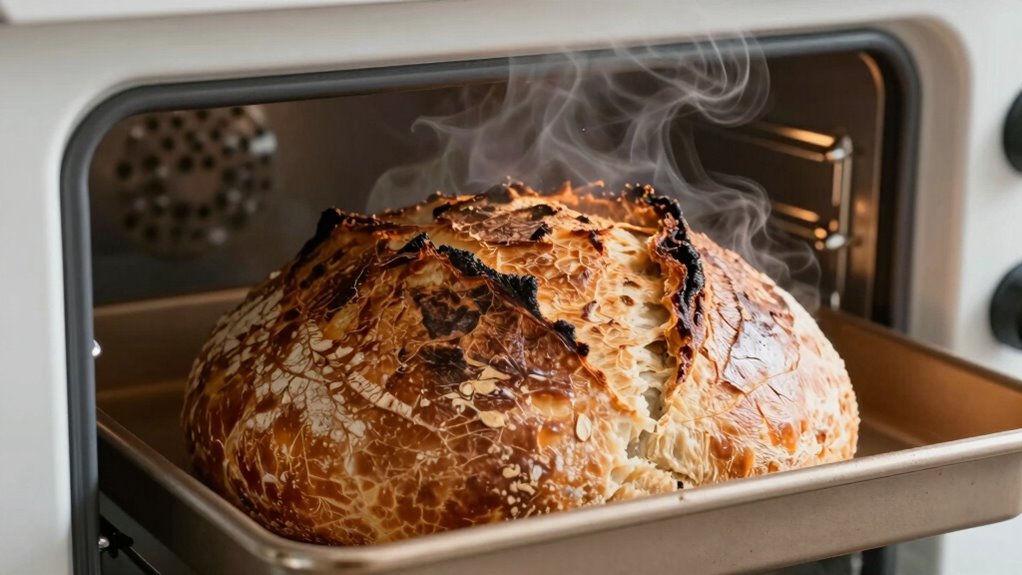
Creating steam at home is simpler than you might think, and you don’t need specialized equipment to do it. You can easily enhance your bread’s flavor and crust by adding steam during baking. Here are simple techniques to get started:
- Place a shallow pan of water on the oven floor before preheating.
- Spray water directly into the oven during the first few minutes of baking.
- Use a spray bottle to mist the loaf surface just before putting it in the oven.
- Bake on a preheated pizza stone to help create steam naturally.
- Adjust the oven temperature slightly higher for initial baking to encourage crust development.
These methods help maintain moisture, improve bread flavor, and develop that perfect crust. Experimenting with these techniques allows you to master steam baking without fancy equipment.
Do You Need a Special Steam Oven or Can You Use DIY Methods?

You don’t need a specialized steam oven to achieve a great crust and moist bread; DIY methods can deliver impressive results with just a few simple techniques. Many home bakers successfully use everyday kitchen tools to create steam, making the question of steam oven necessity less critical. You can add steam by placing a pan of water in the oven or spritzing the dough with water before baking. These DIY methods are effective and cost-efficient, eliminating the need for expensive equipment. While a dedicated steam oven can offer more consistent results, it’s not a requirement for baking bakery-quality bread at home. With a little practice, you’ll find that simple DIY techniques can mimic professional steam baking and produce excellent crust and crumb.
Common Mistakes When Using Steam and How to Avoid Them

Many home bakers make common mistakes when using steam, which can compromise crust quality and baking success. One mistake is opening the oven too early, risking oven safety and losing steam. Another is neglecting proper ingredient substitutions, which can affect moisture levels needed for steam generation. Failing to preheat the oven properly can result in uneven steam distribution. Using too much water can lead to excess humidity, while too little won’t create the desired crust. Lastly, not maintaining a consistent steam environment can cause bread to underbake or crack. To avoid these issues, always monitor oven safety, follow precise ingredient substitutions, and guarantee your steaming method is consistent. Proper technique ensures your bread develops a beautiful crust and a perfect rise.
Is Investing in a Steam Oven Worth It for Home Bakers?

Investing in a steam oven can considerably elevate your home baking, especially if you frequently make bread or pastries that benefit from moist heat. It adds professional-quality results with a crispy crust and soft interior, making it a worthwhile upgrade. When considering if it’s worth it, think about your kitchen aesthetics—does a sleek, built-in steam oven complement your space? Brand comparisons are essential; some models offer advanced features, better durability, and user-friendly controls. If baking is a serious hobby or you want consistent, bakery-quality results, a steam oven can be a valuable addition. However, weigh the cost against your baking frequency and space constraints. For passionate home bakers, the investment often pays off in both performance and the aesthetic appeal of your kitchen.
Frequently Asked Questions
Can I Use a Regular Oven to Produce Steam for Baking?
Yes, you can produce steam in a regular oven by placing a pan of water at the bottom or using a spray bottle to mist the oven walls before baking. Just remember to keep the oven door closed during the initial baking phase to trap the steam. After baking, clean your oven thoroughly to prevent residue buildup, and store your bread properly to maintain freshness.
How Does Steam Affect the Flavor of Bread?
Steam enhances the flavor of bread by creating a moist environment that allows the dough to develop better, richer tastes. It also promotes crust development, giving your bread a glossy, crisp exterior. As you bake, the steam helps the crust form quickly, trapping flavors inside and making each bite more flavorful. So, using steam results in bread with improved taste and an irresistible crust that elevates your baking experience.
What Types of Bread Benefit Most From Steaming?
You’ll notice that high-hydration doughs, like ciabatta and baguettes, benefit most from steaming. The added moisture helps develop a crisp crust by promoting better crust formation, while also supporting the dough’s hydration level. Steaming keeps the surface moist during baking, allowing the bread to expand fully before the crust sets. So, if you want bakery-quality crusts, prioritize steaming for these types of bread.
How Long Should I Introduce Steam During Baking?
You should introduce steam during the first 10 to 15 minutes of baking. This initial phase allows the dough’s hydration to create a glossy, elastic crust and promotes proper crust development. By maintaining steam early on, you help the bread rise fully and develop a beautiful crust. After this period, you can vent the oven to let the crust set, ensuring a perfect balance between soft crumb and crisp crust.
Does Steam Baking Require Special Temperature Settings?
Yes, steam baking does necessitate special temperature settings. You typically start with a high steam temperature to create oven moisture, which helps develop a crispy crust. Later, you reduce the steam to allow the bread to finish baking without becoming soggy. Adjusting the steam temperature ensures you get the perfect balance of moisture and heat, giving your bread that ideal rise and crust every time.
Conclusion
So, next time you skip the steam, don’t be surprised if your bread’s crust looks more like a pancake and your interior stays stubbornly dense. Ironically, the secret to bakery-quality bread isn’t just flour and patience—it’s a simple splash of water or a quick oven trick. Embrace the steam, and you’ll wonder why you ever thought bread could reach its full potential without a little moist magic. Happy baking—your crust will thank you.