To safely store butter at room temperature in butter bells or dishes, opt for salted butter, which lasts longer than unsalted. Make sure the butter is fresh and keep it in a cool, dark spot. Change the water in your butter bell regularly to maintain freshness, and always check for off odors or mold before use. By following these simple guidelines, you can enjoy spreadable butter without worries, and there’s plenty more valuable advice to discover!
Key Takeaways
- Salted butter can safely be kept at room temperature longer than unsalted butter, which should be limited to one week.
- Use butter bells or dishes with airtight seals and change the water regularly to maintain freshness.
- Store butter in a cool, dark place away from direct sunlight and heat to prevent spoilage.
- Avoid contamination by using clean utensils and inspecting butter for off odors or mold before use.
- Proper storage and regular checks can extend the edible lifespan of butter while ensuring safety and quality.
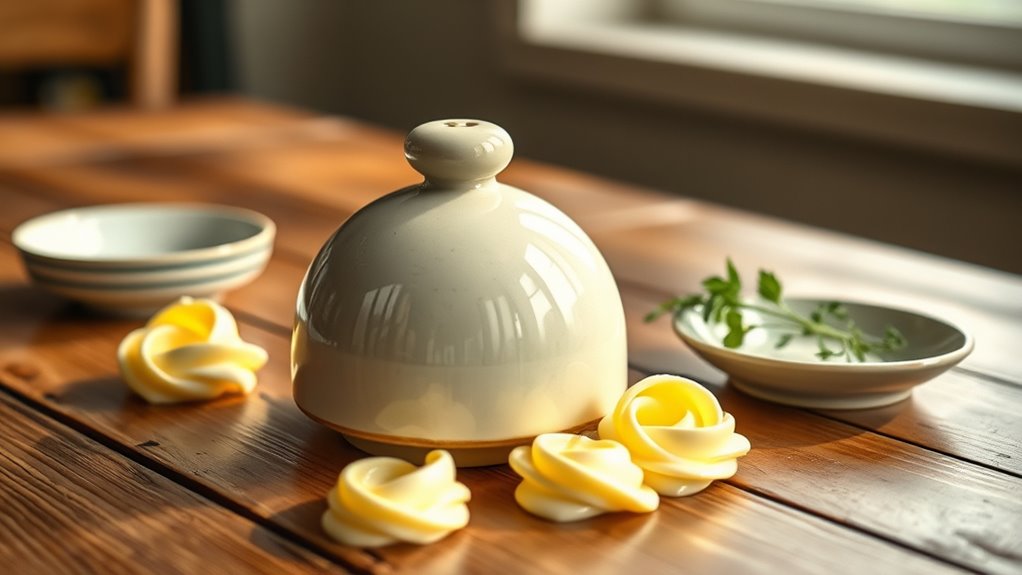
When it comes to enjoying the creamy goodness of butter at room temperature, you might wonder how to keep it safe and delicious. The key lies in proper butter storage and understanding food safety guidelines. If you want to keep your butter soft and spreadable, knowing how to store it can make all the difference.
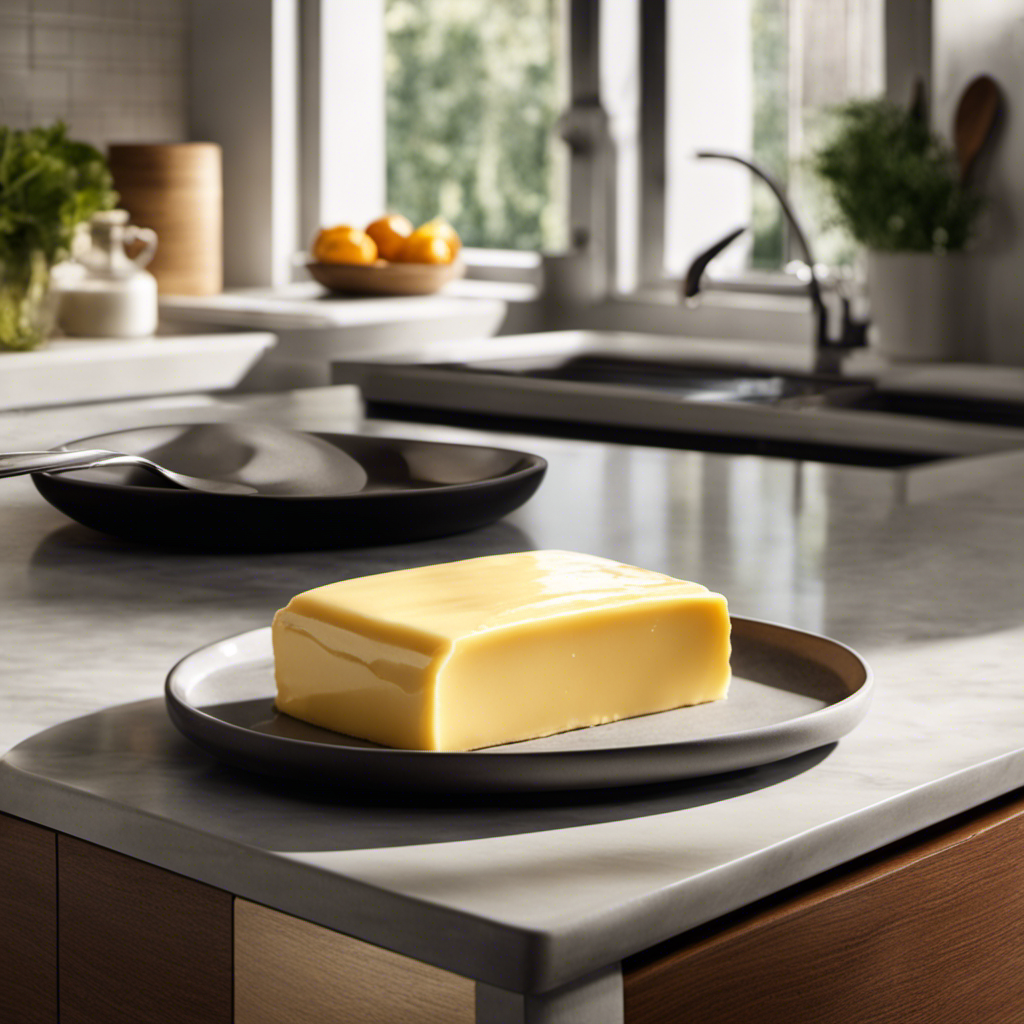
First, consider the type of butter you’re using. Salted butter tends to have a longer shelf life at room temperature than unsalted butter due to the salt acting as a preservative. If you’re using unsalted butter, it’s best to limit its time outside the fridge. Generally, you can leave salted butter out for about a week, but always be mindful of its appearance and smell. If it starts to develop an off odor or shows signs of mold, it’s time to toss it.
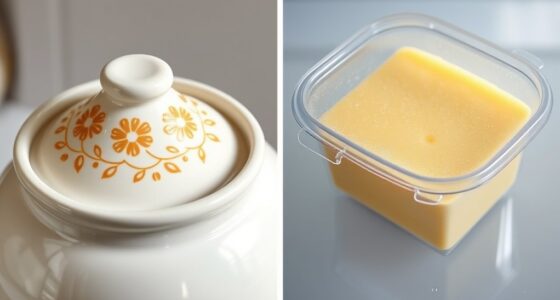
Using a butter bell or dish is a fantastic way to keep butter at room temperature while maintaining its freshness. These containers are designed to hold a small amount of water at the bottom, creating an airtight seal that helps keep bacteria at bay. When using a butter bell, make sure to fill it with fresh, high-quality butter and change the water regularly to ensure ideal food safety.
A butter bell keeps your butter fresh at room temperature by creating an airtight seal, ensuring food safety and deliciousness.
You should also keep butter away from direct sunlight or heat sources. A cool, dark place is ideal for storing your butter dish or bell. This helps prevent oxidation and spoilage, ensuring your butter remains safe to eat. Additionally, avoid double-dipping or using dirty utensils when spreading butter. This can introduce bacteria and lead to faster spoilage.
Remember to keep an eye on the butter’s texture and color. If it starts to look or smell unusual, it’s better to err on the side of caution. Recent studies question the negative perception of saturated fat and emphasize moderation in butter consumption, allowing you to enjoy room-temperature butter without compromising food safety. In general, if you’re mindful of these simple tips, you can enjoy the creamy delight of room-temperature butter without compromising food safety.

Butter Crock with Lid for Countertop – Ceramic French Butter Dish for Spreadable Soft Butter, Butter Container Holder with a Water Seal, Housewarming Gift, Kitchen and Home Decor, Speckled White
Premium Quality Material: Crafted from professional-grade porcelain, our butter crock creuset features an elegant and cozy white appearance,…
As an affiliate, we earn on qualifying purchases.
As an affiliate, we earn on qualifying purchases.
Frequently Asked Questions
Can I Use Salted Butter in Butter Bells?
Yes, you can use salted butter in butter bells. Salted butter adds a distinct flavor, enhancing your dishes, but keep in mind that it may affect the taste of your recipes. If you prefer a more neutral flavor, unsalted butter is the way to go. It gives you more control over the seasoning in your cooking. Ultimately, it’s about your personal preference and how you enjoy the taste of your butter.
How Long Does Butter Last at Room Temperature?
Butter can last about one to two weeks at room temperature, but that varies with how you store it. If you keep it in a tightly sealed container, it’ll maintain its freshness longer. Contrast this with butter stored in the fridge, which can last up to a month. Remember, the butter’s shelf life depends on factors like temperature and exposure to light. Proper butter storage is key to enjoying its rich flavor.
What Types of Butter Are Best for Spreading?
For spreading, the best types of butter are those with a creamy consistency, like regular unsalted or whipped butter. These options provide excellent spreading ease, allowing you to effortlessly coat your bread or toast without tearing it apart. You might also enjoy flavored butters, which add a delightful twist. Avoid hard or overly cold butter, as it’ll make spreading a chore rather than a pleasure. Enjoy your delicious, smooth spreads!
Is There a Specific Temperature for Storing Butter?
The ideal temperatures for butter storage are between 65°F and 70°F (18°C to 21°C). At this range, butter stays soft enough for spreading while maintaining its flavor and freshness. If you keep it too warm, it can spoil quicker, and if it’s too cold, it’ll become hard. So, find a cool spot in your kitchen to store your butter, and enjoy it at its best!
Can I Mix Different Butters in a Butter Dish?
Yes, you can mix different butters in a butter dish! Combining various butter flavor combinations can enhance your culinary experience. For instance, mixing a rich, creamy butter with a herb-infused variety creates a delightful spread. You’ll also notice butter color variations, which can add visual appeal. Just make certain that the butters you mix are at similar temperatures for the best consistency. Enjoy experimenting with flavors to find your favorite blend!
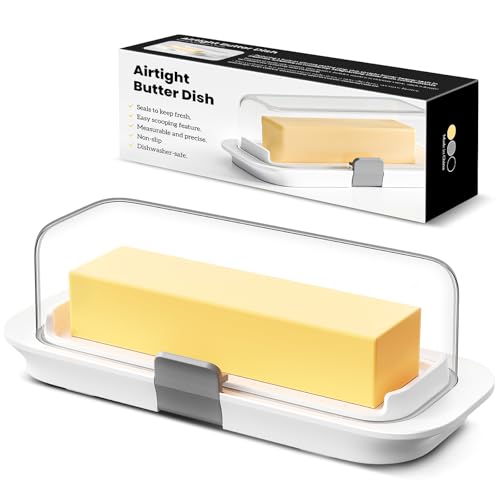
Pisol Butter Dish with Lid for Countertop and Refrigerator Door Shelf, Airtight Butter Keeper Container, Butter Holder for East/West Coast Butter, BPA-free, Microwave/Dishwasher Safe
The Home of American 1/4 LB Butter: 8.03''/20.39cm(L) × 3.31''/8.4cm(W) × 2.64''/6.7cm(H), specially designed for 1 stick butter…
As an affiliate, we earn on qualifying purchases.
As an affiliate, we earn on qualifying purchases.
Conclusion
In summary, selecting safe butter for room-temp butter bells and dishes ensures scrumptious spreads without the scare of spoilage. So, stick to salted selections or choose quality, high-fat butters to savor the smoothness. With proper precautions, you can confidently create a delightful display that dazzles your guests. Remember, a little knowledge goes a long way in keeping your butter beautifully balanced and totally tasty! Enjoy your culinary creations with confidence and care!

Silver Label Plugra Butter, Salted – 8 oz (Pack of 12)
As an affiliate, we earn on qualifying purchases.
As an affiliate, we earn on qualifying purchases.

Priority Chef Butter Crock with Lid with Water Line, Ceramic French Butter Dish to Leave On Counter, White
No More Waiting For Butter To Soften – Get fresh, spreadable butter on demand – our French butter…
As an affiliate, we earn on qualifying purchases.
As an affiliate, we earn on qualifying purchases.