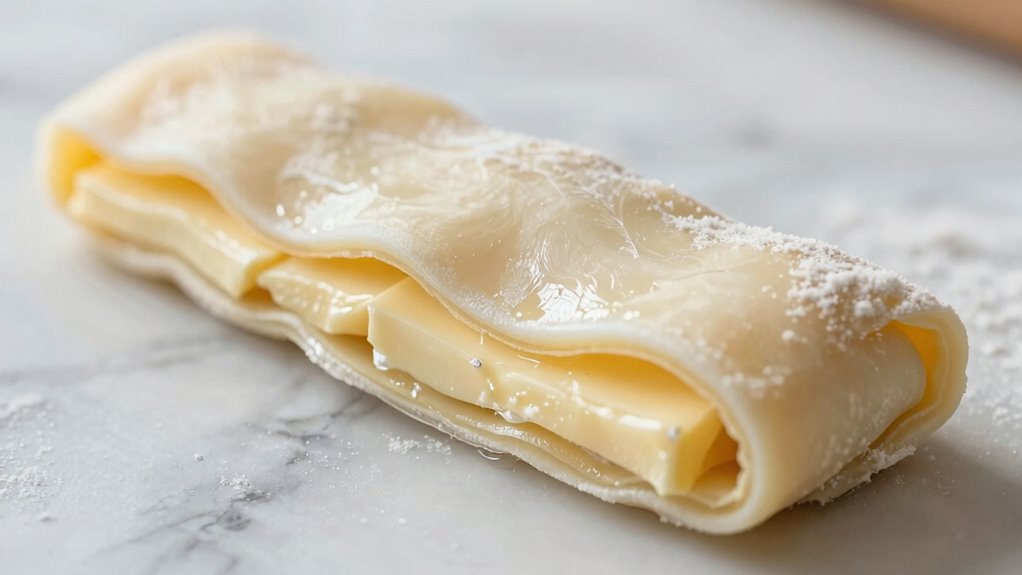
To roll pastry thinner without smearing butter layers, keep everything cold by refrigerating the dough, rolling pin, and work surface. Use gentle, even pressure and turn the dough frequently to maintain even layers. Work on a lightly floured surface with parchment paper or a silicone mat to prevent sticking. Patience is key—if the dough resists or sticks, chill it again before continuing. For more tips on perfecting your pastry, explore the detailed techniques ahead.
Key Takeaways
- Keep dough cold by refrigerating for at least 30 minutes before rolling.
- Use a lightly floured surface and keep everything chilled to prevent butter from softening.
- Roll gently with even pressure, turning the dough frequently for uniform thickness.
- Work in short, controlled strokes, avoiding excessive force that can smear butter layers.
- Return dough to the refrigerator if it resists or begins to stick, maintaining a cold environment.
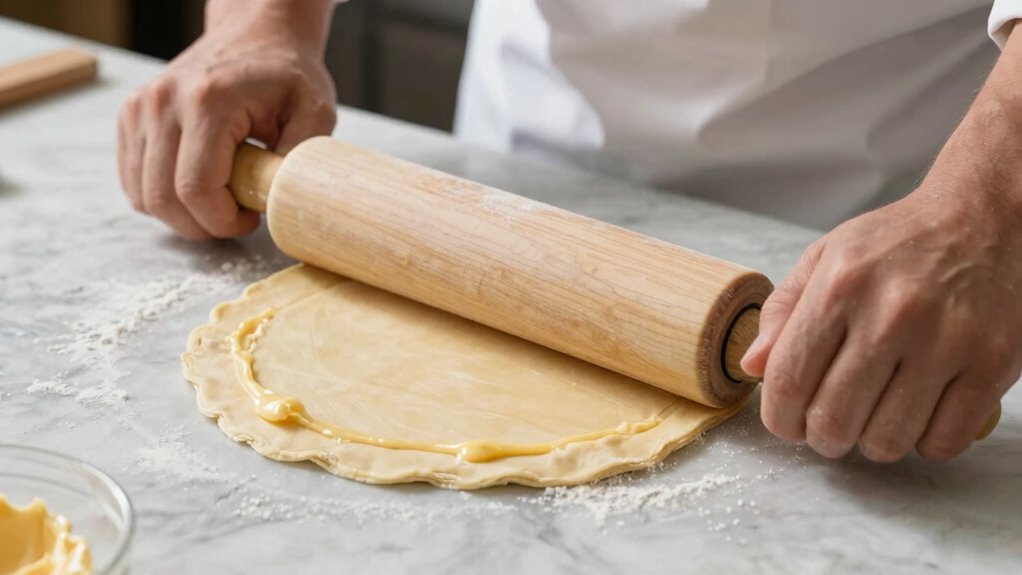
Rolling pastry to a thin, even layer can be tricky, especially when you want to avoid smearing or damaging the delicate butter layers. The key lies in understanding dough hydration and employing cold pastry techniques. When your dough has the right hydration—meaning the proper balance of moisture—you’ll find it easier to handle without sticking or tearing. Too much water, and the dough becomes sticky and prone to smearing the butter; too little, and it becomes tough to roll out evenly. Aim for a dough that’s slightly tacky but still manageable, and always keep your ingredients measured precisely.
Cold pastry techniques are essential for maintaining those distinct, flaky layers. Cold dough is less sticky and more resistant to tearing because the butter remains firm, preventing it from blending too much into the flour during rolling. Before you begin, chill your dough in the refrigerator for at least 30 minutes, and consider refrigerating your rolling pin and work surface as well. This keeps everything cold and minimizes warmth transfer, which can cause the butter to soften prematurely. When you start rolling, apply gentle, even pressure and turn the dough frequently. This helps maintain an even thickness and prevents sticking or tearing. Additionally, working with properly hydrated dough ensures consistent results and easier handling. Using a cold workspace can also significantly improve your rolling process by maintaining the integrity of the layers. Being mindful of temperature control during rolling can help preserve the delicate butter layers.
Another tip is to work with your dough on a lightly floured surface, but don’t overdo it. Excess flour can dry out the dough, making it harder to roll thinly without cracking, while too little can cause sticking. Use just enough flour to prevent sticking, and consider using parchment paper or a silicone baking mat underneath your dough. These surfaces allow for smoother rolling and help keep the layers intact. Proper dough hydration is also crucial for an optimal rolling process, as it affects how easily the dough responds to pressure. Additionally, maintaining consistent cool temperatures throughout the process can prevent the butter from softening unevenly, which is vital for achieving perfect layers.
If you find your dough resisting or sticking, pop it back into the refrigerator for a few minutes. Cold dough is much easier to manipulate into a thin sheet without smearing butter layers. Also, when rolling, start from the center and gently push outward, turning the dough a quarter turn frequently. This technique ensures an even thickness and reduces the risk of tearing. Remember, patience is key—rushing can cause uneven layers or smearing the butter, ruining the flaky texture you want.

Adjustable Rolling Pin with Thickness Rings for Baking, Stainless Steel Designs Dough Roller Pins for Cookie Decorating Baking Supplies Fondant Cake Baker
Stainless steel rolling pin with thickness rings: This 17-inch rolling pin is made from high quality stainless steel…
As an affiliate, we earn on qualifying purchases.
As an affiliate, we earn on qualifying purchases.
Frequently Asked Questions
Can I Use a Rolling Pin With Textured Surfaces?
Yes, you can use textured rolling pins, but they may leave patterns or marks on your pastry. If you prefer a smooth surface, consider alternative rolling techniques like using a silicone baking mat or parchment paper. These methods help control thickness without smearing butter layers. Alternatively, lightly flour your surface and rolling pin to prevent sticking, ensuring your pastry remains even and buttery without unwanted textures.
What Temperature Should the Butter Be for Best Results?
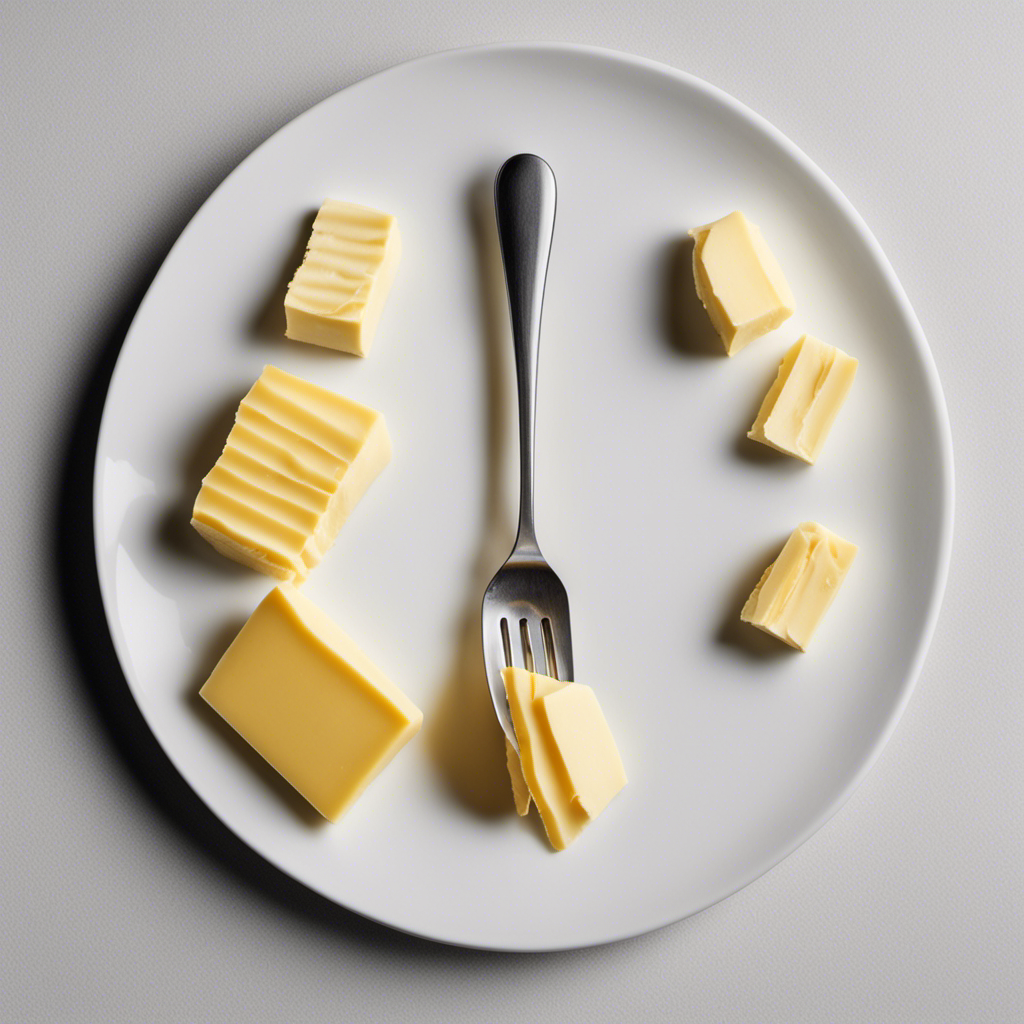
Think of your butter as a delicate dance partner—aim for an ideal temperature of about 60-65°F. This guarantees the butter’s consistency is just right: firm enough to layer without smearing, yet pliable enough to roll smoothly. If it’s too cold, it’ll crack; too warm, it’ll smear. Keep your butter at this perfect temperature, and your pastry will glide effortlessly, revealing beautifully thin, flaky layers.
How Do I Prevent Cracking When Rolling Very Thin Pastry?
To prevent cracking when rolling very thin pastry, focus on maintaining dough elasticity by letting it rest and relax. Use a gentle, even rolling technique, applying light pressure and turning the dough frequently. Keep the dough slightly chilled, but not cold, to stay flexible. If you notice cracks forming, lightly dampen the edges with water and continue rolling. This approach helps keep the pastry smooth and prevents cracks.
Is It Necessary to Chill the Dough Before Rolling?
Yes, chilling the dough before rolling is necessary. It helps manage dough hydration, making it firmer and easier to handle. Resting techniques, like letting it sit in the fridge for at least 30 minutes, relaxes gluten strands, preventing cracking and sticking. Chilled dough stays more elastic, allowing you to roll it thinner without tearing or smearing butter layers. So, always give your dough adequate chill time for perfect results.
Can I Reuse Leftover Pastry Scraps Effectively?
You can certainly give leftover pastry scraps a new lease on life through thoughtful scrap recycling. To keep them fresh, store your pastry properly in an airtight container or wrap it tightly to prevent drying out. When ready to reuse, gently re-roll the scraps, but be mindful not to overwork the dough, which could compromise its flaky texture. Proper pastry storage guarantees your scraps stay tender and perfect for your next baking adventure.

Silicone Baking Pastry Dough Mat – 28x20Inch Extra Large Cookie Bread Rolling Mats Sheet, Nonstick Kitchen Counter Kneading Board, Thick Reusable Pie Cookies Pizza Fondant Making Matt with Measurement
Premium Silicone Bakig Mat: Our kitchen baking mat is crafted with 100% food grade silicone. With 0.7mm thickness…
As an affiliate, we earn on qualifying purchases.
As an affiliate, we earn on qualifying purchases.
Conclusion
Now that you know how to roll your pastry thinner without smearing the butter layers, you’re ready to create perfectly flaky treats. Imagine peeling back the layers of a delicate, crisp pastry, each one intact and buttery—doesn’t that make your mouth water? With patience and the right technique, you can achieve bakery-quality results at home. So, why settle for anything less than a beautifully layered pastry that melts in your mouth?

Pro Dough Pastry Scraper/Cutter/Chopper Stainless Steel Mirror Polished with Measuring Scale Multipurpose- Cake, Pizza Cutter – Pastry Bread Separator Scale Knife
【Simple and Modern style】Pizz cutter/Dough scraper/Dough Cutter designed to scrape and split bread dough,So it's easy to use…
As an affiliate, we earn on qualifying purchases.
As an affiliate, we earn on qualifying purchases.

Flour Sifter, 3 Cup Flour Sifter for Baking Fine Mesh Rotary Hand Crank with Loop Agitator for Quick Sifting, Flour Sifter Stainlees Steel, Crank Sifter Flour for Baking Cakes and Spices Toresano
Holds 3 Cups: Our flour sifter holds more flour and powedered sugar than most sifters; Masurements are stamped…
As an affiliate, we earn on qualifying purchases.
As an affiliate, we earn on qualifying purchases.