The main mistake that causes overproofing in a proofing box is setting the temperature too high or neglecting to monitor it. When your proofing box gets too warm, it accelerates fermentation, leading to excessive rise and weak gluten structure. This results in flat, dense bread with poor texture. If you keep the environment too hot or forget to check conditions, overproofing becomes a real risk. Learn more about best practices to stop this from happening.
Key Takeaways
- Setting the proofing box temperature too high accelerates fermentation, leading to overproofing.
- Using an inconsistent or unmonitored proofing environment causes uncontrolled dough rise.
- Over-relying on a fixed proofing time without checking dough readiness results in overproofed dough.
- Opening the proofing box frequently releases heat and humidity, disrupting optimal proofing conditions.
- Failing to adjust proofing settings for dough hydration and room temperature increases overproofing risk.
What Is the Proofing Box and Why It Matters in Bread Baking
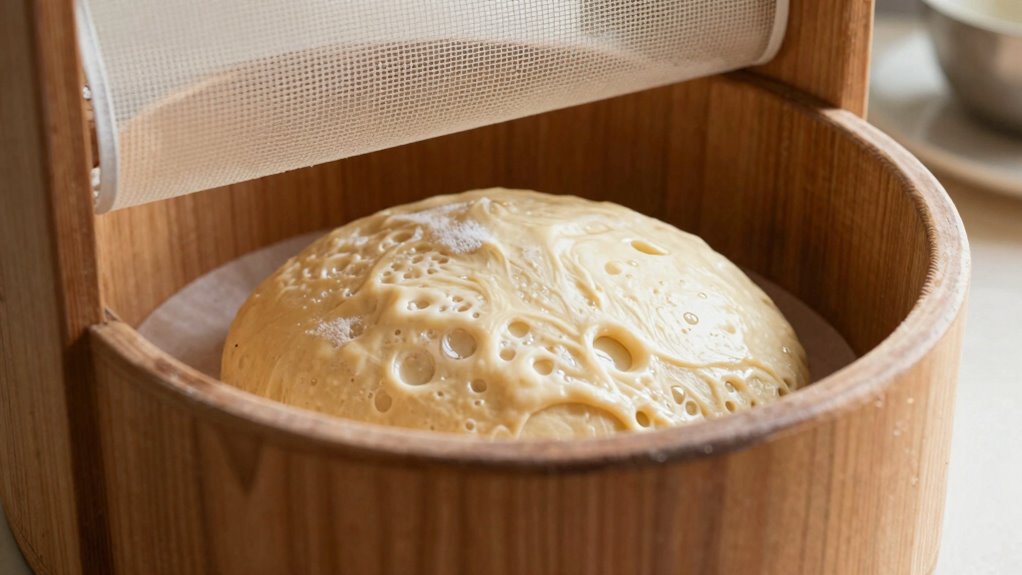
A proofing box is a controlled environment where bread dough rests and ferments before baking. Its primary function is to create ideal conditions for dough to rise properly. The proofing box functions by maintaining consistent temperature and humidity levels, which are vital for yeast activity. Temperature control is key—if it’s too cold, fermentation slows; if it’s too warm, it can overproof or develop undesirable flavors. By providing a stable environment, a proofing box ensures your dough develops the right texture, flavor, and rise. This controlled setting helps you achieve professional-quality bread at home. Without proper temperature regulation, proofing can become unpredictable, leading to issues like under- or overproofing. That’s why understanding how a proofing box works makes all the difference in bread baking success. Temperature management is essential for consistent results and avoiding common pitfalls. Additionally, humidity control within the proofing box plays a crucial role in preventing the dough from drying out or becoming too sticky during fermentation. Proper environmental conditions ensure optimal yeast activity and dough development throughout the process. Maintaining reliable equipment is also important to prevent fluctuations that could affect proofing quality.
Common Mistakes With Proofing Boxes That Lead to Overproofing

One common mistake that leads to overproofing is setting the proofing box at too high a temperature for too long. This accelerates fermentation, risking overproofed dough. Improper control of proofing temperature affects dough hydration too, as warmer temps cause faster yeast activity. To avoid this, monitor both proofing temperature and dough hydration levels carefully. Here’s a quick guide:
| Proofing Temperature | Ideal Dough Hydration |
|---|---|
| Too high (>85°F) | Excessive hydration |
| Perfect (75-80°F) | Balanced hydration |
| Too low (<70°F) | Insufficient rise |
Setting the wrong temperature and ignoring dough hydration can cause overproofing, resulting in a weakened gluten structure and poor oven spring. Always keep these factors in check to prevent overproofing. Additionally, understanding proofing techniques can help optimize your bread-making process.
How to Tell if Your Dough Is Overproofed From Proofing Errors
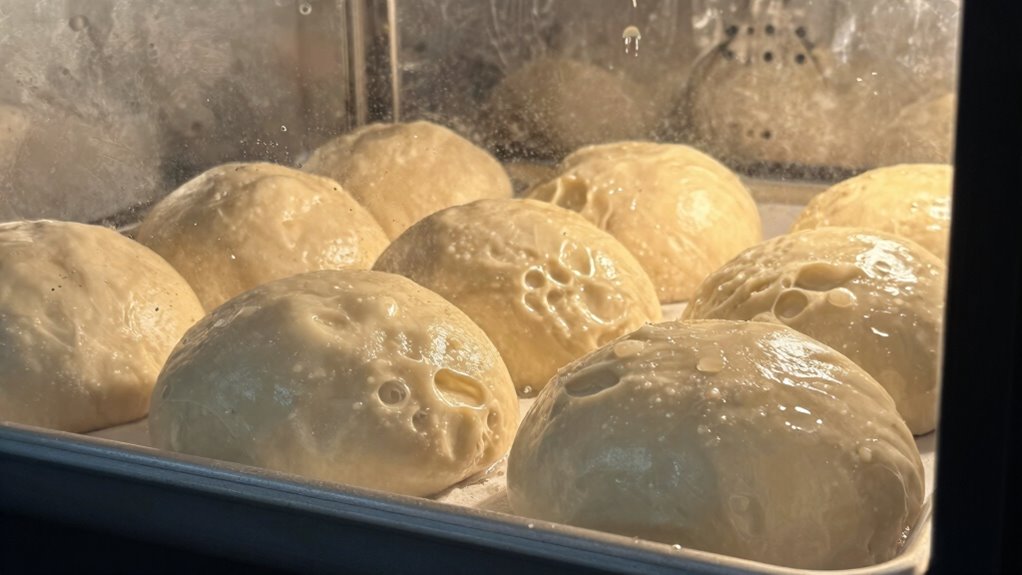
When proofing conditions go off track, signs of overproofed dough become more apparent. You’ll notice a loss of dough elasticity, making it feel slack and less resilient when you gently poke it. Overproofed dough often rises too much, surpassing the ideal fermentation timeline, and then collapses or deflates easily. The surface may look overly bubbly or dry, and the dough might feel very soft or sticky. If you gently press the dough and it leaves a deep indentation that doesn’t spring back, it’s a clear sign it’s overproofed. These indicators show your dough has gone past the most favorable point, often due to too long a fermentation timeline or proofing at too warm a temperature. Proper fermentation is crucial for developing flavor and structure, so recognizing these signs helps you adjust and avoid flat or dense baked goods. Additionally, understanding proofing temperature and keeping it within optimal ranges can prevent overproofing and ensure your dough develops the desired qualities. Maintaining consistent proofing conditions, including temperature and humidity, is essential for predictable results and avoiding overproofing mistakes. Paying attention to proofing time can also help prevent the dough from becoming overproofed, as timing is a critical factor in successful proofing. Being mindful of the proofing environment, such as humidity levels, can also influence how quickly the dough overproofs or underproofs.
Best Practices for Using the Proofing Box to Prevent Overproofing
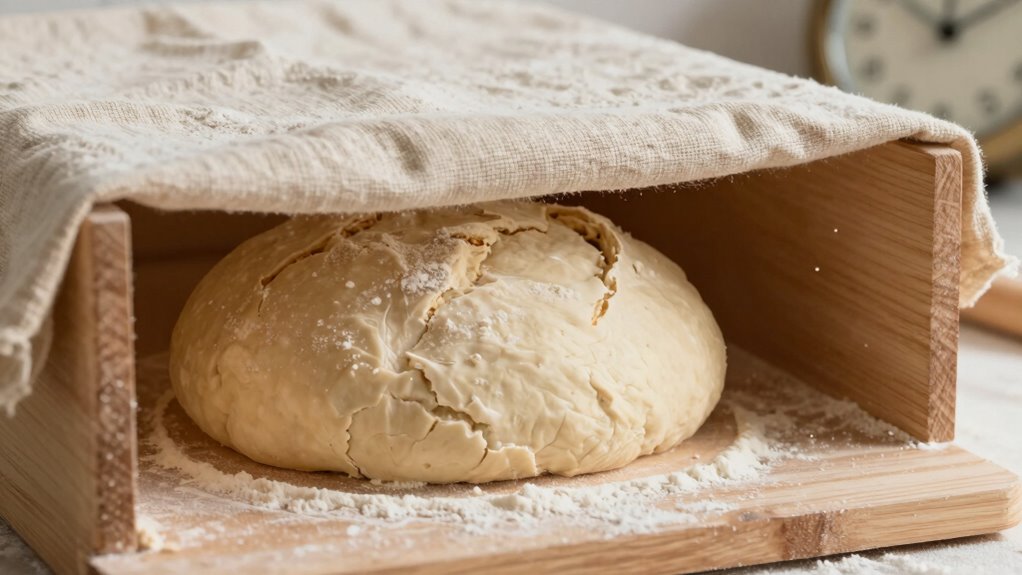
To prevent overproofing in your proofing box, it’s essential to monitor and control the environment carefully. Maintain a consistent proofing environment by keeping the temperature steady, ideally around 75°F (24°C). Use a reliable thermometer to check the dough temperature regularly; aim for about 78-82°F (25-28°C) for ideal fermentation. Avoid opening the proofing box unnecessarily, as fluctuations can cause uneven proofing. Cover the dough properly to retain humidity and prevent skin formation. If your proofing environment is too warm or humid, it can accelerate overproofing. Adjust your settings as needed to create a stable, gentle environment that supports steady fermentation. Proper environment control is crucial for achieving consistent, high-quality results in bread baking. Ensuring your proofing space is free from drafts and temperature fluctuations further helps maintain a stable proofing environment, reducing the risk of overproofing. Additionally, incorporating aromatherapy with calming essential oils like lavender or chamomile can create a more relaxed proofing atmosphere, potentially improving dough behavior and consistency. Using environmental monitoring tools can also help you track and maintain ideal proofing conditions more effectively, especially considering the importance of consistent temperature for optimal fermentation.
Adjusting Your Proofing Method for Different Doughs and Conditions
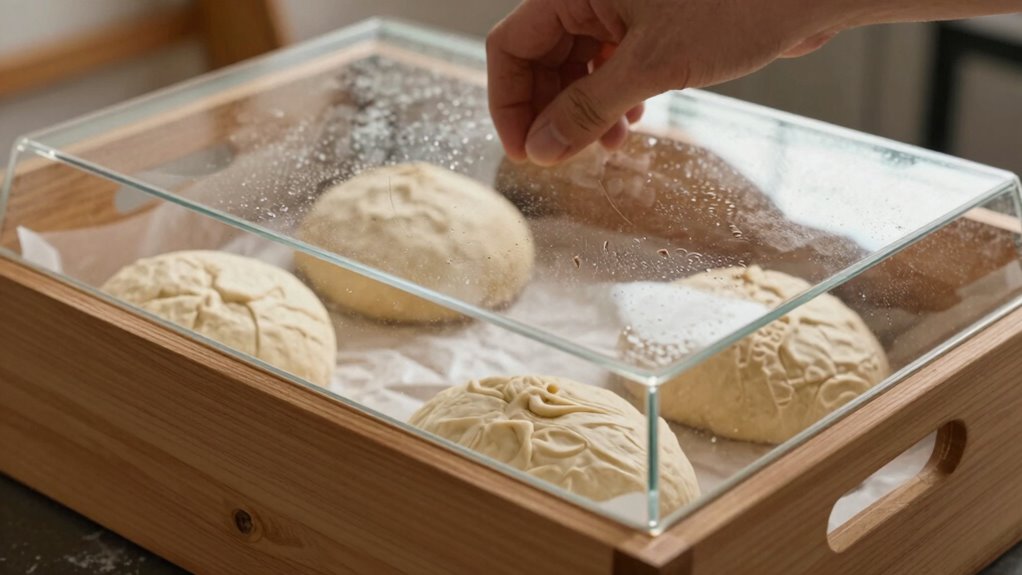
Different types of dough and varying environmental conditions require you to adjust your proofing approach to guarantee ideal fermentation. Your proofing environment and dough hydration levels influence how quickly dough rises. To prevent overproofing or underproofing, consider these adjustments:
Adjust proofing based on dough type and environment for perfect fermentation.
- Monitor room temperature and humidity, adapting your proofing environment accordingly.
- Increase proofing time for high-hydration doughs, which ferment more rapidly.
- Use a cooler proofing environment for delicate, low-hydration doughs.
- Cover dough properly to maintain consistent moisture and prevent drying out.
- Test dough readiness with a gentle poke; adjust proofing based on dough response.
- Understanding proofing accuracy can help you better manage fermentation times and results. Properly assessing proofing conditions and making necessary adjustments can significantly improve your baking outcomes. Additionally, paying attention to environmental factors can optimize your proofing process by creating the ideal conditions for each dough type.
- Being aware of ambient conditions allows you to fine-tune your proofing process and achieve more consistent results.
Frequently Asked Questions
Can the Proofing Box Be Used for Other Baking Processes?
Yes, you can use a proofing box for other baking processes, but be aware of its limitations. It’s great for maintaining consistent warmth and humidity, ideal for dough rising. However, its size and humidity controls may not suit delicate tasks like baking bread or pastries directly. For alternative proofing methods, consider a warm, humid spot in your kitchen or a damp towel over dough, ensuring you don’t rely solely on the proofing box’s capabilities.
How Does Humidity Control Affect Proofing Accuracy?
Humidity regulation acts like a gentle breeze guiding your dough’s ascent, ensuring a perfect moisture balance. When you control humidity accurately, proofing becomes a dance of consistency, preventing it from rising too quickly or stalling. Too much moisture can flood the environment, causing overproofing, while too little stifles fermentation. By maintaining ideal humidity, you create an optimal climate that fosters even proofing, transforming your bread into a masterpiece of texture and flavor.
What Are Alternative Methods to Proofing Boxes?
You can proof dough using alternative methods like natural fermentation in a warm, humid environment or resting it covered in a damp towel. These methods help maintain ideal dough hydration, ensuring proper rise without overproofing. Avoid direct heat sources, and monitor dough closely. You might also use a proofing basket or a covered bowl to create a stable environment, mimicking proofing box conditions and preventing overproofing issues.
How Often Should I Calibrate My Proofing Box?
You should calibrate your proofing box at least once every three to six months to guarantee consistent proofing conditions. Regular proofing box maintenance, including calibration frequency, helps prevent overproofing caused by temperature or humidity inaccuracies. Keep an eye on your proofing environment, and if you notice uneven dough rise or inconsistent results, it’s time for calibration. Proper maintenance ensures your bread proofs perfectly each time.
Is Overproofing Always Caused by the Proofing Box?
Overproofing isn’t always caused by your proofing chamber, but it often plays a big role. If your temperature regulation isn’t precise or if you leave dough in the chamber too long, overproofing can happen. Even small fluctuations in temperature or humidity can accelerate fermentation unexpectedly. So, while the proofing chamber is a common culprit, always consider other factors like dough handling and timing to prevent overproofing.
Conclusion
If you keep falling into the proofing box trap, your bread might turn into a hopeless, overgrown disaster that defies all expectations! But don’t worry—you’ve got the power to master it. By understanding your proofing box, avoiding common mistakes, and adjusting your approach, you’ll turn your dough into perfect, bakery-quality loaves. Say goodbye to overproofed chaos and hello to bread so good, it’ll make your neighbors faint with envy!