Rapidly cooling hot pans, like rinsing with cold water or placing them straight into the fridge, causes thermal stress that leads to warping and damages your cookware. Materials such as aluminum and cast iron respond differently but are both susceptible to damage from quick temperature shifts. To prevent this, cool your pans gradually on heat-resistant surfaces, avoid sudden changes, and handle them carefully. Keep exploring to learn more about protecting your cookware for years to come.
Key Takeaways
- Avoid rinsing hot pans with cold water to prevent thermal shock and warping.
- Let cookware cool gradually on heat-resistant surfaces before washing.
- Do not place hot pans directly into cold environments like refrigerators or cold water.
- Use cooling racks or insulated handles to promote even, gentle cooling.
- Handle cookware carefully to prevent sudden temperature changes that cause deformation.
Why Are Hot Pans More Prone to Warping?
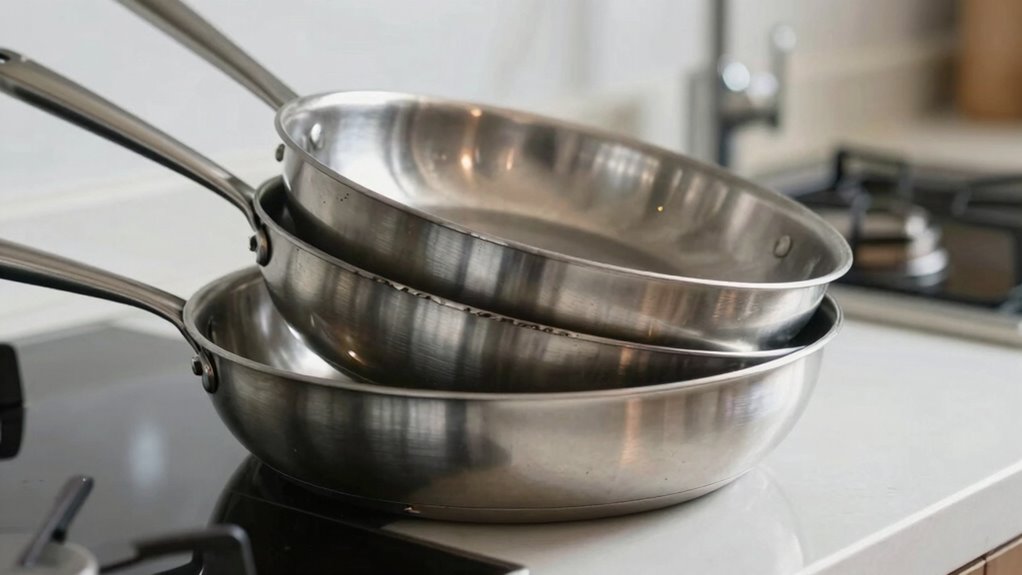
When a pan gets hot, its materials expand unevenly, making it more susceptible to warping. This uneven expansion causes thermal shock, where different parts of the pan experience rapid temperature changes, stressing the material. As the metal heats unevenly, internal stresses build up, increasing the risk of deformation. When you cool the pan quickly, these stresses don’t have time to relax, leading to warping over time. The rapid temperature shifts don’t just cause physical distortion; they also weaken the structural integrity of the pan. Because heat causes the material to expand unevenly, the pan’s shape becomes compromised. This process explains why hot pans are more vulnerable to warping, especially when subjected to sudden cooling or temperature fluctuations. Using high-quality, durable materials like Suprem fabric as an analogy, the strength and resilience of the material can significantly influence its ability to withstand thermal stress without warping. Moreover, proper heating techniques such as gradual temperature increases can help prevent unnecessary strain on the cookware. Additionally, employing proper heating techniques can help maintain the pan’s structural integrity and prolong its lifespan. Understanding how thermal expansion affects cookware can guide you in choosing the right materials and avoiding unnecessary warping. Recognizing the role of material properties can help you select cookware that better withstands heat cycles.
How Do Different Materials Like Aluminum and Cast Iron Respond to Cooling?
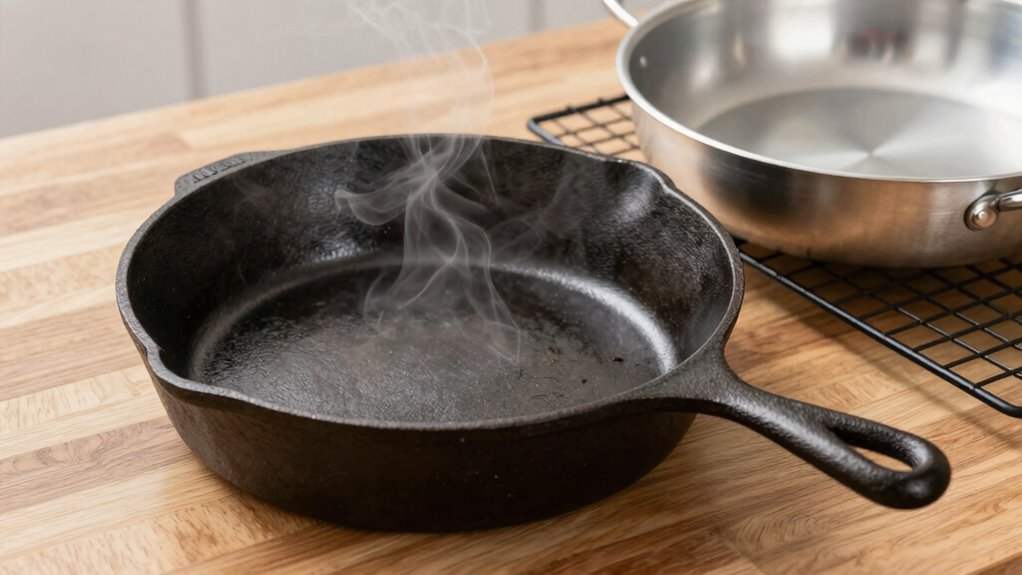
Aluminum expands and contracts quickly due to its high thermal expansion rate, making it more prone to warping during rapid cooling. Cast iron, on the other hand, retains heat longer and cools slowly, reducing stress but increasing the risk of cracks. Understanding how each material responds to cooling helps you choose the right pan for durability and performance. Additionally, thermal expansion plays a crucial role in how materials like aluminum and cast iron behave under temperature changes, affecting their longevity and reliability in the kitchen. Recognizing the material properties of each type of cookware can further inform your care and maintenance practices to prevent damage. Being aware of heat retention characteristics can also guide you in cooking techniques to extend the lifespan of your pans. Proper handling and gradual cooling can help mitigate issues related to thermal stress and preserve your cookware’s integrity over time. Material behavior during cooling is essential to understanding how to prevent warping and cracking effectively.
Aluminum’s Thermal Expansion Rates
Different materials expand and contract at varying rates as they heat up or cool down, which directly impacts how they respond during the cooling process. Aluminum has a high thermal expansion rate, meaning it contracts markedly when cooled. This rapid contraction can lead to material deformation if the pan is cooled unevenly or too quickly. Because aluminum’s structure shifts more with temperature changes, it’s more prone to warping and other damage if not handled carefully. Unlike materials with lower expansion rates, aluminum’s quick contraction increases stress on the metal, making it more sensitive to temperature fluctuations. Understanding aluminum’s thermal expansion helps you avoid damaging your cookware by cooling it gradually and avoiding sudden temperature drops. Additionally, proper cooling techniques can significantly extend the lifespan of aluminum cookware by minimizing thermal stress.
Cast Iron Heat Retention
Cast iron excels at retaining heat longer than many other materials, which means it stays hot even after you remove it from the heat source. This slow cooling helps maintain consistent cooking temperatures and enhances its performance. Proper cast iron seasoning creates a natural non-stick layer that improves over time and contributes to its heat retention. Unlike aluminum, which cools quickly, cast iron’s ability to hold heat supports even cooking and reduces hot spots. Additionally, its durable cookware aesthetics develop a seasoned patina that can be maintained for generations. When you cool cast iron gradually, you protect its seasoning and prevent warping. This slow cooling process helps preserve your cookware’s integrity and enhances its beauty, making it a reliable kitchen staple. Quality cookware materials also influence how well your cookware withstands temperature changes and prolongs its lifespan. Thermal mass plays a crucial role in how effectively cookware retains and distributes heat during cooking.
Material Durability Under Cooling
When it comes to cooling, the durability of cookware materials varies considerably. Aluminum heats quickly but is prone to material fatigue from repeated thermal cycling, which can cause warping over time. Cast iron handles thermal stress well due to its stability, but its thick walls can crack if cooled too abruptly. Here’s a quick comparison:
| Material | Response to Cooling | Durability Aspect |
|---|---|---|
| Aluminum | Rapid temperature change causes warping, fatigue | Sensitive to thermal cycling |
| Cast Iron | Resists warping but can crack with uneven cooling | Excellent durability |
| Copper | Warps under quick cooling, prone to deformation | Moderate durability |
| Stainless Steel | Resistant but can discolor, warping rare | Good durability |
| Non-stick Coats | Damage from thermal shocks, peeling may occur | Less durable under rapid cooling |
Common Mistakes When Cooling Hot Pans (And Why They Damage Your Cookware)
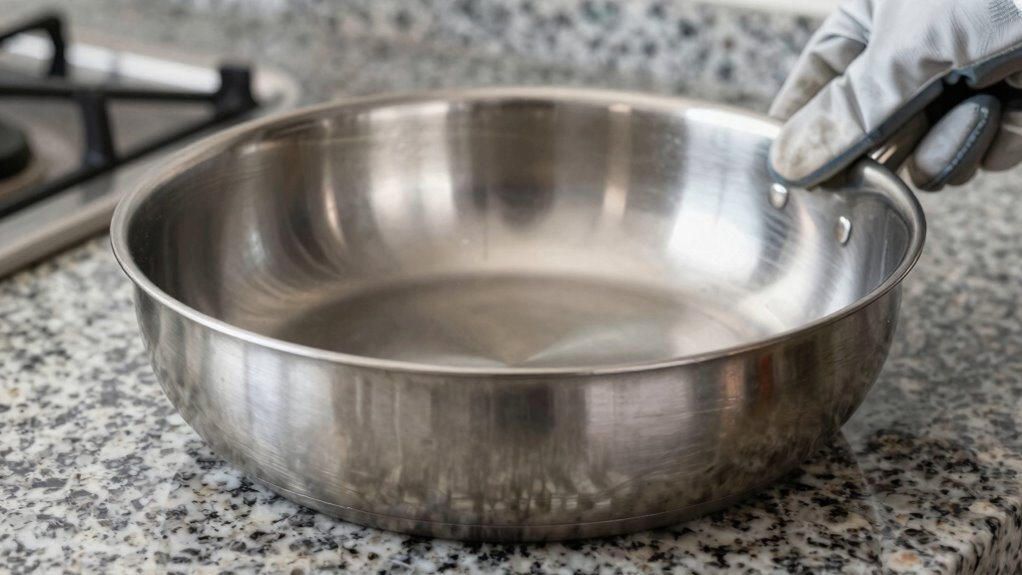
Cooling hot pans too quickly or improperly can cause serious damage to your cookware. Many believe the cooling myth that rapidly chilling a hot pan prevents warping, but in reality, sudden temperature changes can lead to pan warping. When you pour cold water into a hot pan or place it in a cold environment, thermal stress develops, causing the metal to contract unevenly. This uneven contraction weakens the structure, increasing the risk of deformation. Avoid these common mistakes: don’t rinse hot pans with cold water, and resist the urge to move them directly into cold spaces. Instead, let your pan cool gradually at room temperature. Proper cooling preserves your cookware’s shape and extends its lifespan, preventing costly warping and damage.
Why Putting a Hot Pan Straight Into the Fridge Is a Bad Idea

Putting a hot pan directly into the fridge might seem like a quick way to cool it down, but it can do serious damage. When you expose a hot pan to cold temperatures suddenly, it causes uneven cooling that leads to pan warping over time. The rapid temperature change stresses the metal, weakening its structure and increasing the risk of deformation. Additionally, placing a hot pan in the fridge can cause fridge damage. The heat can raise the internal temperature, forcing the appliance to work harder and potentially damaging its compressor or cooling system. To prevent this, always allow your cookware to cool gradually at room temperature before storing it. This careful approach preserves your cookware’s shape and keeps your fridge functioning properly, as well as preventing thermal shock. Allowing the pan to cool naturally is an important step in protecting your cookware, ensuring it remains durable and safe to use for years to come. To further extend the life of your cookware, consider using cooling racks to promote even cooling. Additionally, avoiding rapid temperature changes can significantly prolong the lifespan of your pots and pans.
How to Properly Cool and Handle Your Pans After Cooking
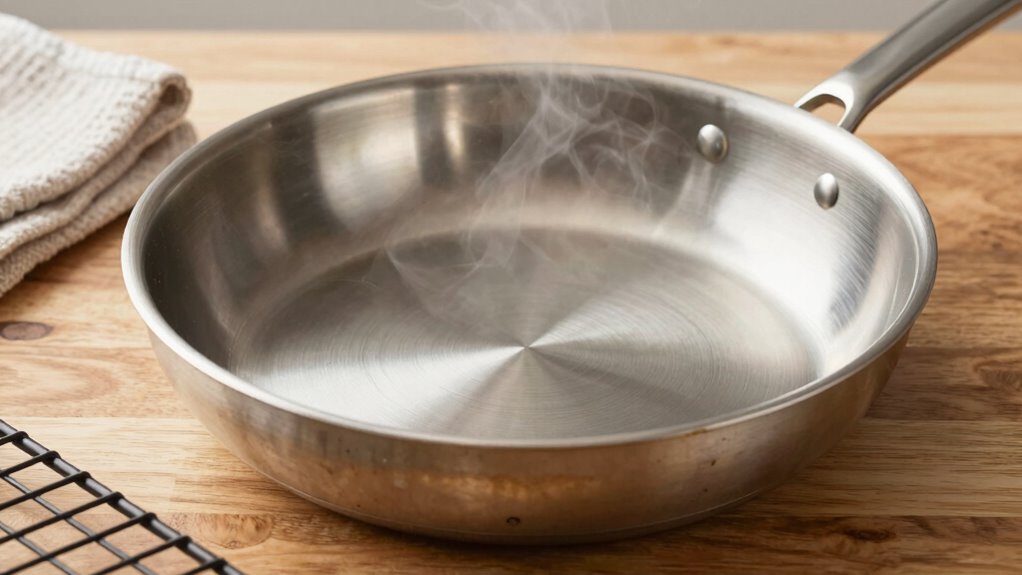
To prevent warping, you should cool your pans gradually using gentle methods like resting them at room temperature. Avoid sudden temperature changes, such as putting hot pans directly into cold water or the fridge. Once cooled, store your pans properly in a dry area to maintain their shape and longevity. Additionally, understanding the importance of safe and reliable power in your kitchen can help you implement proper safety measures when handling appliances and cookware. Proper kitchen safety practices can also minimize the risk of accidents and damage to your cookware. Being aware of thermal expansion helps you better understand why sudden temperature shifts can damage your pans and how to prevent it.
Use Gentle Cooling Methods
After you finish cooking, handling your pans carefully is essential to prevent warping. Instead of rushing to cool them, consider gentle methods like placing the pan in cooling water or running it under lukewarm water. Avoid sudden temperature drops that stress the material. If you stack pans, do so with a soft cloth or paper towel between them to prevent scratches and uneven heat distribution. Let the pan cool gradually on a stovetop or countertop, avoiding direct contact with cold surfaces. Gentle cooling minimizes thermal shock, keeping your cookware in top shape. Additionally, thermal conductivity plays a significant role in how quickly a pan cools, which is why controlling cooling rates is so important. Proper cooling techniques help prevent warping caused by thermal stress. Ensuring your cookware is made from heat-resistant materials can also improve its ability to withstand temperature changes without warping. Remember, patience is key—rushing the cooling process can lead to warping and damage. Using proper cooling techniques ensures your cookware remains durable and safe to use for years to come. Use these simple techniques to extend the lifespan of your pans and maintain their performance.
Avoid Sudden Temperature Changes
Handling your pans carefully after cooking helps prevent warping caused by sudden temperature changes. Rapid cooling stresses the pan’s surface texture and handle design, risking deformation. To avoid this, follow these tips:
- Let your pan cool gradually on a heat-resistant surface before washing.
- Avoid rinsing a hot pan with cold water, which causes thermal shock.
- Use thick, insulated handles to reduce stress during cooling.
- Do not stack hot pans directly on cold surfaces or other cookware.
Being mindful of how quickly you change the temperature preserves both the pan’s surface texture and handle integrity. Proper handling guarantees even heating, prolongs lifespan, and keeps your cookware in excellent condition.
Properly Store Pans After Use
Once you’ve finished cooking, proper cooling of your pans before storing them is vital. Allow your cookware to cool gradually to maintain ideal heat distribution and prevent warping. Avoid stacking hot pans directly in your pan storage, as uneven heat can damage the material. Instead, place them on a heat-resistant surface and let them cool to room temperature. Using a towel or a cooling rack can help facilitate gentle cooling. Once cooled, clean your pans thoroughly to remove residue that could cause sticking or corrosion. Proper handling ensures your pans retain their shape and cooking performance. Storing them correctly preserves their longevity and prevents warping caused by sudden temperature changes or improper heat distribution during storage.
How to Check If Your Pans Are Warped and When to Worry
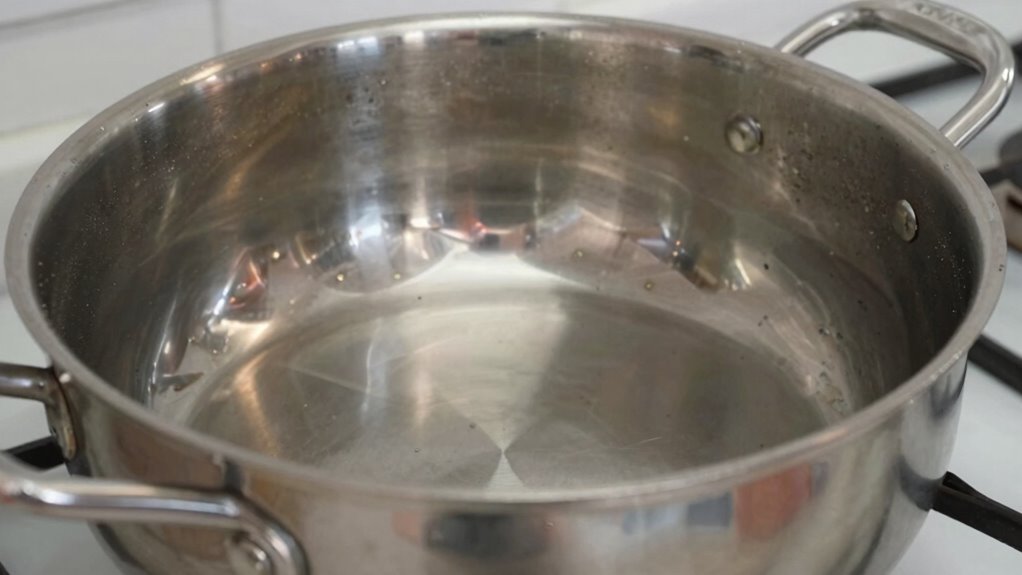
To determine if your pans are warped, start by placing them on a flat, smooth surface like a glass or granite countertop. Observe how well the pan sits; if it wobbles or rocks, it’s a sign of cookware deformation. Here are some key checks:
Place your pan on a flat surface; wobbling indicates warping.
- Visual Inspection: Look for uneven warping or bending along the base.
- Tapping Test: Gently tap the pan’s bottom with a utensil—listen for irregular sounds indicating warping.
- Cooking Performance: If food cooks unevenly or burns in spots, your pan might be warped.
- Surface Contact: Hold the pan against a straightedge or ruler to see if it touches only parts of the bottom, indicating warping.
If you notice any of these signs, your cookware may have experienced pan warping, and you should consider replacing it.
Ways to Fix Slightly Warped Pans and When to Replace Them
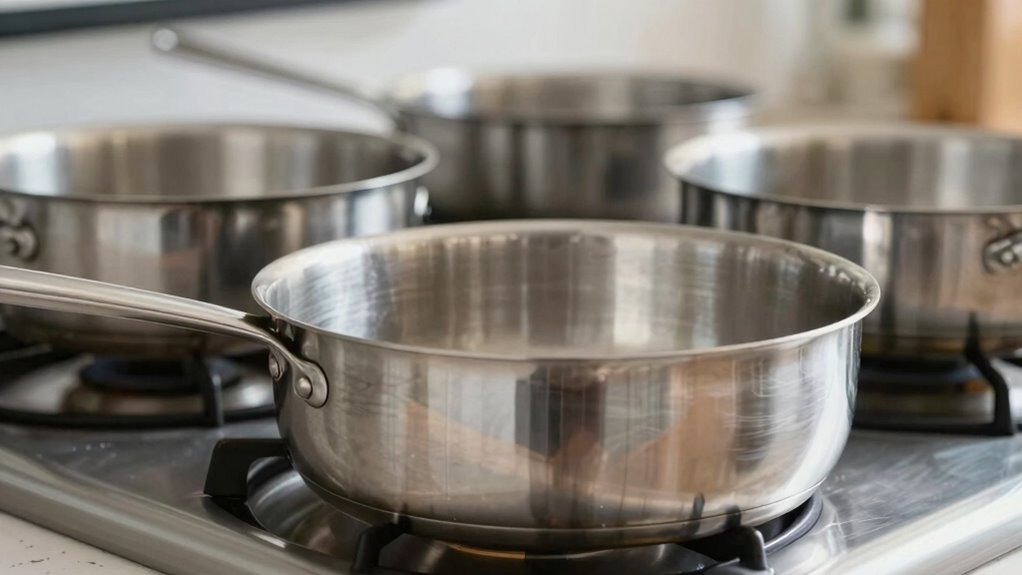
If you notice minor warping on your pans but they still sit relatively flat and cook evenly, there are simple fixes you can try before replacing them. One method is to carefully flatten the warped area by applying gentle, even heat with a heat diffuser or placing the pan in a warm oven for a few minutes. Be cautious not to overheat or expose it to sudden temperature changes, as this can worsen warping. Regular pan care and proper cookware maintenance, like avoiding rapid cooling and using appropriate utensils, can prevent further damage. If warping persists or worsens, it’s best to replace the pan to ensure safe, even cooking. Addressing minor warping early helps extend your cookware’s lifespan and maintains ideal performance.
Tips to Store and Handle Pans to Prevent Warping in the Future
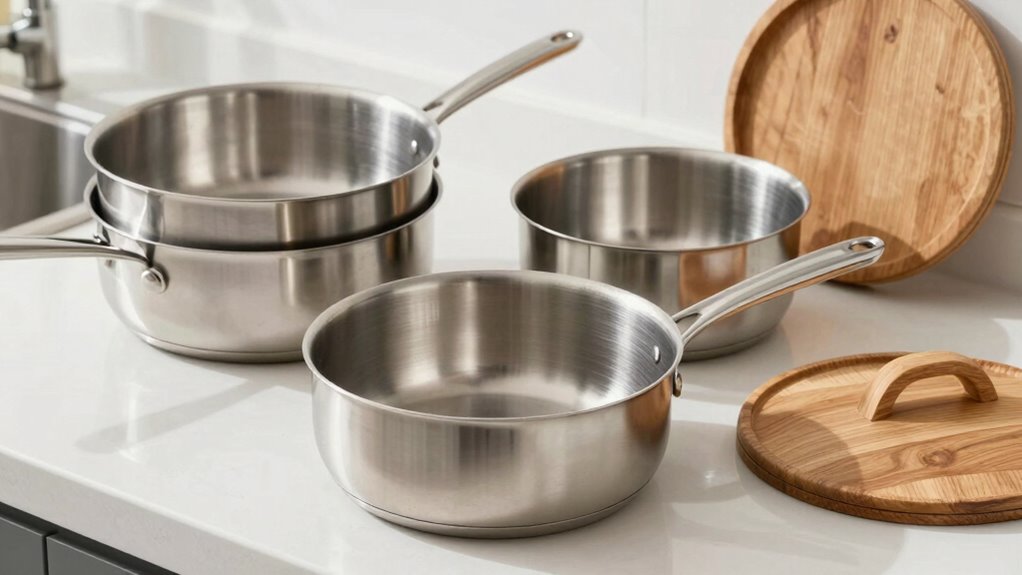
To prevent warping, you should cool your pans properly after use, avoiding sudden temperature changes. Store them in organized, padded spaces to minimize stress and accidental damage. Handle your pans gently, paying attention to proper techniques to keep them flat and in good condition.
Proper Cooling Techniques
Proper cooling techniques are essential for preventing pan warping, and how you handle and store your pans plays a crucial role. After cooking, avoid rapid temperature changes by letting your pan cool gradually. This helps preserve the integrity of your cookware. Here are four tips:
- Allow pans to cool naturally before cleaning or washing.
- Use gentle cleaning methods, avoiding harsh abrasives that can weaken the material.
- When seasoning techniques are involved, ensure the pan cools completely before applying oils or finishes.
- Store pans in a stable environment, avoiding stacking or placing them in hot, humid areas.
Following these steps reduces stress on the metal and helps maintain proper shape over time. Consistent, gentle cooling is key to extending your cookware’s lifespan and avoiding warping.
Organized Storage Solutions
Organized storage is essential for preventing pan warping, as improper handling can put unnecessary stress on your cookware. Proper pan storage and cookware organization help keep your pans in good shape and avoid accidental drops or crushing that can cause warping. Use sturdy racks or hooks to hang pans, ensuring they aren’t stacked too tightly or with heavy items on top. When stacking, place a soft cloth or paper towel between pans to prevent scratches and uneven weight distribution. Avoid overcrowding cabinets, which can lead to unnecessary pressure on the cookware. By maintaining an organized storage system, you reduce the risk of warping caused by mishandling or improper stacking, helping your pans stay flat and functional for years to come.
Handling With Care
Handling your pans carefully is essential to preventing warping over time. Proper handling safety guarantees your cookware stays flat and functional. To maintain your pans and avoid damage, follow these tips:
- Always lift rather than slide pans across surfaces to prevent stress on the material.
- Use oven mitts or pot holders to handle hot pans safely, avoiding accidental drops.
- Avoid sudden temperature changes—don’t run cold water over hot cookware.
- Store pans securely to prevent shifting or knocking, which can cause warping.
Key Practices to Protect Your Cookware and Keep It Flat for Years

To keep your cookware flat and prevent warping, start by avoiding sudden temperature changes, such as placing a hot pan directly into cold water or cold storage. Proper pan seasoning creates a natural non-stick surface and reduces the need for harsh cleaning, which can damage the pan’s integrity. When cleaning your cookware, use gentle scrubbers and avoid abrasive cleaners that can cause warping over time. Always dry your cookware thoroughly after washing to prevent moisture buildup, which can weaken the material. Store your pans properly, stacking with soft cloths if needed, to prevent dents or warping. Following these practices helps maintain your cookware’s shape and ensures it lasts for years without warping or damage.
Final Tips: Maintaining and Restoring Your Cookware for Longevity

Regular maintenance is key to extending the life of your cookware. To keep it in top shape, focus on proper cleaning, storage, and understanding your cooking styles. Here are four tips to help you maintain and restore your cookware for longevity:
- Clean thoroughly after each use to prevent residue buildup, which can cause warping.
- Ensure your kitchen remains clean, especially around heat sources, to avoid uneven heating.
- Use appropriate heat levels for different cookware types; high heat can warp pans over time.
- Regularly inspect for damage and restore cookware with proper seasoning or repair methods when needed.
Frequently Asked Questions
Can Seasoning or Oil Prevent Pan Warping?
Seasoning or oil can help prevent pan warping by improving seasoning durability and creating a protective layer. Use oil compatible with your pan type, like flaxseed or vegetable oil, for best results. Properly seasoned pans distribute heat evenly, reducing warping risks. Remember, avoid rapid temperature changes and overheating. Regularly re-season your cookware to maintain its protective layer, ensuring longevity and consistent performance.
Does Dishwasher Cleaning Affect Pan Warping?
Imagine your pan riding through a dishwasher’s churning waters, where harsh detergents and high heat collide. Dishwasher damage can cause warping, especially with non-stick or delicate pans. Using proper cleaning methods, like hand washing with gentle scrubbers, preserves your cookware’s shape and coating. Don’t risk warping by relying on dishwasher cleaning—opt for careful, methodical cleaning to keep your pans flat and functional longer.
Are Ceramic or Non-Stick Pans More Resistant to Warping?
Ceramic pans tend to be more resistant to warping due to their ceramic durability, which withstands high temperatures and rapid temperature changes better. Non-stick pans, while resilient in non-stick coating, are generally less resistant to warping because of their thinner construction and materials. You should handle ceramic pans carefully, especially when heating or cooling, to prevent warping, and choose high-quality non-stick options for better resilience.
How Does Repeated Thermal Shock Impact Pan Durability?
Repeated thermal shock is like bending a paperclip back and forth; it weakens your pan over time. You cause thermal stress that leads to metal fatigue, making the material more prone to warping, cracking, or even breaking. Every quick temperature change accelerates this damage, reducing your cookware’s lifespan. To protect your pans, avoid sudden temperature shifts and let them cool gradually—this preserves their durability and keeps them cooking well longer.
Is It Safe to Use Warped Pans for Cooking?
Using warped pans isn’t safe because warping can cause uneven heat distribution, leading to food mishaps or potential leaks. For pan repair, it’s best to compare materials like stainless steel or cast iron, which resist warping better. If your pan is severely warped, replacing it is smarter than trying to fix it, especially since some materials don’t respond well to repair efforts. Prioritize safety and choose durable cookware suited for your cooking style.
Conclusion
By treating your pans with care, you can keep them flat and beautiful for years to come. Avoid the temptation to shock hot cookware with cold water or store it improperly—think of it as giving your pans a gentle hug, not a harsh jolt. With proper handling, you’ll prevent warping and guarantee your cookware stays a trusty kitchen companion, standing tall and proud through countless delicious meals.