
You’ll find that peanut roasters improve flavor only when cooling happens quickly because rapid cooling immediately stops the roasting process, locking in the flavors and aromas you want. Fast cooling also helps maintain the right texture and moisture content, preventing over-roasting or uneven flavor development. If you manage to cool promptly, you’ll get a more consistent, flavorful batch with better crunch and aroma. Keep going to discover more about how quick cooling enhances your roasting results.

Get kitchen staples and gadgets delivered free with Prime
- Fast, free delivery on millions of items
- Prime Video, Amazon Music and more included
- Member-only deals all year
Key Takeaways
- Rapid cooling halts chemical reactions, preserving the peak flavor developed during roasting.
- Fast cooling prevents over-roasting, maintaining desired aroma and nutty notes.
- Quick heat removal ensures uniform flavor and texture across the entire batch.
- Efficient cooling locks in moisture, enhancing the overall mouthfeel and freshness.
- Delayed cooling can cause flavor degradation and uneven quality in roasted peanuts.
When roasting peanuts, quickly cooling them after the heat source is essential for enhancing flavor. The moment you pull the peanuts from the heat, you need to stop the cooking process immediately. This rapid cooling is crucial because it locks in the flavors developed during roasting. If you delay, the residual heat continues to cook the peanuts, which can lead to over-roasting and a burnt or bitter taste. Proper cooling preserves the delicate balance of roasted flavors and prevents the peanuts from becoming overly dark or dry.
The key to good flavor development lies in your ability to control the cooling process. When cooling is efficient, it halts the chemical reactions triggered during roasting at just the right moment. This means you capture the peak flavor profile, including the nutty aroma and the subtle sweetness that roasting enhances. If the cooling is slow or uneven, some peanuts may continue to cook, resulting in inconsistent flavor. This variability can diminish the overall quality of your batch, leaving you with some peanuts that are too roasted and others that aren’t roasted enough. Achieving uniform cooling is also essential to prevent temperature fluctuations that can affect flavor.
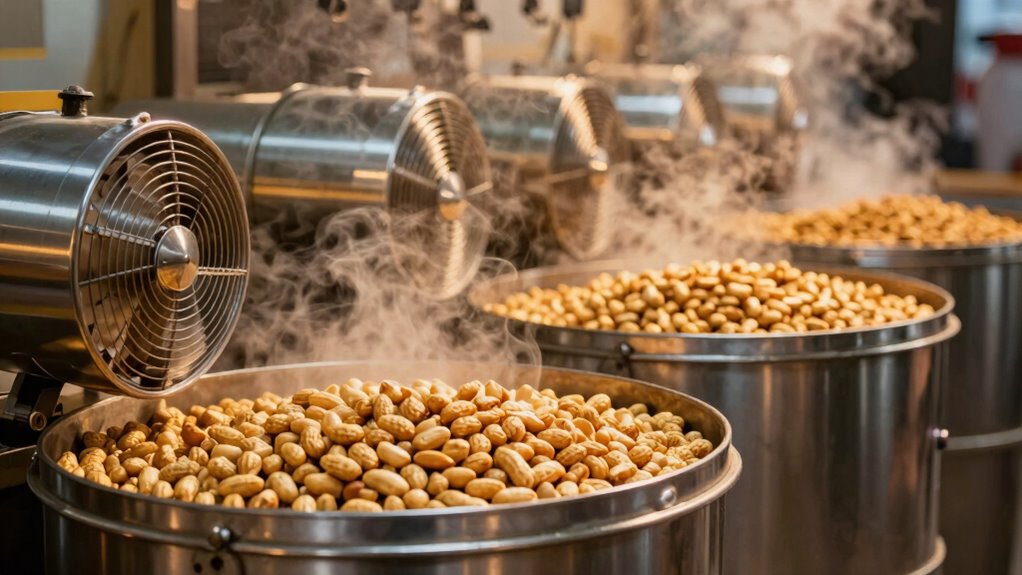
Cooling efficiency directly impacts the quality of your finished product. Using a rapid cooling method, like spreading the peanuts on a cool surface or using a fan, helps you achieve uniformity. The faster you can bring down the temperature, the more you prevent over-roasting. This quick transition from heat to cool is especially important when you’re working with batch roasting because it helps maintain consistency across all the nuts. Efficient cooling also reduces moisture loss, which can otherwise lead to a dry, less flavorful peanut. Proper cooling techniques are vital for maintaining both flavor and texture. Additionally, understanding the cooling process can help you fine-tune your roasting method for optimal results. Implementing effective cooling methods can significantly enhance the overall quality and flavor of your roasted peanuts.
In addition to maintaining flavor integrity, fast cooling helps you better control the texture of your peanuts. Over-roasted peanuts tend to be tough and brittle, while those cooled quickly retain a better crunch and tenderness. This textural quality is part of what makes freshly roasted peanuts appealing. When cooling is sluggish, the texture can suffer, and that affects the overall eating experience. Rapid cooling also helps preserve the natural moisture content, which contributes to a better mouthfeel.
Ultimately, the success of your roasting process depends on your attention to cooling. To improve flavor, you need to prioritize rapid, even cooling immediately after roasting. This not only preserves the rich, roasted flavor but also ensures consistency and optimal texture. When cooling is fast enough, you maximize flavor development, making your roasted peanuts more delicious and satisfying.
As an affiliate, we earn on qualifying purchases.
Frequently Asked Questions
How Does Cooling Speed Affect Peanut Oil Quality?
Cooling speed directly affects peanut oil quality by impacting flavor retention and oil stability. When you cool peanuts quickly, you lock in fresh flavors and prevent overheating that can cause oxidation. Fast cooling minimizes moisture and oxygen exposure, preserving oil quality and reducing rancidity. This process helps maintain the oil’s stability over time, ensuring your peanuts stay fresher longer and retain their best flavor and texture.
What Cooling Methods Are Most Effective for Flavor Preservation?
To maximize flavor retention and preserve sensory impact, you should use rapid cooling methods like water quenching or forced air cooling. These techniques quickly lower the temperature, preventing oil degradation and aroma loss. By cooling fast, you maintain the peanut’s natural flavors and aroma, ensuring a better sensory experience. Slow cooling allows flavor compounds to escape, diminishing the overall quality and sensory impact of your roasted peanuts.
Can Cooling Speed Influence Peanut Aroma Development?
Cooling speed directly influences peanut aroma development and flavor retention. When you cool the peanuts quickly, you lock in the desirable aroma compounds and prevent the loss of volatile flavors. Fast cooling helps preserve the freshness and enhances aroma, making the peanuts more appealing. By controlling cooling rates, you guarantee better flavor retention and aroma enhancement, resulting in a superior product that delights consumers with richer, more vibrant flavors and enticing aromas.
How Does Ambient Temperature Impact Cooling Efficiency?
Ambient temperature critically impacts cooling efficiency because stable ambient conditions help maintain consistent temperature gradients. When the environment is stable, heat dissipates more effectively, preventing uneven cooling that can affect flavor development. If the ambient temperature fluctuates or is too high, cooling slows down, risking flavor loss. To optimize cooling, guarantee a controlled environment with steady ambient stability, enabling rapid heat dissipation and preserving peanut aroma.
Is Rapid Cooling Necessary for All Types of Roasted Nuts?
Rapid cooling isn’t essential for all roasted nuts, but it considerably boosts flavor enhancement and preserves texture. When cooling is quick, nuts retain their crispness and flavor profiles, preventing continued cooking that can lead to bitterness or dryness. For delicate or high-quality nuts, fast cooling ensures you lock in freshness and ideal texture. However, for some nuts, slower cooling might suffice, especially if flavor development during roasting is the priority.
Conclusion
So, if you want your peanuts to burst with flavor like a fireworks display in your mouth, don’t let them cool slowly—speed up that cooling process! Think of it as a flavor explosion waiting to happen, where each nut is a tiny rocket igniting with taste. Skip the slow cooling, and your peanuts might as well be bland, lifeless stones. Fast cooling isn’t just a choice; it’s the secret to revealing peanut perfection!
NFL season / tailgating Picks
team gear
As an affiliate, we earn on qualifying purchases.