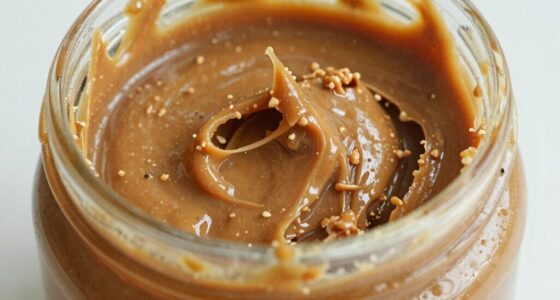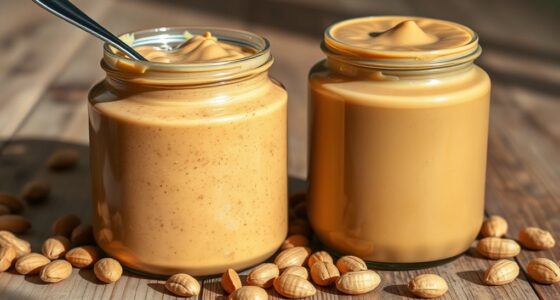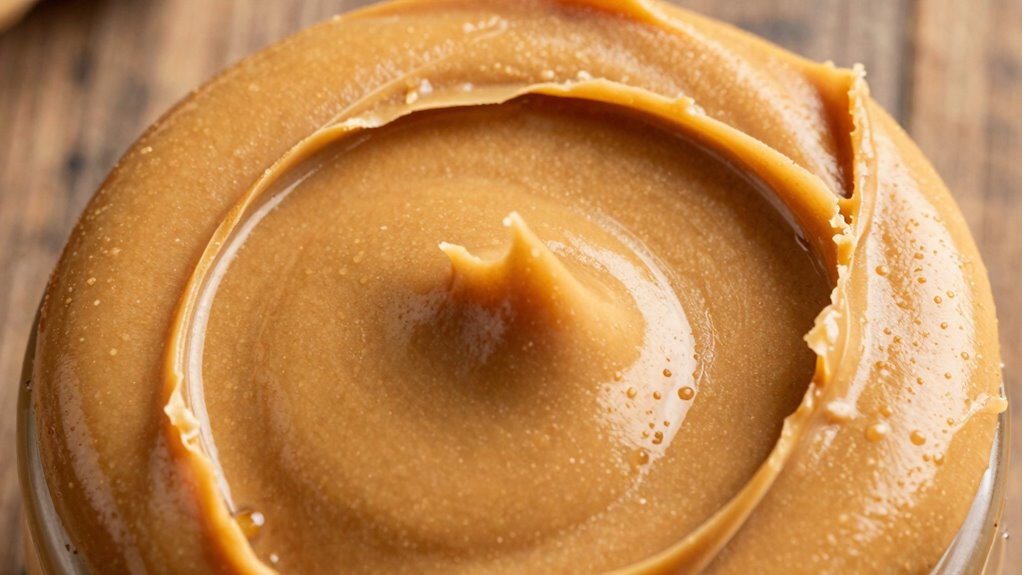

Your homemade peanut butter’s texture isn’t just about how long you grind; it starts with picking the right roast depth. A properly roasted peanut releases more oils during grinding, creating that smooth, creamy consistency you want. Light roasts preserve mild flavors but lack oil, while darker roasts boost oil release and richness. Getting the roast level right guarantees better oil integration and less separation over time. Keep exploring—there’s more to perfecting your homemade peanut butter.

Get kitchen staples and gadgets delivered free with Prime
- Fast, free delivery on millions of items
- Prime Video, Amazon Music and more included
- Member-only deals all year
Key Takeaways
- Proper roast depth enhances oil release, leading to smoother, creamier peanut butter regardless of grinding duration.
- Deep roasting develops natural oils and flavors that improve texture and reduce separation over time.
- Light roasts may require longer grinding but still struggle with oil integration, affecting final smoothness.
- Consistent, well-controlled roasting ensures even oil distribution and better overall texture during processing.
- Optimal roast levels create a stable, cohesive mixture, minimizing the need for added oils or stirring after grinding.
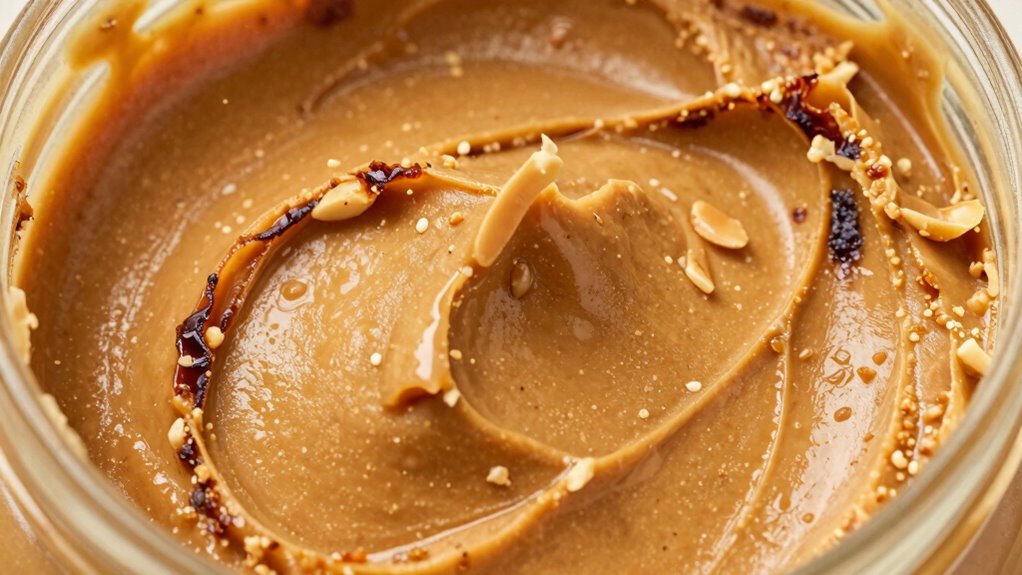
Have you ever wondered how to achieve the perfect homemade peanut butter texture? The secret isn’t just in how long you grind the peanuts; it’s about starting with the right roast depth. When you roast your peanuts, you’re setting the foundation for flavor enhancement and texture development. Light roasts preserve a mild, nutty flavor, but don’t bring out the full depth of aroma and richness that darker roasts can provide. A deeper roast enhances the natural sweetness and adds a toasted, complex flavor that elevates your peanut butter beyond the ordinary. This initial step impacts the final consistency, ensuring that your peanut butter isn’t just smooth but also bursting with flavor.
Once you’ve achieved the preferred roast level, the grinding process begins. While longer grinding times can help break down the peanuts into a creamy consistency, they don’t necessarily guarantee a perfect texture. Instead, the quality of the roast influences how easily the peanuts release their oils during grinding. A proper roast encourages better oil release, which is key to achieving that creamy, spreadable texture you’re after. It also plays a role in flavor enhancement, giving your peanut butter a richer, more robust taste. Keep in mind, though, that oil separation can still happen over time. To counter this, you might need to stir the peanut butter before each use or consider adding a small amount of oil to maintain consistency if you prefer a more uniform texture. Additionally, understanding roast depth can help you tailor your process for optimal flavor and texture. Recognizing how oil release is affected by roasting helps in creating a more cohesive mixture, especially as the oils naturally separate over time.
The depth of roast also affects how your peanut butter handles oil separation. A darker roast tends to produce a more cohesive mixture because the oils are better integrated. However, if your peanut butter sits for a while and oil begins to rise to the top, don’t worry—you can easily mix it back in to restore its original consistency. This step is crucial for maintaining the texture you desire and ensuring every spoonful is smooth and flavorful. When selecting your roast level, consistent roasting can make a significant difference in achieving the desired texture and flavor profile. Proper temperature control during roasting ensures even development and prevents burning or uneven flavors. Remember, the goal isn’t just grinding longer but roasting smarter. By paying attention to the roast depth, you enhance flavor and manage oil separation more effectively, resulting in a homemade peanut butter that’s both delicious and perfectly textured.
peanut butter roasting and grinding kit
As an affiliate, we earn on qualifying purchases.
As an affiliate, we earn on qualifying purchases.
Frequently Asked Questions
Can Different Peanut Varieties Affect the Final Texture?
Yes, different peanut varieties definitely affect the final texture. A peanut variety with higher oil content, like Valencia, produces a creamier, smoother peanut butter, while lower-oil varieties, like Spanish or Virginia, tend to result in a chunkier, thicker texture. Your choice of peanut variety influences texture variation, so experiment to find the one that matches your preferred consistency. Adjust roasting and grinding accordingly for the best homemade peanut butter.
How Does Adding Oil Change the Peanut Butter’s Consistency?
Adding oil to peanut butter is like tuning a musical instrument—you control the oil consistency to modify the texture. When you blend oil in, it loosens the mixture, making it creamier and smoother, perfect for spreading. The right amount of oil guarantees your peanut butter isn’t too thick or gritty, giving you that ideal, velvety consistency. It’s a simple trick to elevate your homemade spread to perfection.
Is There an Ideal Roasting Temperature for Optimal Texture?
You should aim for a roast temperature around 350°F (175°C) for ideal texture and flavor development. This temperature allows the peanuts to develop a richer, deeper flavor while maintaining the right level of oil release for smoothness. Avoid over-roasting, as it can make the nuts too dry or bitter, impacting texture. Proper roasting at this temperature enhances both flavor and the creaminess of your homemade peanut butter.
Can Homemade Peanut Butter Be Stored Without Refrigeration?
You can store homemade peanut butter without refrigeration for a short period, but for longer shelf stability and flavor preservation, it’s best to refrigerate it. Without refrigeration, oils can go rancid, affecting taste and texture. To extend shelf life, keep it in a sealed container in a cool, dark place. Refrigeration slows spoilage, maintains flavor, and guarantees your homemade peanut butter stays fresh and delicious for weeks.
How Does Ambient Humidity Influence Peanut Butter Texture?
Humidity impact can turn your peanut butter into a sticky, unspreadable mess if you’re not careful. When ambient humidity rises, moisture sneaks in, making the texture creamier or even causing separation. To keep your homemade peanut butter smooth, moisture control is key—store it in an airtight container and keep it in a cool, dry place. This way, humidity won’t sabotage your effort and your peanut butter stays just right.
Conclusion
Remember, making peanut butter at home is like tending a garden—trust the process, and patience will reveal its true richness. The roast depth is your seed, shaping the flavor and texture, while your grinding is the gentle watering that brings it to life. With each batch, you’re cultivating a masterpiece born from care and attention. So, embrace the journey, and soon you’ll savor a jar that’s uniquely yours—a symbol of craftsmanship and love in every spoonful.
Halloween Picks
halloween
As an affiliate, we earn on qualifying purchases.