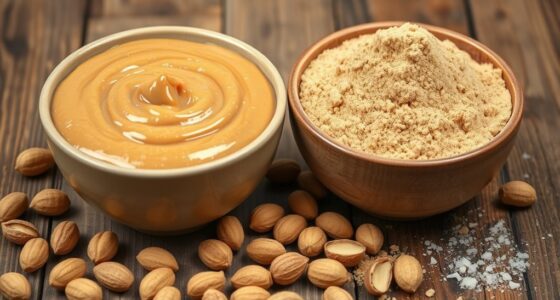
Peanut butter’s marketed as a high-protein food, but the truth is, its protein content is modest—about 7-8 grams per two tablespoons. Compared to chicken, fish, or beans, it’s lacking. While it’s beneficial for healthy fats, it shouldn’t replace primary protein sources in your diet. Look for natural peanut butter with few ingredients to avoid added proteins that can mislead you. Want to learn more about how to incorporate it wisely into your meals?
Key Takeaways
- Peanut butter contains about 7-8 grams of protein per two-tablespoon serving, which is modest compared to other protein sources like meat or legumes.
- Marketing often portrays peanut butter as a high-protein food, potentially misleading consumers about its actual protein content.
- While it provides healthy monounsaturated fats, peanut butter’s high calorie count (around 190 calories per serving) should be considered in dietary planning.
- Some brands enhance peanut butter with additional protein, which can further confuse perceptions of its natural protein levels.
- For a balanced diet, peanut butter should complement other protein-rich foods rather than serve as a primary protein source.

As you explore the world of nutrition, you might wonder how peanut butter stacks up when it comes to protein claims. It’s a popular choice for many, touted for its creamy taste and versatility. However, when you look at nutritional labeling, things may not be as straightforward as they seem. You’ll find that peanut butter does contain protein, typically around 7-8 grams per two-tablespoon serving. But is that enough to consider it a primary protein source?
Peanut butter is tasty and versatile, but its protein content may not qualify it as a primary source.
Consumer perceptions play a significant role in how you view peanut butter’s nutritional value. Many people equate peanut butter with high protein, often because it’s marketed that way. You might think of it as an ideal snack to fuel your workouts or a healthy alternative to other spreads. Yet, when you compare it to sources like chicken, fish, or beans, the protein content is relatively modest. This discrepancy is essential to understand, especially if you’re trying to meet specific dietary goals or protein intake.
Moreover, the fat content in peanut butter is mainly healthy monounsaturated fats, which can be beneficial. However, that also means you’re consuming extra calories, which can be a concern if you’re trying to maintain or lose weight. As you scan the nutritional label, you’ll see that each serving packs around 190 calories, primarily from fat. This means that while it does contribute protein, it’s important to balance it with other sources.
Many brands aim to capitalize on the protein trend, so you might encounter peanut butter products labeled as “high-protein.” These could contain added protein from whey or other sources, which might skew your perception of its natural protein content. If you’re looking for a clean, whole-food option, sticking to natural peanut butter with minimal ingredients is usually best. Additionally, incorporating foods high in vitamins A, C, and folate can help create a balanced diet that supports overall health.
As you navigate your choices, remember that peanut butter can certainly be part of a healthy diet. Just don’t rely on it as your main protein source. Instead, think of it as a complement to a well-rounded meal plan. Understanding nutritional labeling and being aware of consumer perceptions can empower you to make informed decisions about how to incorporate peanut butter into your diet effectively. Ultimately, it’s all about balance and ensuring you’re meeting your nutritional needs while enjoying the foods you love.
Frequently Asked Questions
Is Natural Peanut Butter Healthier Than Processed Varieties?
Yes, natural peanut butter is generally healthier than processed varieties. With its rich peanut butter flavor and minimal additives, you get better ingredient transparency. You’re choosing a product that contains just peanuts, or peanuts and salt, which means fewer unhealthy fats and sugars. Processed peanut butters often have added oils and sweeteners, which can detract from their nutritional value. So, when you pick natural, you’re making a healthier choice for your diet.
Can Peanut Butter Help With Weight Loss?
Yes, peanut butter can help with weight loss, but it’s all about portion control. Its calorie content is high, so enjoying it in moderation is key. A small serving can satisfy your hunger and provide healthy fats, keeping you full longer. Pair it with fruits or veggies for a nutritious snack that curbs cravings. Just remember to measure out your portions to avoid overindulging and make it part of a balanced diet.
Are There Any Allergens in Peanut Butter?
Yes, peanut butter can contain allergens. Most importantly, peanuts are a common allergen, and allergen labeling often highlights this. Additionally, cross-contamination risks can arise during manufacturing, especially if the facility processes other nuts or allergens. Always check the label for warnings about cross-contamination. If you have a peanut allergy, it’s essential to read these labels carefully to avoid any adverse reactions. Staying informed helps keep you safe.
How Should I Store Peanut Butter for Freshness?
To keep your peanut butter fresh, store it in a cool, dark place, like a pantry or cupboard. If you’ve opened it, consider refrigerating it for longer freshness preservation. Make sure you seal the jar tightly to prevent air exposure. For best results, use clean utensils each time, avoiding contamination. Following these storage tips will help you enjoy your peanut butter’s rich flavor and creamy texture for as long as possible!
Can Peanut Butter Cause Digestive Issues?
Yes, peanut butter can cause digestive issues for some folks. Imagine your stomach as a busy highway; when you eat a lot of peanut butter, it might hit a traffic jam. The high fat content can slow down peanut butter digestion, leading to discomfort or bloating. While it offers a great nutritional impact, moderation is key. If it doesn’t sit well with you, consider trying other nut spreads that might be easier on your system.
Conclusion
In the grand tapestry of nutrition, peanut butter often struts its stuff as a protein powerhouse. However, while it does offer a delightful dose of this essential nutrient, it’s wise to temper your expectations. Rather than viewing it solely as a muscle-building marvel, consider it a charming companion in a balanced diet. Embrace its rich flavor and versatility, but remember: moderation is key, and a well-rounded approach will always be your best ally in health.