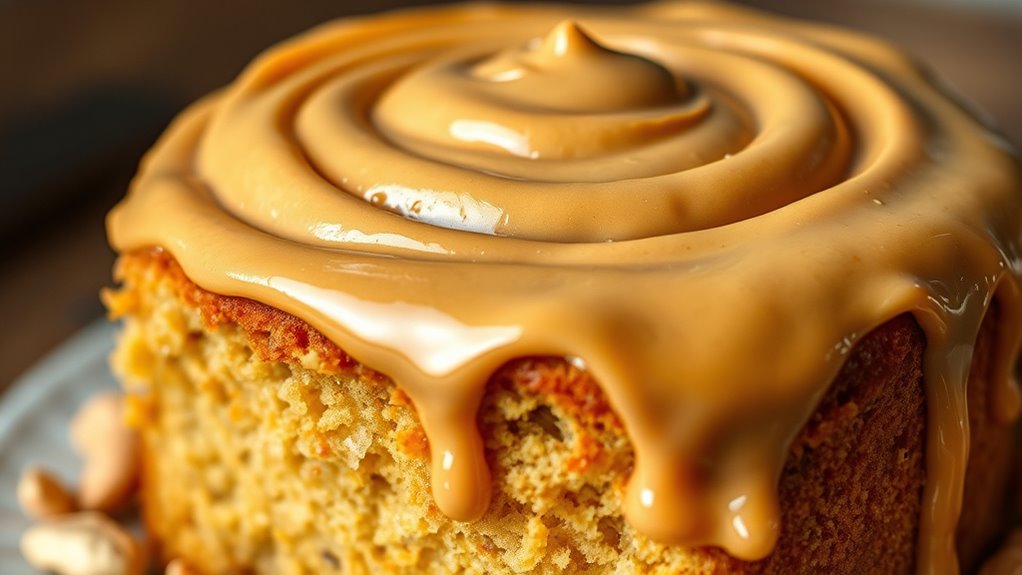
Peanut butter’s a game-changer in baking, providing both moisture and structure to your goodies. It replaces traditional fats, ensuring your treats stay soft and chewy while boosting flavor with its rich, nutty taste. You’ll find it helps bind ingredients, creating a cohesive final product without dryness or crumbling. Plus, its protein and healthy fats make your baked goods a bit healthier! Stick around to discover more ways to elevate your baking with peanut butter.
Key Takeaways
- Peanut butter enhances moisture in baked goods, preventing dryness and ensuring a soft, chewy texture.
- It replaces traditional fats, contributing to a dense and cohesive structure in treats.
- The binding properties of peanut butter improve the overall structural integrity of baked items.
- Incorporating peanut butter results in a fudgy consistency, enhancing the mouthfeel of desserts.
- It allows for consistent moisture levels, making it a versatile ingredient for various baked goods.
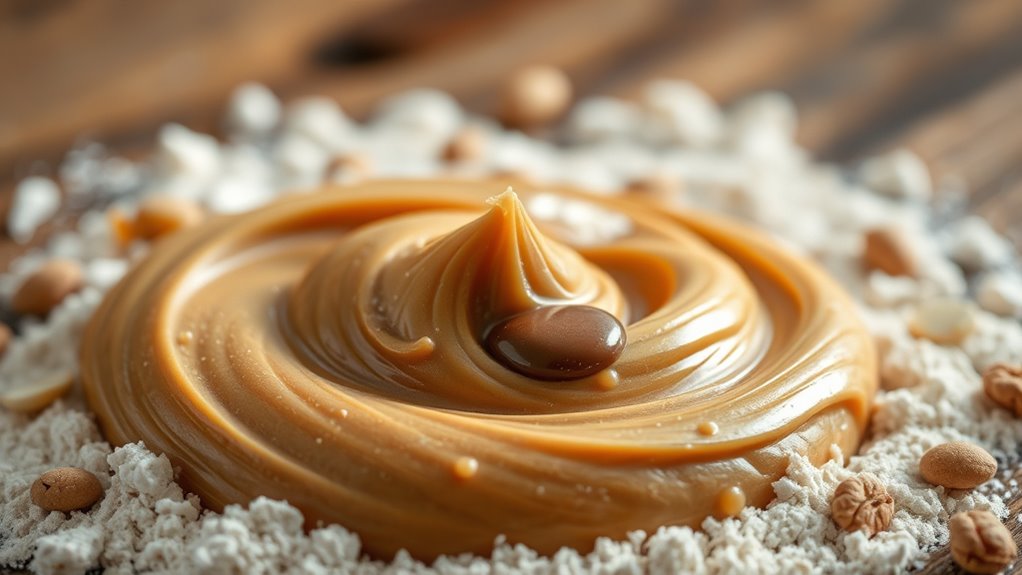
Have you ever wondered how peanut butter can transform your baking? It’s not just a tasty addition; it brings a wealth of benefits that can elevate your creations to new heights. When you incorporate peanut butter into your recipes, you’re not only enhancing flavor but also improving the nutritional impact of your baked goods. The creamy, nutty essence of peanut butter adds a delightful twist to everything from cookies to brownies, making them richer and more satisfying.
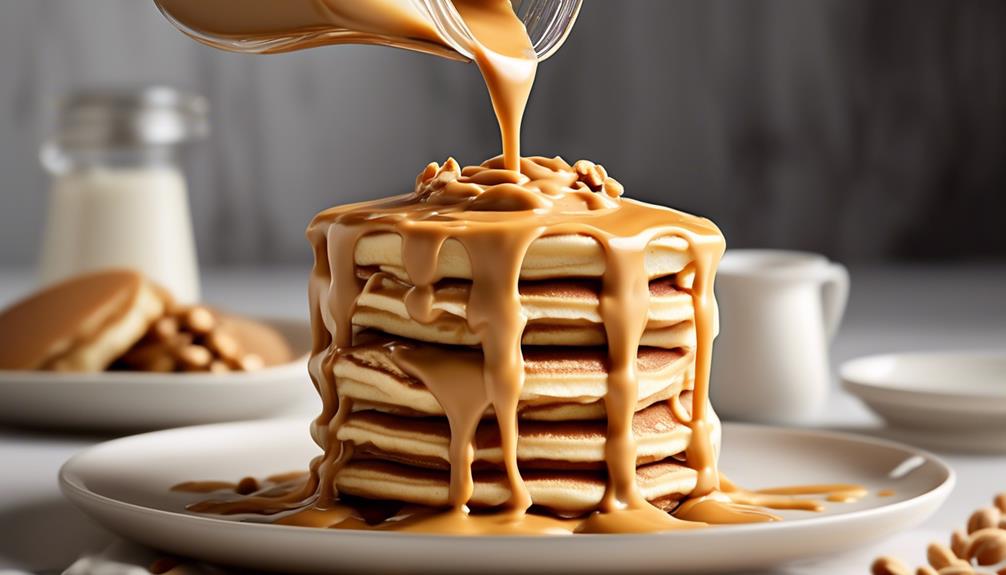
One of the most significant advantages of using peanut butter is its ability to add moisture and structure. Traditional ingredients like butter or oil can be replaced or supplemented with peanut butter, which helps create a dense, moist texture. This is especially important in baked goods that can often turn out dry or crumbly. When you swap in peanut butter, you’re ensuring a soft, chewy cookie or a fudgy brownie that melts in your mouth. Plus, this nutty spread binds ingredients together, giving your treats a more cohesive structure.
Peanut butter adds moisture and structure, ensuring your baked goods are soft, chewy, and perfectly cohesive.
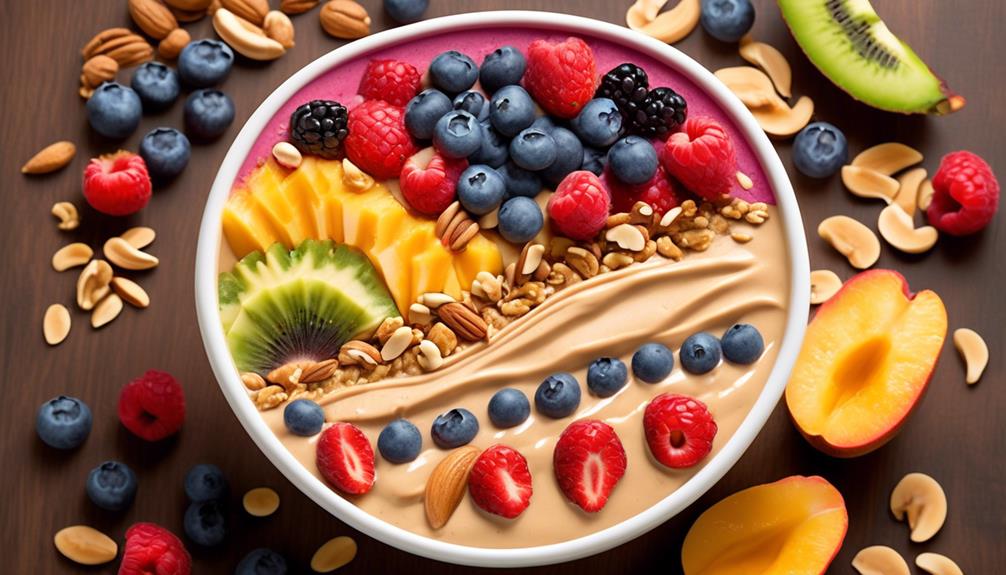
But let’s not forget about flavor enhancement. Peanut butter has a unique taste that can elevate your baking in surprising ways. It adds depth to chocolate recipes, making them taste richer and more indulgent. Imagine biting into a chocolate chip cookie that has a hint of peanut butter—it’s a match made in dessert heaven! You can even experiment by adding different types of peanut butter, such as crunchy or flavored varieties, to create new and exciting flavor profiles.
In addition to moisture and flavor, peanut butter also contributes to the nutritional impact of your baked goods. It’s packed with protein, healthy fats, and essential vitamins, making your treats a little more wholesome. Instead of feeling guilty about indulging in a cookie, you can enjoy it knowing that you’re getting some nutritional benefits. This can make a significant difference, especially for those looking to maintain a balanced diet while still satisfying their sweet tooth.

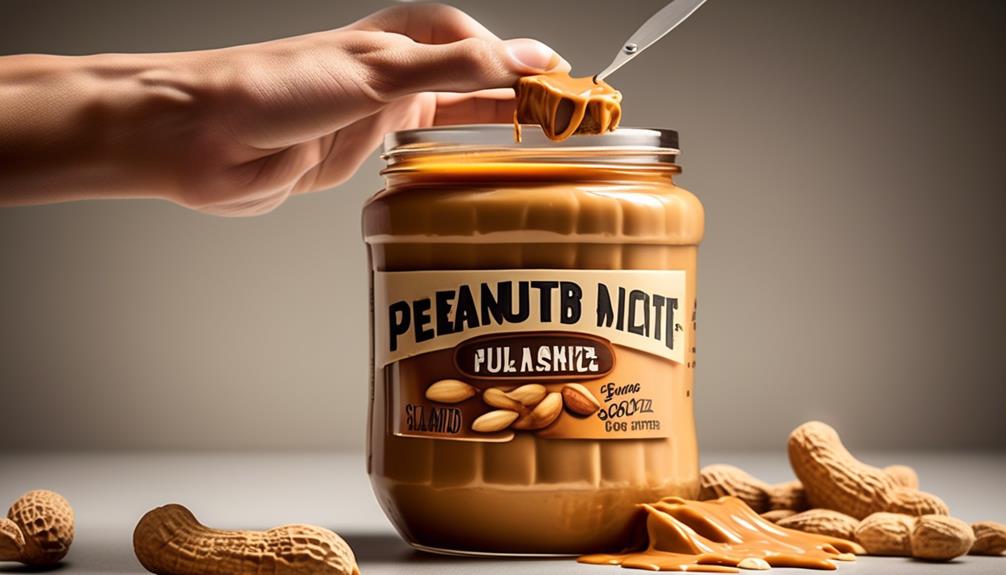
SKIPPY Natural Peanut Butter Creamy Spread, 26.5 oz Jar
One 26.5 oz. jar of SKIPPY Natural Creamy Peanut Butter spread; four simple ingredients with a sweet and…
As an affiliate, we earn on qualifying purchases.
As an affiliate, we earn on qualifying purchases.
Frequently Asked Questions
Can I Substitute Peanut Butter With Other Nut Butters in Baking?
Yes, you can substitute peanut butter with other nut butter alternatives in baking. Almond butter, cashew butter, or sunflower seed butter can work well, though they might alter the flavor a bit. When you’re making a flavor substitution, consider the distinctive taste of each nut butter, as it can impact your final dish. Experimenting with these alternatives can lead to delicious results while keeping the texture you want in your baked goods.
How Does Peanut Butter Affect the Baking Time of Recipes?
Imagine your cake’s a cozy sponge, soaking up a warm bath. When you add peanut butter, it’s like giving that sponge a thicker blanket. Because of its moisture retention, you might find you need to adjust the baking time. The added density can mean longer baking, so keep an eye on it. A toothpick test will be your trusty guide to make certain your creation’s perfectly baked and not too gooey inside!
Does the Type of Peanut Butter Matter for Texture?
Yes, the type of peanut butter you choose definitely matters for texture. Creamy peanut butter gives your baked goods a smooth consistency, while crunchy peanut butter adds delightful little bits for extra texture. Different brands can also offer flavor variations, which might enhance or alter the overall taste of your recipe. So, when you’re baking, consider how the peanut butter consistency and flavor will impact the final texture of your treats.
Can I Use Crunchy Peanut Butter Instead of Creamy?
Absolutely, you can use crunchy peanut butter instead of creamy! Think of it like adding a surprise twist to your favorite song; it spices up the rhythm. The crunchy texture brings delightful pops of flavor variation to your baked goods, making each bite exciting. Just keep in mind that your final product might have a different consistency, but that’s part of the fun! So go ahead, embrace the crunch and enjoy the added character!
What Are the Best Recipes for Beginners Using Peanut Butter?
For beginners, easy peanut butter cookies are a great starting point. Just mix peanut butter, sugar, and an egg, then bake! You’ll love how simple and delicious they are. Another fantastic option is no bake peanut butter bars. Just combine peanut butter, oats, and honey, then chill until set. Both recipes require minimal ingredients and effort, making them perfect for anyone new to baking. Enjoy trying these tasty treats!
SKIPPY Natural Peanut Butter Creamy Spread, 26.5 oz Jar
One 26.5 oz. jar of SKIPPY Natural Creamy Peanut Butter spread; four simple ingredients with a sweet and…
As an affiliate, we earn on qualifying purchases.
As an affiliate, we earn on qualifying purchases.
Conclusion
So, you think you can bake without peanut butter? Ha! Good luck with your dry, crumbly creations. Peanut butter’s the secret agent in your cookies and cakes, bringing moisture and structure like a superhero in an apron. Just imagine a world where baked goods lack that creamy goodness—what a tragedy! Embrace the nutty delight, and your treats will sing with flavor and texture. After all, who needs plain old flour when peanut butter’s ready to steal the show?

365 by Whole Foods Market, Organic Creamy Peanut Butter, Unsweetened & Unsalted, Stir and Enjoy, 16 Ounce
Made with 100% USA peanuts
As an affiliate, we earn on qualifying purchases.
As an affiliate, we earn on qualifying purchases.
365 by Whole Foods Market, Organic Creamy Peanut Butter, Unsweetened & Unsalted, Stir and Enjoy, 16 Ounce
Made with 100% USA peanuts
As an affiliate, we earn on qualifying purchases.
As an affiliate, we earn on qualifying purchases.