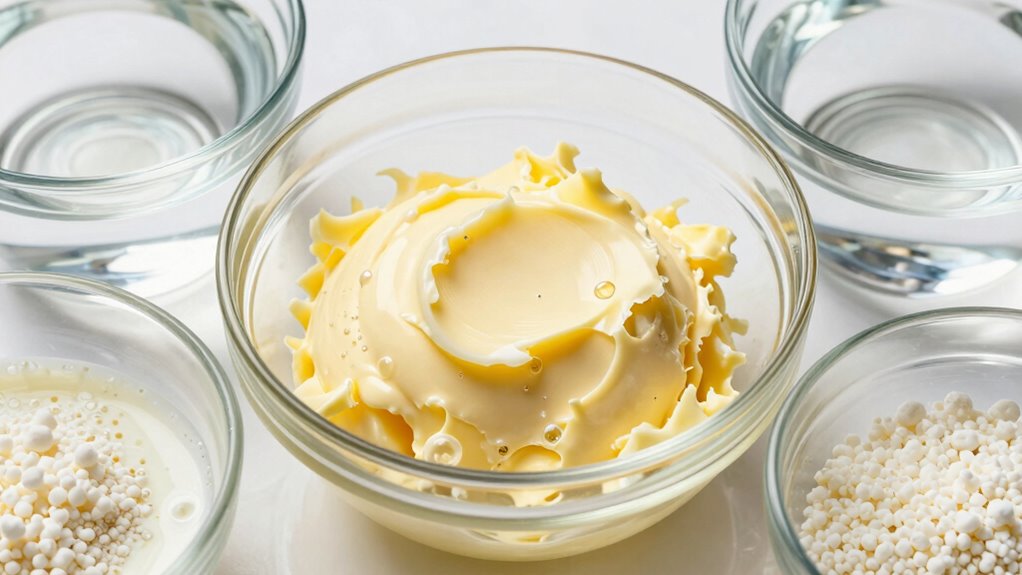

Butter is made up of three main parts: fat, water, and milk solids. The fat gives it creaminess, richness, and helps with spreading, while water influences its texture and smoothness. Milk solids, like proteins and lactose, add flavor and affect how butter melts or browns when heated. Understanding these parts helps you see how butter behaves in cooking and baking. Keep exploring to uncover more about how each component impacts your culinary creations.
Key Takeaways
- Butter primarily consists of about 80-82% fat, which provides richness and spreadability.
- Water makes up approximately 16-17% of butter, contributing to its smooth texture.
- Milk solids, including proteins and lactose, are small components that influence flavor and melting behavior.
- The proportion of fat, water, and milk solids varies based on production methods and butter type.
- These components determine butter’s culinary properties and how it reacts during cooking or baking.
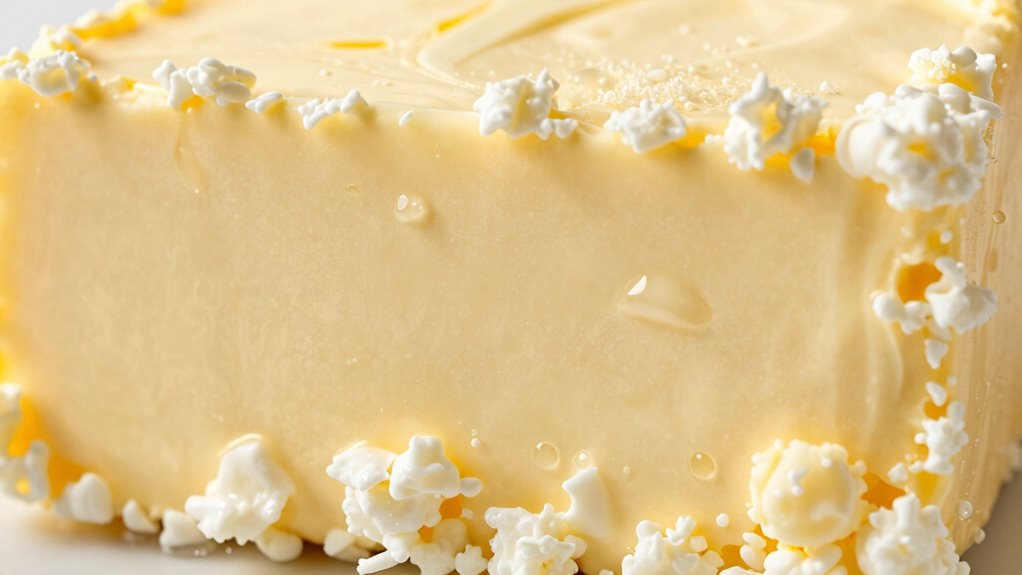
Butter is made up of several essential parts that work together to give it its smooth texture and rich flavor. When you look at butter, you’re actually seeing a complex mixture of fat, water, and milk solids. These components determine not only its taste and consistency but also how it behaves in cooking. Understanding the parts of butter starts with recognizing the difference between cultured and unsalted varieties, which are common options you’ll find at the store. Cultured butter is made from cream that’s been fermented with bacteria, giving it a tangy flavor, while unsalted butter is produced from fresh cream without any added salt. Both types go through similar production processes, but their flavor profiles and uses can differ.
The butter production process begins with cream, which is separated from milk. To make butter, the cream is churned vigorously until the fat molecules clump together to form butter grains. During this churning, the mixture separates into butterfat, water, and milk solids. The proportion of these parts can vary depending on the method and whether the butter is cultured or unsalted, but generally, butter contains about 80-82% fat, 16-17% water, and a small amount of milk solids. The process is vital because it determines how much water and milk solids remain in the finished product, influencing texture and flavor. Additionally, the fermentation process in cultured butter can alter the balance of these parts, often resulting in a tangier flavor and sometimes a slightly different composition of milk solids and water. It’s also important to note that butter’s composition can vary slightly based on production techniques and regional standards. Variations in production methods can affect the final quality and characteristics of the butter.
The fat in butter is the main component, giving it that creamy, spreadable quality. It’s responsible for the richness and the ability to carry flavors. The water content, although minimal, is evenly dispersed within the fat, which helps give butter its smooth texture. Milk solids, which include proteins and lactose, are left behind in the butter after churning. These solids can contribute to flavor but also affect how butter behaves when heated—whether it browns easily or melts smoothly. Cultured butter’s fermentation process can slightly alter the balance of these parts, often resulting in a tangier flavor and sometimes a slightly different composition of milk solids and water. Understanding the composition of butter can help in choosing the right type for specific culinary uses. Recognizing the different parts of butter can also assist in understanding how it reacts under various cooking conditions.
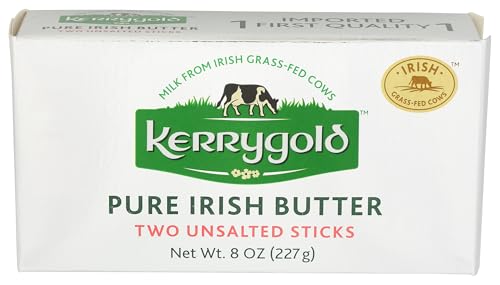
Kerrygold Butter Sticks, Unsalted, 8 oz
Kerrygold Pure Irish Butter, 2 Sticks, Unsalted, RBST Free, Gras-Fed, 8 Ounce
As an affiliate, we earn on qualifying purchases.
As an affiliate, we earn on qualifying purchases.
Frequently Asked Questions
How Does Butter Production Vary Across Different Cultures?
You’ll notice that butter production varies widely across cultures, reflecting unique cultural butter traditions and regional butter varieties. In some places, traditional churning methods are still used, while others incorporate modern techniques. For example, European cultures often emphasize salted butter, whereas Asian regions favor unsalted or fermented varieties. These differences showcase how local climate, diet, and customs shape butter-making, making each regional butter variety distinct and culturally significant.
Can Butter Be Made From Non-Dairy Sources?
Yes, you can make butter from non-dairy sources. Non-dairy alternatives use plant-based fats like coconut oil, shea butter, or vegan margarine, which mimic traditional butter’s texture and flavor. These plant-based fats are churned or processed similarly, creating a butter-like spread suitable for those avoiding dairy. So, if you’re seeking a dairy-free option, exploring these plant-based fats gives you a versatile and tasty alternative.
What Are the Health Benefits of Butter Compared to Other Fats?
You might think butter isn’t healthy, but it offers benefits like containing conjugated linoleic acid and fat-soluble vitamins. In a fat comparison, butter’s natural fats support brain health and hormone production. While it has saturated fat, moderate consumption fits into a balanced diet. Butter’s richness in antioxidants and vitamins makes it a better choice than heavily processed fats, promoting overall well-being when eaten wisely.
How Does Aging or Storage Affect Butter’s Composition?
Aging or storage impacts butter’s composition mainly through butter oxidation, which causes it to develop off-flavors and rancidity over time. When stored improperly, especially at warm temperatures, the fats break down faster, reducing quality. To minimize storage impact, keep butter in a cool, airtight environment. Proper storage slows oxidation, preserves flavor, and extends shelf life, ensuring you enjoy fresh-tasting butter longer.
Are There Any Common Misconceptions About Butter’s Parts?
A common misconception myths about butter’s parts is that it’s just fat. In reality, butter’s water and milk solids play a significant role in its consistency and flavor. You might think butter is uniformly greasy, but the water content affects its spreadability, especially when stored improperly. Understanding these parts helps you appreciate butter’s unique qualities and dispels the myth that it’s simply fat, enhancing your culinary choices.

SACO Cultured Buttermilk Blend for Cooking and Baking, 16 ounce (Pack of 1) | Certified Kosher, Gluten-Free and Nut-Free
SAME GREAT BUTTERMILK, NEW CONVEINENT PACKAGING: Enjoy the same high-quality buttermilk as our classic canister, now in a…
As an affiliate, we earn on qualifying purchases.
As an affiliate, we earn on qualifying purchases.
Conclusion
Now that you know the parts of butter—fat, water, and milk solids—you’re like a chef with a secret recipe, ready to create delicious dishes. Understanding these components helps you appreciate butter’s versatility and richness, just like a painter values every color on their palette. So, next time you spread or cook with butter, remember it’s a tiny world of science and flavor working together, making your culinary creations truly special.

TeeMars Butter Churner – Upgraded Hand Crank Mason Jar Churn Kit, 34oz Manual Maker with 14 Recipe, Paddle, Mold with Lid, Cheese Cloth & Anti-slip Mat, Homemade Butter in 15Min
✅【HAND CRANK MASON JAR BUTTER CHURNER】Make rich, creamy butter at home with full control over ingredients. Choose your…
As an affiliate, we earn on qualifying purchases.
As an affiliate, we earn on qualifying purchases.

Lorann Oils Butter Bakery Emulsion: True Butter Flavor, Ideal for Enhancing Rich Dairy Notes in Baked Goods, Gluten-Free, Keto-Friendly, Butter Flavoring Essential for Your Kitchen
BAKING ESSENTIAL: Our 4 ounce Butter Bakery Emulsion is a vital butter extract for baking alternative among baking…
As an affiliate, we earn on qualifying purchases.
As an affiliate, we earn on qualifying purchases.