
The term “non-dairy butter” can be misleading since it suggests the product contains actual butter, which conflicts with FDA regulations. According to these rules, butter must contain specific dairy ingredients. So, brands often use terms like “plant-based spread” or “vegan spread” to clarify the absence of dairy and guarantee transparency. Understanding this labeling can help you make better choices aligned with your dietary needs, and there’s more to uncover about ingredient influences on flavor and texture.
Key Takeaways
- The FDA defines butter as a product with a specific percentage of milkfat, prohibiting the use of “butter” in non-dairy products.
- Brands must avoid using “butter” in labeling unless their products meet dairy content criteria outlined by the FDA.
- Alternative terms like “plant-based spread” or “vegan spread” are encouraged to accurately reflect non-dairy ingredients.
- Clear labeling helps consumers understand that these products do not contain traditional dairy butter, reducing potential misleading expectations.
- Ingredient transparency enhances consumer choice, allowing for informed decisions based on dietary needs and flavor preferences.
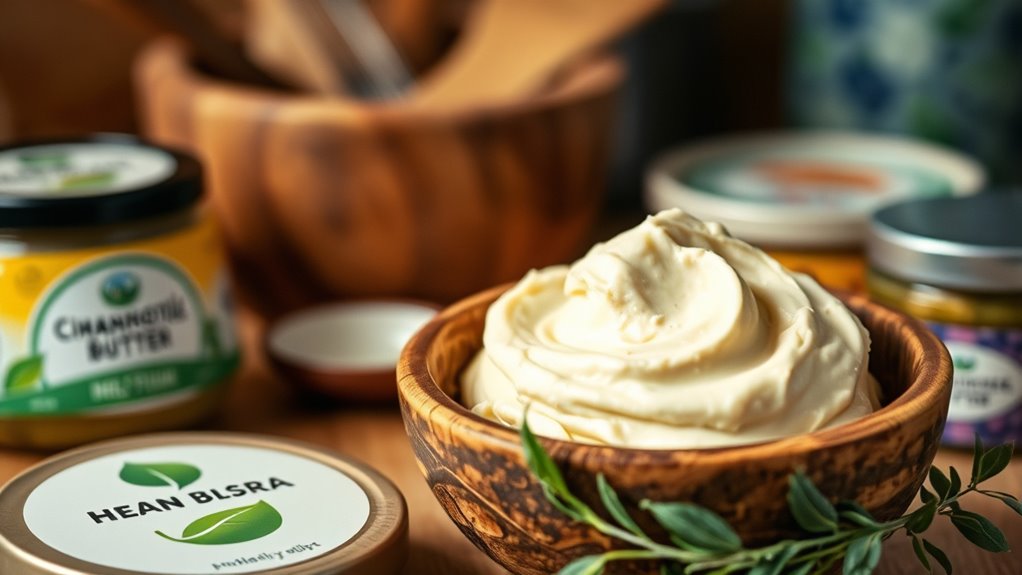
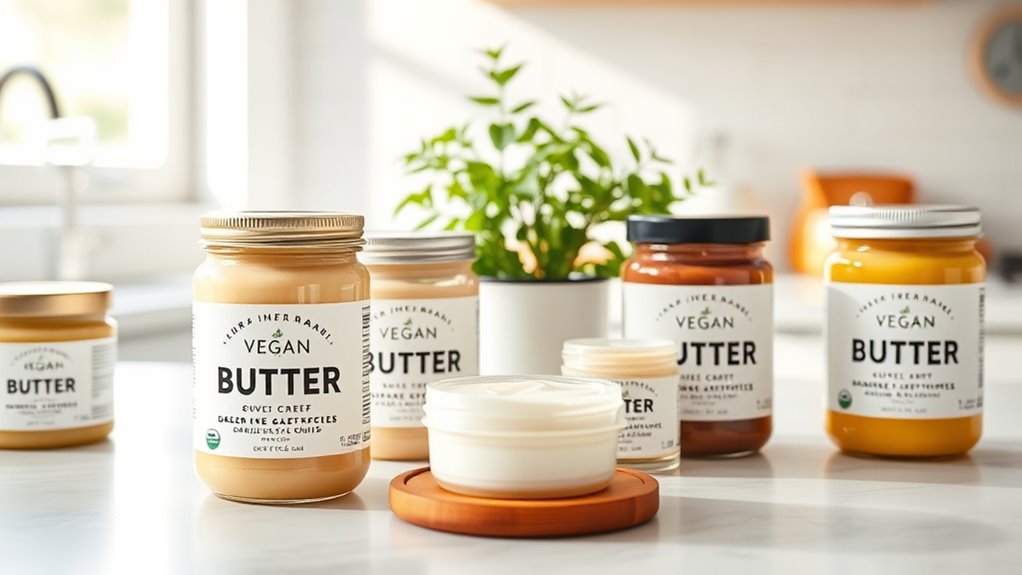
When it comes to labeling, the term “non-dairy butter” is often employed to attract consumers who are seeking out dairy-free options. However, it is crucial to recognize that this term can be misleading. Non-dairy spreads don’t contain any actual butter, so calling them “butter” can create expectations that aren’t fulfilled. Instead, you’ll often see terms like “plant-based spread” or “vegan spread” used to clarify what these products actually are. These terms help consumers understand that they’re not just getting a butter substitute but a completely different product made from plant ingredients.
The U.S. Food and Drug Administration (FDA) has regulations when it comes to how food products can be labeled. In fact, they define butter as a product containing a specific percentage of milkfat, which means any product marketed as “butter” must include dairy. This creates a challenge for brands aiming for dairy alternative branding, as they can’t legally use the term “butter” unless it meets those criteria. Instead, brands have to get creative, using terms that emphasize the plant-based nature of their products while still appealing to consumers’ desires for taste and texture.
Navigating plant-based spread terminology isn’t just a marketing challenge; it also affects how you perceive these products. You might have preferences for certain ingredients, and understanding this terminology can help you make informed choices. For example, some non-dairy spreads are made with coconut oil, while others might utilize avocado or almond oil. Each ingredient brings its own flavor and texture to the table, so knowing what you’re looking for can enhance your culinary experience. Additionally, understanding the concept of auditory processing can help you better appreciate how different ingredients interact with your palate and enhance your overall eating experience.
Top picks for "dairy butter terminology"
Open Amazon search results for this keyword.
As an affiliate, we earn on qualifying purchases.
Frequently Asked Questions
Are There Health Benefits to Non-Dairy Butter Alternatives?
Yes, non-dairy butter alternatives can offer health benefits, especially if you’re looking for nutritional advantages. Many of these products are lower in saturated fats and cholesterol compared to traditional butter, which can support heart health. They often cater to allergen considerations as well, being free from dairy, making them suitable for those with lactose intolerance or dairy allergies. Just check the labels to find options that align with your dietary needs!
Can Non-Dairy Butter Be Used in Baking?
Yes, you can definitely use non-dairy butter in baking! When you’re looking for dairy-free substitutes, choose one that mimics the texture and flavor of traditional butter. For best results, keep these baking tips in mind: measure accurately, consider the fat content, and monitor baking times, as non-dairy alternatives can behave differently. With the right choice, your baked goods will turn out delicious and satisfying, just as if you’d used regular butter.
What Are Common Ingredients in Non-Dairy Butter?
Common ingredients in non-dairy butter often include plant-based fats like coconut oil, olive oil, or avocado oil. You’ll also find ingredients such as soy, almond, or cashew milk, which add creaminess. Many dairy-free spreads use natural flavors, emulsifiers, and sometimes nutritional yeast for a cheesy taste. Some brands even incorporate vitamins to mimic the nutritional profile of dairy butter. It’s a delicious alternative for anyone looking to avoid dairy!
How Do I Store Non-Dairy Butter Products?
To store non-dairy butter products, keep them in a cool, dark place or in the refrigerator to extend their shelf life. Make sure to seal them tightly to prevent moisture and odors from affecting the flavor. If you’re using a tub, consider transferring it to an airtight container for better protection. For longer storage, you can freeze non-dairy butter, but remember to label it with the date to track freshness.
Is Non-Dairy Butter Suitable for Vegans?
Yes, non-dairy butter is generally suitable for vegans, as it’s made without animal products. However, you should check for vegan certification and look for dairy-free labeling on the packaging. Some brands use plant-based ingredients, while others may include additives that aren’t vegan-friendly. Always read the ingredients list to verify it aligns with your dietary choices. Enjoy exploring the variety of options available that fit your vegan lifestyle!
Conclusion
In steering the world of non-dairy butter terminology, you’re equipped to make informed choices that reflect your preferences and values. Just like a well-tuned orchestra, understanding labeling rules helps create harmony between consumers and products. By recognizing the differences and nuances in these terms, you empower yourself to select options that suit your lifestyle. So, the next time you shop, remember: knowledge is your best ingredient for a satisfying culinary experience.