The microstructure of butter is primarily made up of fat molecules arranged in specific patterns. When you cool butter, these fat molecules crystallize, and the size of these crystals affects the texture. Smaller, stable crystals create a smooth, creamy feel, while larger crystals can lead to graininess. Butter exists in different crystal forms, known as polymorphs, which influence its melting point and texture. Keep exploring to uncover more about how these factors shape your favorite spread.
Key Takeaways
- Butter’s microstructure is primarily composed of fat molecules that arrange themselves into various crystal formations.
- The process of cooling butter causes fat molecules to crystallize, affecting texture and consistency.
- Butter can exist in multiple crystal forms called polymorphs, each with distinct characteristics like melt point and texture.
- Slow cooling promotes stable, smaller crystals that enhance butter’s spreadability and creamy texture, while rapid cooling can lead to graininess.
- The source and content of fat in butter influence its microstructure, affecting melting behavior and overall texture quality.
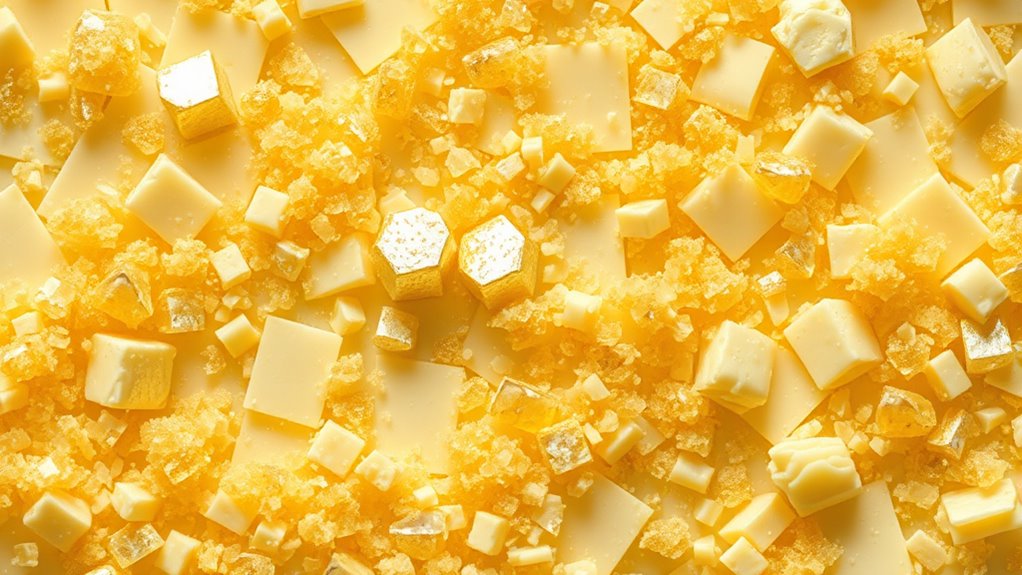
When you spread butter on your toast, you might not think about the intricate microstructure that gives it its creamy texture and rich flavor. The magic lies in how butter forms both fat crystals and undergoes polymorphic shifts. Understanding these processes can help you appreciate that delightful spread even more.
Butter is primarily made up of fat, and its texture results from the arrangement of these fat molecules. When butter cools, the fat molecules start to crystallize. This crystal formation is essential because it determines the butter’s texture. You might notice that butter straight from the fridge is hard, while room temperature butter spreads easily. This behavior is due to the size and arrangement of the crystals. Larger crystals can make butter grainy and hard, while smaller, stable crystals contribute to that smooth, creamy feel you love.
Butter’s creamy texture comes from the arrangement of fat molecules and crystal formation, influencing its spreadability and consistency.
The polymorphic shifts in butter are fascinating, too. Butter can exist in several different crystal forms, known as polymorphs. Each polymorph has unique characteristics that affect texture and melt point. For instance, when butter is heated and then cooled, it can transition between these forms. If you melt butter, then cool it too quickly, it may not achieve the desired crystal structure. This can lead to a grainy texture, which is less enjoyable on your toast. On the other hand, a slow cooling process allows for stable crystal formation, resulting in the creamy consistency you expect.
You might not realize it, but the type of fat used can also influence the microstructure of butter. Different sources of fat have varying melting points and crystal formation behaviors. For example, butter with a higher milk fat content tends to produce a more desirable texture, as it can form a more stable crystal structure. This stability is what helps keep your butter from separating and becoming oily, ensuring that it remains spreadable. Additionally, the self-watering system utilized in specialized pots can demonstrate how moisture levels affect the growth and development of plants, similar to how fat content influences the texture of butter.
Frequently Asked Questions
What Role Does Temperature Play in Butter’s Microstructure?
Temperature plays a vital role in butter’s microstructure by influencing crystal formation. When you control the temperature during cooling, you can either promote small, stable crystals or allow larger, less desirable ones to form. If it’s too warm, the crystals may not solidify properly, leading to a grainy texture. By managing the temperature, you guarantee a smooth, creamy consistency that enhances the butter’s overall quality and performance in cooking or baking.
How Does Butter’s Microstructure Affect Its Flavor?
Butter’s microstructure is like a flavor orchestra, where crystal size influences the harmony of taste. Smaller crystals create a smoother texture that enhances flavor development, allowing your taste buds to fully experience the buttery richness. Conversely, larger crystals can lead to a grainier mouthfeel, which may mute the flavors. So, when you savor butter, remember that its microstructure plays an essential role in crafting the delicious experience you enjoy.
Can the Microstructure of Butter Influence Its Shelf Life?
Yes, the microstructure of butter can definitely influence its shelf life. When you look at crystal formation, stable microstructures help retain freshness and prevent spoilage. If the crystals are too large or unstable, they can lead to rancidity, reducing shelf life. By ensuring a consistent microstructure, you can extend the butter’s usability. So, pay attention to how butter is processed, as it directly affects both flavor and longevity.
What Are the Health Implications of Butter’s Crystal Structure?
Imagine butter as a shimmering sea, where crystal structures dance like waves, influencing your health. You see, the way these crystals form can affect trans fat content, which isn’t great for your heart. If those crystals are misaligned, your cholesterol absorption might spike, leading to increased risks for heart disease. So, as you savor that creamy spread, remember, the hidden structure beneath can shape your health journey in unexpected ways.
How Does Butter’s Microstructure Differ From Margarine?
Butter’s microstructure differs from margarine in crystal size and polymorphic forms. You’ll notice that butter typically has a more complex arrangement of fat crystals, resulting in a richer flavor and texture. Margarine, on the other hand, often contains smaller, more uniform crystals due to its processing methods. This difference in crystal structure affects not just taste but also how each spreads and interacts with other ingredients in your cooking and baking.
Conclusion
In essence, the microstructure of butter, with its intricate dance of crystals and polymorphs, plays a crucial role in its texture and flavor. By understanding these elements, you can appreciate the craftsmanship behind this beloved dairy product. Just as a painter blends colors on a canvas, nature combines fat molecules to create the creamy delight we enjoy. So, the next time you spread butter, remember the fascinating science that makes it a masterpiece on your plate.