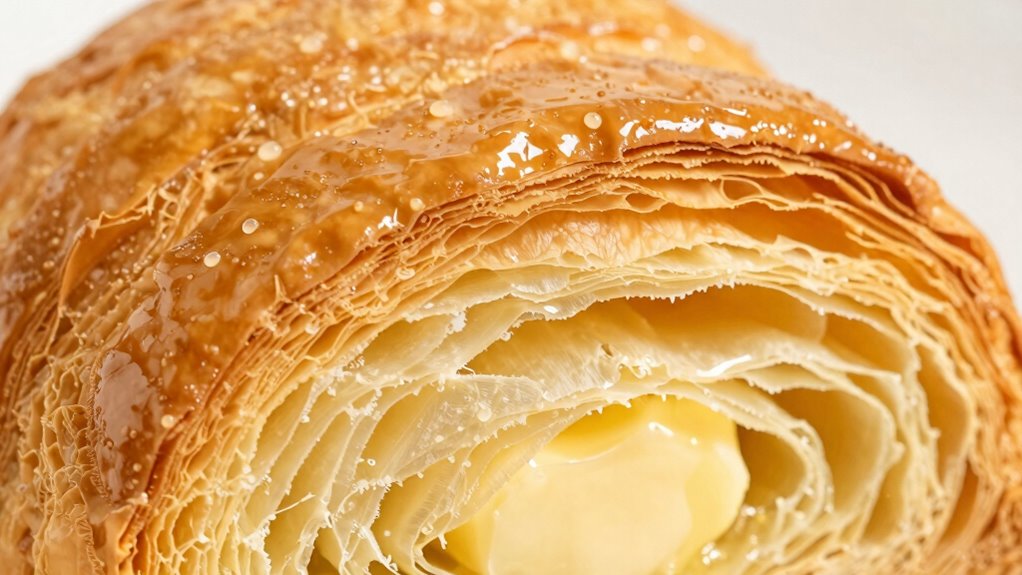
The main reason your laminated dough fails often comes down to butter temperature. If the butter is too warm, it becomes greasy and leaks into the dough, preventing proper layering. Too cold, and it cracks, making it hard to shape and causing tears. Achieving the right butter temperature is essential for smooth incorporation and distinct, flaky layers. Pay close attention to this detail, and you’ll discover more tips to perfect your laminated dough.
Key Takeaways
- Butter that is too warm becomes greasy, preventing proper layering and causing the dough to slip during lamination.
- Cold, firm butter resists shaping, leading to tears and uneven layers in the laminated dough.
- Proper butter temperature ensures smooth incorporation, essential for distinct, flaky layers.
- Incorrect butter temperature disrupts the lamination process, resulting in poor layer separation and a dense pastry.
- Maintaining the correct butter temperature is critical for achieving crisp, well-defined laminated dough.
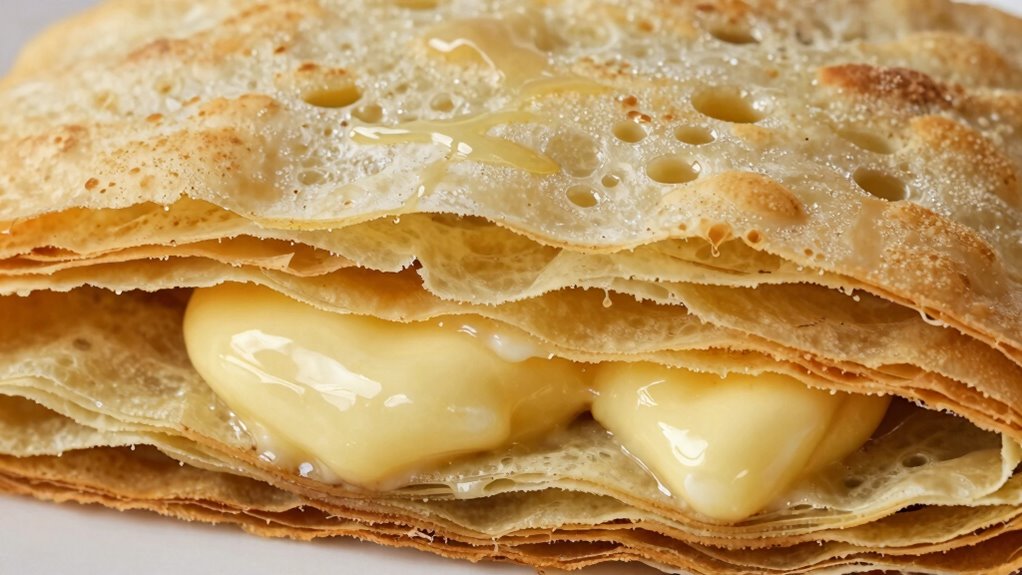
Laminated dough failures are a common frustration for both novice and experienced bakers, often resulting in flaky, uneven, or tough pastries instead of the crisp layers everyone desires. At the heart of these issues is usually butter temperature, but many bakers overlook other essential factors like fermentation timing and ingredient ratios. When your butter isn’t at the right temperature, it can sabotage the entire lamination process, preventing proper layering and causing dough to tear or become greasy.
You want your butter to be cold but pliable—firm enough to hold its shape during rolling and folding, yet soft enough to incorporate smoothly into the dough. If the butter is too warm, it becomes greasy and leaks into the dough, making it difficult to achieve those delicate, separate layers. Conversely, if it’s too cold, it cracks and resists shaping, leading to uneven layers and potential tears. Achieving that perfect temperature is fundamental because it directly affects how well the butter integrates and how the layers form during folding. Proper butter temperature is crucial in ensuring the layers are distinct and well-defined.
Fermentation timing plays an essential role in laminated dough success. Under-fermentation can leave the dough too tight and resistant to expansion, while over-fermentation risks weakening the gluten structure, making the dough overly soft and prone to tearing. You need to give your dough the right amount of resting and proofing time to develop the proper structure. Proper fermentation ensures the dough is elastic enough to handle multiple folds without snapping, which is key for creating those crisp, flaky layers. Additionally, understanding fermentation timing helps prevent common issues like over-proofing or under-proofing, which can compromise the final texture. Proper dough handling also contributes significantly to lamination success, as rough handling can cause tears and uneven layers.
Ingredient ratios are equally important. Too much butter can make the dough greasy and difficult to work with, while too little butter might not generate enough steam during baking to lift the layers. The ratio between flour, butter, water, and salt must be precise; even slight deviations can compromise the lamination process. When the ratios are off, the dough may become too soft or too stiff, leading to issues like uneven rolling or tearing during folding. Ensuring proper ingredient ratios helps maintain consistent dough texture and facilitates easier handling throughout the lamination process. Paying attention to ingredient ratios also influences how well the dough holds its shape and responds to folding, which is crucial for achieving those perfect layers.
In the end, all these elements—butter temperature, fermentation timing, and ingredient ratios—must work in harmony. If one aspect is off, it impacts the others, and your laminated dough may fail to deliver those beautiful, crisp layers. By paying close attention to each detail, especially butter temperature, you give yourself the best chance to produce perfectly layered, flaky pastries every time.
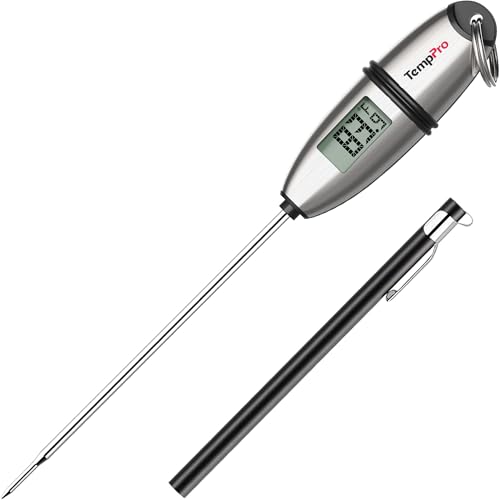
TempPro TP02S Digital Food Thermometer for Cooking Bread Baking Sourdough Liquids, Meat Thermometer Digital with Super Long Probe for Kitchen BBQ Yogurt Candy Making Accessory (Previously ThermoPro)
Fast and Accurate Reading: Kitchen thermometer for cooking features a 1 to 3 second readout speed and high…
As an affiliate, we earn on qualifying purchases.
As an affiliate, we earn on qualifying purchases.
Frequently Asked Questions
How Does Butter Temperature Affect Lamination Success?
Butter temperature directly impacts lamination success because it affects butter storage and dough elasticity. If the butter is too warm, it becomes soft and difficult to layer evenly, leading to uneven lamination. On the other hand, cold butter maintains its shape, making it easier to handle and ensuring clean, distinct layers. Proper butter temperature helps achieve ideal dough elasticity, resulting in flaky, perfectly laminated pastry.
What Is the Ideal Butter Temperature for Laminated Dough?
Think of butter as the heartbeat of your laminated dough; it should be chilled just enough to stay firm but pliable—around 60-65°F. Proper butter storage keeps it from becoming too soft or too cold, ensuring dough consistency stays smooth and manageable. If butter’s too warm, it melts into the dough, ruining lamination. If too cold, it fractures, like glass. Keep it balanced for silky, flaky layers.
Can Improper Butter Temperature Cause Dough to Tear?
Yes, improper butter temperature can cause dough to tear. When butter isn’t at the right consistency, it affects dough elasticity, making it too stiff or too soft. If butter is too cold, it’s less pliable, increasing the risk of tears during lamination. Conversely, if it’s too warm, it becomes greasy and fails to create the necessary layers. Preserving proper butter temperature guarantees smooth rolling and prevents tearing.
How to Measure Butter Temperature Accurately?
You should use a digital or infrared thermometer to measure butter temperature accurately. Keep butter stored in a cool, consistent environment to guarantee temperature stability. Before working with it, check its temperature, aiming for around 60-65°F (15-18°C). Consistent butter temperature prevents tearing and ensures even lamination. Regularly checking the thermometer helps maintain temperature consistency, so your laminated dough turns out perfect every time.
Does Butter Type Influence Lamination Quality?
Butter’s a silent partner in lamination, and yes, its type influences quality. Selecting fresh, high-quality butter with a good shelf life guarantees ideal flavor impact and smooth layering. Unsalted butter often yields better control over flavor, while European-style butter, with its higher fat content, creates flakier, more tender layers. Using the right butter keeps your dough reliable and delicious, avoiding surprises caused by inferior options.

Kafoor 16.7 Inches Marble Rolling Pin for Baking with Wooden Handles & Wooden Cradle – Rolling Pin for making Pizza Dough & Tortillas, Dough Roller for Pasta, Cookie, Pie Crust and More!
Durable Natural Marble – Crafted from solid marble for long-lasting use. Ideal for working with doughs, pastries, and…
As an affiliate, we earn on qualifying purchases.
As an affiliate, we earn on qualifying purchases.
Conclusion
Remember, the success of your laminated dough hinges on butter temperature—it’s the heartbeat of perfect layers. When butter’s too warm, it’s like trying to tame a wild storm, causing your delicate layers to collapse into a soggy mess. Keep your butter just right, and you’ll discover bakery-quality pastries that rise like a fortress of flaky perfection. Master this, and you’ll be turning out laminated treats so stunning, they’ll make even the most seasoned bakers gasp in awe.

Pro Dough Pastry Scraper/Cutter/Chopper Stainless Steel Mirror Polished with Measuring Scale Multipurpose- Cake, Pizza Cutter – Pastry Bread Separator Scale Knife
【Simple and Modern style】Pizz cutter/Dough scraper/Dough Cutter designed to scrape and split bread dough,So it's easy to use…
As an affiliate, we earn on qualifying purchases.
As an affiliate, we earn on qualifying purchases.
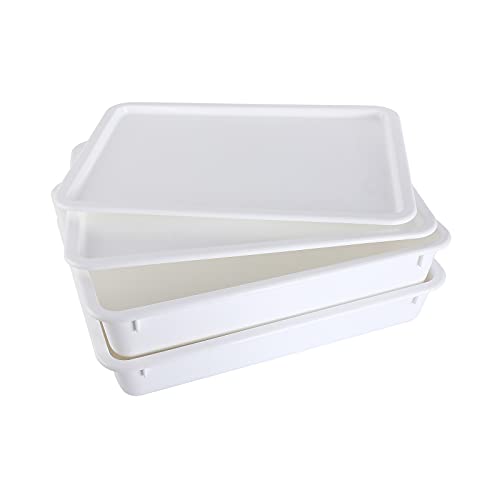
GSM Brands Pizza Dough Proofing Box – Stackable Commercial Quality Trays with Covers (17.25 x 13 Inches) – 2 Trays and 2 Covers
COMMERCIAL QUALITY: Our dough proofing boxes are generously sized at 17.25 x 13 x 3.54" with covers and…
As an affiliate, we earn on qualifying purchases.
As an affiliate, we earn on qualifying purchases.