
To get the best results with your jerky dehydrator, you need consistent airflow across all trays. This helps guarantee even drying, prevents tough or burnt spots, and keeps moisture levels uniform. Proper setup—like arranging trays correctly, avoiding overcrowding, and maintaining clean vents—plays a big role. Using adjustable fans and rotating trays can improve airflow further. Keep these tips in mind, and you’ll produce flavorful, high-quality jerky every time—there’s more to discover to perfect your process.

Get kitchen staples and gadgets delivered free with Prime
- Fast, free delivery on millions of items
- Prime Video, Amazon Music and more included
- Member-only deals all year
Key Takeaways
- Properly arrange trays with space between them to ensure unobstructed airflow across all pieces.
- Regularly rotate trays during drying to promote even airflow and moisture removal.
- Use adjustable fans or vents to maintain consistent airflow throughout the dehydrator.
- Keep vents and fans clean to prevent debris buildup that can disrupt airflow.
- Avoid overcrowding trays to prevent airflow blockage and uneven drying.
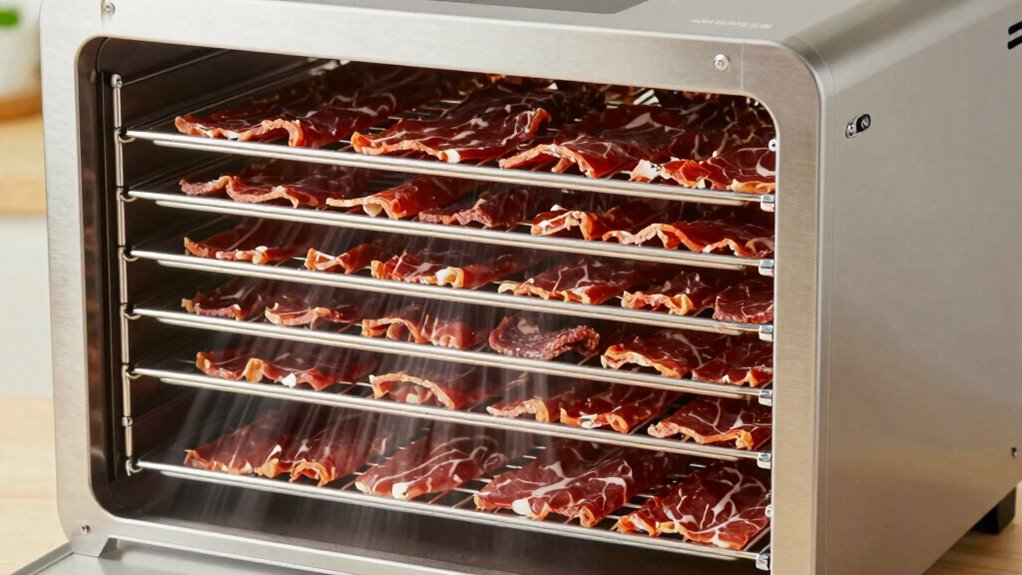
When dehydrating jerky, maintaining consistent airflow across all trays is essential for even drying and ideal results. If the airflow isn’t uniform, some pieces may dry too quickly, leading to tough or burnt spots, while others remain moist and prone to spoilage. Consistent airflow ensures each slice of meat receives the same amount of warm, dry air, which helps you achieve that perfect, evenly dried jerky you’re aiming for. This not only improves the texture but also boosts flavor enhancement because properly dried jerky retains more of its natural flavors without overcooking or losing moisture unevenly.
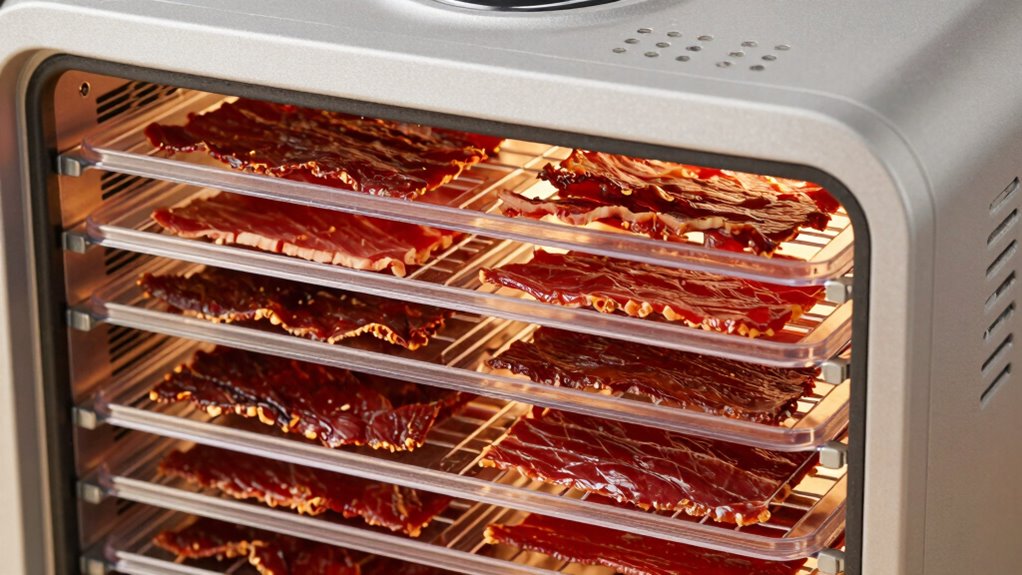
To keep airflow steady, start with your dehydrator’s setup. Make sure all trays are arranged correctly, with no overcrowding or blocking of vents. When stacking trays, leave enough space between them to allow air to circulate freely around each piece. Some dehydrators come with adjustable fans or vents—use these to fine-tune airflow if necessary. Regularly check your equipment for dust or debris that could clog vents or fans, which can compromise the airflow and, consequently, your jerky’s quality. Proper dehydrator maintenance is indispensable not just for consistent airflow but also for prolonging your device’s lifespan and ensuring maximum performance. Additionally, using a high-quality dehydrator can help maintain more uniform airflow throughout the drying process.
Arrange trays properly, leave space, and regularly clean vents to ensure consistent airflow and optimal jerky drying.
Another tip to maintain even airflow is to rotate trays periodically during the drying process. This practice helps counteract any minor airflow inconsistencies that might develop over time. Also, keep an eye on the temperature setting; too high a temperature can cause uneven drying, while too low might extend drying time unnecessarily. Using a reliable thermometer can help you monitor the internal temperature, so your jerky dries uniformly without overcooking. Being mindful of airflow management is crucial, especially when drying large batches or different thicknesses of meat, to prevent uneven results. Proper airflow distribution can also be enhanced by avoiding overcrowding, which can obstruct airflow pathways and lead to inconsistent drying across trays.
Consistent airflow not only improves the texture of your jerky but also enhances flavor retention. When moisture is removed evenly, the spices and marinades penetrate the meat uniformly, resulting in a more flavorful bite with each piece. Plus, good airflow reduces the risk of mold or bacteria growth, which can happen if some areas stay moist longer than others. So, investing time in proper dehydrator maintenance and paying close attention to airflow across trays pays off by delivering high-quality, flavorful jerky every time. Keep your equipment clean, organized, and well-maintained, and your jerky will come out perfectly dried, savory, and safe to enjoy.
Products Worth Considering

Breville Bambino Espresso Machine, Brushed Stainless Steel (BES450BSS)

Cuisinart Mix It In Soft Serve Ice Cream Maker, 1.5 Quart (ICE-48)
Vitamix Ascent X3 Professional-Grade Blender, 3 Programs, Shadow Black
As an affiliate, we earn on qualifying purchases.
Frequently Asked Questions
Can I Dehydrate Other Foods Besides Jerky in the Same Machine?
Yes, you can dehydrate other foods besides jerky in the same machine. Just keep in mind that flavor infusion and drying techniques vary for different items. For example, fruits need a lower temperature and longer drying times, while herbs require quick dehydration. Make sure airflow stays consistent across trays to prevent uneven drying, which is essential for all foods. Adjust settings accordingly to achieve the best results without compromising flavor or texture.
How Do I Clean and Maintain My Jerky Dehydrator?
To keep your dehydrator in top shape, regularly perform dehydrator cleaning after each use. Remove trays and wash them with warm, soapy water, making sure to dry thoroughly. Wipe down the interior with a damp cloth to prevent residue buildup. Follow maintenance routines like checking fans and heating elements periodically. Proper cleaning and maintenance routines guarantee consistent airflow, prolonging your dehydrator’s lifespan and ensuring your foods dry evenly every time.
What Are the Best Types of Meat for Jerky Dehydration?
You should choose lean meats like beef, turkey, or venison for jerky dehydration. Opt for cuts with minimal fat, as fat can spoil faster and affect texture. Use marinating techniques like soy sauce, Worcestershire, or spices to enhance flavor. Proper meat selection guarantees even drying and great taste. Remember, leaner meat dries more uniformly, so pick quality cuts and marinate thoroughly for the best jerky.
How Long Does It Typically Take to Dehydrate Jerky?
On average, dehydration takes about 4 to 8 hours, depending on your jerky’s thickness and moisture level. Did you know that proper airflow can cut dehydration time by nearly half? You’ll want to check your jerky regularly, aiming for a firm, yet flexible texture, which indicates the right dehydration time. Maintaining consistent airflow guarantees your jerky reaches the perfect moisture level without over-drying.
Are There Safety Tips for Preventing Food Contamination?
To prevent food contamination, you should focus on cross contamination prevention and proper storage techniques. Always wash your hands and sanitize surfaces before handling ingredients. Keep raw meat separate from other foods, and store jerky in airtight containers once dried. Regularly clean your dehydrator trays and utensils. By practicing these safety tips, you minimize risks and guarantee your jerky remains safe to eat.
Conclusion
If your airflow isn’t steady across all trays, your jerky could turn into a soggy, uneven disaster—like a tornado ripping through your kitchen! But when you keep that airflow consistent, your jerky will come out perfectly crisp, evenly seasoned, and ready to impress even the pickiest snackers. So, don’t let uneven airflow sabotage your snack dreams—stay vigilant, keep it steady, and watch your jerky reach legendary status in mere hours!