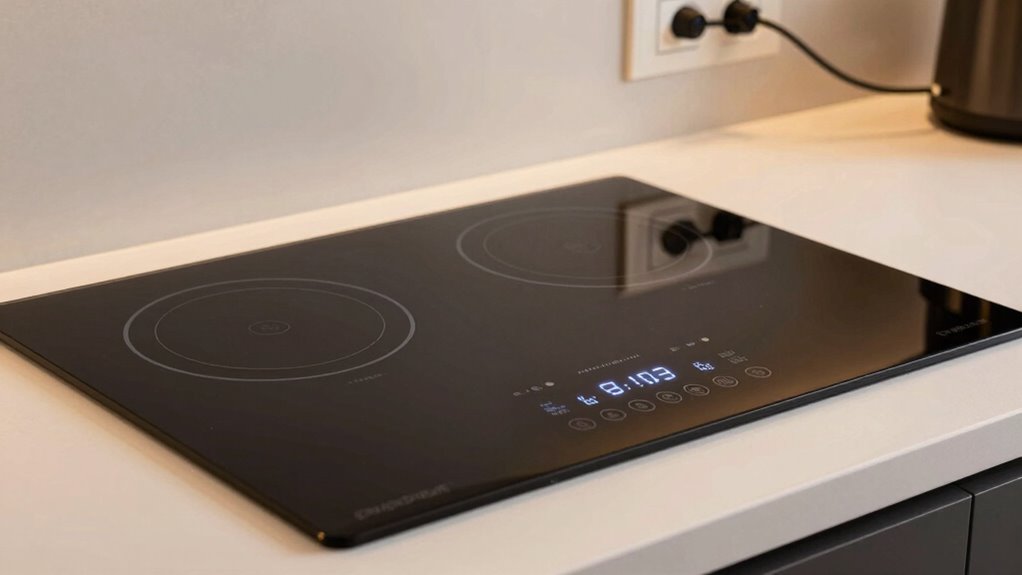

Your induction cooktop’s wattage affects how much power it needs from your outlet. To guarantee safe operation, check that your outlet can handle the cooktop’s wattage—most require a dedicated 240V circuit with enough amperage. Lower-wattage models (1000-2500W) are suitable for smaller outlets, but higher-wattage units need stronger circuits. If you continue exploring, you’ll discover how to match your cooktop’s wattage with your electrical system and avoid overloads.
Key Takeaways
- Check your outlet’s voltage and amperage to ensure it can support the cooktop’s wattage requirements.
- Most induction cooktops need a dedicated 240V outlet with sufficient current, usually 30-50 amps.
- Confirm the cooktop’s wattage aligns with your electrical system’s capacity to prevent overloads.
- Use a properly grounded outlet and consider professional installation for safety and compliance.
- Monitor for signs of overload, like circuit trips or hot outlets, to ensure your electrical system handles the cooktop safely.
What Is Induction Cooktop Wattage and Why Does It Matter?

Induction cooktop wattage refers to the power output of the appliance, typically measured in watts. Higher wattage units usually heat faster and offer better energy efficiency, saving you time and electricity. Knowing the wattage helps you choose a model that matches your cooking needs and your home’s electrical capacity. It also plays a vital role in safety precautions; an appliance with too high wattage for your outlet can cause electrical issues or hazards. Selecting the right wattage ensures your cooktop runs efficiently without overloading your circuits. Additionally, understanding wattage helps you maintain energy efficiency, reducing energy waste and lowering your utility bills. Always consider your kitchen’s wiring capacity to prevent safety hazards and guarantee peak performance. Electrical safety and proper wattage matching are crucial for safe operation and longevity of your appliances. Being aware of your appliance’s power compatibility helps you make informed choices and avoid potential electrical problems. Furthermore, consulting your electrical system’s capacity limits ensures safe and reliable use of high-wattage appliances. Recognizing the power requirements of your cooktop can also help in planning future kitchen upgrades or modifications.
How Can You Check If Your Kitchen Outlet Can Support an Induction Cooktop?

To determine if your kitchen outlet can support an induction cooktop, start by checking its electrical specifications, such as voltage and amperage. Most induction cooktops require a dedicated 240V outlet with enough current capacity. Look at the outlet itself for wattage ratings or labels indicating compatibility. Keep in mind that wireless compatibility isn’t relevant for power support but can affect control options. Additionally, your countertop material matters; for example, metal countertops may interfere with induction’s magnetic field, impacting performance. If you’re unsure, consult an electrician to test your outlet’s capacity and verify it meets the cooktop’s requirements. Proper power support ensures safe operation and prevents overloads, making sure your induction cooktop functions efficiently without tripping circuits. You can also refer to power supply considerations to better understand how your electrical setup influences appliance performance. Ensuring your electrical connections meet Suprem fabric standards can help prevent potential electrical issues and optimize appliance operation. Moreover, understanding the electric current capacity of your outlets is essential for safe and efficient cooking. Additionally, verifying that your outlet has the necessary dedicated circuit can help prevent overloads and ensure the longevity of your appliance. Incorporating energetic alignment principles can also help you assess and improve your overall electrical setup for optimal appliance performance.
What Are Typical Wattage Ranges for Different Induction Stoves?
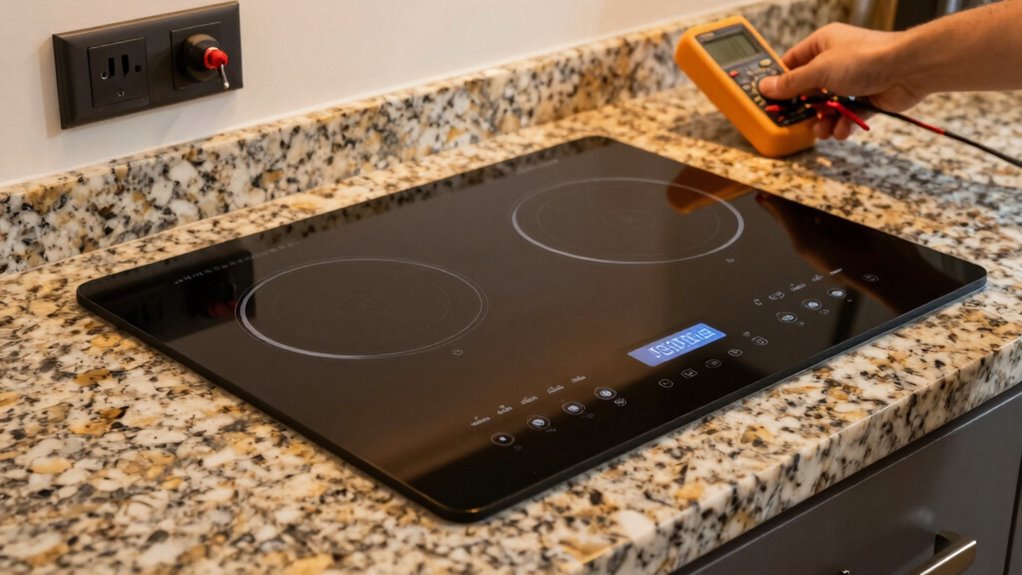
Wattage ranges for induction stoves vary depending on their size and intended use, but most models fall within specific power brackets. Generally, smaller portable units operate between 1000-1800 watts, offering decent cooking efficiency for light tasks. Mid-range models for home use typically range from 1800-3600 watts, balancing energy consumption and performance. High-end built-in stoves can reach 3700-7400 watts, providing rapid heating and better cooking control. Keep in mind:
- Compact portable stoves: 1000-1800 watts
- Single burners: 1500-2500 watts
- Multi-burner units: 1800-3600 watts
- High-powered models: 3700-7400 watts
- Commercial-grade stoves: 6000+ watts
Understanding these ranges helps you choose a stove that maximizes cooking efficiency while managing home electrical capacity. Additionally, being aware of the power requirements can prevent overloads and ensure your outlet can handle the load safely. Being aware of the power consumption of your appliances is crucial for maintaining overall energy efficiency and avoiding potential electrical issues. Proper knowledge of wattage can also aid in selecting a model that aligns with your kitchen’s electrical system, which is increasingly important given the rise of energy-efficient appliances in modern kitchens.
How Do You Match Your Cooktop’s Wattage to Your Electrical System?
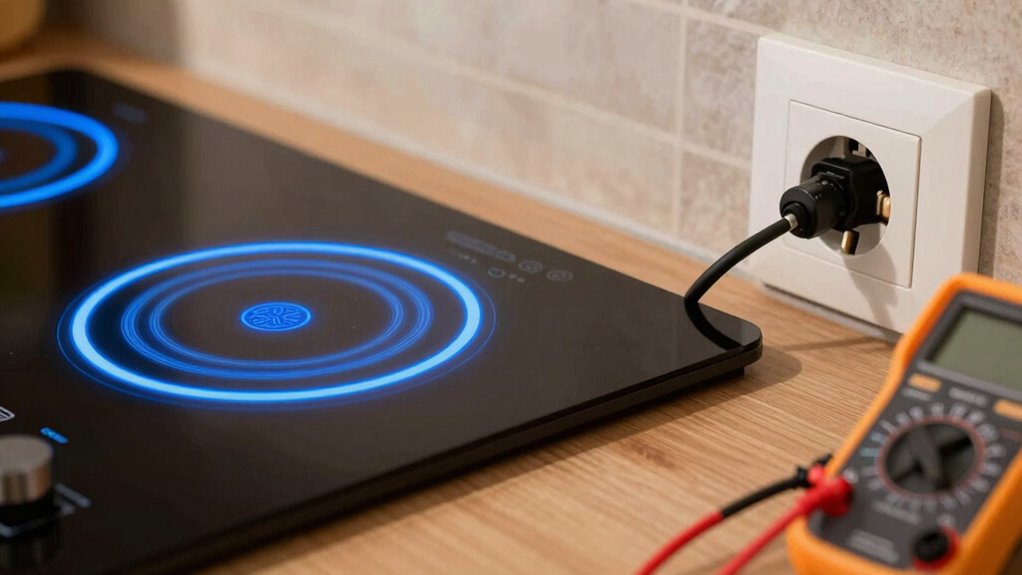
To match your cooktop’s wattage to your electrical system, start by evaluating your circuit capacity to guarantee it can handle the load. Next, check if your outlet is compatible with the cooktop’s power requirements, and consider the power settings you plan to use regularly. This will help you select a model that operates safely and efficiently in your home. Additionally, understanding industry standards and wattage guidelines can assist in making an informed decision. Being aware of Free Floating concepts can also help you optimize your electrical setup for safe and effective use, especially as emerging digital revolutions continue to transform household appliances, influencing the design and wave and wind energy considerations that impact electrical loads. Considering smart home technology integrations can further enhance energy management and safety during operation.
Assess Circuit Capacity
Before you install an induction cooktop, you need to make certain your electrical system can handle its power demands. Start by evaluating your circuit capacity to prevent overloads. Check your existing circuit breakers to ensure they can support the cooktop’s wattage, typically 30-50 amps. Examine your outlet wiring to confirm it’s rated for the required current. Assess circuit capacity to ensure compatibility and safety. Consider these points: – Verify if your circuit breaker matches the cooktop’s amperage needs – Inspect wiring gauge for sufficient current capacity – Determine if your outlet is dedicated or shared – Check for any existing overloads or tripped breakers – Confirm the circuit’s overall load capacity isn’t exceeded. Additionally, understanding your home’s electrical system can help you plan upgrades if needed. Doing this guarantees your system is prepared, ensuring safety and efficient operation. Properly evaluating your electrical system capacity can prevent costly repairs and hazards later on.
Check Outlet Compatibility
Once you’ve checked your circuit capacity, the next step is confirming your outlet can safely handle the induction cooktop’s wattage. You need to verify that the outlet placement matches the cooktop’s power requirements. An incompatible outlet can lead to power surges, risking damage to your appliance or wiring. Look for a dedicated, properly grounded outlet rated for high wattage—usually a 240V outlet for larger cooktops. Avoid using extension cords or adapters, as they can increase the risk of power surges and overloads. If your outlet isn’t suitable, consider installing a dedicated circuit to support your cooktop safely. Proper outlet compatibility ensures your induction cooktop operates efficiently without electrical hazards or interruptions. Additionally, understanding the power requirements of AI tools can help you optimize your kitchen’s electrical setup for future smart appliance upgrades.
Ensuring outlet compatibility also helps prevent potential electrical violations and safety issues.
Consider Power Settings
Matching your cooktop’s wattage to your electrical system is essential for safe and efficient operation. Properly considering power settings ensures the best energy efficiency and prevents overloads. Adjusting your cooktop’s power level helps manage power consumption and protects your electrical system. To do this effectively, keep in mind:
- Use the lowest effective power setting for simmering or gentle cooking
- Avoid running multiple high-wattage burners simultaneously
- Check your circuit’s amperage capacity before increasing wattage
- Opt for energy-efficient cooking modes when available
- Regularly monitor your electrical system’s performance during use
- Be aware of style considerations to select the most suitable wattage for different cooking needs
How to Spot Signs That Your Outlet or Circuit Might Be Overloaded?
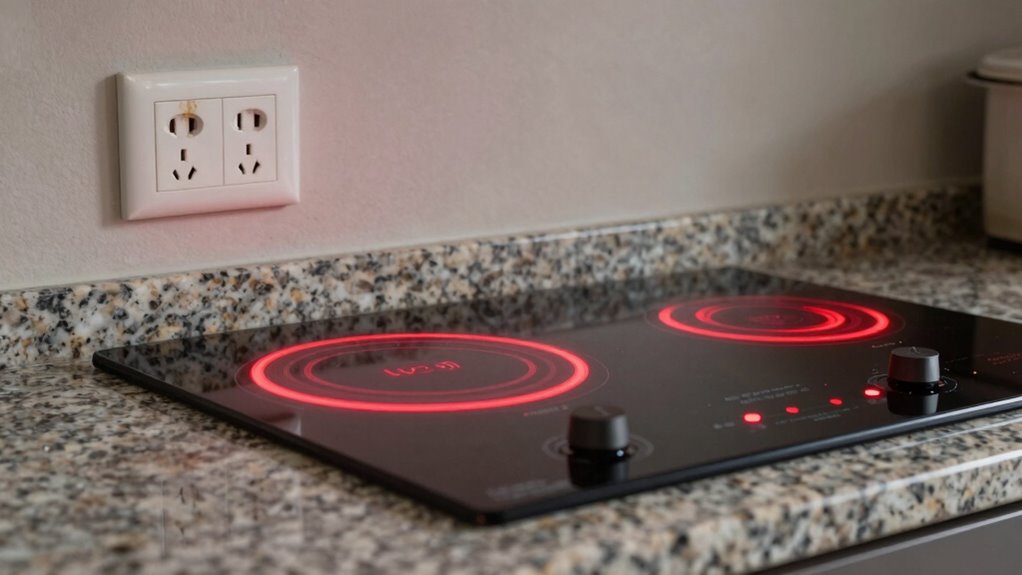
If your outlet or circuit is overloaded, you’ll likely notice some warning signs. You might experience frequent circuit breaker trips or flickering lights, indicating that circuit protection is kicking in to prevent damage. Warm or hot outlets and cords are also red flags, signaling that electrical safety is compromised. You may feel a burning smell or see sparks when plugging in appliances, which is dangerous. Overloading can cause wires to overheat, increasing the risk of fire. Pay attention to any unusual power fluctuations or if your appliances don’t operate properly. Recognizing these signs helps you avoid electrical hazards and ensures your circuits aren’t strained beyond their capacity. Regularly checking for these indicators is essential to maintaining a safe and functional electrical system.
Safe Installation Tips for Your Induction Cooktop
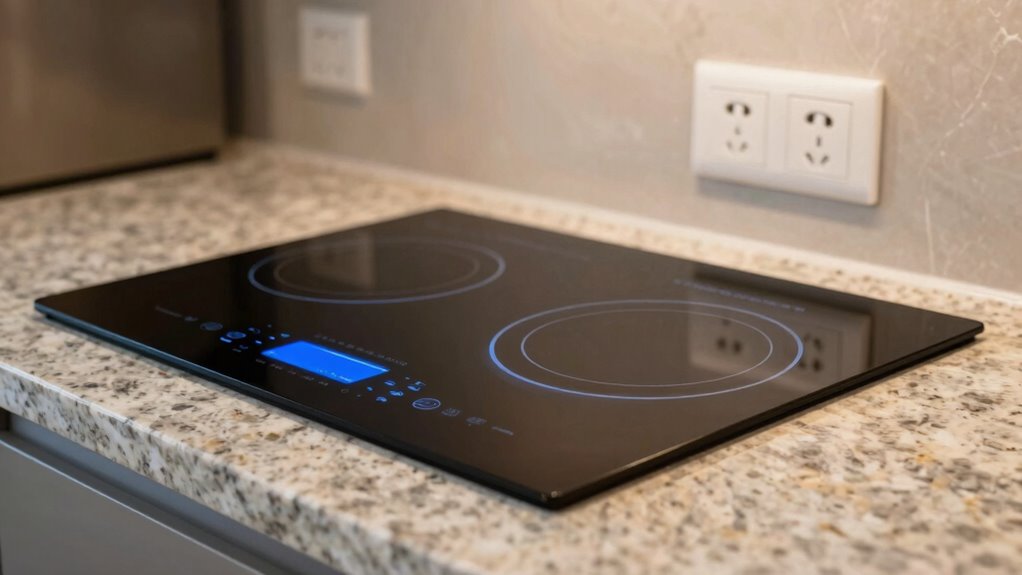
Proper installation of your induction cooktop is key to guaranteeing safety and ideal performance. During your kitchen renovation, prioritize correct setup to prevent electrical hazards and maximize appliance compatibility. Always check that your outlet can handle the cooktop’s wattage and ensure a dedicated circuit. Follow manufacturer instructions carefully, and consider hiring a professional for wiring. Confirm your countertop supports the weight and size of the cooktop. Keep ventilation clear to prevent overheating. Use appropriate cords and connectors to avoid damage. Regularly inspect connections for wear or loose contacts. For added safety, install a surge protector if recommended. These steps help safeguard your investment and create a safe, efficient cooking environment.
How to Choose the Right Induction Cooktop Based on Your Power Needs?
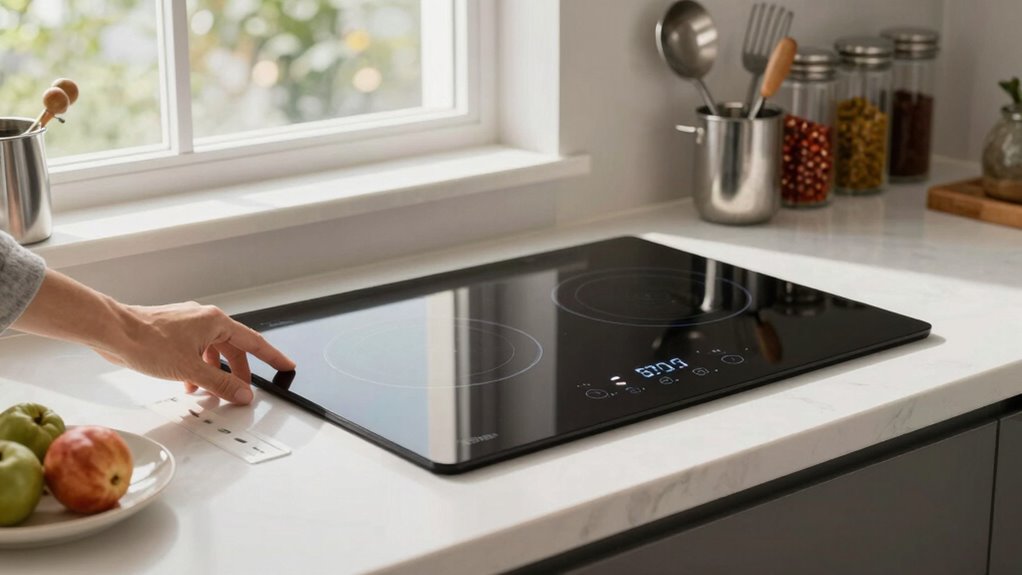
Choosing the right induction cooktop depends largely on your cooking habits and the power you need for efficient performance. Assess your typical cooking routines—if you often prepare large meals or use multiple burners simultaneously, opt for a model with higher wattage for better energy efficiency and faster heating. Conversely, if you mostly cook simple dishes, a lower wattage unit can conserve energy and reduce costs. When selecting, check your outlet’s capacity to prevent overloads. Also, consider maintenance tips like keeping the surface clean and avoiding metal objects that can interfere with performance. Balancing wattage with your usage ensures your cooktop operates efficiently, saving energy and prolonging its lifespan. This way, you’ll find a model that fits your needs without sacrificing performance or safety.
Frequently Asked Questions
Can I Upgrade My Existing Outlet for Higher Wattage Induction Stoves?
Yes, you can upgrade your outlet for higher wattage induction stoves, but you need to guarantee power compatibility first. Outlet upgrades involve installing a dedicated circuit with the proper amperage capacity to handle the increased wattage. Consult a licensed electrician to assess your current wiring and ensure the upgrade meets safety standards. This way, you’ll enjoy better performance without risking electrical issues or damage.
Are There Portable Induction Cooktops With Different Power Requirements?
Yes, there are portable induction cooktops with different power variations to suit your needs. These portable options range from lower wattage models ideal for camping or small apartments, to higher wattage units for faster cooking. When choosing, check the power requirements to guarantee your outlet can handle it. This way, you get flexibility and performance without worrying about electrical issues or needing to upgrade your outlets.
How Does Altitude Affect Induction Cooktop Performance and Wattage Needs?
At higher altitudes, you need to make altitude adjustments to your induction cooktop’s settings because reduced air pressure affects power efficiency. You might notice it takes longer to heat or that the wattage needs to be increased slightly for the same performance. Some models offer automatic altitude adjustments, but if not, manually adjusting your cooktop’s power settings guarantees it operates effectively despite the altitude changes.
What Safety Devices Are Recommended for High-Wattage Induction Stove Outlets?
Did you know that improper electrical safety can cause over 50% of kitchen fires? For high-wattage induction stoves, you should prioritize grounding requirements and choose a circuit breaker with the correct amperage rating. This guarantees your outlet handles the load safely, preventing overloads. Always consult a professional electrician to verify your wiring and breaker selection, providing peace of mind and safeguarding your home.
Can Multiple Small Appliances Share the Same Outlet as an Induction Cooktop?
You shouldn’t share an outlet between your induction cooktop and multiple small appliances because it can overload the outlet capacity. Appliance compatibility varies, and high-wattage cooktops need a dedicated circuit for safety and performance. When you connect multiple devices, you risk tripping breakers or damaging your appliances. Always check your outlet’s wattage limits and make sure your cooktop has a separate outlet to prevent electrical issues and maintain safe operation.
Conclusion
So, after all this talk about wattage and outlets, you’d think choosing the right induction cooktop is a breeze, right? But here’s the irony: the more you try to match your power needs perfectly, the more your kitchen might remind you of a science experiment. Just remember, sometimes the safest choice is to ignore the wattage drama altogether—after all, who needs a perfectly powered stove when you can just enjoy your meal?