
When you check butter labels, focus on three key factors: fat percentage, grade, and salt content. Look for butter with around 80% fat for a more natural choice. Higher grades, like AA, indicate better flavor and fewer additives. Pay attention to salt; choose unsalted if you’re watching your sodium intake. By understanding these elements, you can make more informed decisions on butter. Stick around to discover even more tips for selecting the best products!
Key Takeaways
- Check the fat percentage; higher fat content (around 80%) indicates a more natural butter product.
- Look for USDA grades; Grade AA butter offers superior flavor and fewer artificial additives.
- Recognize the difference between salted (1-2% salt) and unsalted butter for dietary needs.
- Be cautious of ‘light’ or ‘reduced-fat’ options that may contain artificial fillers.
- Always read labels for additional ingredients to ensure quality and authenticity.
Have you ever stood in the dairy aisle, puzzled by the various butter labels? You’re not alone. With so many options available, understanding what each label means can save you time and help you make healthier choices. Let’s break down the essential components you should look for when reading butter labels: fat percentage, grade, and salt content.
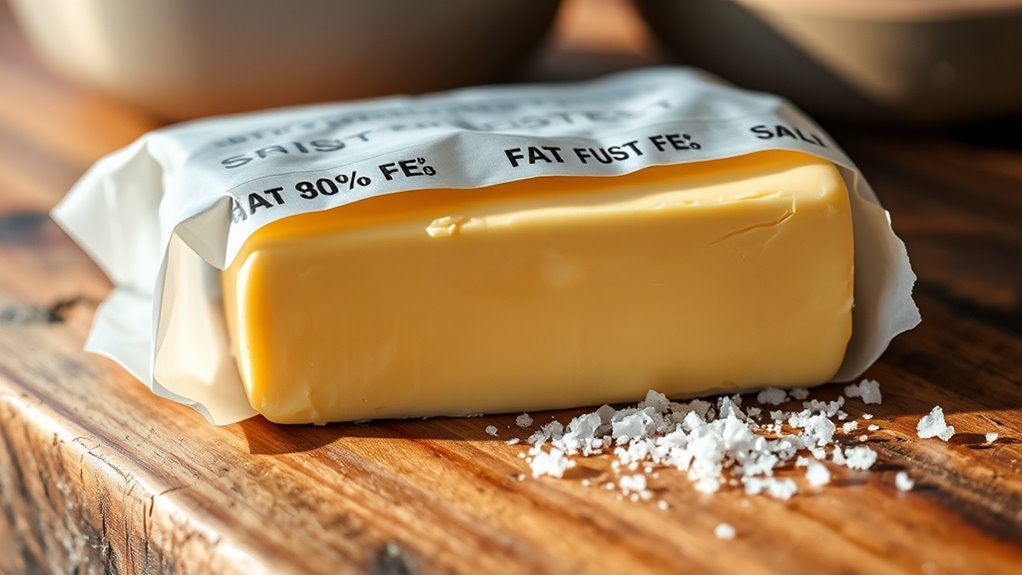
First, let’s talk about fat percentage. Butter typically contains around 80% fat, which is the standard for most products you’ll find. However, you might come across options with varying fat percentages, such as ‘light’ or ‘reduced-fat’ butters. While these lighter versions often boast fewer calories, they can also contain artificial ingredients to compensate for the reduced fat. Always check the label to see what additives are included. If you’re aiming for a more natural product, sticking to traditional butter with a higher fat content is usually your best bet.
Understanding butter’s fat percentage is key; opt for traditional varieties for a more natural choice.
Next, consider the butter grade. The U.S. Department of Agriculture (USDA) grades butter based on factors like flavor, texture, and color. Grades range from AA, which is the highest quality, to B. Grade AA butter is creamy, has a smooth texture, and a rich flavor—ideal for spreading on toast or using in recipes. When you choose a higher grade, you’re likely opting for a product with fewer artificial ingredients since premium options are more likely made from high-quality cream. Don’t be swayed by fancy packaging design; focus on the grade to make certain you’re getting the best quality.
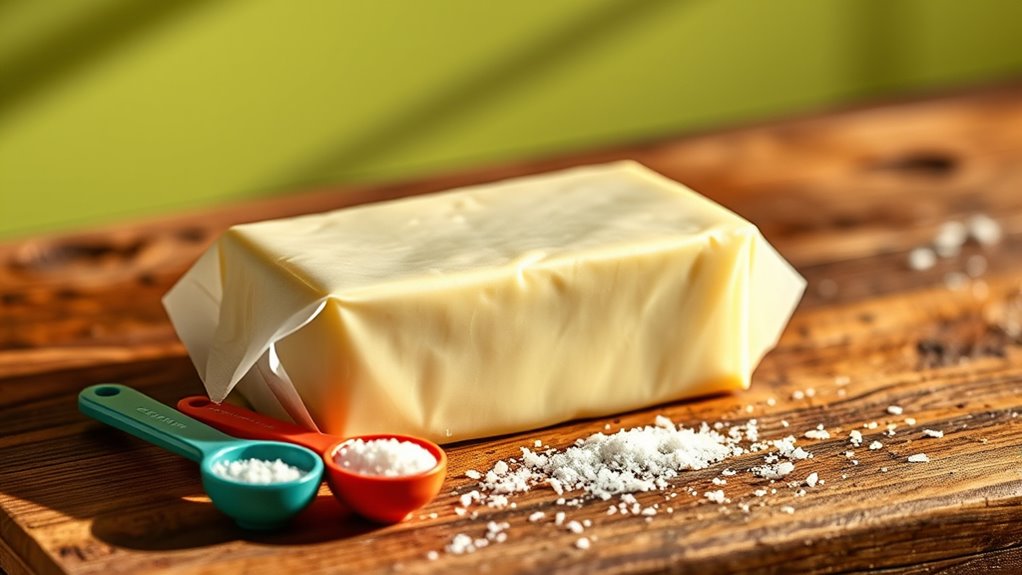
Lastly, the salt content is another vital factor. Salted butter typically contains about 1-2% salt, while unsalted butter has no added salt. If you’re watching your sodium intake, unsalted butter is a better choice. It also lets you control the salt content in your cooking more precisely. Again, check the label for any additional artificial ingredients that might be present, as some brands may include preservatives or flavor enhancers.
Frequently Asked Questions
What Is the Difference Between Salted and Unsalted Butter?
Salted butter contains added salt, which enhances its flavor and acts as a preservative. This salt content can vary, affecting how you use it in recipes. Unsalted butter, on the other hand, has no added salt, allowing you to control the saltiness of your dishes. If you want a pure butter flavor, unsalted is your best bet. For a richer taste in certain recipes, go for the salted variety.
How Should Butter Be Stored for Freshness?
To keep your butter fresh, store it in the fridge at a temperature below 40°F. Use an airtight container to prevent it from absorbing other odors and to maintain its quality. If you’ve got a large quantity, consider freezing it in smaller portions, wrapped tightly in plastic wrap or foil. This way, you can enjoy your butter’s flavor and freshness whenever you need it without worrying about spoilage.
Can I Use Margarine Instead of Butter?
Absolutely, you can use margarine instead of butter! It’s not like you’re swapping gold for gravel. When considering margarine vs butter, keep in mind that margarine often has fewer saturated fats, making it a popular butter substitute for those watching their health. Just remember, the flavor and texture might differ slightly, so it’s best to choose a margarine that closely resembles butter for your recipes. Enjoy exploring your options!
What Are the Health Benefits of Butter?
Butter offers several health benefits when consumed in moderation. It’s rich in essential nutrients like vitamins A, D, E, and K, which support immune health and vision. The healthy fats in butter can help improve cholesterol levels and provide a good source of energy. Plus, the butyrate found in butter promotes gut health. By incorporating butter into your diet wisely, you can enjoy its delicious flavor along with its nutritional perks.
How Does Butter Fat Content Affect Baking?
When you bake, think of butter as a key player in a symphony. The fat content impacts how well your batter rises and bakes. Higher fat butter melts at a lower temperature, creating a tender crumb, while lower fat can lead to drier results. Proper fat crystallization during cooling helps maintain structure, ensuring your baked goods are both fluffy and rich. So, choose wisely for that perfect harmony in your treats!
Conclusion
Now that you know how to decode butter labels, the next time you pick up a package, you’ll spot the hidden details that can transform your cooking. Will you opt for the creamier, higher fat percentage, or the lower salt option for a healthier choice? Each decision holds the potential to elevate your dishes or lead you down a different culinary path. What will you choose? The delicious possibilities await—don’t let them slip away!