
Salt transforms butter beyond just flavor by acting as a natural preservative, extending its shelf life by inhibiting bacterial growth. It improves texture and spreadability, making butter smoother and easier to apply, especially in cold conditions. Salt also influences the physical properties, helping maintain consistency across storage environments and in recipes. Additionally, it enhances emulsification and interacts with other ingredients, ensuring better overall quality. Keep exploring to discover even more about how salt impacts butter’s many qualities.
Key Takeaways
- Salt acts as a natural preservative, extending butter’s shelf life by inhibiting microbial growth.
- It enhances butter’s texture, making it more spreadable and smoother, especially in cold conditions.
- Salt improves emulsification, helping butter blend better with other ingredients in recipes.
- It influences the physical properties of butter, affecting consistency and stability during storage.
- Salt’s antimicrobial effects prevent spoilage during transportation and prolonged storage.
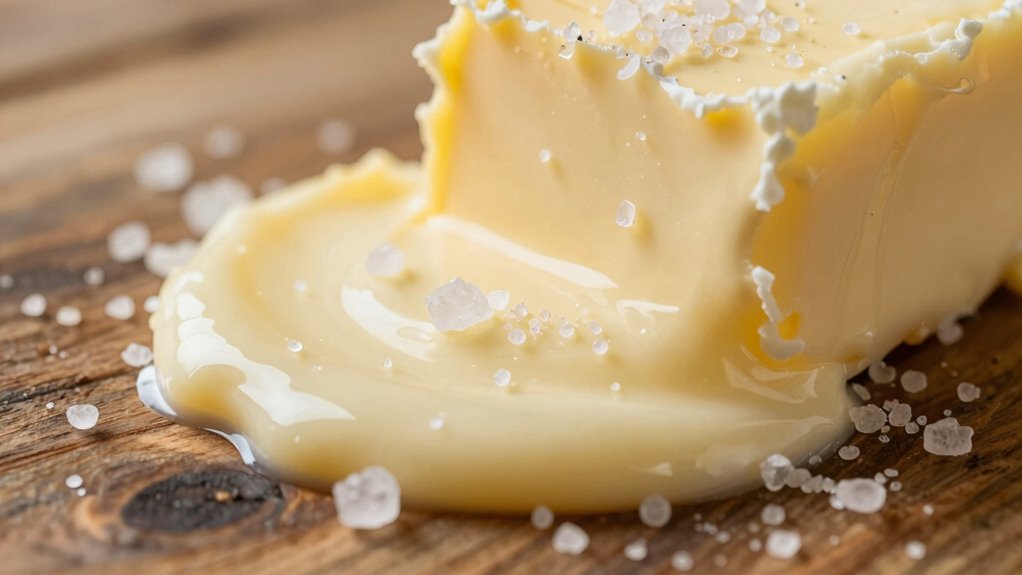
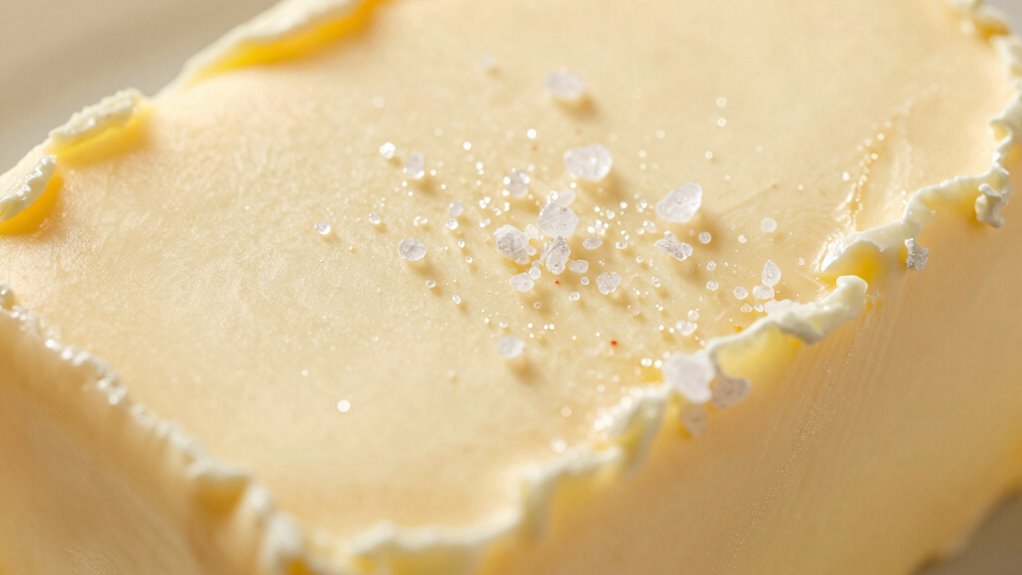
Salt has long been used to enhance the flavor of butter, but its effects go far beyond just taste. When you add salt to butter, you’re not only making it more palatable but also influencing its preservation and texture. Salt acts as a natural preservative, helping to extend butter’s shelf life by inhibiting bacterial growth that can cause spoilage. This preservation property is especially important in traditional dairy practices, where salt was used to keep butter fresh during storage and transportation. By controlling microbial activity, salt guarantees that your butter remains safe to consume for longer periods, reducing waste and maintaining quality.
Salt naturally preserves butter by inhibiting bacteria, extending shelf life and maintaining freshness over time.
Beyond preservation, salt plays a pivotal role in flavor enhancement. It brings out the natural richness of butter, balancing its creamy sweetness with a subtle savory note. When you salt your butter, you’re not just making it taste better; you’re also creating a more complex flavor profile that can elevate your dishes. Salt amplifies the butter’s inherent qualities, making it more versatile in both sweet and savory recipes. The right amount of salt can turn a simple spread into a culinary enhancer, enriching everything from baked goods to sautéed vegetables.
Salt’s impact on butter’s texture is also notable. When incorporated properly, salt can improve the spreadability of butter, especially in colder temperatures. It can help break down fat crystals, resulting in a smoother consistency that’s easier to spread on bread or toast. This effect is particularly useful if you’re making homemade butter or working with artisanal varieties, where texture can vary. Salt’s ability to influence the physical properties of butter makes it a valuable ingredient, not just for flavor but also for achieving the desired texture and consistency. Additionally, understanding the preservation properties of salt can help you make better decisions when storing butter for longer periods. Incorporating salt can also influence the butter’s interaction with other ingredients, such as fats and liquids, enhancing emulsification in culinary preparations. Properly salting butter can also improve its shelf life, especially when stored in warm or humid environments.

Z Natural Foods Rich Salted Butter Powder, Replace Messy Butter Stick with Powdered Butter, Non GMO- Hormone Free-Baking Butter- 1 lb
100% Real and Delicious: This salted butter powder is made from real butter and is incredibly tasty and…
As an affiliate, we earn on qualifying purchases.
As an affiliate, we earn on qualifying purchases.
Frequently Asked Questions
Does Salt Affect Butter’s Shelf Life?
Yes, salt affects butter’s shelf life by acting as a preservation agent. When you add salt, it inhibits bacterial growth, which helps prevent spoilage. This preservation effect extends butter’s freshness and reduces rancidity over time. Additionally, salt enhances flavor, making the butter taste richer. So, if you want your butter to last longer while boosting its flavor, incorporating a bit of salt is a simple, effective solution.
Can Salted Butter Be Healthier Than Unsalted?
Salted butter can be healthier than unsalted if it helps you reduce overall sodium intake by enhancing flavor and encouraging less added salt. Like a master painter, salt subtly modifies taste and texture, making butter more satisfying with less. This flavor enhancement means you might use less butter overall, potentially lowering calorie intake. However, be mindful of sodium levels, as excess salt still poses health risks.
How Does Salt Influence Butter’s Melting Point?
Salt lowers butter’s melting temperature by disrupting its crystalline structure. When you add salt, it causes salt crystallization within the butter, which weakens the intermolecular forces holding the fat molecules together. As a result, the melting point decreases, making the butter melt more quickly at lower temperatures. This effect is useful in cooking, ensuring butter melts uniformly and enhancing texture and flavor throughout your dishes.
Is Salted Butter Better for Baking Than Unsalted?
You’ll find salted butter often preferable for baking because it offers better flavor enhancement, balancing sweetness and richness. Its salt content also boosts culinary versatility, allowing you to adapt recipes more easily without extra salt. While unsalted butter provides control over salt levels, salted butter simplifies the process and adds depth to baked goods, making it a popular choice for home bakers seeking consistent flavor and a richer taste experience.
Does Salt Change Butter’s Nutritional Content Significantly?
Salt doesn’t considerably change butter’s nutritional content, but it does enhance flavor and alter texture slightly. When you add salt, it boosts the butter’s taste, making it more flavorful without adding calories or nutrients. Additionally, salt can influence texture by making butter feel firmer or smoother. Overall, the nutritional impact is minimal, but the sensory improvements from salt make your baked goods and dishes more appealing.

Land O Lakes Butter with Olive Oil & Sea Salt, Spreadable, 13 oz tub
BUTTER WITH OLIVE OIL & SEA SALT: Land O Lakes Butter with Olive Oil and Sea Salt is…
As an affiliate, we earn on qualifying purchases.
As an affiliate, we earn on qualifying purchases.
Conclusion
So, next time you sprinkle salt into your butter, remember, you’re not just enhancing flavor—you’re revealing a secret world of culinary magic! Salt transforms butter into a powerhouse of texture, preservation, and even aroma, turning simple into spectacular. It’s like giving your butter superpowers, making every bite an extraordinary adventure. Don’t underestimate the tiny pinch—you’re wielding a flavor-changing, life-enhancing, taste-bud-tantalizing elixir that can elevate your cooking to legendary status!

FLORIDA PURE Salted Butter Sea Salt – 80+ Mineral Sea Salt, Natural, Unrefined, Non Iodized – for Baking, Cooking, Seasoning & Enhancing Taste – Hand-harvested Flaky Sea Salt (4.5oz Jar)
Creamy & Luxurious Flavor: Elevate your dishes with our Salted Butter Infused Sea Salt, bringing a rich, buttery…
As an affiliate, we earn on qualifying purchases.
As an affiliate, we earn on qualifying purchases.

LorAnn Butter Vanilla Bakery Emulsion, 4 oz – Intense Butter Vanilla Flavor Extract for Baking, Cookies, Frosting, Ice Cream, Smoothies and Beverage – Gluten Free, Vegan, Sugar Free, Nut Free
Our Bakery Emulsions are water-based flavors that won’t bake out like traditional alcohol-based extracts
As an affiliate, we earn on qualifying purchases.
As an affiliate, we earn on qualifying purchases.