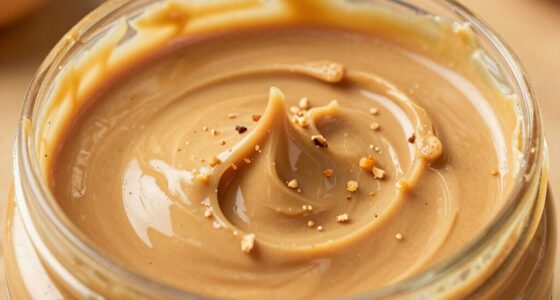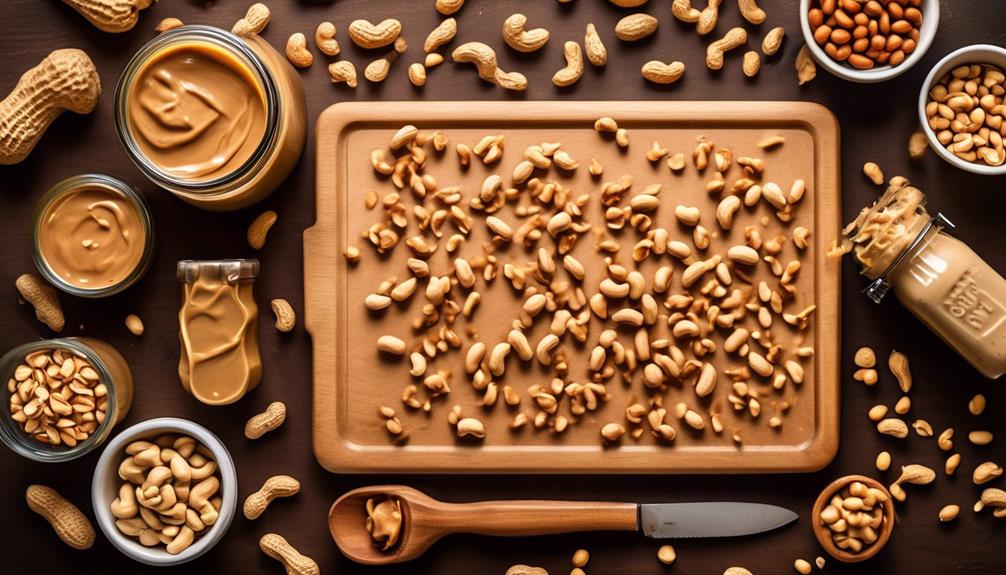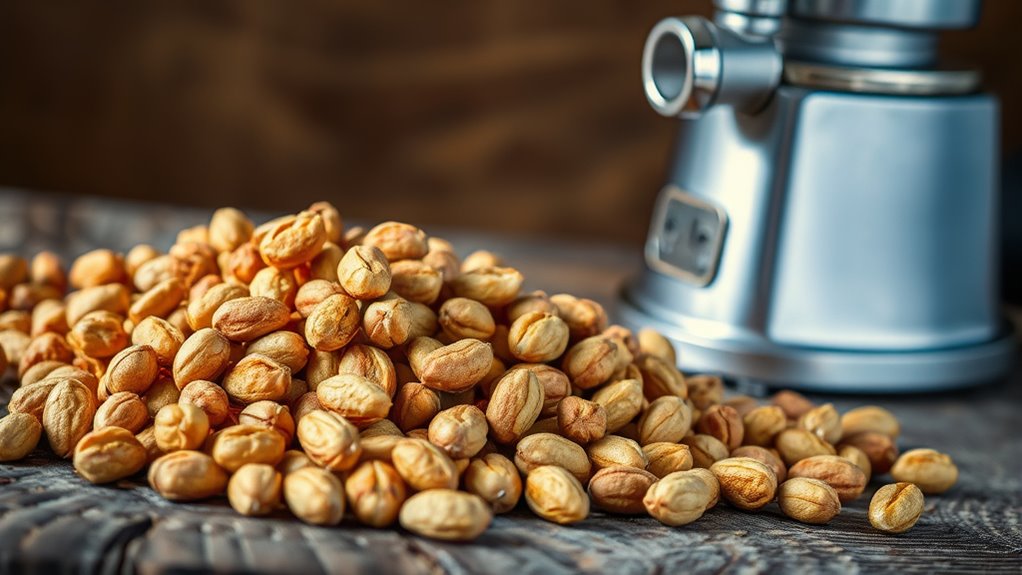

To make peanut butter, you start with high-quality peanuts, typically Virginia or Runner varieties. They’re roasted to enhance their flavor, then quickly cooled to lock in that taste. After roasting, the peanuts are ground into a paste, which can be smooth or chunky based on your preference. Flavors like salt and sugar might be added, and some brands use stabilizers to prevent oil separation. There’s plenty more to explore about the process if you keep going!

Get kitchen staples and gadgets delivered free with Prime
- Fast, free delivery on millions of items
- Prime Video, Amazon Music and more included
- Member-only deals all year
Key Takeaways
- High-quality Virginia or Runner peanuts are selected to ensure optimal flavor and consistency in the final product.
- Peanuts are roasted at specific temperatures to enhance flavor, aroma, and caramelize natural sugars.
- After roasting, peanuts are quickly cooled to lock in flavor and prevent bitterness.
- Roasted peanuts are ground into a paste, with texture controlled for smooth or chunky varieties.
- Final preparation includes blending with salt, sugar, or oil, followed by packaging for distribution.
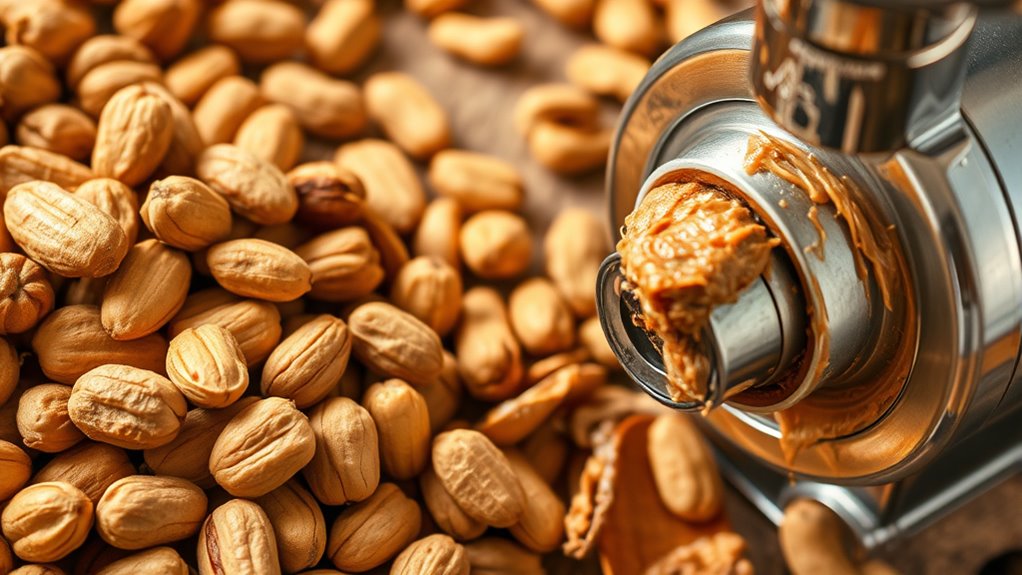
When you think about peanut butter, you might picture a creamy spread perfect for sandwiches or a chunky treat to enjoy by the spoonful. However, there’s a fascinating journey that transforms raw peanuts into the beloved spread you know. It all begins with the selection of high-quality peanuts, usually Virginia or Runner varieties, known for their rich flavor and texture. Once the right peanuts are chosen, they’re subjected to roasting, which enhances their natural flavor and aroma.
Roasting is a critical step in the peanut butter-making process. During this stage, the peanuts are heated to a specific temperature, causing the natural oils to release and the sugars to caramelize. You can practically taste the difference in flavor between raw and roasted peanuts. After roasting, the peanuts are cooled down quickly to lock in that delicious, nutty goodness. This step also helps in preventing overcooking, which can lead to bitterness.
Roasting peanuts enhances their flavor and aroma, creating that irresistible nutty goodness we love in peanut butter.
Next comes the grinding process. The roasted peanuts are ground in a machine that crushes them into a paste. You have the option of controlling the grind’s consistency, whether you prefer a smooth or chunky texture. While traditional peanut butter remains a favorite, many people explore alternative spreads made from other nuts or seeds. These alternatives, like almond butter or sunflower seed spread, offer unique flavors and nutrition profiles, catering to various dietary preferences.
As you enjoy your peanut butter, it’s good to remember the peanut nutrition benefits. Peanuts are packed with protein, healthy fats, and essential vitamins and minerals. This makes peanut butter not only a tasty treat but also a nutritious addition to your diet. It’s a fantastic source of energy, which is why it’s often a staple for athletes and health enthusiasts alike. In fact, butter’s role in culinary traditions highlights its versatility as a key ingredient in various dishes.
After grinding, the peanut butter is usually blended with a bit of salt and sometimes sugar or oil to achieve the desired taste and consistency. Some brands even offer no-stir varieties, which contain stabilizers to prevent oil separation. Once the mixture is ready, it’s packaged and sent to store shelves, waiting for you to bring it home.
As an affiliate, we earn on qualifying purchases.
Frequently Asked Questions
What Types of Peanuts Are Best for Making Peanut Butter?
For the best peanut butter, you should choose Virginia or Runner peanut varieties. Virginia peanuts have a robust flavor, while Runner peanuts are known for their creamy texture. When it comes to roasting techniques, opt for dry roasting to enhance the natural oils and flavor. This method brings out the best in your chosen peanuts, creating a rich, delicious spread. So, pick the right peanuts and roast them properly for a perfect peanut butter experience!
How Long Does Homemade Peanut Butter Last?
Homemade peanut butter typically lasts about 2 to 4 weeks in the fridge. To maximize its shelf life, store it in an airtight container to prevent oxidation and moisture. If you notice any off smells or mold, it’s best to toss it. For longer storage, consider freezing it in small portions. Just remember to label your containers with the date, so you know when you made it. Enjoy your fresh peanut butter while it’s at its best!
Can I Add Flavors to My Peanut Butter?
Absolutely, you can jazz up your peanut butter like a rock star at a concert! Flavor infusion is your playground—think cinnamon, vanilla, or even a dash of sea salt for that zing. If you’re craving sweetness, you’ve got options galore: honey, maple syrup, or even a sprinkle of powdered sugar. Just mix in your chosen ingredients until it’s a creamy masterpiece! Your taste buds will dance with delight every time you spread it!
Is Natural Peanut Butter Healthier Than Processed?
Yes, natural peanut butter is generally healthier than processed versions. It offers greater nutritional benefits, as it usually contains just peanuts and maybe a bit of salt, ensuring ingredient purity. Processed peanut butters often have added sugars, oils, and preservatives that can diminish their health value. By choosing natural varieties, you’re getting more protein and healthy fats without the unwanted extras, making it a better choice for your overall diet.
What Are Common Allergens Related to Peanut Butter?
Peanut butter’s a delicious delight, but it’s not without its dangers! The most notorious allergen associated with it is the peanut allergy, which can cause serious reactions in sensitive individuals. You’ve got to pay attention to allergen labeling on products, as many brands process peanut butter in facilities that handle other allergens like tree nuts or soy. Always double-check those labels to keep you and others safe while enjoying this tasty treat!
Conclusion
In the delightful journey from raw peanuts to creamy goodness, you’ve witnessed the transformation of humble legumes into a beloved spread. Each step, from the gentle roasting that releases their nutty charm to the rhythmic grinding that creates a silky texture, showcases nature’s magic. So, the next time you savor that rich, velvety peanut butter, remember it’s more than just a condiment; it’s a labor of love that brings comfort and joy to every bite. Enjoy!
Halloween Picks
halloween
As an affiliate, we earn on qualifying purchases.