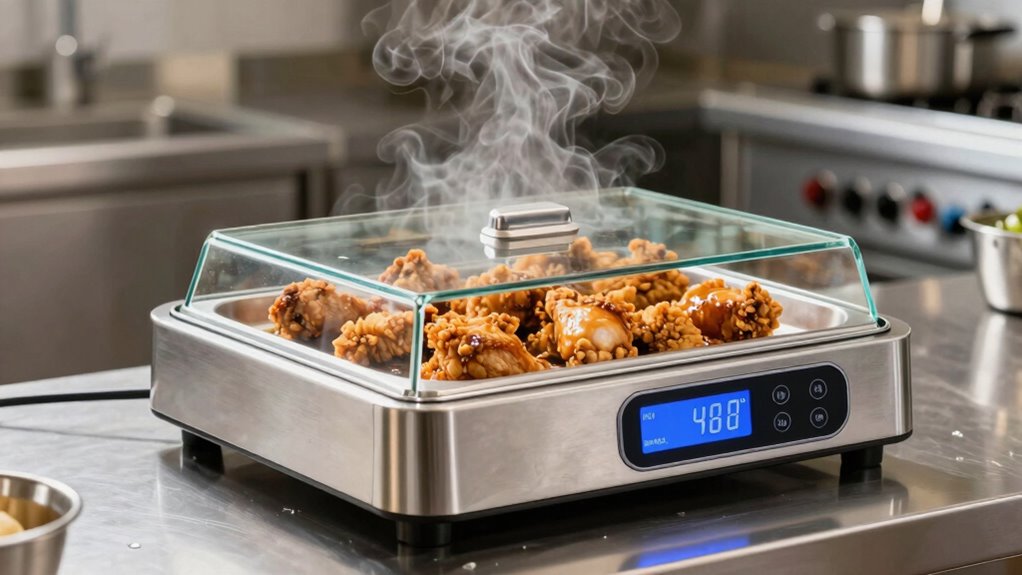
To keep food safe without drying it out, maintain hot holding temperatures between 140°F and 165°F, with ideal around 165°F. Use proper equipment, insulated containers, and covers to retain moisture. Regularly check temperatures with calibrated thermometers and adjust equipment as needed. Avoid fluctuations by monitoring closely and reheating promptly. Staying within the safe range prevents bacteria growth while keeping your food moist and tasty. Keep exploring to learn more tips for perfect hot holding!
Key Takeaways
- Maintain hot holding temperatures at or above 140°F (60°C) to prevent bacterial growth and ensure food safety.
- Use insulated containers and covers to retain heat and keep food moist during holding.
- Regularly monitor and document internal temperatures to ensure consistent safety and quality.
- Employ proper heat distribution and equipment with adjustable thermostats to prevent cold spots and dryness.
- Address temperature fluctuations promptly by recalibrating sensors and inspecting insulation to maintain optimal conditions.
Why Hot Holding Temperatures Matter for Food Safety

Maintaining proper hot holding temperatures is essential because bacteria can grow rapidly at unsafe levels if food isn’t kept hot enough. When temperature stability isn’t maintained, food quality can decline quickly, leading to dry, overcooked, or flavorless dishes. Consistent hot temperatures prevent bacterial growth, ensuring your food stays safe to eat. If the temperature drops, bacteria like Salmonella and Clostridium perfringens can multiply, increasing the risk of foodborne illness. Keeping food at the right hot holding temperature preserves its texture, flavor, and overall quality. This not only protects your customers but also helps you meet food safety standards. In short, controlling hot holding temperatures is a critical step in serving safe, tasty, and high-quality food every time. Proper temperature monitoring and food safety practices are vital for maintaining these standards. Additionally, understanding safe temperature ranges helps prevent bacterial proliferation and ensures compliance with health regulations. Regularly checking and calibrating your thermometers can help maintain these proper temperature controls, further safeguarding food safety. Implementing effective temperature management systems can enhance consistency and reduce risks associated with temperature fluctuations.
What’s the Safe Temperature Range for Hot Food?
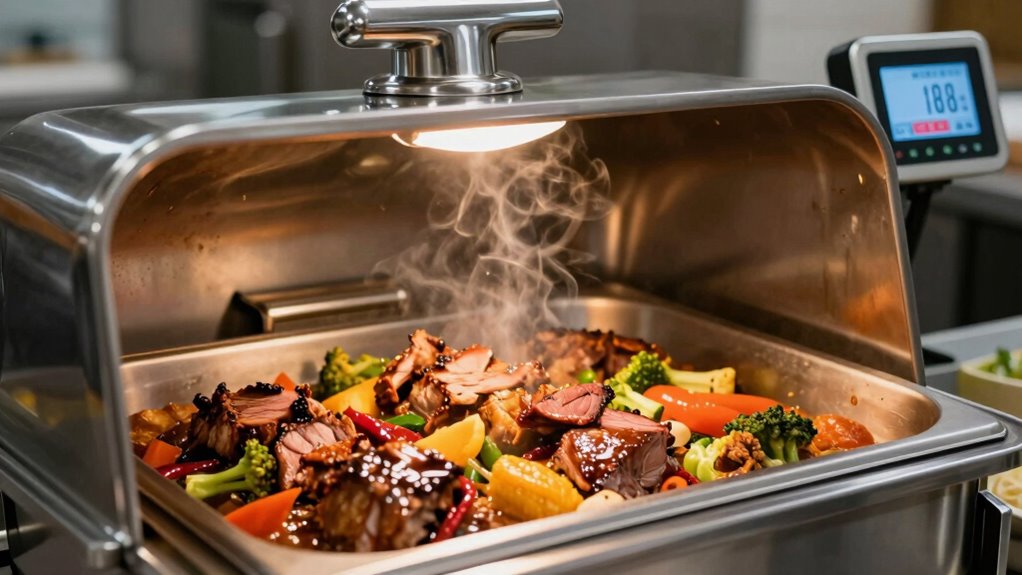
To keep hot food safe, it’s essential to serve and hold it within the proper temperature range. The safe temperature range for hot food is at least 140°F (60°C) or higher. Keeping food above this temperature prevents bacteria growth, ensuring food safety. Temperatures below 140°F risk bacterial proliferation, which can cause illness. Use a food thermometer to check the temperature regularly. The table below shows key temperature points:
| Temperature (°F) | Food Safety Tip |
|---|---|
| 140°F (60°C) | Start hot holding, keep above here |
| 165°F (74°C) | Ideal serving temperature |
| 130°F (54°C) | Risk zone, avoid holding here |
| 150°F (66°C) | Recommended for hot holding |
| 170°F (77°C) | Maintain for safety and quality |
Always monitor and adjust to maintain food safety. Proper temperature control is vital for preventing foodborne illness and maintaining quality during hot holding.
How to Keep Food Hot and Moist During Holding
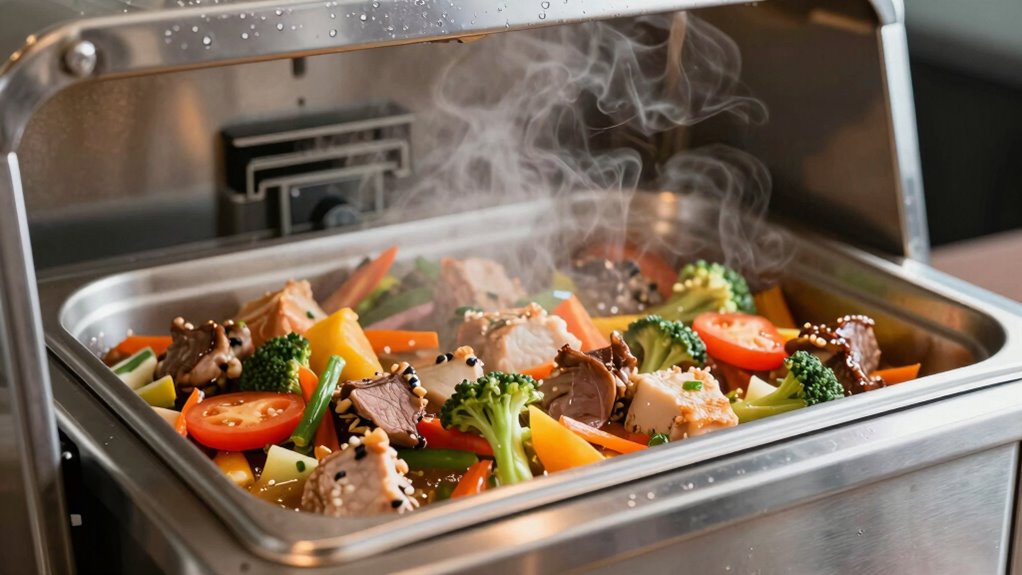
To keep food hot and moist during holding, you need to use proper insulation techniques like covered containers or heat-retaining equipment. Regularly monitor the temperature to guarantee it stays within safe limits and maintains quality. Staying attentive helps prevent food from drying out or becoming unsafe to serve. Incorporating sound management principles can also enhance the environment by minimizing heat loss and ensuring consistent temperatures. Using appropriate power tools and equipment, such as insulated containers or heat-retentive warmers, can further improve your holding setup. Additionally, understanding auditory processing can help in creating a quieter, more controlled environment that supports food safety protocols. Maintaining proper networking hardware in your kitchen area can also facilitate better temperature monitoring through connected sensors, ensuring optimal conditions. Implementing environmental controls can optimize the overall climate, further safeguarding the quality and safety of your food.
Use Proper Insulation Techniques
Proper insulation techniques are essential for keeping hot foods both moist and at safe temperatures during holding. Using effective insulation methods helps improve temperature retention, preventing heat loss that can compromise food safety and quality. You can use insulated food pans, covers, and thermal blankets to trap heat and moisture. Avoid gaps or leaks that let heat escape, and ensure lids fit tightly. Wrapping containers with insulating materials, like foil or specialized wraps, adds an extra layer of protection. Proper insulation minimizes temperature fluctuations, keeping food at consistent, safe temperatures while maintaining moisture. Additionally, air circulation management plays a crucial role in preventing hot spots and ensuring even temperature distribution. Good insulation techniques reduce the risk of bacterial growth and help retain the food’s texture and juiciness longer. Incorporating temperature monitoring tools, such as thermometers, ensures that the holding environment remains within safe limits at all times. To further enhance effectiveness, maintaining proper insulation integrity prevents heat leaks and ensures consistent temperature control. Proper insulation techniques also support the use of proper storage practices, which further enhances food safety and quality. By focusing on good insulation techniques, you ensure hot foods stay safe to serve and retain their desirable texture and juiciness longer.
Monitor Regularly for Temperature
Regularly checking food temperatures during holding guarantees that your hot foods stay both safe and moist. Use a properly calibrated thermometer to guarantee accurate readings, and check temperatures at regular intervals. Consistent monitoring helps you catch any temperature drops that could compromise safety or cause drying out. Keep detailed records in temperature logbooks to track your checks and identify trends or issues early. Proper thermometer calibration is essential for reliable readings; recalibrate thermometers periodically according to manufacturer instructions. Regularly inspecting equipment and maintaining proper storage conditions supports food safety and helps prevent temperature fluctuations. Additionally, ensuring proper hot holding equipment is functioning correctly minimizes risks of temperature inconsistencies. Implementing routine temperature checks is a simple yet effective way to ensure food remains at safe and moist levels during holding. Using digital thermometers can provide faster readings and improve accuracy, thereby enhancing your monitoring process. By maintaining a routine of frequent checks and logging results, you’ll prevent hot foods from falling below safe temperatures, preserving moisture and quality. Staying vigilant with monitoring gives you peace of mind and ensures your food remains safe and delicious during holding. Incorporating proper storage practices can further stabilize temperatures and improve overall food quality during holding.
Choosing and Using Hot Holding Equipment Properly
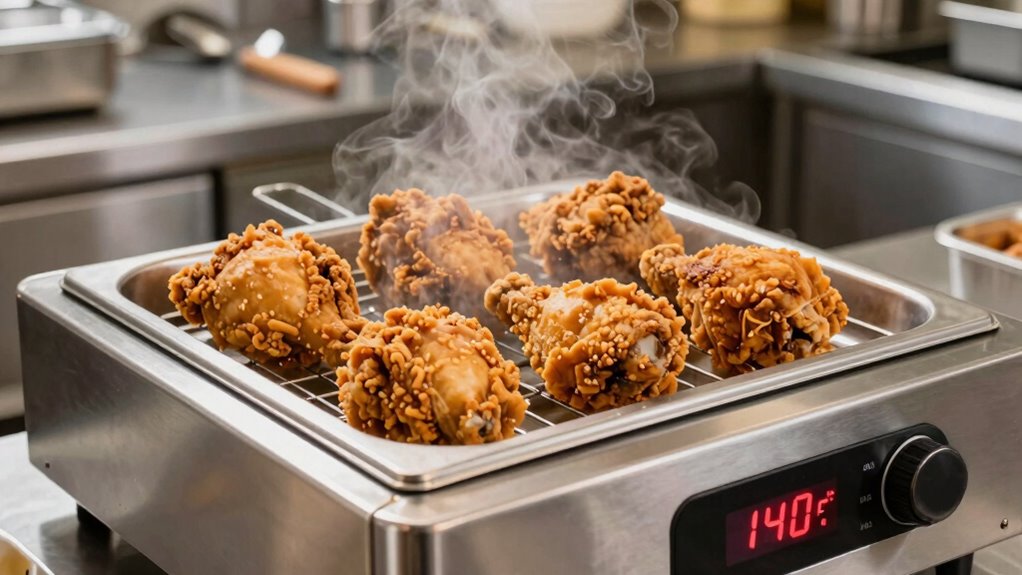
When choosing hot holding equipment, make sure it’s suitable for the food you’re storing and keeps temperatures consistent. You should also check temperatures regularly to guarantee food stays safe, and perform routine maintenance to keep equipment working properly. Proper selection, monitoring, and upkeep help prevent foodborne illnesses and keep your food at the right temperature. Additionally, understanding heat distribution can help ensure even warming and avoid cold spots that may compromise safety. Using equipment with consistent temperature control features can further enhance safety and food quality. Incorporating smart monitoring systems can provide real-time temperature data and alerts, enhancing food safety management. To achieve optimal performance, consider how equipment placement affects heat circulation and consistency within your holding units. Proper airflow management can also improve heat distribution and prevent temperature fluctuations.
Selecting Appropriate Equipment
Choosing the right hot holding equipment is essential to keep food at safe temperatures and prevent bacterial growth. Proper equipment selection ensures food stays hot enough without drying out. When selecting equipment, consider insulation techniques to maintain consistent heat. Here are key points to guide you:
- Opt for insulated holding units to reduce heat loss.
- Choose equipment with adjustable thermostats for precise temperature control.
- Ensure the size matches your volume to avoid overcrowding.
- Prioritize ease of cleaning to maintain hygiene standards.
Using insulation techniques effectively helps retain heat and minimizes energy consumption. Always verify that equipment can hold foods at the recommended temperatures, and invest in quality options suited to your needs. Proper selection guarantees that your hot holding setup is safe, efficient, and reliable.
Monitoring Temperature Regularly
To guarantee food remains safe during hot holding, you need to monitor temperatures consistently and accurately. Regular temperature checks ensure your food stays within safe limits and prevents bacterial growth. Use a reliable thermometer and record readings as part of your sanitation procedures. Proper food storage is essential, so keep hot foods at the correct temperature from the start, but continuous monitoring helps catch any temperature drops early. Check temperatures at least every two hours, especially during busy periods. If temperatures fall below safe levels, reheat or discard the food promptly. Staying vigilant with temperature monitoring reduces the risk of foodborne illness and maintains compliance with safety standards. Consistent checks are your best defense against unsafe food conditions.
Proper Maintenance Practices
Proper maintenance of hot holding equipment is essential to guarantee it functions correctly and keeps food at safe temperatures. Regular checks prevent equipment breakdowns that could compromise food safety. To assure proper use, focus on these key practices:
- Schedule routine inspections and cleanings to avoid buildup that hampers performance.
- Calibrate thermostats frequently to maintain precise temperature control.
- Train staff thoroughly on equipment operation and food storage guidelines.
- Replace worn parts promptly to prevent malfunctions that could lead to unsafe food temperatures.
Maintaining equipment properly helps keep hot foods at safe temperatures while preventing food waste. Staff training ensures everyone understands how to operate and care for the equipment correctly, reinforcing food safety protocols. Consistent maintenance supports reliable hot holding and ideal food quality.
How to Recognize Signs of Temperature Problems in Your Food

Recognizing temperature problems in your food is essential to preventing foodborne illnesses. Look for visual cues like a change in color, texture, or separation of liquids, which can indicate improper holding temperatures. Sensory detection also plays a key role; if food feels abnormally cold or hot to the touch or has an off smell, these are signs of potential temperature issues. Be alert for signs of spoilage, such as sliminess or discoloration, which often result from bacteria growth due to unsafe temperatures. Regularly inspecting your food using your senses helps catch problems early before servings, reducing the risk of illness. Trust your senses to identify when food isn’t held at safe temperatures, and take immediate action to correct the issue.
Best Practices for Monitoring and Reheating Hot Food Safely

Monitoring and reheating hot food safely are critical steps in preventing foodborne illnesses. To ensure proper safety, follow these best practices:
- Use reliable temperature sensors to check food’s internal temperature regularly, aiming for at least 165°F during reheating.
- Reheat leftovers quickly and evenly, stirring if necessary, to avoid cold spots where bacteria can grow.
- Follow reheating tips such as covering food to retain moisture and maintain consistent heat.
- Always verify reheated food reaches the safe temperature before serving, discarding any that don’t meet the standard.
Troubleshooting Temperature Fluctuations During Service
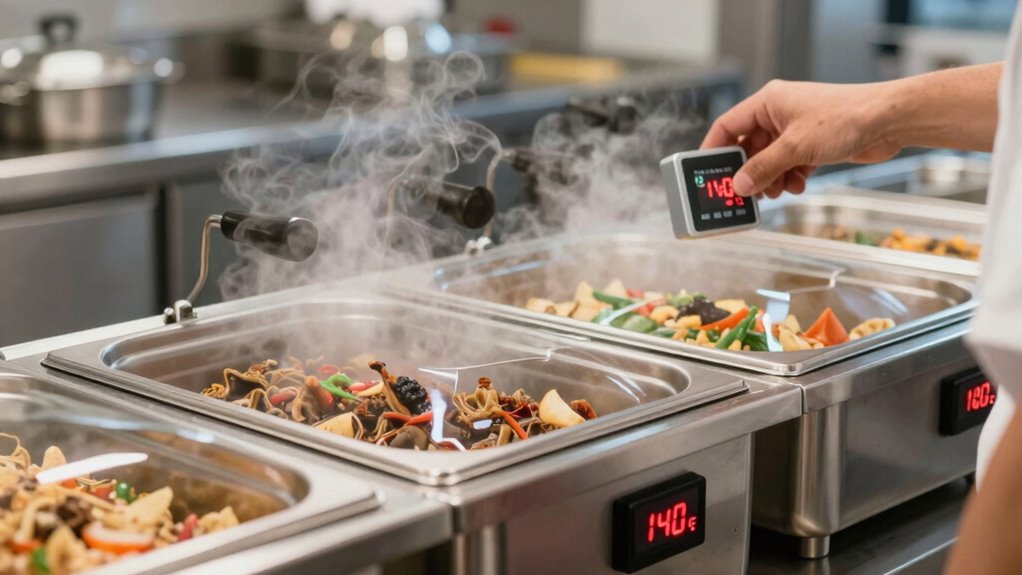
When temperature fluctuations occur during service, they can compromise food safety and quality. To troubleshoot, first check your temperature sensors—they should be properly calibrated and positioned. Faulty sensors can give false readings, leading to improper hot holding. Next, inspect your insulation materials; worn or damaged insulation allows heat loss, causing inconsistent temperatures. Regularly monitor the ambient temperature and ensure your equipment is functioning correctly. Keep a log of fluctuations to identify patterns. Use this table to guide your troubleshooting:
| Issue | Solution |
|---|---|
| Inaccurate temperature readings | Calibrate sensors or replace faulty ones |
| Heat loss from insulation | Repair or upgrade insulation materials |
| Equipment malfunction | Schedule maintenance and check heating elements |
| External airflow | Seal gaps and ensure proper ventilation |
How Following Hot Holding Guidelines Protect Your Customers and Business
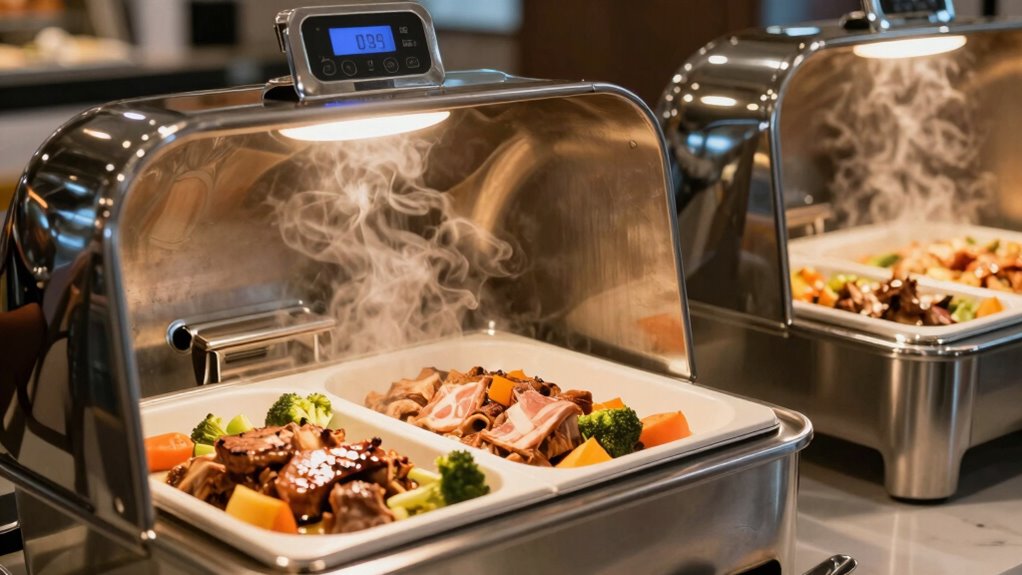
Have you ever considered how strictly following hot holding guidelines can safeguard your customers and your business? By maintaining proper temperatures, you ensure food stays safe and appealing. This directly impacts food presentation, making dishes look fresh and appetizing. When food is held at safe temperatures, customer satisfaction increases because they receive tasty, safely prepared meals.
Here are four ways following guidelines benefits you:
- Prevents foodborne illnesses, protecting your reputation.
- Keeps dishes visually appealing, enhancing food presentation.
- Reduces waste by avoiding spoilage due to temperature mishaps.
- Builds customer trust, encouraging repeat business and positive reviews.
Sticking to hot holding standards demonstrates your commitment to safety and quality, ensuring both your customers and your business thrive.
Frequently Asked Questions
How Often Should Hot Holding Equipment Be Calibrated?
You should calibrate hot holding equipment regularly, ideally at least once every three to six months, to guarantee accurate temperature monitoring. Follow your establishment’s calibration schedule and check temperatures daily to prevent food from falling below safe holding temperatures. If you notice any discrepancies or equipment issues, calibrate immediately. Proper calibration keeps food safe, maintains quality, and complies with health regulations.
Can Hot Holding Temperatures Vary for Different Types of Foods?
Think of hot holding temperatures as a dance floor, where each food type has its own rhythm. You should know that temperature fluctuations can occur for different foods, affecting food quality and safety. For delicate items like seafood, keep temperatures higher to prevent bacteria, while sturdier dishes can tolerate slight variations. Adjust your settings accordingly, ensuring each dish stays safe and flavorful throughout the event.
What Are the Consequences of Not Maintaining Proper Hot Holding Temps?
If you don’t maintain proper hot holding temps, you risk food safety issues and potential foodborne illnesses. Temperature accuracy is vital because bacteria can grow quickly if food falls into the danger zone (usually 40°F to 140°F). Without proper controls, your food could become unsafe, leading to health violations, waste, and loss of customer trust. Always monitor and verify hot holding temps to guarantee safety and quality.
How Do Ambient Conditions Affect Hot Holding Temperature Control?
Ambient temperature and humidity effects directly impact hot holding temperature control. If the surrounding environment is too warm or humid, it becomes harder to maintain the proper temperature, increasing bacteria growth risks. You need to monitor ambient conditions closely, adjusting your equipment as needed. Use insulated containers and ensure good air circulation to counteract these effects, keeping food safe and at the right temperature without drying it out.
Are There Specific Cleaning Protocols for Hot Holding Equipment?
Imagine your hot holding equipment glistening after a thorough cleaning. You should follow specific cleaning protocols, including regular cleaning schedules and detailed equipment maintenance. Use warm, soapy water and non-abrasive scrubbers to remove residues. Disinfect surfaces afterward to prevent bacteria growth. Properly cleaning and maintaining your equipment guarantees it functions efficiently, keeps food safe, and extends its lifespan, ultimately safeguarding your customers and reputation.
Conclusion
By keeping your hot holding temps just right, you create a steady heat that whispers safety and flavor. Imagine a gentle simmer, never boiling over, as your food stays moist and inviting. When you monitor, adjust, and care for your equipment, you’re weaving a shield against bacteria. This rhythm of attention guarantees every plate served is a warm embrace of quality, protecting your customers and your reputation with every hot, delicious bite.