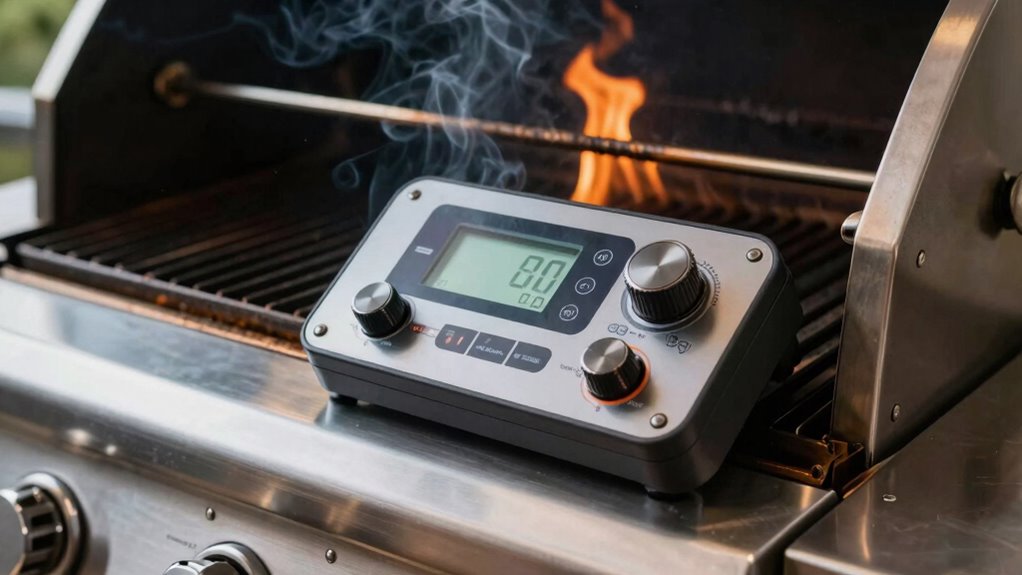
Grill controllers make smoking easier by automating temperature regulation, so you spend less time adjusting vents or checking temps. They help maintain steady heat and consistent smoke, improving flavor and texture. However, they’re not foolproof—external weather like wind or rain can still disrupt your efforts. Your knowledge, skill, and attention are essential for great results. Want to discover how to maximize your smoking success with or without controllers? Keep exploring to find out more.

Get kitchen staples and gadgets delivered free with Prime
- Fast, free delivery on millions of items
- Prime Video, Amazon Music and more included
- Member-only deals all year
Key Takeaways
- Grill controllers automate temperature regulation but are affected by external weather conditions like wind and rain.
- They help maintain steady temperatures, reducing monitoring but cannot prevent all fluctuations caused by environmental factors.
- Proper use requires understanding smoking principles and regular maintenance for consistent performance.
- External factors such as cold or windy weather may still require manual adjustments despite automation.
- Controllers enhance smoking ease but do not replace skill, attention, or knowledge for perfect results.
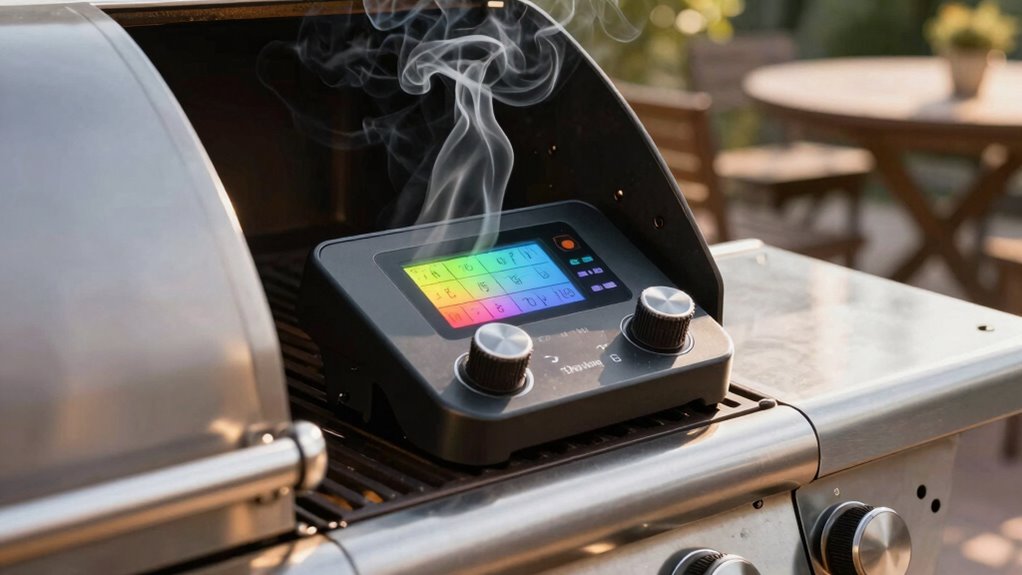
Smoking meat has always required careful attention and precise temperature control, but with the advent of grill controllers, that task has become much easier. These devices offer automated temperature regulation, meaning you can set a target temperature, and the controller adjusts the heat source accordingly. This feature helps prevent temperature swings, keeping your meat at a steady, ideal smoking temperature without constant monitoring. As a result, you can focus more on preparing side dishes or simply relaxing rather than babysitting your smoker. The automation reduces the chances of overheating or undercooking, which are common pitfalls for amateur pitmasters.
Grill controllers automate temperature, making smoking easier and more consistent for better flavor and less monitoring.
Enhanced smoke consistency is another advantage that grill controllers provide. When the temperature stays stable, the wood chips or chunks burn more evenly, producing a steady stream of smoke. This consistent smoke is essential for developing the deep, smoky flavor that characterizes good smoked meat. Without control, fluctuations in temperature can lead to uneven smoke production, resulting in a patchy flavor profile. By maintaining a consistent environment, your meat absorbs smoke more uniformly, leading to better flavor and texture.
However, it’s important to remember that grill controllers aren’t foolproof. They can greatly improve your smoking process, but they don’t eliminate all challenges. For instance, ambient weather conditions, such as wind or rain, can still influence your smoker’s performance. If it’s particularly cold or windy, the controller might struggle to maintain the set temperature, requiring you to make manual adjustments or add insulation. Moreover, the quality of your grill or smoker plays a role; a poorly sealed chamber will be harder to regulate, no matter how advanced your controller is.
Additionally, even with automated systems, you need to understand your equipment and ingredients. Relying solely on technology without knowing the basics of smoking can lead to less-than-ideal results. It’s essential to periodically check your meat and adjust if needed. Sometimes, the controller’s sensors might fail or become inaccurate, especially if not maintained properly. Regular calibration and attention to your smoker’s overall condition are necessary to get the best results. Understanding temperature regulation and how external conditions affect your smoker can greatly enhance your smoking success. Developing a foundational knowledge of smoker performance can help you troubleshoot common issues and achieve better results. Recognizing the impact of ambient weather on your smoking process is crucial for adapting your technique accordingly.
In the end, grill controllers make smoking easier by providing consistent heat and smoke, but they don’t replace the need for skill, attention, and knowledge. They’re tools that enhance your ability to produce great smoked meat, not magic devices that guarantee perfect results every time. With proper use and understanding, they can elevate your smoking game, making the process more manageable and enjoyable.
digital grill controller for smoker
As an affiliate, we earn on qualifying purchases.
As an affiliate, we earn on qualifying purchases.
Frequently Asked Questions
Do Grill Controllers Work With All Types of Smokers?
Grill controllers don’t work with all smoker types due to compatibility issues. Some controllers are designed specifically for electric or gas smokers, while others may not fit or sync with charcoal or pellet smokers. Before purchasing, you need to check the controller’s compatibility with your smoker type. If you ignore this, you might face issues controlling temperature and maintaining consistent smoke, making your smoking experience less effective.
How Often Should I Calibrate My Grill Controller?
To keep your grill controller’s temperature accuracy in check, calibrate it regularly—about once every season or after heavy use. Consistent calibration guarantees precise temperature control, preventing unpredictable cooking. If you notice fluctuations or inconsistent readings, calibrate more often. Regular calibration keeps your smoker in sync with your culinary needs, making every smoke session smoother, safer, and more satisfying. Stay vigilant, and your grill will serve up perfect results every time.
Can Grill Controllers Be Used Outdoors in All Weather Conditions?
Yes, you can use grill controllers outdoors in various weather conditions, but you should pay attention to their weather resistance and waterproof features. Look for models specifically designed with waterproofing and weather-resistant materials to guarantee durability during rain or snow. Proper placement and covering your grill controller when not in use can also help protect it from harsh elements, extending its lifespan and maintaining accurate temperature control.
Are There Safety Concerns With Using Smart Grill Controllers?
Yes, there are safety concerns with using smart grill controllers. You need to prioritize fire safety by keeping an eye on the device during use and ensuring proper ventilation. Be aware of potential device malfunctions that could lead to overheating or uncontrolled flames. Always follow the manufacturer’s instructions and regularly check the controller for issues to prevent accidents and keep your outdoor cooking safe.
What’s the Average Lifespan of a Typical Grill Controller?
A typical grill controller lasts about 3 to 5 years, depending on usage and maintenance. To extend its lifespan, you should focus on regular grill maintenance, such as cleaning and checking for corrosion. Controller durability varies with quality, so investing in a high-quality model can pay off. Proper care guarantees your controller continues to operate smoothly, helping you enjoy consistent smoking sessions without frequent replacements.
Conclusion
While grill controllers certainly make smoking simpler, they’re not a magic bullet. You still need to keep an eye on your pit and understand your gear. Think of it like sailing—no matter how good your compass, you still need to steer the ship. With a little effort and attention, you’ll turn out smoky delights that impress everyone. Remember, even the best tools can’t do all the work—they just help you along the way.
Halloween Picks
halloween
As an affiliate, we earn on qualifying purchases.