
To get the perfect dough texture with your food processor, focus on ingredient ratios and processing times. Start by adding dry ingredients, then pulse briefly before gradually pouring in liquids. Stop as soon as the dough comes together—overmixing can toughen it. Adjust hydration with small amounts of water or flour as needed. Using the right attachments and monitoring your dough helps guarantee consistency. Keep going to discover more tips for mastering dough perfection.
Key Takeaways
- Use short pulses to prevent overworking gluten and achieve a tender, elastic dough.
- Add liquids gradually to control hydration and avoid sticky or dry textures.
- Monitor dough consistency closely, stopping processing once the desired texture forms.
- Choose a food processor with at least 600W motor and sturdy blades for even mixing.
- Incorporate specialized attachments like dough blades for better kneading and uniform results.
Choosing the Right Food Processor and Attachments for Dough
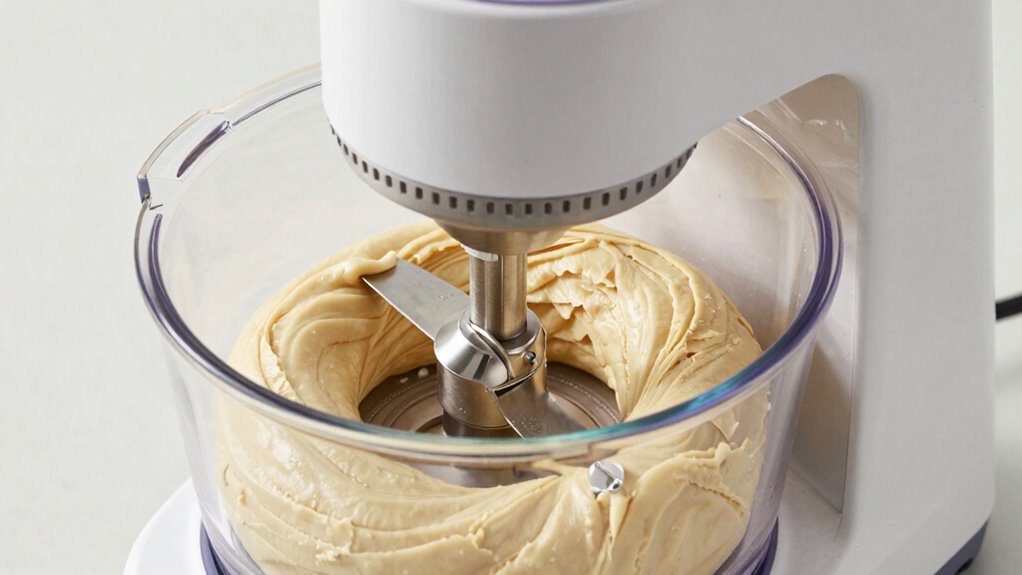
When selecting a food processor for making dough, it’s important to contemplate both the motor power and the attachments it offers. A robust motor ensures the machine can handle dense dough without straining or overheating. Look for at least 600 watts of power for most bread or pizza doughs. Equally important is blade design; a wide, sturdy blade helps mix ingredients evenly and knead thoroughly. Some processors come with specialized dough blades or scraper attachments that improve consistency. Choose a model with sharp, durable blades that can handle sticky dough without dulling. Additionally, consider motor performance features that can help manage appliance energy use efficiently during extended kneading sessions. The right combination of motor power and blade design guarantees efficient kneading and prevents overworking your appliance, giving you perfectly textured dough every time. Incorporating professional-grade components can further enhance durability and performance, ensuring your food processor remains reliable over time.
How to Use Your Food Processor to Make Perfect Dough
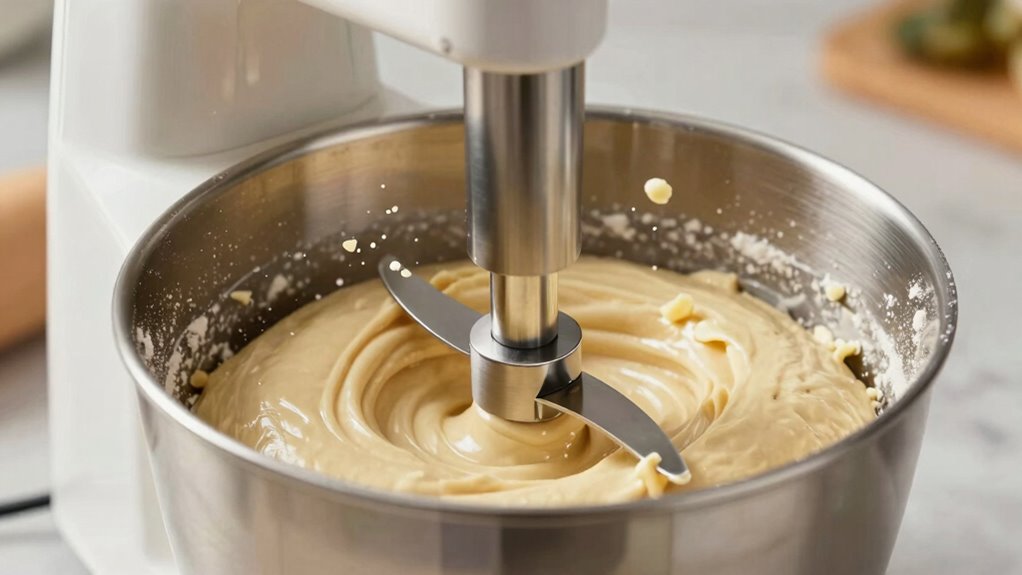
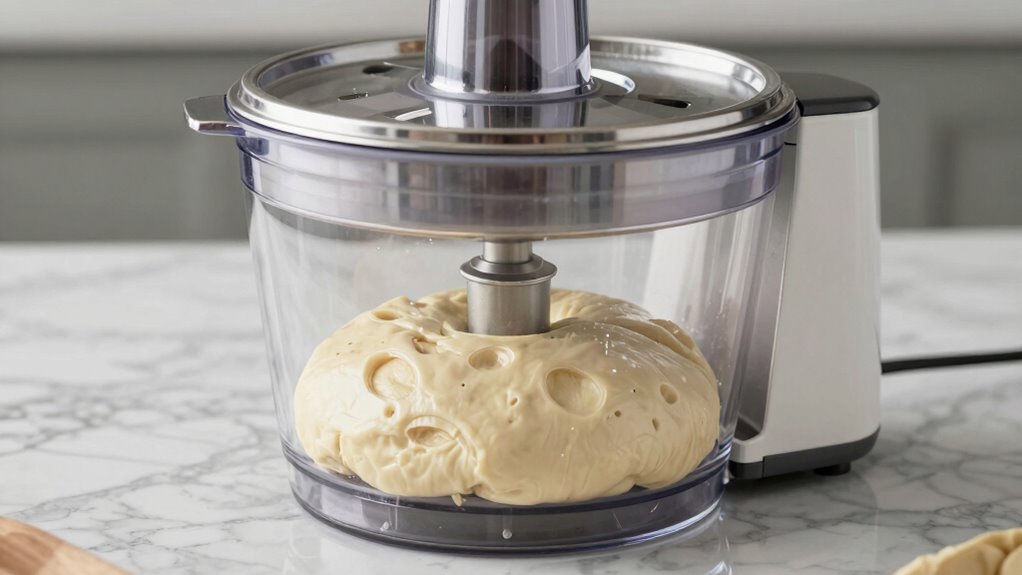
Using your food processor to make perfect dough involves following a few straightforward steps to guarantee consistent results. Start by adding your dry ingredients, then pulse briefly before pouring in your liquid. This process helps control dough hydration, ensuring it’s neither too sticky nor too dry. As you process, watch for gluten development; over-processing can make the dough tough, while under-processing can result in weak structure. Use short pulses to avoid overworking the gluten.
| Dough Hydration | Gluten Development | Processing Tips |
|---|---|---|
| Controls stickiness | Creates elastic texture | Pulse in short bursts |
| Ensures proper structure | Prevents toughness | Stop when dough gathers |
| Adjusts with liquids | Achieves ideal stretch | Monitor dough consistency |
What Is the Ideal Dough Texture for Bread, Pizza, and Pastries?

Achieving the perfect dough texture depends on the type of baked good you’re making, as each requires a specific consistency for ideal results. For bread, aim for well-hydrated dough with moderate gluten development, which creates a chewy crumb and good elasticity. Pizza dough benefits from higher dough hydration, making it tender yet sturdy enough to stretch thin. Pastry dough, on the other hand, should be less hydrated, resulting in a flaky, tender texture with minimal gluten development. Proper dough hydration influences the final texture by controlling moisture content, while effective gluten development ensures structure and elasticity. Adjusting hydration levels and mixing times helps you achieve the right consistency, whether you want a light, airy loaf, a stretchable pizza base, or delicate pastries. Additionally, employing energy-efficient technology in your baking process can enhance sustainability and consistency in dough preparation.
Common Mistakes in Making Dough With a Food Processor and How to Avoid Them
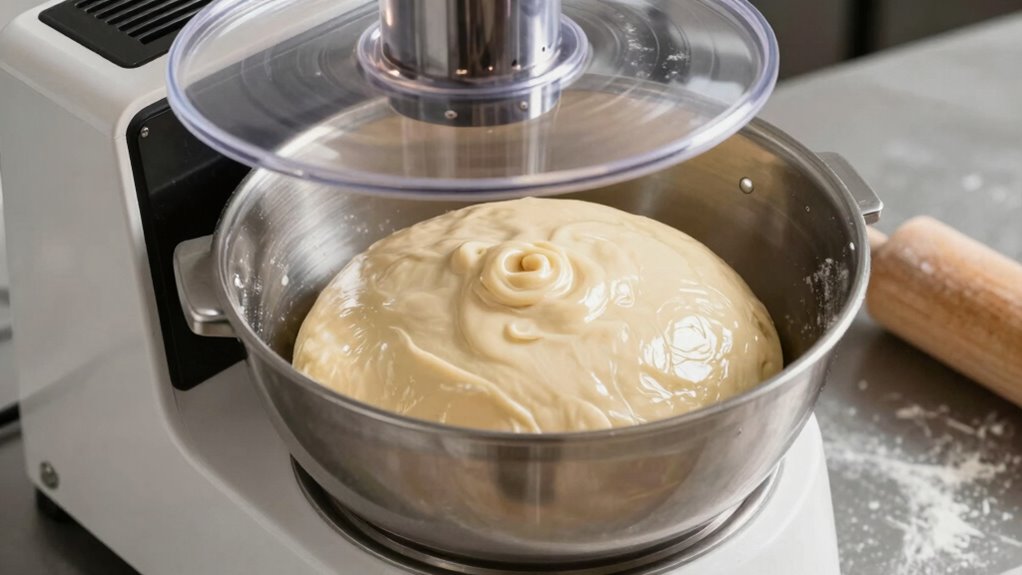
While mastering the perfect dough texture often involves careful control of hydration and mixing, many home bakers encounter common pitfalls when using a food processor. One mistake is overmixing dough, which can develop gluten too much and make the final product tough. Another is underhydrating dough, leading to dry, crumbly results. To avoid these issues, pay close attention to your processing time and ingredient quantities. Additionally, proper equipment maintenance ensures your food processor operates efficiently and prevents uneven mixing. Regular blade cleaning helps maintain consistent results and prolongs the appliance’s lifespan. Be mindful not to process too long, and always add water gradually to achieve the right consistency. Also, double-check your measurements to prevent underhydrating the dough. For optimal results, understanding dough hydration levels can make a significant difference in the final texture. Maintaining consistent mixing techniques can further enhance your control over the dough’s final quality. Incorporating techniques for even mixing ensures the ingredients are uniformly combined, preventing pockets of dry or wet ingredients. Keeping these tips in mind helps you maintain control and produce dough with the ideal texture every time.
Troubleshooting Food Processor Dough Issues: Tips From Baking Pros
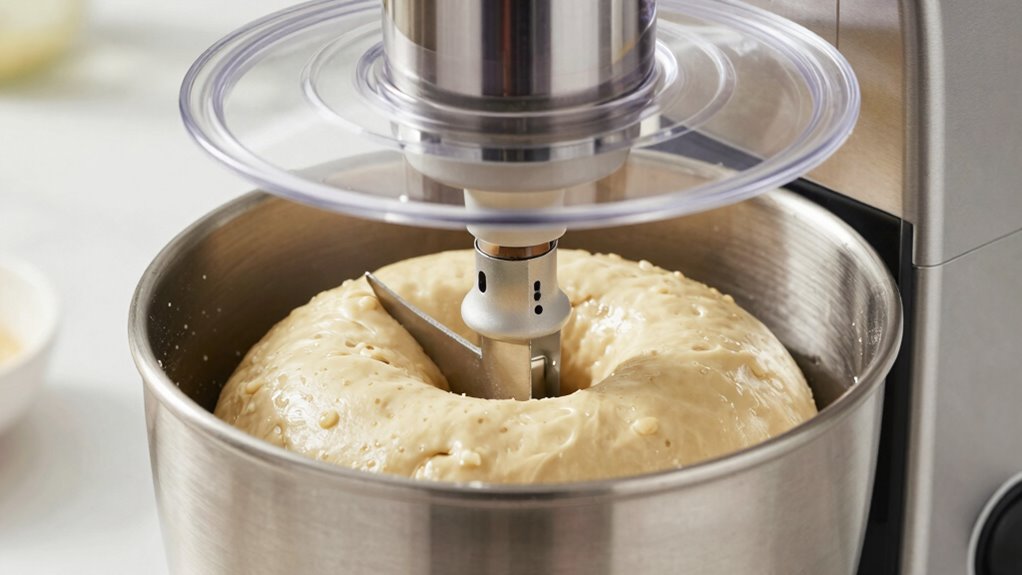
When dough doesn’t come together as expected, troubleshooting becomes essential to pinpoint the issue and fix it quickly. First, check the dough consistency; if it’s too dry, it’s likely due to insufficient liquid or improper ingredient ratios. Add small amounts of water or oil gradually, mixing after each addition, until the dough reaches a tacky but manageable texture. Conversely, if the dough is too sticky, incorporate a little more flour, a tablespoon at a time. Also, ensure your ingredients are measured accurately—imbalanced ratios can cause issues. Overmixing can lead to tough dough, so process just until ingredients are combined. Monitoring dough texture helps prevent overmixing and ensures consistent results. Additionally, paying attention to ingredient ratios can significantly impact the final outcome. Being aware of proper mixing techniques can also help achieve the desired dough consistency.
Frequently Asked Questions
Can I Use a Mini Food Processor for Dough?
Yes, you can use a mini processor for dough, but it might be tricky. A mini processor works best for small batches and can help you achieve the right dough consistency if you’re careful. Keep in mind, its smaller size means less power and capacity, so you may need to pulse and scrape often. For thicker doughs, a full-sized food processor is usually more effective, but a mini processor can handle lighter, smaller tasks.
How Do I Prevent Overmixing in a Food Processor?
To prevent overmixing in a food processor, keep a close eye on the dough consistency, stopping as soon as it comes together. Use a pulsing mixing technique instead of continuous blending, which gives you more control. Check frequently and avoid processing too long, as overmixing can develop gluten too much, making the dough tough. Practice patience, and you’ll achieve the perfect dough texture every time.
What’s the Best Way to Store Leftover Dough?
To store leftover dough, wrap it tightly in plastic wrap or place it in an airtight container to prevent it from drying out. Dough storage is easiest when you divide it into portions, so you only thaw what you need. Keep it in the refrigerator for up to 3 days, or freeze it for longer preservation. Proper leftover preservation guarantees your dough stays fresh and ready for your next baking session.
How Do Ingredient Temperatures Affect Dough Texture?
Temperature control and ingredient conditioning are key to achieving the perfect dough texture. When ingredients are too cold, the dough may be tough and difficult to work with; too warm, and it becomes sticky and hard to handle. You should guarantee ingredients are at room temperature before mixing, and keep the dough chilled if needed. Proper temperature regulation helps you get a smooth, pliable dough with the desired consistency.
Can I Make Gluten-Free Dough in a Food Processor?
Yes, you can make gluten-free dough in a food processor. Using gluten-free flour, like almond or rice flour, helps attain the right consistency. To enhance dough elasticity, add binding agents such as xanthan gum or chia seeds. Pulse the ingredients just until combined to prevent overmixing. This process ensures your dough stays cohesive and workable, giving you better results for baking or cooking.
Conclusion
With your food processor, you hold the power to craft perfect doughs that rise like dreams and bake to golden perfection. Think of each batch as shaping a foundation—trust your instincts, avoid common pitfalls, and adjust textures as needed. As you master this technique, you’ll feel like an artist carving a masterpiece from simple ingredients. Embrace the process, and soon your kitchen will be filled with the warm aroma of success, one perfectly textured dough at a time.