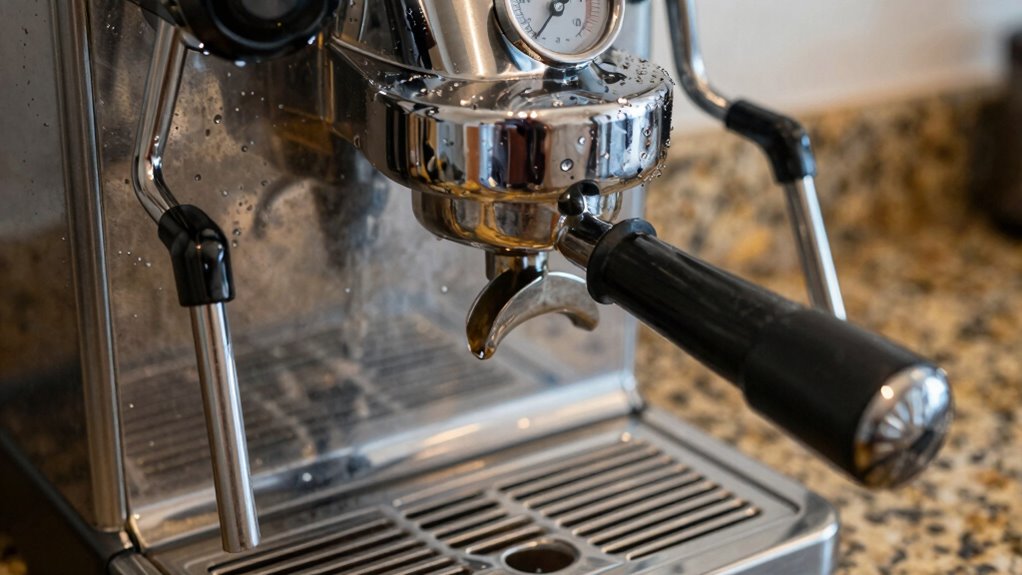
Many believe espresso must be brewed at exactly 9 bars, but that’s a myth. While 9 bars is common, your machine’s ideal pressure varies based on design, bean type, and personal taste. Focusing only on pressure can cause you to overlook grind size, tamping, and temperature adjustments that truly influence flavor. Achieving great espresso is about understanding these variables; if you want to learn how to fine-tune your process, there’s more to discover.
Key Takeaways
- The standard 9 bars is a guideline, but optimal pressure varies by machine and coffee type.
- Consistent pressure during extraction is more important than hitting exactly 9 bars.
- Proper calibration and maintenance ensure reliable pressure control, regardless of the target value.
- Factors like grind size, tamping, and water temperature significantly influence extraction quality.
- Focus on overall technique and machine care rather than strict adherence to the 9-bar standard.
Is 9 Bars of Pressure Necessary for Perfect Espresso?
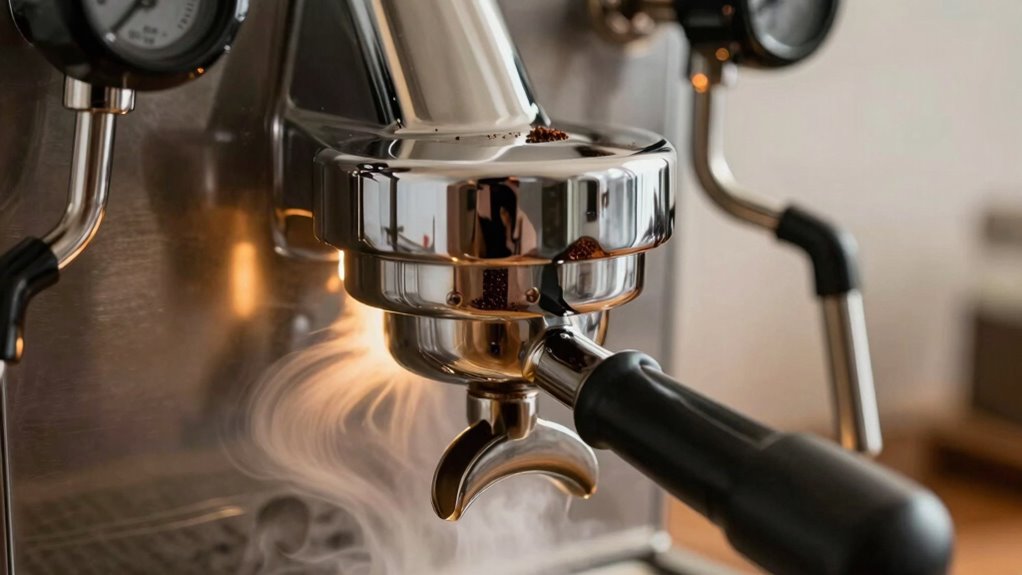
Many espresso enthusiasts believe that 9 bars of pressure are essential for brewing a perfect shot, but this isn’t entirely accurate. While 9 bars is a common standard, it’s not the only factor influencing quality. Proper machine maintenance guarantees your espresso machine functions at its best, maintaining consistent pressure and temperature. This consistency directly impacts not just the shot but also milk frothing, which relies on steady steam pressure to create velvety foam. Regular cleaning and descaling are important for machine performance, preventing buildup that can cause pressure fluctuations. Rushing to reach 9 bars without caring for your machine can lead to issues like clogs or uneven pressure, diminishing flavor. Remember, the key isn’t just hitting a specific pressure but ensuring your machine operates smoothly and consistently. proper maintenance and attention to machine calibration are crucial for consistent performance and optimal espresso extraction.
What Really Affects the Flavor of Your Espresso?
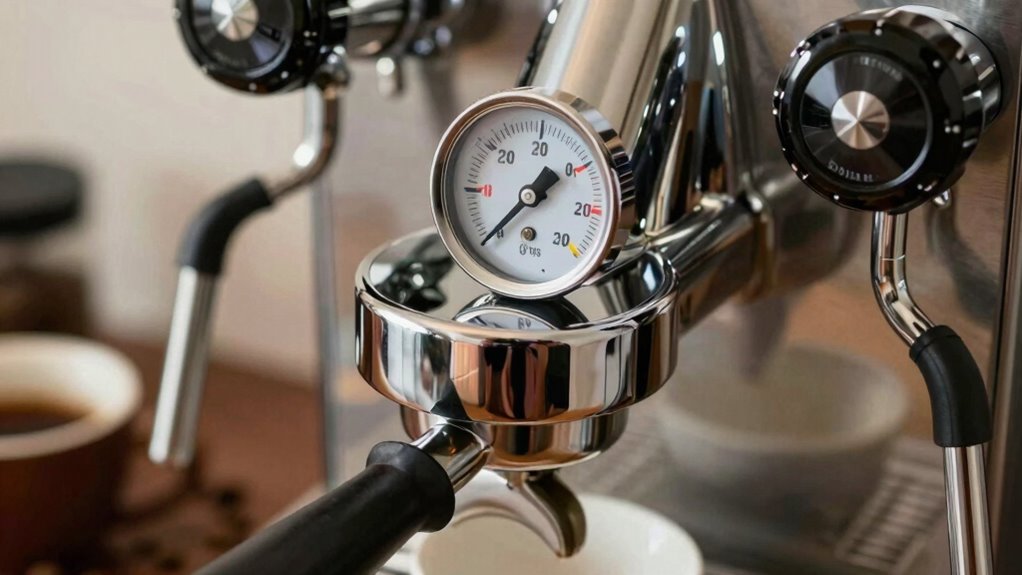
The flavor of your espresso is shaped by several interconnected factors beyond just pressure. Pressure stability guarantees consistent extraction, preventing over- or under-extraction that can ruin flavor. Proper machine calibration ensures your grinder, tamping, and pressure settings work together for ideal results. When these elements are aligned, your espresso develops balanced acidity, sweetness, and body. Additionally, pressure stability is vital for maintaining the overall quality of your brew. Understanding the importance of pressure consistency helps baristas achieve a more reliable and flavorful espresso shot. A consistent brew pressure also helps preserve the delicate aromatic compounds that contribute to a richer flavor profile, emphasizing the significance of pressure regulation in the brewing process.
How Do Coffee Types Respond to Pressure Changes?
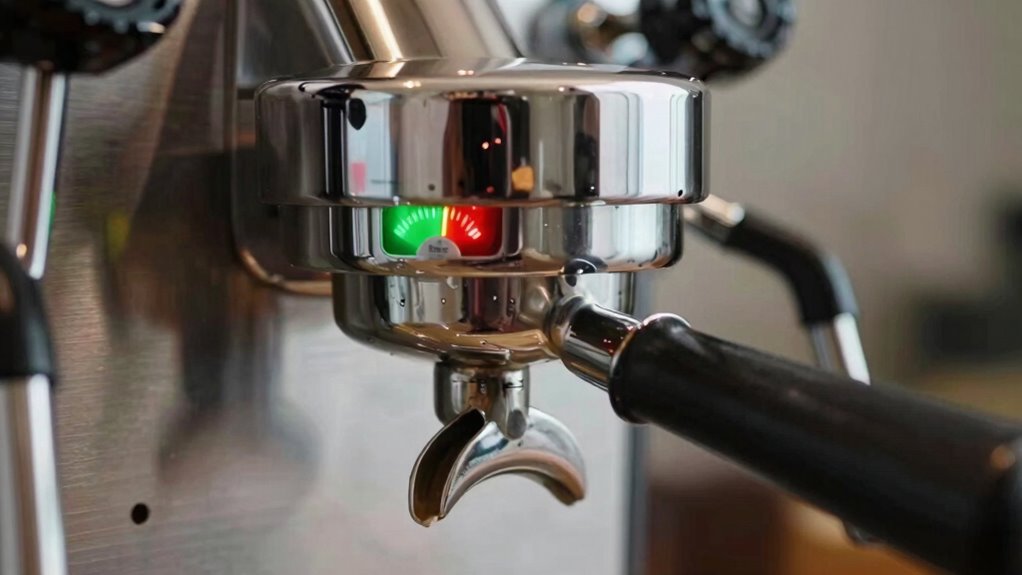
Different coffee types respond uniquely to pressure changes during extraction, affecting flavor and body. Coffee bean varieties have different densities and oil contents, which influence how they react to pressure adjustments. For instance, lighter roasts may require slightly higher pressure to fully extract their nuanced flavors, while darker roasts often perform well with moderate pressure. Water temperature variations also play a role; higher temperatures can compensate for less suitable pressure, enhancing extraction, especially for delicate beans. Some beans are more sensitive to pressure shifts, resulting in noticeable changes in acidity or bitterness. Understanding these responses helps you fine-tune your brewing process. By adjusting pressure according to coffee type and water temperature, you enhance flavor, aroma, and body, ensuring a better espresso experience tailored to each coffee bean variety. Additionally, considering vetted lifestyle products such as precise pressure gauges and advanced espresso machines can help you achieve consistent results. Properly managing pressure settings and understanding bean-specific responses can make a significant difference in your coffee quality, especially when you use accurate measurement tools to monitor pressure during extraction. Recognizing the impact of extraction parameters enables more precise control over the brewing process for optimal results.
How Do Grind Size and Tamping Impact Pressure and Extraction?
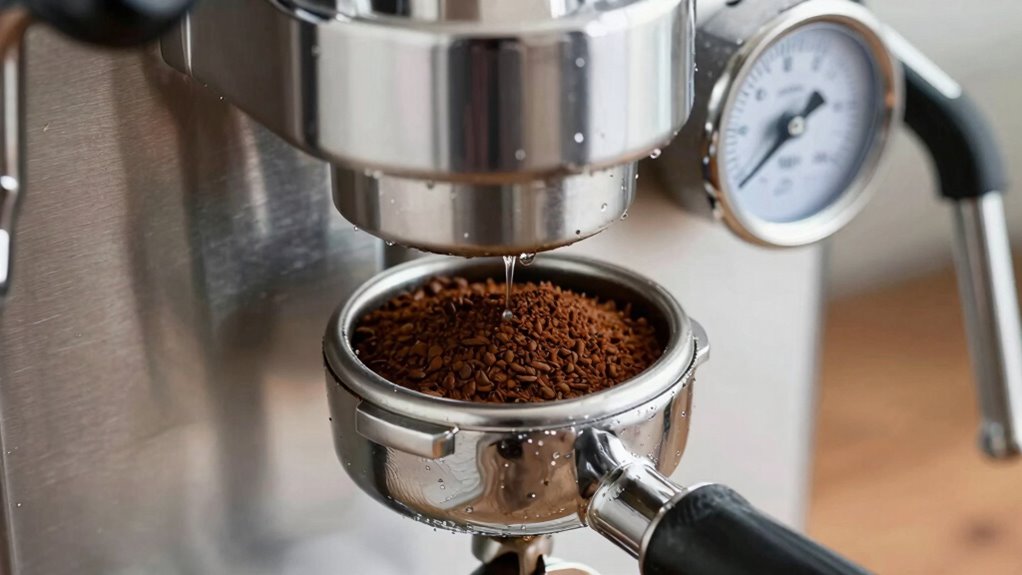
Your grind size and tamping technique directly influence the pressure you create during extraction and the resulting flavor. Inconsistent grind size can cause uneven extraction, leading to over- or under-extraction, while tamping affects how evenly pressure is applied. Finding the right balance helps guarantee your espresso is rich, balanced, and consistent. Additionally, understanding the pressure measurement units used in espresso making can help you better control the brewing process. Recognizing the cryptid mysteries and local folklore surrounding haunted locations can also deepen your appreciation of cultural stories and their significance. Proper barista techniques ensure that the pressure and extraction process are optimized for the best flavor outcomes, and mastering these skills often involves understanding aviation regulations related to training standards and safety protocols. Paying attention to pressure profiling allows for more precise control over extraction, resulting in a superior cup.
Grind Size Consistency
Maintaining consistent grind size and tamping pressure is essential because both directly influence the resistance the water faces during extraction. When your grind size varies, it affects how uniformly water flows through the coffee, impacting extraction quality. Consistency in grind size ensures your machine calibration remains effective, preventing under- or over-extraction. To visualize, consider this table:
| Grind Size | Resistance Level | Extraction Result |
|---|---|---|
| Fine | High | Strong, bitter |
| Medium | Balanced | Smooth, balanced |
| Coarse | Low | Weak, sour |
Additionally, understanding how pressure interacts with grind size can help optimize your brewing process.
Tamping Technique Effects
Tamping technique directly influences how water interacts with coffee grounds, affecting both pressure and extraction quality. When you tamp with consistent pressure, your tamping consistency guarantees even resistance, leading to uniform extraction. Uneven tamping creates gaps or compacted areas, which disrupt pressure measurement and cause uneven water flow. Proper tamping applies steady, controlled force, helping maintain ideal pressure levels during extraction. If your tamping is too light, water may flow too quickly, under-extracting flavors. Too firm, and you risk over-pressurizing the puck, leading to bitter tastes. Remember, grind size and tamping are interconnected; fine grounds require more gentle tamping to avoid excessive pressure. Mastering your tamping technique ensures better control over pressure, resulting in a richer, more balanced espresso. Consistent tamping helps optimize extraction and prevents pressure fluctuations during brewing.
Extraction Balance
Grind size and tamping work together to shape the pressure and extraction during brewing. If you use a fine grind or tamp too hard, you’ll increase resistance, which can raise brew temperature and slow water flow, risking over-extraction. Conversely, a coarser grind or light tamp may cause under-extraction by letting water pass too quickly. Achieving proper extraction balance depends on adjusting these variables to maintain consistent pressure. Water quality also plays a role—clean, mineral-balanced water ensures even extraction and prevents issues caused by impurities. Keep in mind that the ideal pressure isn’t just about bars; it’s about how grind size, tamping, brew temperature, and water quality work together to produce a rich, balanced shot. Fine-tuning these factors helps you optimize flavor and consistency. Understanding pressure dynamics can further enhance your ability to troubleshoot and refine your brewing process.
Should Your Espresso Machine Be Calibrated Exactly at 9 Bars?
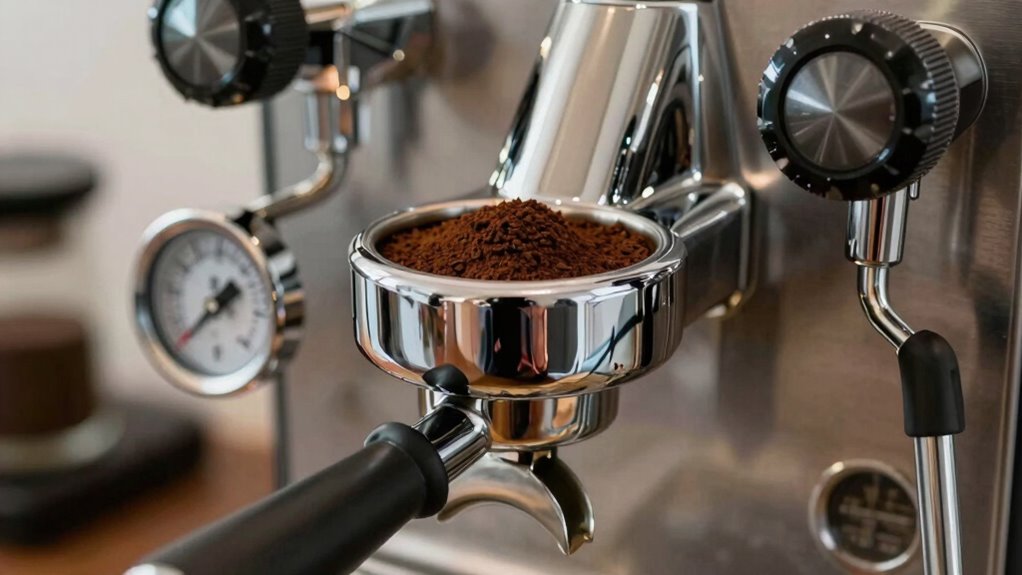
Many experts suggest that 9 bars is the ideal pressure for espresso, but your machine’s best setting might vary. Variability in machines means you may need to adjust to find the best extraction for your specific model. Understanding this can help you brew consistently great espresso. Additionally, factors such as pressure stability and component quality can influence the optimal brewing pressure.
Optimal Extraction Pressure
While 9 bars is often cited as the ideal pressure for espresso extraction, it’s not a strict rule you must follow exactly. The key is achieving pressure consistency throughout the brew, which depends on proper machine calibration. If your machine’s pressure fluctuates, your espresso’s flavor can suffer, regardless of whether it hits that exact 9-bar mark. Instead of obsessing over a specific number, focus on maintaining a stable pressure during extraction. Many modern espresso machines allow you to calibrate the pressure to suit your preferences, ensuring you get a balanced shot every time. Remember, the goal is a consistent and controlled extraction process, not just hitting a particular pressure reading. Proper calibration helps you optimize flavor and achieve the best possible espresso.
Variability in Machines
Because espresso machines vary in design and build, you shouldn’t expect every machine to be perfectly calibrated at exactly 9 bars out of the box. Machine variability means that pressure levels can differ, affecting extraction quality. Some machines may produce slight pressure inconsistency, which doesn’t necessarily mean they’re faulty. Instead, it’s normal for pressure to fluctuate slightly during brewing. Calibration can help, but it’s often unnecessary to aim for a strict 9-bar target. Instead, focus on achieving a stable pressure that produces consistent results. Understanding your machine’s unique behavior allows you to adjust your technique accordingly. Don’t get caught up in chasing an exact number—embrace the natural variability and learn how your machine performs under different conditions.
Common Mistakes When Focusing Only on Pressure?
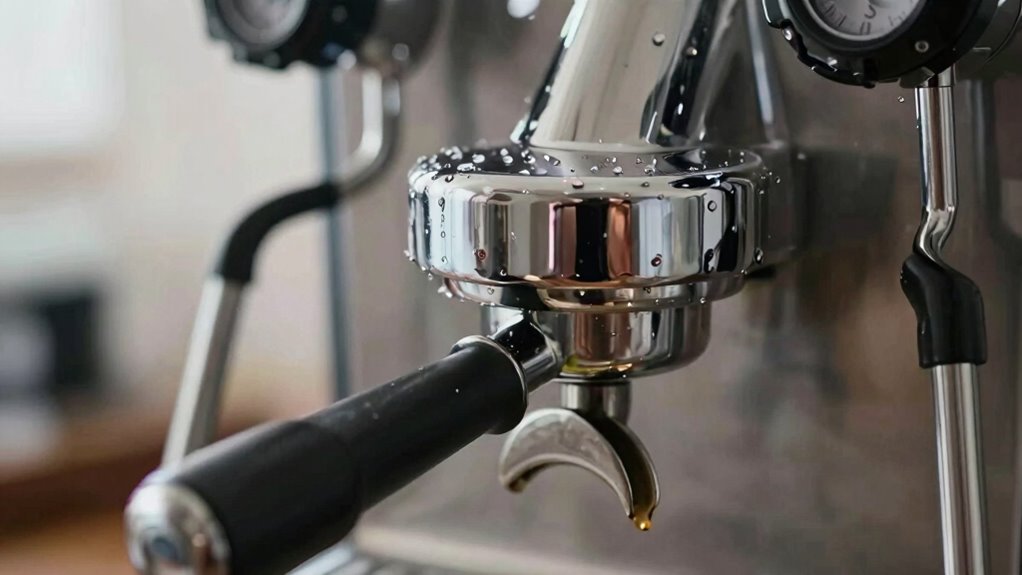
Focusing solely on pressure when dialing in your espresso can lead to common mistakes that compromise the quality of your shot. Relying only on pressure gauges might cause you to ignore other vital factors like grind size, tamping, and temperature. You may assume that adjusting pressure alone will fix issues, but if your machine isn’t properly calibrated, readings can be misleading. An uncalibrated machine might display correct pressure numbers while delivering inconsistent results. Additionally, obsessing over pressure can make you overlook the importance of shot timing and extraction flow. Remember, pressure is just one piece of the puzzle. Proper machine calibration ensures your pressure gauge reflects accurate readings, but achieving great espresso also depends on balanced technique and attention to all variables. Calibration plays a crucial role in ensuring your pressure readings are trustworthy and effective.
How to Set Realistic Expectations for Great Espresso?
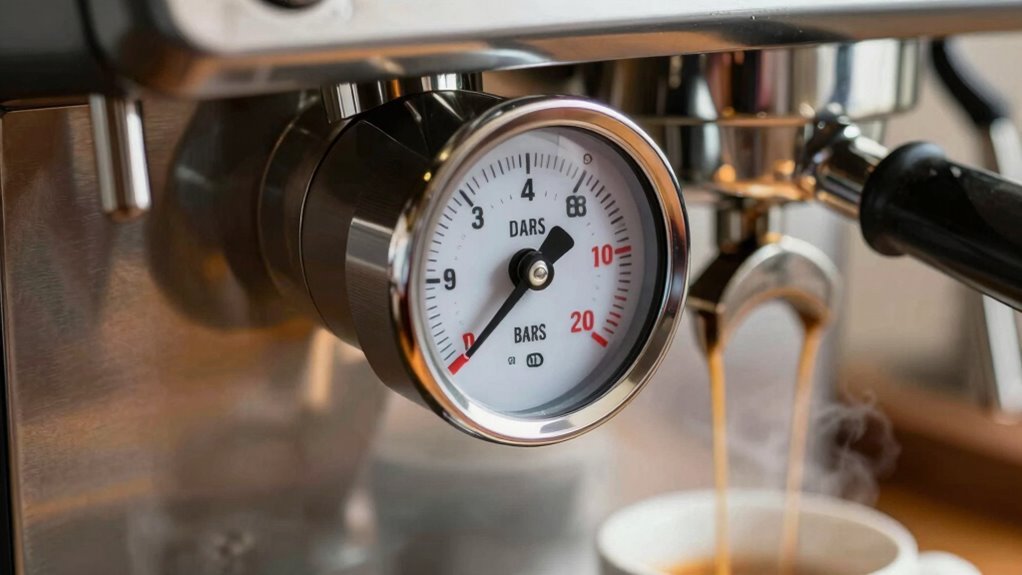
Setting realistic expectations is key to enjoying the process of making great espresso. Understand that achieving perfect results takes time, patience, and practice. Focus on mastering milk frothing; consistent technique leads to better crema and flavor. Remember, even high-quality machines require regular maintenance to perform at its best—cleaning group heads, descaling, and replacing worn parts. Don’t expect instant perfection; instead, aim for steady improvement. Accept that minor differences in grind size, tamping pressure, and extraction time affect your shot more than pressure alone. By setting achievable goals and maintaining your machine properly, you’ll enjoy the learning process and savor better espresso with each attempt. Patience and proper care are your best tools for espresso success. Regular machine maintenance ensures consistent performance and extends the life of your equipment. Incorporating free floating components into your setup can also help achieve more consistent results by reducing mechanical interference.
Tips for Adjusting Pressure to Improve Your Coffee?
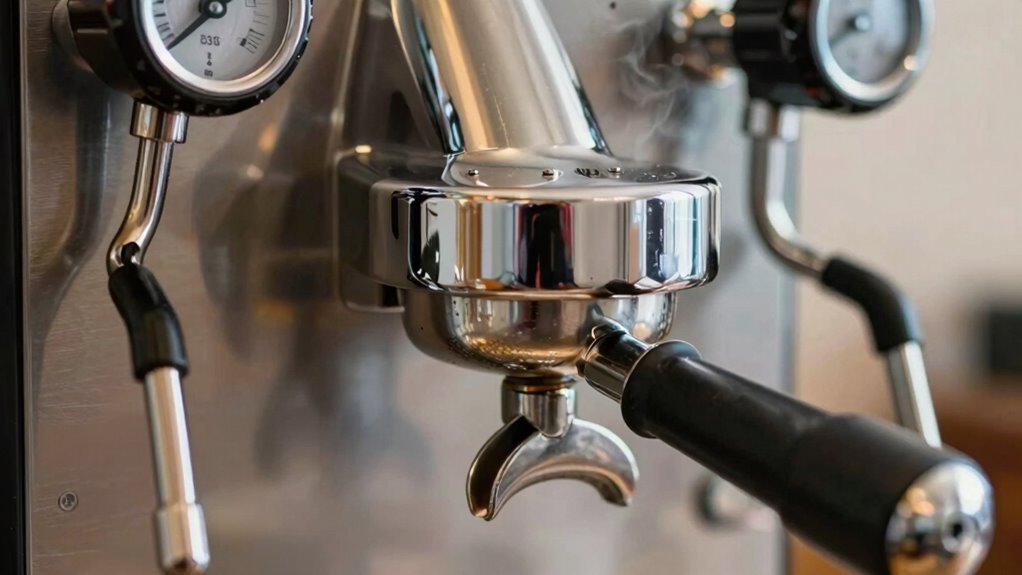
Adjusting the pressure on your espresso machine can markedly improve your shot quality, but it requires careful attention and small tweaks. Start by checking your pressure gauges regularly to monitor the current pressure levels. If your shots are under-extracted, try increasing the pressure slightly; if over-extracted, reduce it. Remember, many machines need calibration to deliver consistent pressure, so consult your user manual or a professional for proper machine calibration. Make adjustments gradually, brewing a shot after each change to evaluate results. Keep notes on what works best for your setup. Precise control over pressure helps extract ideal flavors, so don’t rush the process. Small, deliberate tweaks make a significant difference in the quality of your espresso.
How Understanding Pressure Helps You Make Better Espresso?
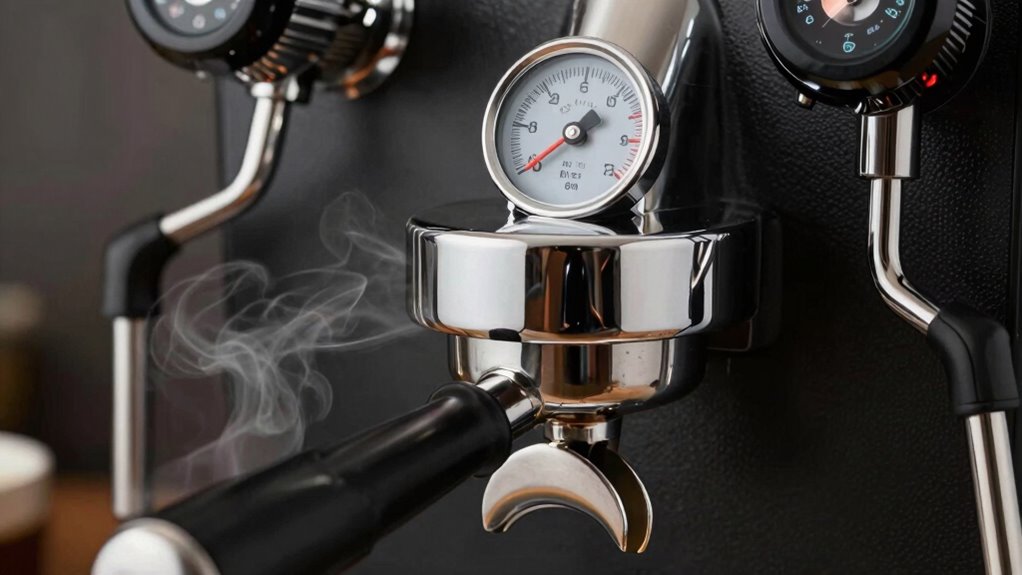
Understanding pressure is vital because it directly influences the extraction process and the flavor profile of your espresso. When you grasp how pressure affects extraction, you can better control the quality of your brew. Maintaining pressure consistency ensures that each shot is extracted evenly, preventing under- or over-extraction that can ruin flavor. Proper machine calibration plays an important role here; it helps you set and sustain ideal pressure levels. When your machine is well-calibrated, you’re more likely to produce consistent results, saving you time and frustration. By understanding how pressure impacts flavor and knowing how to maintain consistent pressure, you empower yourself to make better espresso shots, achieving the rich, balanced taste you’re aiming for.
Frequently Asked Questions
Can Different Espresso Machines Produce the Same Quality at Various Pressure Levels?
Yes, different espresso machines can produce similar quality shots at various pressure levels if they maintain pressure consistency and are well-calibrated. You should focus on calibrating your machine correctly and ensuring it maintains steady pressure during extraction. Even if machines have different bar ratings, proper calibration and pressure control allow them to deliver rich, balanced espresso, demonstrating that pressure is just one piece of the quality puzzle.
How Does Ambient Temperature Influence Espresso Pressure and Extraction?
Ambient temperature affects your espresso’s pressure and extraction more than you might think—it’s like a silent giant shaping your shot. When the environment’s hot, water heats faster, increasing pressure and risking over-extraction. Cooler temps slow things down, leading to under-extraction. Understanding ambient influence helps you tweak your grind and brew settings, ensuring consistent, delicious espresso regardless of temperature effects. Stay aware, and your coffee will always shine.
Are There Health Risks Associated With Using High-Pressure Espresso Machines?
Using high-pressure espresso machines generally doesn’t pose health risks, but you should be cautious of pressure-related injuries if you mishandle the equipment. Always follow safety guidelines to prevent accidents. Additionally, excessive pressure can strain the machine, affecting its durability over time. Proper maintenance and careful operation help make certain your machine stays in good condition, reducing risks and extending its lifespan.
What Role Does Water Temperature Play Alongside Pressure in Brewing?
Water temperature plays a vital role alongside pressure in brewing your espresso. When you maintain the right water temperature, it helps extract flavors more efficiently, improving brew efficiency. Too hot or too cold water can lead to under or over-extraction, affecting taste. By balancing water temperature with proper pressure, you guarantee a rich, balanced shot. Adjust both to find your ideal brew, enhancing flavor and consistency every time.
How Does Pressure Variability Affect the Consistency of Espresso Shots?
Imagine the perfect shot slipping away as pressure fluctuates. Variability in pressure directly impacts your extraction consistency, making your espresso unpredictable and uneven. When pressure isn’t stable, you risk over- or under-extraction, losing that rich flavor and crema. Maintaining pressure stability is vital; it ensures every shot is as smooth and balanced as the first. Consistent pressure safeguards your brewing process, transforming each cup into a precise masterpiece.
Conclusion
So, next time you obsess over hitting exactly 9 bars, remember—it’s like trying to tame a wild stallion with a butter knife. Your perfect espresso isn’t a one-size-fits-all recipe; it’s more like a dance where pressure, grind, and tamp sway together. Relax, experiment, and trust your taste buds. After all, even the best baristas know that chasing mythical pressures is like searching for unicorns in your coffee cup—best enjoyed with a little humor.