
With a dual boiler, your workflow becomes faster and more consistent because you can steam milk and brew espresso simultaneously without waiting. It’s straightforward and reduces the need to manage temperature fluctuations. In contrast, a heat exchange machine requires more attention—you’ll need to monitor and adjust settings during busy periods, which can slow you down. Want to discover how these differences impact your daily routine in detail? Keep exploring to learn more.

Get kitchen staples and gadgets delivered free — and shop member deals
- Fast, free delivery on millions of items
- Access to Prime Big Deal Days deals on October 6–7
- Prime Video, Amazon Music and more included
Key Takeaways
- Dual boilers allow immediate switching between brewing and steaming, reducing wait times during high-volume workflows.
- Heat exchange machines require temperature management and adjustments, adding complexity to the routine.
- Dual boilers provide stable, consistent temperatures for both processes, enhancing efficiency and shot quality.
- Heat exchange systems may need technique finesse and monitoring to maintain optimal milk and brew temperatures.
- Dual boilers are larger and more costly but streamline busy, milk-heavy environments; heat exchange units are more compact and budget-friendly.
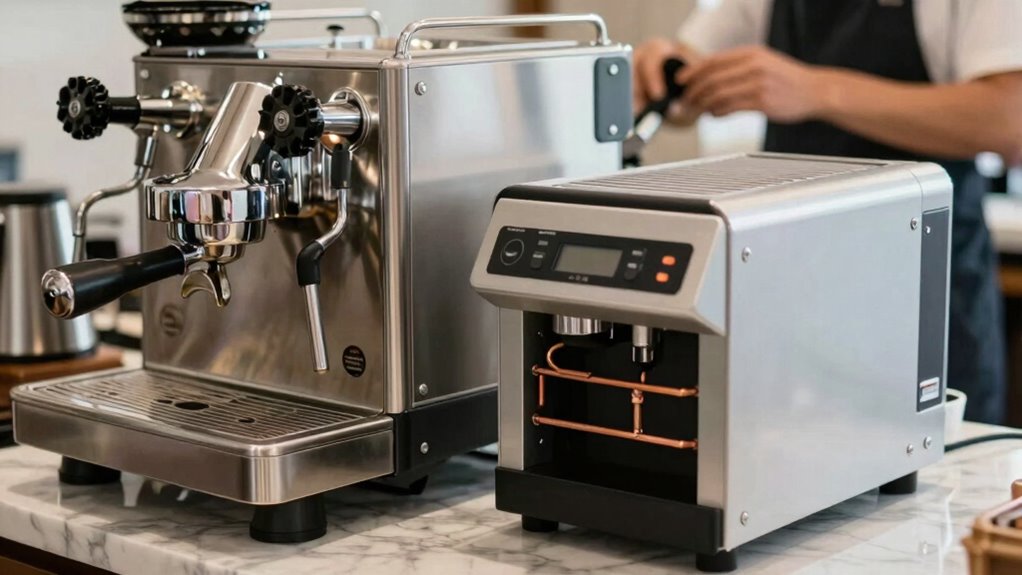
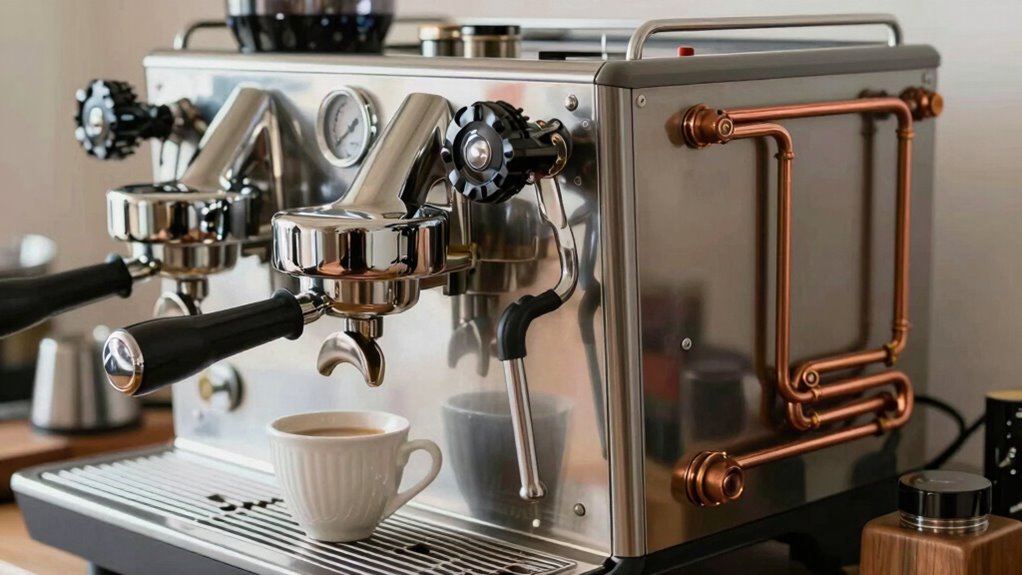
When choosing between a dual boiler and a heat exchange espresso machine, understanding their daily workflow differences can considerably impact your brewing experience. If you often make milk-based drinks like lattes or cappuccinos, you’ll notice how each machine handles milk frothing differently. A dual boiler excels here because it provides dedicated, separate boilers for brewing espresso and steaming milk. This setup allows you to froth milk at the ideal temperature without affecting your espresso shot, making the process smoother and more efficient. You won’t need to wait for the boiler to recover or cool down, which is especially beneficial during busy mornings or when serving multiple drinks in quick succession.
On the other hand, a heat exchange machine operates with a single boiler that simultaneously heats water for brewing and steaming milk. To maintain temperature stability, these machines use a metal tube called a heat exchange coil, which allows you to pull shots and steam milk without needing to wait too long. However, if you’re not careful, temperature fluctuations can occur, impacting milk frothing quality and shot consistency. You might find yourself adjusting the steam or brew temperature on the fly, which takes more attention and practice. For someone who prioritizes milk frothing, this can mean a slight compromise in milk texture or consistency, especially if you’re pushing the machine to its limits during back-to-back drinks.
Heat exchange machines require careful temperature management for consistent milk frothing and shot quality.
In terms of workflow, a dual boiler generally offers a more straightforward experience. You set the temperature once, and it stays stable throughout your session. This stability ensures that your milk is consistently steamed at the right temperature, resulting in better microfoam and a more balanced flavor profile in your espresso. The dedicated boilers mean you can switch quickly between brewing and steaming without waiting for temperature recovery, which streamlines your routine and reduces interruptions. Temperature stability is a key advantage that many users find makes a noticeable difference in their overall brewing quality.
Conversely, heat exchange machines require a bit more finesse. You’ll need to be mindful of how the machine’s temperature fluctuates, especially during heavy use. It may involve adjusting your technique or waiting a few moments after pulling a shot to ensure the milk reaches the perfect temperature. While they’re often more affordable and compact, their workflow demands more attention to detail to achieve the same level of milk frothing quality and temperature stability that a dual boiler provides.
Ultimately, your choice comes down to how you prioritize convenience, workflow, and milk-based drink preparation. If you value speed, consistency, and less hassle, a dual boiler might be the better fit. But if you’re comfortable with a bit of extra effort and want a more affordable option, a heat exchange machine can still deliver excellent results with proper technique.
As an affiliate, we earn on qualifying purchases.
Frequently Asked Questions
Which Machine Is More Energy-Efficient for Daily Use?
A heat exchange machine generally uses less energy for daily use because it maintains a stable temperature with lower power consumption, making it more power efficient. You’ll notice it heats up quickly and uses less energy during operation. In contrast, a dual boiler consumes more energy due to its separate boilers for steaming and brewing. So, if energy efficiency is your priority, a heat exchange machine is the better choice for daily use.
How Easy Is It to Perform Routine Maintenance on Each System?
Performing routine maintenance on these machines is like tending a delicate garden. With a dual boiler, you’ll carefully check water temperature and clean the boilers regularly to guarantee system durability. The heat exchange machine is simpler, with fewer parts to monitor, making maintenance easier. Both require attention, but the dual boiler demands a bit more finesse to keep water temperature steady and the system thriving over time.
Are There Significant Noise Differences During Operation?
You’ll notice noise levels differ between the dual boiler and heat exchange systems. The dual boiler tends to produce more noise during operation, especially when heating or steaming, due to its multiple components working simultaneously. In contrast, the heat exchange machine generally offers better acoustic performance, operating more quietly during brewing and steaming. If noise is a priority, the heat exchange setup might be more suitable for your needs.
Can Both Systems Produce the Same Quality of Espresso?
Yes, both systems can produce the same quality of espresso if used correctly. They offer excellent flavor consistency and temperature stability, ensuring your shots are consistently rich and balanced. The dual boiler allows you to brew and steam simultaneously, maintaining ideal temperatures, while the heat exchange system also provides stable temperature control. Your skill and proper maintenance are key to achieving top-quality espresso with either setup.
Which Setup Is Better for a High-Volume Commercial Environment?
Think of a marathon runner choosing their gear; for high-volume environments, a dual boiler setup often outperforms. It maintains consistent coffee temperature and offers better machine durability, essential for constant use. While heat exchange machines might be faster initially, they may struggle under sustained demand. You need reliability and steady performance, making dual boilers the smarter choice for busy commercial settings.
Conclusion
In the end, choosing between a dual boiler and heat exchange machine shapes your entire coffee-making day. With a dual boiler, you’ll feel like a barista wizard, juggling multiple drinks effortlessly—your workflow soaring to legendary heights. Meanwhile, a heat exchange offers rapid adjustments, making every shot perfect in a flash. Whichever you pick, mastering your machine transforms your routine into an artful symphony—your coffee game reaching epic proportions. The right choice could elevate your daily brew to legendary status.
NFL season / tailgating Picks
team gear
As an affiliate, we earn on qualifying purchases.