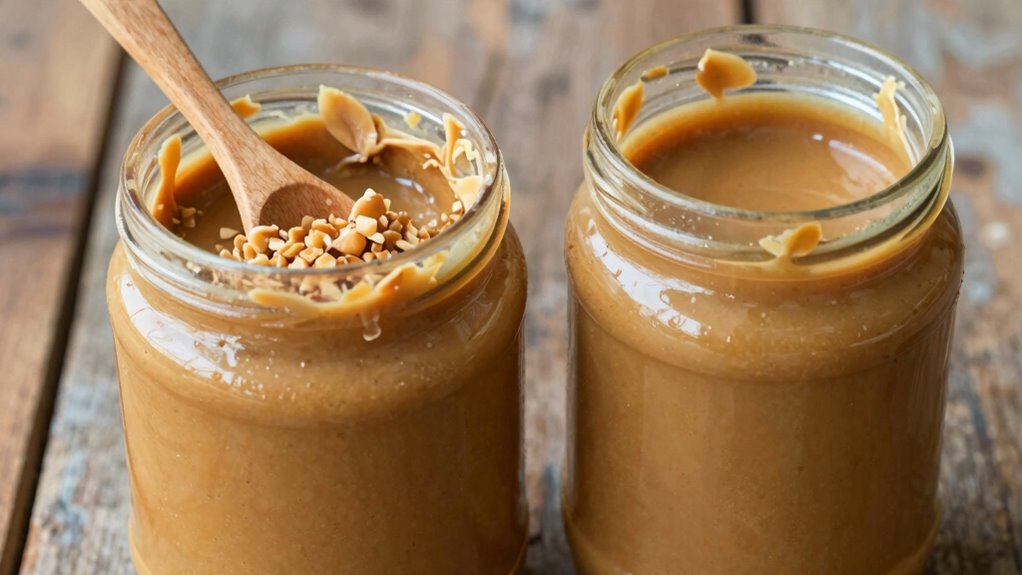

Natural peanut butter generally has better nutrition because it’s made mainly from peanuts without added sugars or hydrogenated oils. This means you get more of the peanut’s natural nutrients, healthy fats, protein, and fiber. It also offers vitamins and minerals that are often lost in highly processed spreads. The minimal processing preserves its wholesome qualities, making it a smarter choice for your diet. Keep exploring to discover more about its health benefits.
Key Takeaways
- Natural peanut butter retains the full spectrum of peanut nutrients due to minimal processing.
- It contains no added sugars or hydrogenated oils, offering a cleaner nutritional profile.
- Rich in healthy fats, protein, and fiber, supporting balanced nutrition.
- Variations like honey or cinnamon add flavor without significantly altering nutritional value.
- Shorter shelf life and oil separation indicate minimal processing, preserving natural nutrient content.
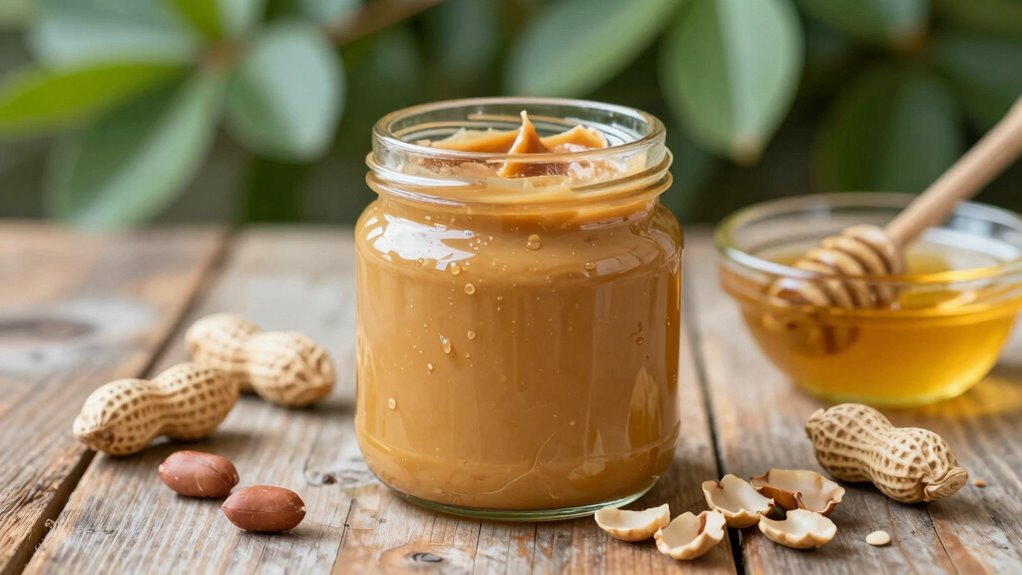
Natural peanut butter is a nutritious choice for those seeking a wholesome, minimally processed spread. Unlike its conventional counterparts, it’s made with just peanuts and sometimes a touch of salt, which means you get more of the natural nutrients without added sugars or hydrogenated oils. When you opt for natural peanut butter, you’re choosing a product that retains the full spectrum of peanut benefits, including healthy fats, protein, fiber, and essential vitamins. This makes it a great addition to your diet if you’re aiming for a nutrient-dense snack or ingredient.
Natural peanut butter offers pure nutrients with minimal ingredients, making it a wholesome, versatile choice for healthy eating.
One of the interesting aspects of natural peanut butter is its variety of flavor options. You can find different flavor variations that cater to your taste preferences, such as honey, cinnamon, or even roasted varieties with a richer, deeper taste. These flavor variations don’t usually compromise the nutritional profile much, especially if they’re added in moderation. They can enhance your eating experience and make it easier to incorporate peanut butter into meals, whether spread on toast, mixed into smoothies, or used as a dip. Keep in mind that some flavor options might include additional ingredients, so it’s worth checking labels if you’re aiming for the most natural, minimally processed product.
Shelf stability is another factor worth considering when choosing natural peanut butter. Because it contains no preservatives or stabilizers, natural peanut butter tends to have a shorter shelf life than conventional versions. You’ll notice that it often needs stirring before use — the oils naturally separate and rise to the top. While this might seem inconvenient at first, it’s actually a sign of minimal processing and a more natural product. To maximize shelf stability, store your jar in a cool, dark place or refrigerate it after opening. Refrigeration can help prevent the oils from going rancid and keep the peanut butter fresh longer, especially if you don’t plan to use it quickly. Additionally, biodiversity plays a role in the cultivation of peanuts, influencing the sustainability of peanut farming practices.

SKIPPY Natural Peanut Butter Creamy Spread, 26.5 oz Jar
- Size: 26.5 oz jar of peanut butter
- Ingredients: Four simple ingredients, no preservatives
- Flavor: Sweet and savory peanut flavor
As an affiliate, we earn on qualifying purchases.
As an affiliate, we earn on qualifying purchases.
Frequently Asked Questions
Is Natural Peanut Butter Suitable for People With Nut Allergies?
Natural peanut butter isn’t suitable if you have nut allergies because of nut allergy precautions and cross-contamination risks. Even if it’s just peanuts, traces can be present due to shared equipment or manufacturing processes. Always check labels carefully, and consult your doctor before trying any new products. To stay safe, avoid natural peanut butter entirely if you have a nut allergy, and opt for allergy-friendly alternatives instead.
How Does Natural Peanut Butter Compare to Almond or Cashew Butter?
Natural peanut butter offers a distinct flavor profile and smoother, sometimes oilier, texture compared to almond or cashew butter. You’ll notice its richer, more robust peanut flavor, while almond and cashew butters tend to be milder and nuttier. Texture-wise, peanut butter is often thicker and more viscous, whereas almond and cashew butters feel creamier and silkier. Your choice depends on your taste preferences and desired consistency for recipes or spreadability.
Can Natural Peanut Butter Be Part of a Low-Fat Diet?
Yes, natural peanut butter can be part of a low-fat diet, but you should watch portion sizes due to its flavor profiles and texture variations. Natural peanut butter tends to have a richer, more authentic flavor and a creamy or slightly chunky texture. Though it contains healthy fats, choosing smaller servings helps you enjoy its taste without exceeding your fat intake goals, making it a satisfying addition to your diet.
Does Natural Peanut Butter Contain Added Sugars or Preservatives?
You open a jar of natural peanut butter, expecting simplicity, but wonder—does it hide added sugars or preservatives? Typically, natural peanut butter contains just peanuts and maybe a pinch of salt, with no added sugars or preservatives. However, some brands add small amounts for flavor or shelf stability, raising preservative concerns. Always read labels carefully to guarantee you’re choosing a product that aligns with your health goals and keeps additives at bay.
How Long Can Natural Peanut Butter Be Stored Without Spoiling?
Natural peanut butter typically lasts about 6 months unopened and 1-3 months once opened if stored properly. For ideal shelf life, keep it in a cool, dry place, tightly sealed to prevent air and moisture exposure. Store it in the refrigerator to extend freshness, especially if you notice oil separation. Always check for signs of spoilage like mold, off smell, or unusual texture before use. Proper storage tips help maintain its quality longer.
Conclusion
Choosing natural peanut butter means you skip the added sugars and hydrogenated oils, embracing pure, wholesome nutrition. Imagine spreading a simple, creamy layer on your toast—no artificial ingredients in sight—just the rich, nutty flavor. Unlike processed options that hide behind labels, natural peanut butter offers honest nourishment straight from the jar. It’s a small change that makes a big difference, turning your snack into a simple act of self-care and mindful eating.