
Diacetyl’s key to butter’s rich, creamy flavor, and it forms naturally during fermentation. Lactic acid bacteria break down lactose, releasing diacetyl as a secondary metabolite. The more bacteria in the mix, the more pronounced the butter flavor becomes. That’s why cultured butter, made with specific bacterial cultures, often tastes richer than sweet cream butter. Understanding how diacetyl works can enhance your appreciation for butter’s flavor complexities. There’s much more to discover about this fascinating process.
Key Takeaways
- Diacetyl is a key compound that gives butter its rich, creamy flavor and characteristic aroma.
- It is produced during fermentation by lactic acid bacteria breaking down lactose into lactic acid.
- Increased lactic acid bacteria presence leads to higher diacetyl levels, enhancing butter’s flavor.
- Cultured butter, made with specific bacterial cultures, has a more robust flavor due to elevated diacetyl production.
- Diacetyl’s flavor influence extends beyond butter, found in various dairy products and some alcoholic beverages.
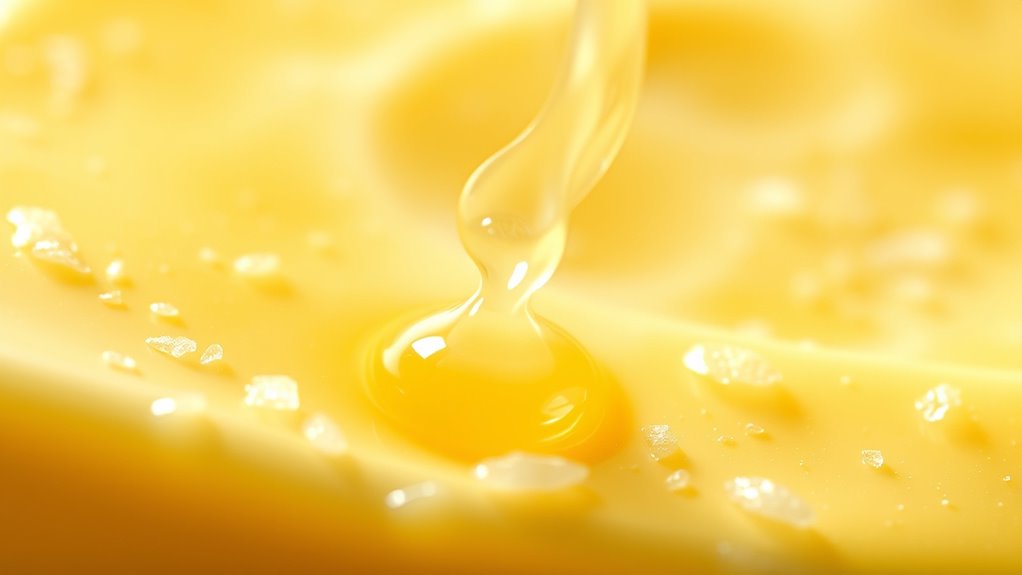
When you savor the rich, creamy taste of butter, you might not realize that diacetyl plays a essential role in that flavor. This compound is a natural byproduct of the fermentation process that occurs during the production of butter. It’s responsible for the delightful, buttery aroma and flavor you experience, making it an indispensable component of butter flavor chemistry. Understanding diacetyl production can enhance your appreciation for this everyday staple.
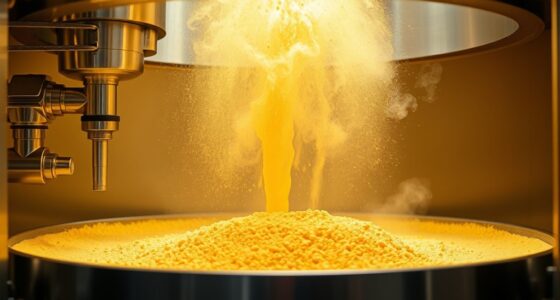
Diacetyl is formed primarily through the action of lactic acid bacteria, which are integral to the fermentation process. When milk is churned into butter, these bacteria break down lactose, creating lactic acid. During this transformation, diacetyl is produced as a secondary metabolite. This is where the magic happens; that buttery flavor you love is a direct result of this chemical process. The more lactic acid bacteria present, the richer the diacetyl production, leading to a more pronounced butter flavor.
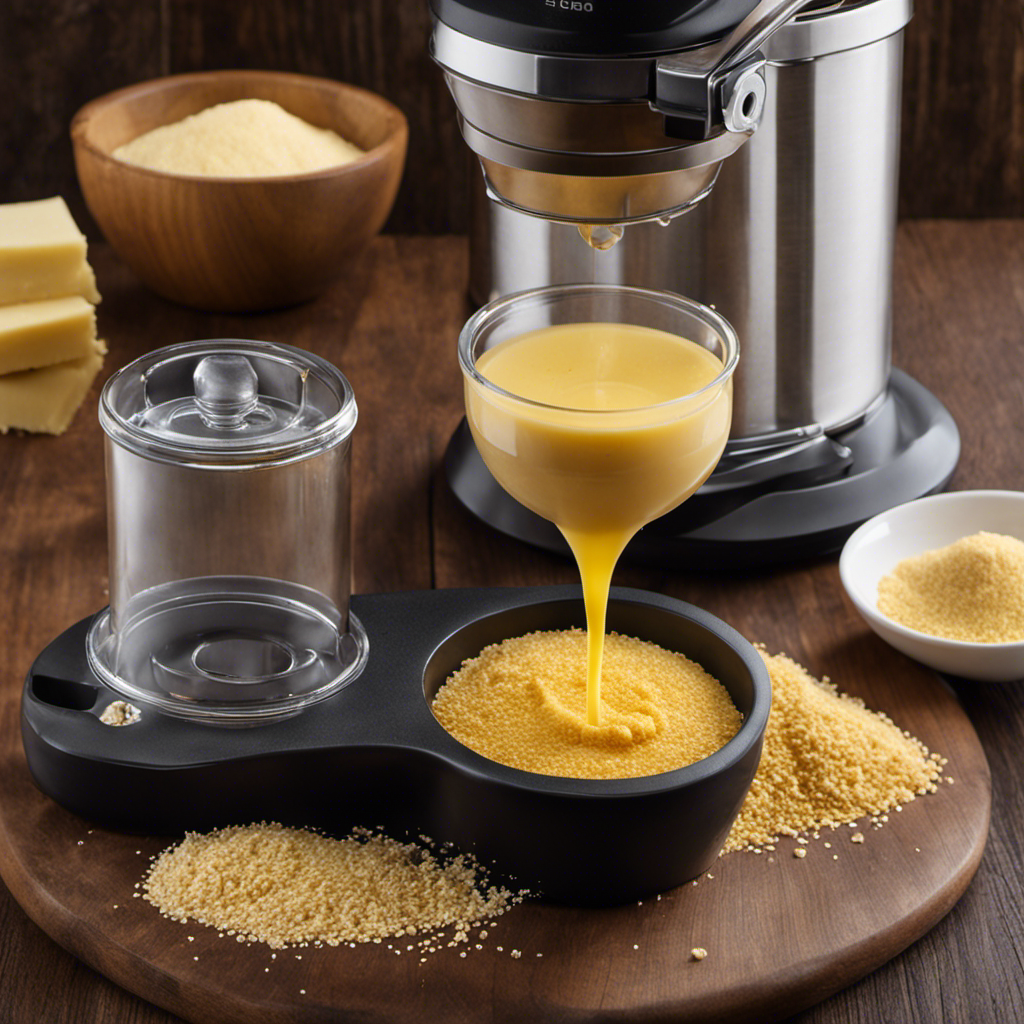
If you think about it, this means that not all butter is created equal. The method of production can considerably influence the flavor profile. For instance, cultured butter, which incorporates specific bacterial cultures, tends to have a more robust flavor due to higher diacetyl levels. In contrast, sweet cream butter, made from fresh cream without fermentation, may lack that depth of flavor. This difference highlights how butter flavor chemistry varies based on the production method.
You might also be surprised to know that diacetyl isn’t just limited to butter. It’s found in other dairy products and even certain beers and wines, contributing to their unique tastes. However, butter remains one of the most prominent examples of diacetyl’s impact on flavor. When you spread that golden goodness on your toast or use it in cooking, you’re not just enjoying a fat; you’re experiencing a complex interplay of flavors shaped by diacetyl.

WONDERMILL Junior Deluxe Grain Mill for Flour, Hand Crank Wheat Mill for Grains, Nuts, Seeds, Oily Foods & Spices, Grain Grinder with Stone and Stainless Steel Burrs (Red)
FASTER and MORE EFFICIENT THAN OTHER HAND MILLS - The Wonder Junior Deluxe hand crank grain mill can...
As an affiliate, we earn on qualifying purchases.
Frequently Asked Questions
What Health Concerns Are Associated With Diacetyl Exposure?
Diacetyl exposure poses serious health concerns, particularly for lung health. When inhaled, it can lead to respiratory risks, including a condition known as “popcorn lung,” which damages your airways. If you work in environments with high diacetyl levels, you’re at greater risk. It is crucial to be aware of these dangers and take precautions, like using protective equipment, to minimize your exposure and protect your respiratory health effectively.
Can Diacetyl Be Found in Other Foods Besides Butter?
Yes, you can find diacetyl in other foods besides butter. It’s often present in various non-dairy products, especially those that undergo fermentation processes, like certain cheeses, yogurt, and even some beers. When these foods ferment, they can naturally produce diacetyl, contributing to their flavor. So, if you’re enjoying fermented foods, there’s a chance you’re consuming diacetyl along with them, adding to the overall taste experience.
How Is Diacetyl Measured in Food Products?
You measure diacetyl in food products using various analytical techniques and detection methods. Gas chromatography is a common approach, allowing you to distinguish and identify compounds in a sample. You might also use mass spectrometry to quantify diacetyl levels accurately. Other methods include high-performance liquid chromatography (HPLC) and sensory analysis, where trained panels assess flavor profiles. Each technique helps guarantee that diacetyl levels are within acceptable limits for food safety and quality.
What Regulations Exist for Diacetyl in Food Production?
In food production, regulations for diacetyl focus on industry standards and guaranteeing regulatory compliance. The FDA monitors diacetyl levels, especially in products intended for consumption. While there’s no specific limit set for diacetyl in all foods, manufacturers must adhere to general safety guidelines. You’ll find that many companies voluntarily reduce diacetyl levels to meet consumer safety expectations. It’s vital to stay informed about updates in regulations to guarantee compliance and protect public health.
Are There Alternatives to Diacetyl for Flavoring?
Yes, there are several alternatives to diacetyl for flavoring. You can explore natural flavor alternatives like fruit extracts, vanilla, or spices that provide rich tastes without the risks associated with diacetyl. Additionally, plant-based flavoring options, such as those derived from herbs or essential oils, can enhance your dishes while keeping them safe. These alternatives not only offer unique flavors but also align with healthier and more sustainable food practices.

Stone Grain Mill Grinder for Home - Handmade Countertop Wheat & Flour Disk Grinder with Wooden Stand for Bread, Tortillas, Spices
【Natural Granite Stone Grinding】Crafted from durable natural granite stone disks, this manual mill preserves nutrients and authentic flavors...
As an affiliate, we earn on qualifying purchases.
Conclusion
In the end, diacetyl is like the secret ingredient that transforms a simple dish into a gourmet experience. Just as a chef adds a pinch of salt to elevate flavors, diacetyl enhances the buttery richness we love. Remember that time you tasted freshly made popcorn at the movies? That buttery aroma, thanks to diacetyl, wrapped around you like a warm blanket. It’s this natural formation that makes butter special, giving it the comforting taste we all cherish.

Manual Butter Churn Kit - Wooden Hand - Crank Butter Maker with Glass Jar, Perfect for Fresh Cream, Keto Butter & Sustainable Homesteading (1.5L)
Butter Churn - Just add whipping cream and turn the handle,Make fresh home-made butter in minutes,The butter should...
As an affiliate, we earn on qualifying purchases.
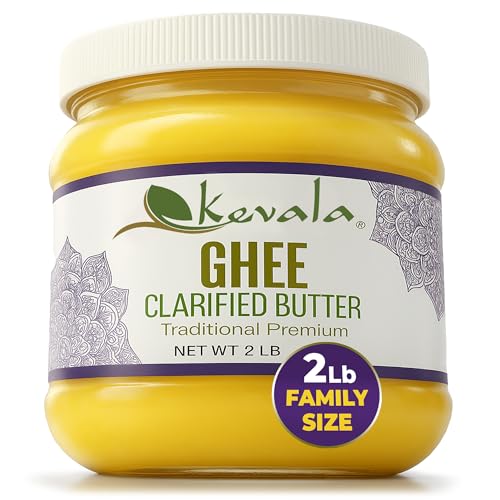
Kevala Clarified Butter Ghee – Grass‑Fed, Lactose & Casein Free, High Smoke Point Cooking & Baking Butter Alternative – Keto & Gluten Free Spread & Oil Substitute | 2 lb
[PURE & NATURAL] Made from grass-fed cow’s milk with no additives, preservatives, or artificial ingredients, naturally gluten free...
As an affiliate, we earn on qualifying purchases.