
To cook safely at oil’s smoke points, always monitor your temperature with a reliable thermometer and avoid heating oils past their smoke point to prevent harmful compounds and flavor loss. Use high-smoke-point oils like avocado or refined safflower for frying, and lower-smoke-point oils like extra virgin olive oil for low-heat applications. Keep heat consistent, avoid overcrowding pans, and choose the right oil for your cooking method. Continue exploring to learn more about maximizing oil safety and flavor.

Get kitchen staples and gadgets delivered free with Prime
- Fast, free delivery on millions of items
- Prime Video, Amazon Music and more included
- Member-only deals all year
Key Takeaways
- Do preheat oils gradually and monitor temperature with a thermometer to prevent exceeding the smoke point.
- Don’t reuse oils that have exceeded their smoke point, as harmful compounds can develop.
- Do choose oils with appropriate smoke points for your cooking method, such as high-smoke point oils for frying.
- Don’t heat oils to the point of visible smoke or burning, which indicates breakdown and potential health risks.
- Do store oils in a cool, dark place to maintain stability and prevent premature degradation.
As an affiliate, we earn on qualifying purchases.
Understanding Smoke Points of Different Oils
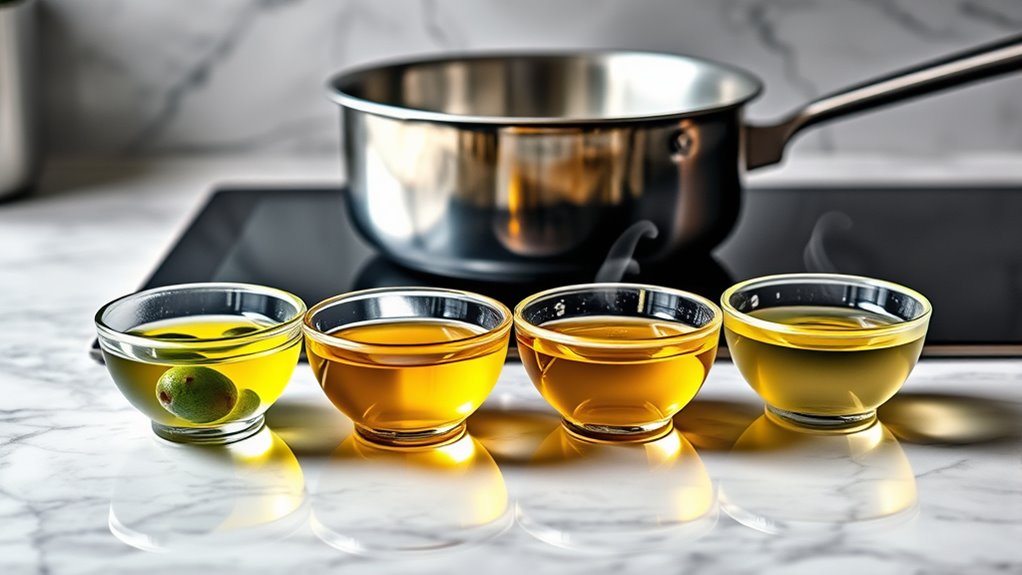
Understanding the smoke points of different oils is essential for safe and effective cooking. When oils reach their smoke point, they start to break down, affecting both oil stability and flavor retention. Oils with higher smoke points, like avocado or refined safflower, can withstand higher temperatures without burning, making them suitable for frying or high-heat searing. Conversely, oils with lower smoke points, such as extra virgin olive oil, are best used for drizzling or low-heat cooking to preserve their delicate flavors. Knowing these differences helps you choose the right oil for each cooking method, ensuring your dishes taste great and your kitchen stays safe. By understanding smoke points, you maximize oil stability and maintain the authentic flavors of your ingredients. Additionally, being aware of personal preferences can help you select oils that complement your cooking style and flavor profiles.
Best Practices for Cooking With Oils at Their Smoke Points
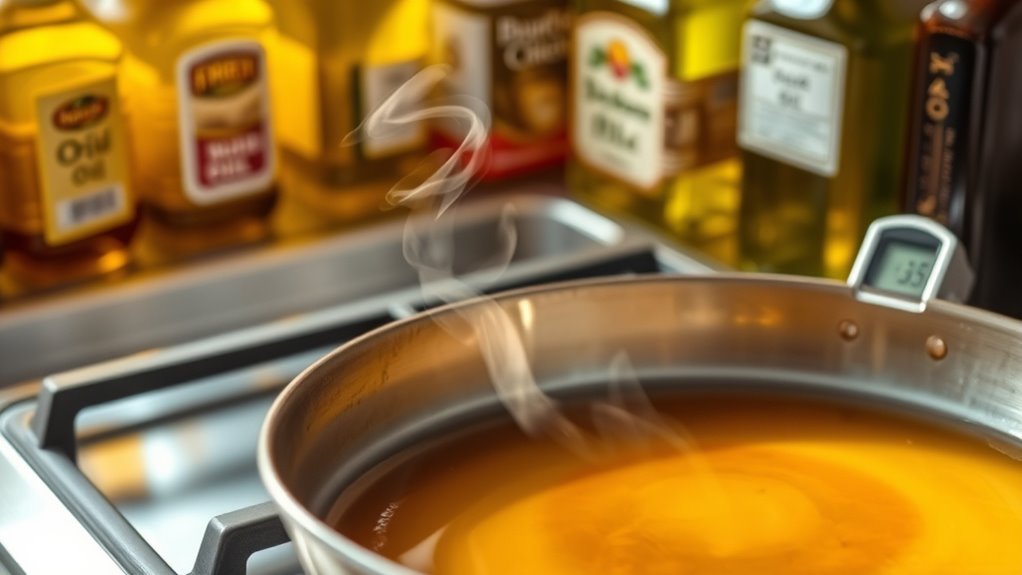
To cook safely and effectively at the smoke point of your chosen oil, it’s important to follow specific practices that minimize the risk of burning or degrading the oil. Keep the heat consistent and monitor it closely to prevent exceeding the oil’s smoke point. Use a quality thermometer to gauge temperature accurately. Choose oils with flavor profiles suitable for your dish, avoiding overpowering tastes. Also, consider the health impacts of oils; some may degrade into harmful compounds when overheated. Here’s a quick guide:
| Technique | Benefit |
|---|---|
| Preheat gradually | Prevents sudden temperature spikes |
| Use appropriate cookware | Distributes heat evenly |
| Avoid overcrowding pan | Maintains steady temperature |
Following these practices helps maintain oil quality and health benefits. Being aware of the smoke point of oils can also guide you in selecting the best fat for different cooking methods, ensuring safety and flavor retention.
Frequently Asked Questions
How Can I Tell if My Oil Has Exceeded Its Smoke Point?
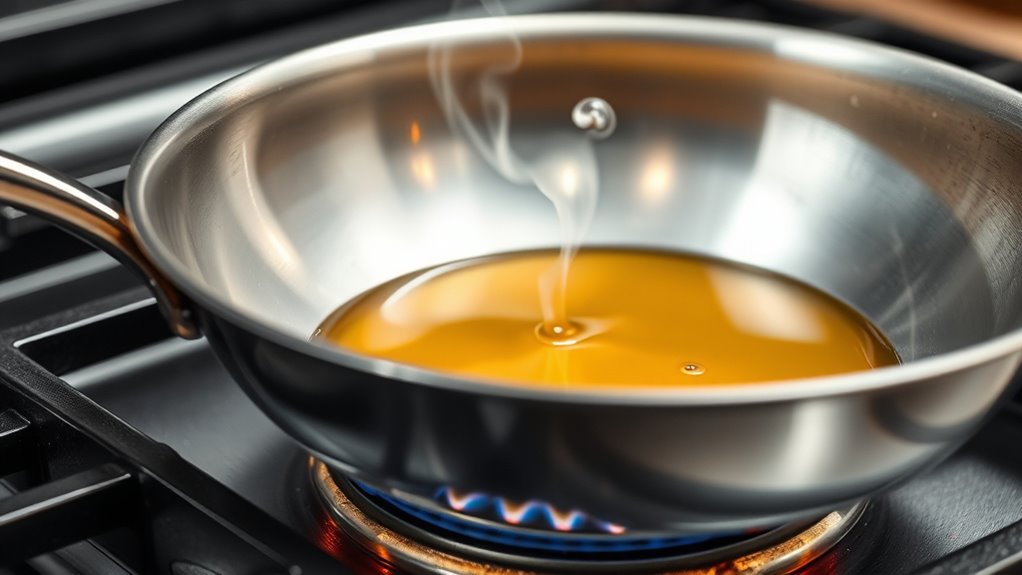
You can tell if your oil has exceeded its smoke point by watching for visual cues like wisps of smoke or a burning smell. Smoke point indicators include sudden smoke, a darkening color, or a crackling sound. When these signs appear, it’s a clear sign that the oil is overheating and should be removed from heat immediately to prevent burning and undesirable flavors.
Do Refined Oils Have Higher Smoke Points Than Unrefined Oils?
Ever wonder if refined oils have higher smoke points than unrefined ones? They do! Refined oils typically have a higher smoke point because the refining process removes impurities, making them more heat-stable. This smoke point comparison means you can cook at higher temperatures without burning the oil. So, if you’re planning to sear or fry, choosing refined oils is a smart move—they handle heat better than unrefined options.
Can Aging or Storage Affect an Oil’s Smoke Point?
Aging and poor storage conditions can lower an oil’s smoke point over time. When you store oils improperly, like exposing them to heat, light, or air, their oil shelf life shortens, and they become more prone to rancidity. This degradation affects the oil’s stability, making it smoke at lower temperatures. To maintain a high smoke point, keep your oils in a cool, dark place and use them before their expiration date.
What Are the Health Risks of Cooking With Overheated Oils?
Cooking with overheated oils can pose health risks, as 90% of oil oxidation occurs at high temperatures, leading to harmful compounds. These compounds can cause inflammation and increase your risk of chronic diseases. Overheating also degrades nutrients, reducing the oil’s health benefits. To stay safe, avoid overheating your oils and use a thermometer to maintain proper temperatures, protecting your health and preserving oil quality.
Are There Oils Suitable for High-Heat Frying With Low Smoke Points?
For high-heat frying, you should choose alternative oils with higher smoke points, like avocado or refined safflower oil. These oils withstand higher temperatures without smoking. Always monitor the temperature carefully to prevent overheating and smoke. Using the right oil and keeping an eye on the heat guarantees safe, healthy cooking while achieving crispy, delicious results without risking health hazards from burnt oils.
Conclusion
So, next time you’re cooking at high heat, remember that smoke point isn’t just a fancy term—it’s your secret weapon for avoiding burnt, bitter flavors. Ironically, choosing the right oil can save you from the smoke-filled chaos you’d rather forget. It’s almost amusing how something as simple as an oil’s smoke point can make or break your dish. Stay mindful, and you’ll keep your kitchen smelling fresh—and your meals perfectly cooked.
Halloween Picks
halloween
As an affiliate, we earn on qualifying purchases.