
Over-extraction causes your cold brew to turn bitter and unbalanced. When grounds steep too long or are too finely ground, harsh compounds are released, overpowering natural flavors and creating a harsh, astringent taste. It’s important to monitor steeping times and use a coarse grind to prevent this. Learning how to identify over-extraction and adjust your process can save your batch—if you want to discover more tricks, keep exploring these tips.
Key Takeaways
- Over-extraction occurs when cold brew steeping exceeds 12-24 hours or uses too fine a grind, pulling bitter compounds.
- Excessive steeping time or high coffee-to-water ratios lead to harsh, overpowering flavors.
- Using a fine grind increases surface area, speeding up extraction and causing bitterness.
- Tasting during brewing helps identify over-extraction signs like bitterness or dull aroma.
- Adjusting grind size, reducing steeping time, and diluting can fix or prevent bitter over-extraction.
What Is Cold Brew Over-Extraction and How Does It Happen?
Cold brew over-extraction occurs when coffee grounds are steeped for too long or extracted at too high a ratio, resulting in a bitter, overly strong, and often unpleasant flavor. Extraction timing is vital—you need to find the right balance between under- and over-extraction. If you steep the grounds too long, the flavors become harsh and unbalanced. Grind size plays a key role too; a grind that’s too fine increases extraction rate, leading to over-extraction, while a coarser grind slows it down. When you use the wrong grind size or steep for too long, you risk pulling out bitter compounds and undesirable flavors. Mastering proper extraction timing and choosing the appropriate grind size helps prevent over-extraction and guarantees a smooth, delicious cold brew. Additionally, paying attention to the quality of water used during brewing can influence extraction and flavor clarity. Proper temperature control during brewing can also help prevent over-extraction by slowing down the extraction process. Being aware of the extraction process and how it affects flavor can help you better control the final taste of your cold brew.
Why Does Over-Extraction Make Cold Brew Bitter and Unbalanced?
Why Does Over-Extraction Make Cold Brew Bitter and Unbalanced?
Have you ever noticed that over-extracted cold brew tastes overly bitter and lacks balance? This happens because excessive extraction pulls out compounds that dominate flavor, creating a flavor imbalance. When you lose control over extraction, harsh tannins and undesirable bitter compounds become prominent, overshadowing the coffee’s natural sweetness and acidity. To illustrate, consider this comparison:
| Proper Extraction | Over-Extraction |
|---|---|
| Bright, balanced | Bitter, unbalanced |
| Smooth, complex | Harsh, overpowering |
Additionally, over-extraction can also lead to the release of undesirable bitter compounds, further contributing to the unpleasant flavor. Understanding coffee extraction principles can help prevent this, ensuring a well-balanced brew. Controlling variables like grind size, brewing time, and water temperature is essential to avoid over-extraction and maintain the desired flavor profile.
How Can You Tell If Your Cold Brew Is Over-Extracted?
When your cold brew starts tasting overly bitter and unbalanced, it’s a clear sign that the extraction process has gone too far. You’ll notice a shift in the flavor profile toward harsh, astringent notes, with less of the smooth, nuanced qualities you want. Brewing indicators include a pronounced dryness or puckering sensation on the palate and a lingering aftertaste that’s more bitter than sweet. If your cold brew smells overly intense or has a dull, dullish aroma, it’s another warning sign of over-extraction. These signs mean the coffee grounds have released too many compounds, leading to an unappealing, overly bitter brew. Trust your senses—taste and smell are your best tools for detecting when your cold brew has been over-extracted.
How to Prevent Over-Extraction When Making Cold Brew
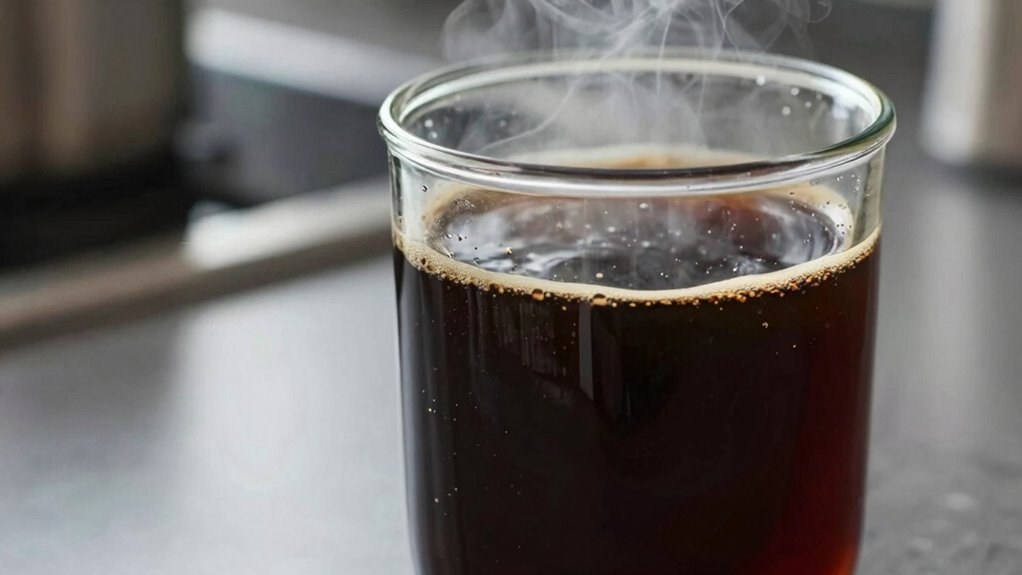
To prevent over-extraction when making cold brew, focus on controlling your brewing time and grind size. Using a coarse grind size helps prevent excessive extraction because it limits the surface area exposed to water, reducing bitterness. Keep your brew time between 12 to 24 hours; longer extraction increases the chance of over-extraction, resulting in bitter flavors. Monitor your brewing process closely—overly long steeping times or too fine a grind can lead to harsh, over-extracted coffee. Adjusting either factor can make a significant difference. Remember, a coarser grind combined with an ideal brew time ensures a smooth, balanced cold brew without bitterness. Staying attentive to these variables helps you avoid over-extraction and achieve consistently better results. Additionally, proper ventilation considerations during brewing can help prevent unwanted aromas and ensure optimal coffee quality. Proper temperature control during extraction can also influence the flavor profile and help avoid bitterness. Incorporating regular tasting during the brewing process allows you to better gauge the extraction level and make adjustments as needed.
Troubleshooting: How to Fix Over-Extracted Cold Brew
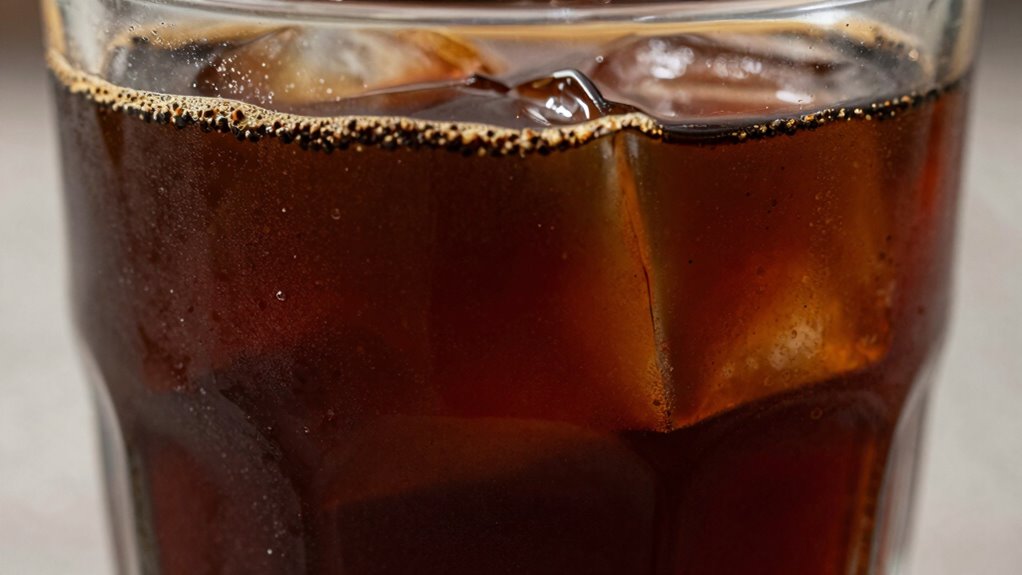
If your cold brew tastes overly bitter and harsh, over-extraction is likely the cause. To fix this, start by adjusting brewing variables such as grind size, steep time, and water temperature. Use a coarser grind to slow extraction, reducing bitterness. Shorten the steeping time to limit the extraction of bitter compounds. Also, confirm your water isn’t too hot, as higher temperatures increase extraction speed. Consider diluting your brew with fresh water or milk to mellow strong flavors. Taste your coffee regularly during brewing to catch over-extraction early. Remember, different beans have unique flavor profiles, so fine-tuning these variables helps achieve a balanced, smooth cold brew. Making small adjustments allows you to regain control and craft a more enjoyable batch.
Frequently Asked Questions
Can Different Coffee Beans Impact Over-Extraction Susceptibility?
Yes, different coffee beans impact over-extraction susceptibility. You’ll notice that beans from different origins, like Ethiopia or Colombia, have unique flavor profiles and extraction rates. Light roasts tend to be more delicate and can over-extract quickly, leading to bitterness, while dark roasts are more forgiving. So, pay attention to bean origin and roast level to prevent over-extraction and achieve a well-balanced cold brew.
Does Grind Size Influence the Likelihood of Cold Brew Over-Extraction?
Your grind size directly influences cold brew over-extraction. When you use a too-fine grind, uneven particle distribution and inconsistent grind consistency create tiny particles that extract too quickly, turning your brew bitter. Picture a chaotic particle mix—this chaos increases the risk of over-extraction. To avoid this, aim for a uniform grind size, ensuring consistent extraction and a smooth, balanced cold brew.
How Does Ambient Temperature Affect Cold Brew Over-Extraction?
Ambient temperature directly impacts the extraction rate of your cold brew. When it’s warmer, the extraction process speeds up, increasing the risk of over-extraction and bitterness. Conversely, cooler temperatures slow down extraction, allowing flavors to develop more evenly. To avoid bitterness, keep your brewing environment at a consistent, moderate temperature, and consider adjusting brew time accordingly. This helps you maintain control over flavor and prevents over-extraction.
Are There Specific Brewing Times That Minimize Over-Extraction Risks?
Timing truly trumps trouble when it comes to cold brew. To minimize over-extraction risks, stick to a brewing duration of 12 to 24 hours. This controlled clock keeps flavor finesse intact, preventing bitterness. By managing your brewing time, you control extraction, ensuring a smooth, balanced brew. Remember, patience and precise timing are key to creating consistently delicious cold brew without the bitter bite.
Can Cold Brew Over-Extraction Occur With Cold Brewing Methods Other Than Steeping?
Yes, over-extraction can happen with cold brewing methods beyond steeping, especially if you use poor coffee bean selection or brewing at higher temperatures. When you choose stale or oily beans, or if you accidentally raise the brewing temperature, you risk drawing out bitter compounds. To avoid this, stick to fresh beans, control your brewing temperature, and keep steeping times moderate to ensure a smooth, balanced cold brew.
Conclusion
Think of your cold brew as a delicate dance; over-extraction is like stepping on toes, throwing off the rhythm. When you understand how to spot and prevent it, you keep your brew smooth and balanced, like a perfectly choreographed performance. Keep practicing, stay attentive, and you’ll master the art of cold brew, turning each batch into a harmonious symphony of flavors. Remember, a little attention turns chaos into a beautiful, bitter-free masterpiece.