When choosing between salted and unsalted butter for cooking, consider your recipe needs. Unsalted butter gives you precise control over flavors, while salted butter offers convenience and longer shelf life. Many recipes call for unsalted butter to guarantee consistent taste, especially in baking. If you prefer customizing the salt level in your dishes, stick with unsalted. Plus, fresh unsalted butter can elevate your cooking. There’s more to discover about their differences and how to use them effectively!
Key Takeaways
- Unsalted butter is preferred for baking to ensure precise flavor control and consistent results in recipes.
- Salted butter offers immediate flavor and convenience, making it suitable for casual spreading or cooking.
- Unsalted butter enhances the natural flavors of ingredients, allowing for customizable salt levels in dishes.
- Salted butter has a longer shelf life due to salt’s preservative qualities, ideal for infrequent use.
- Always follow recipes specifying unsalted butter to avoid unintentional salt overload and achieve the desired flavor balance.
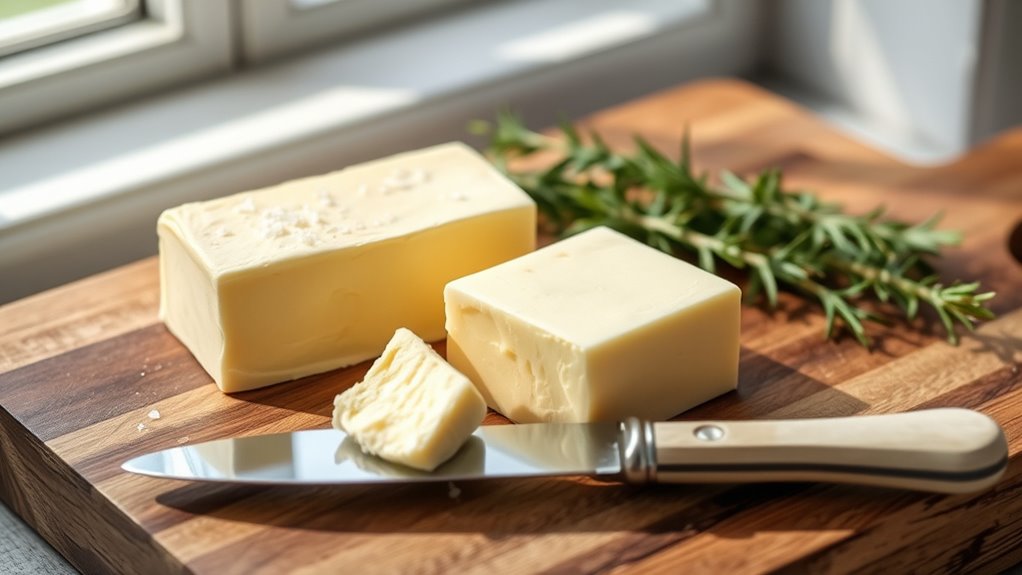
When it comes to cooking, choosing between salted and unsalted butter can make a big difference in your dishes. Salted butter is often seen as a convenient option because it adds flavor right away, making it great for spreading on bread or using in recipes that don’t rely on precise measurements. However, if you want to guarantee your dishes reach their full potential, unsalted butter is usually the better choice. This is especially true in baking, where the balance of flavors is essential. When you control the amount of salt, you can enhance the overall taste of your creation.
Using unsalted butter allows you to focus on the natural flavors of the ingredients. You can adjust the salt levels according to your preference, which leads to a more balanced dish. It’s also worth noting that many recipes are designed with unsalted butter in mind, as it provides a baseline for flavor enhancement. If you’re following a recipe that calls for unsalted butter, substituting it with salted butter could lead to an unintentional salt overload, throwing off the intended taste.
Using unsalted butter gives you control over flavors, ensuring a balanced dish and avoiding unintentional salt overload in recipes.
Another aspect to consider is shelf life. Salted butter tends to have a longer shelf life due to the preservative qualities of salt. If you’re someone who doesn’t use butter often, salted might be the way to go, as it can last longer in your fridge. However, if you’re an avid cook who uses butter frequently, unsalted is the fresher choice. Since it doesn’t contain added salt, unsalted butter is typically fresher and allows you to use it as needed without worrying about the salt content affecting your dish.
When you think about flavor enhancement, it’s vital to remember that the freshness of your butter can greatly impact your cooking. Unsalted butter, when fresh, carries a rich, creamy flavor that can elevate your dishes, whether you’re baking cookies or sautéing vegetables. Additionally, using unsalted butter can provide greater control over flavors, which is essential for achieving the desired outcome in your culinary creations. So, if you’re serious about cooking, keep unsalted butter on hand for those moments when you want full control over the flavors.
Frequently Asked Questions
Can I Substitute Salted Butter for Unsalted in Baking Recipes?
Yes, you can substitute salted butter for unsalted in baking recipes, but keep in mind it’ll add a salty flavor to your dish. This might work well in some recipes, but it could affect the final taste, especially in delicate desserts. Additionally, salted butter has preservative effects that can slightly alter the texture. If you’re concerned about saltiness, you might want to reduce any added salt in the recipe to balance the flavors.
How Does Salted Butter Affect the Shelf Life of Baked Goods?
Salted butter can actually enhance the shelf life of baked goods due to its preservation effects. The added salt helps inhibit the growth of bacteria and molds, keeping your treats fresher longer. However, the salt can also impact flavor stability; it might overshadow delicate flavors in some recipes. If you’re after a longer-lasting product with a pronounced flavor, using salted butter might be a good option for your baking endeavors.
Is There a Difference in Taste Between Salted and Unsalted Butter?
Yes, there’s a distinct flavor difference between salted and unsalted butter. You’ll notice the salty taste in salted butter, enhancing savory dishes and baked goods, while unsalted butter offers a pure, creamy flavor that lets other ingredients shine. When you’re baking, the lack of added salt in unsalted butter gives you better control over the final taste. So, choosing between them can really impact the overall flavor of your creations!
Can I Use Unsalted Butter for Savory Dishes?
Absolutely, you can use unsalted butter for savory dishes! It allows you to control the salt content, so you can adjust flavors to your liking. Unsalted butter enhances flavors without overpowering the dish. Just remember to add salt separately, which gives you the freedom to tailor the seasoning. This way, you’ll achieve a perfect balance in your savory recipes, ensuring they taste just the way you want them to!
What Brands Offer the Best Quality Unsalted Butter?
When you seek the finest unsalted butter, think of it as a canvas for your culinary creations. Premium brands like Plugrá and Kerrygold stand out, offering rich flavors that elevate your dishes. Don’t overlook local dairies, which often provide exceptional quality and freshness; their butter can taste like sunshine on a warm day. By choosing these options, you’ll guarantee your cooking shines with depth and character, making every bite memorable.
Conclusion
When it comes to choosing between salted and unsalted butter, your culinary destiny hangs in the balance! Unsalted butter gives you the power to wield flavor with precision, allowing your dishes to reach new heights of gastronomic delight. Salted butter, while delicious, can lead to unpredictable flavor explosions. So, embrace the unsalted path, and unleash your inner gourmet chef! Your taste buds will thank you as you set out on a buttery adventure like no other!