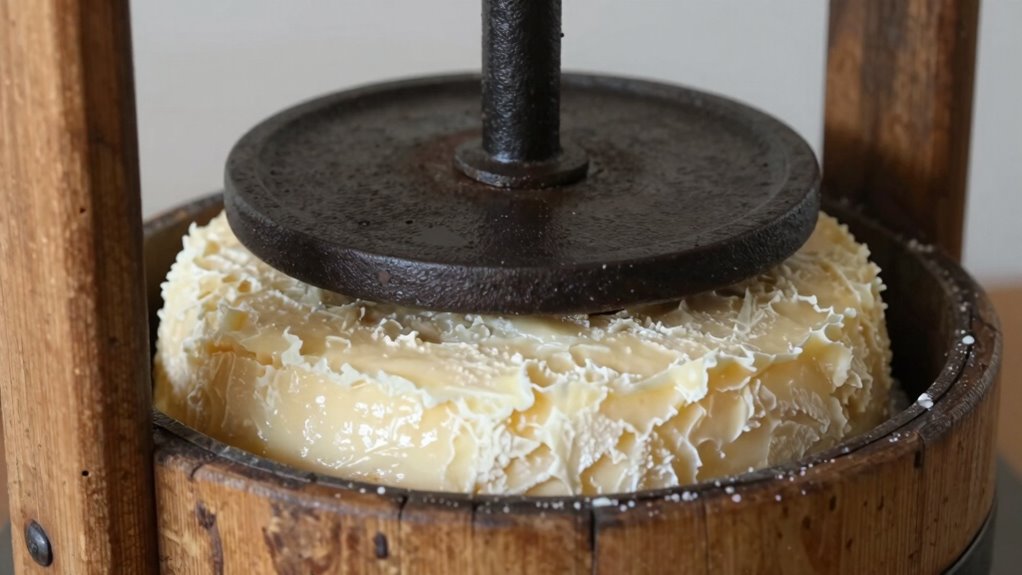

Pressing your cheese with too much force can backfire by causing cracks, uneven texture, and loss of flavor. Over-pressing squeezes out essential fats and moisture, which can make the final product too firm or crumbly. To get the best results, you need to find the right balance based on your cheese type. If you keep these tips in mind, you’ll learn how to avoid common mistakes and improve your pressing technique.
Key Takeaways
- Excessive pressure damages cheese by disrupting moisture balance and causing uneven whey drainage.
- Over-pressing can lead to cracks, a crumbly texture, and hinder proper aging.
- Adjust pressing force based on cheese type: softer cheeses need gentler pressure, harder cheeses require more.
- Monitor cheese response during pressing and modify pressure to prevent deformation or drying out.
- Proper calibration and gradual pressure increase help avoid uneven shape, cracks, and flavor loss.
Why Pressing Too Hard Can Ruin Your Cheese
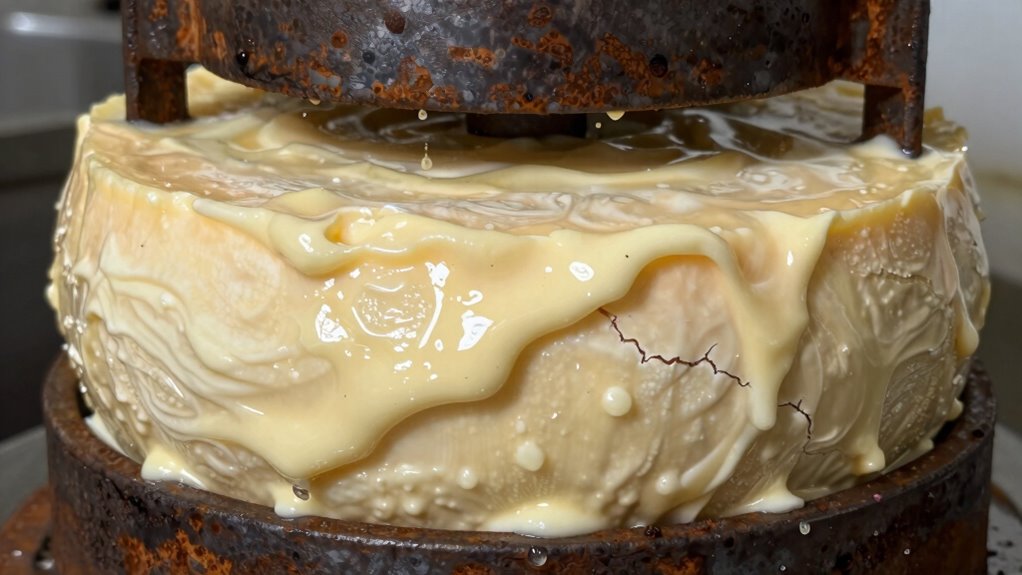
Pressing your cheese too hard may seem like a good way to remove excess whey quickly, but it can actually damage the final product. Applying excessive pressure can hinder proper cheese aging by disrupting the cheese’s natural moisture balance. When you press too firmly, it may cause uneven whey drainage, leading to inconsistent textures. Additionally, overly compressed cheese creates an environment with limited airflow, which encourages mold development in unwanted areas. This can compromise the cheese’s flavor and appearance, especially during aging. Instead, applying moderate pressure helps maintain ideal moisture levels and allows the cheese to develop complex flavors naturally. Proper pressing ensures a balanced texture and reduces the risk of mold problems, resulting in a better-quality cheese that ages well and looks appealing. Understanding moisture control is crucial for achieving the best aging conditions and flavor development. Additionally, pressure distribution plays a vital role in ensuring the cheese is pressed evenly to prevent deformities and promote uniform aging. Incorporating proper technique can significantly improve the quality of your finished cheese by promoting consistent results. Moreover, using appropriate equipment can help regulate pressure more precisely and avoid accidental over-pressing. Being mindful of cheese texture during pressing can further enhance the final product’s quality and consistency.
How to Tell If You’re Applying Too Much Pressure to Your Cheese
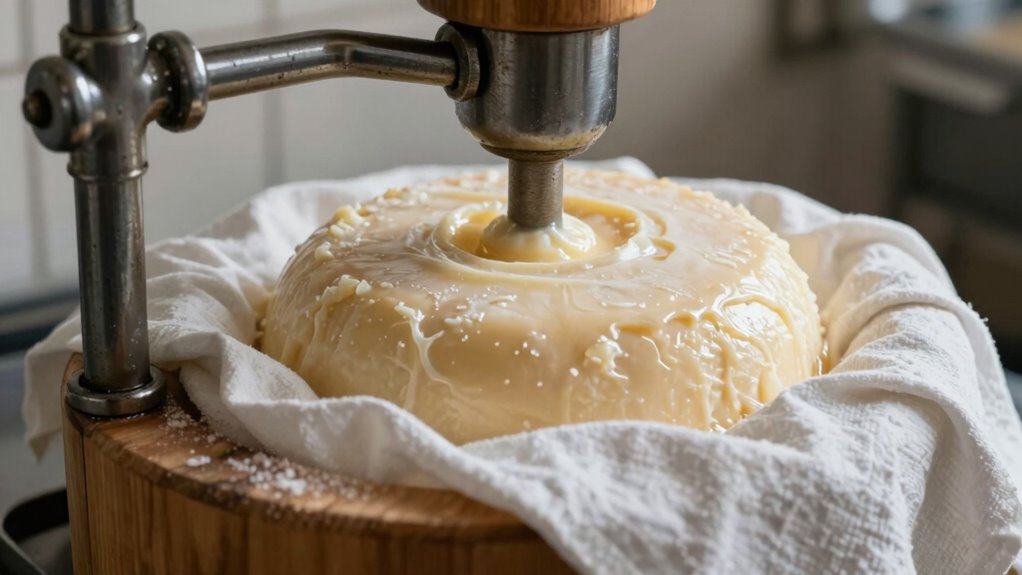
If you notice your cheese developing cracks or becoming overly firm, it’s a sign you might be applying too much pressure during pressing. Excessive force can hinder proper cheese aging, leading to an unbalanced texture and compromised flavor. Over-pressed cheese may also become difficult to store, as it’s more prone to cracking or drying out in cheese storage. Pay attention to how your cheese feels and looks; a firm, crumbly texture indicates over-pressing. Instead, aim for a gentle, even pressure that allows moisture to escape gradually. Proper pressing ensures your cheese ages well, develops flavor, and maintains a smooth, consistent texture. Adjust your pressure accordingly to avoid damaging your cheese’s quality or making storage more challenging.
Finding the Perfect Pressing Force for Different Cheeses
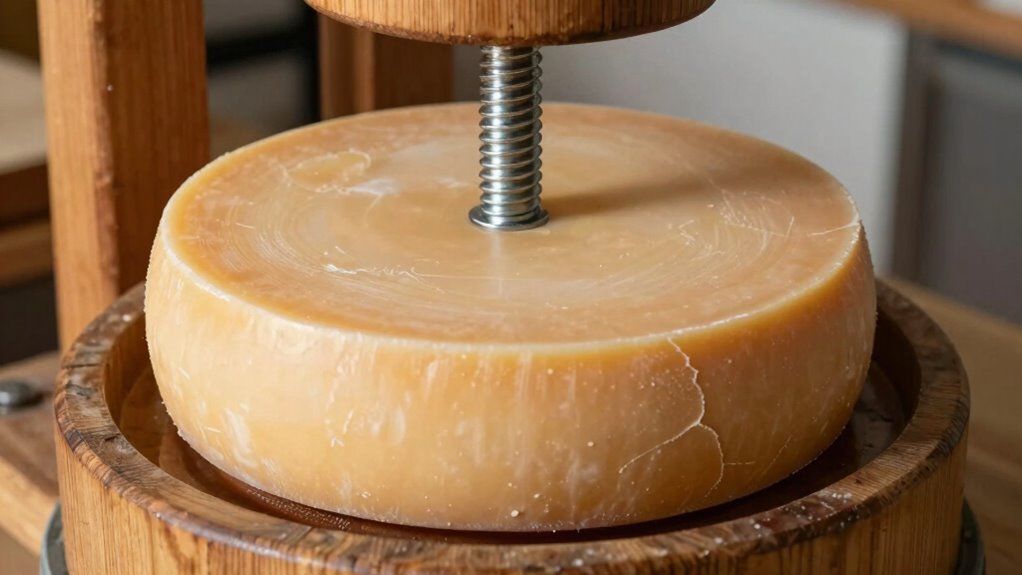
Choosing the right pressing force depends on the type of cheese you’re making, as each variety requires a different approach to achieve ideal texture and flavor. For softer cheeses, apply gentle pressure to prevent squeezing out moisture, which supports proper cheese aging and smooth texture. Proper cheese aging techniques are essential for developing complex flavors and ensuring optimal texture. These techniques involve controlling factors such as temperature and humidity during aging to enhance flavor development. Additionally, the aging environment can influence how well the cheese develops its characteristic taste and texture. Harder cheeses need stronger pressing to expel excess whey, promoting proper compaction and flavor development. Too much force can hinder aging, creating uneven textures or dull flavors, while too little can lead to a crumbly or weak cheese. Pay attention to the cheese’s moisture content and desired firmness. Adjust your pressure accordingly, ensuring it’s firm enough to eliminate whey but gentle enough to preserve delicate flavor nuances. Proper pressing technique can make a significant difference in the final quality of your cheese. Finding this balance enables optimal aging and results in a well-rounded, flavorful cheese.
How to Adjust Your Cheese Pressing Technique for Better Results
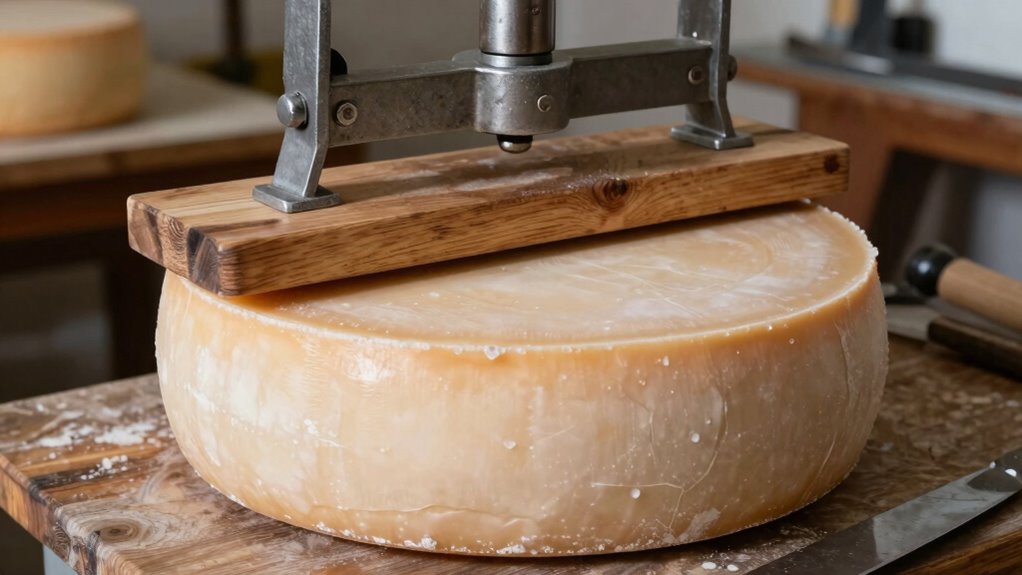
To improve your cheese pressing results, you need to fine-tune your technique based on the cheese’s characteristics and progress. Adjusting your method influences the aging process and cheese aging quality. Observe how the cheese responds during pressing, and modify pressure or duration accordingly. Consistent pressure application helps achieve uniform texture and prevents defects. Additionally, understanding the material properties of your cheesecloth or pressing surface can impact how pressure affects the final product. Incorporating energy-efficient practices in your pressing routine can contribute to more sustainable cheese production methods. Being aware of lifestyle product recommendations can also inspire innovative techniques and tools to optimize your cheese pressing process. Proper piercing care and hygiene can prevent contamination and ensure the cheese remains safe throughout pressing and aging.
Common Cheese Pressing Mistakes and How to Avoid Them
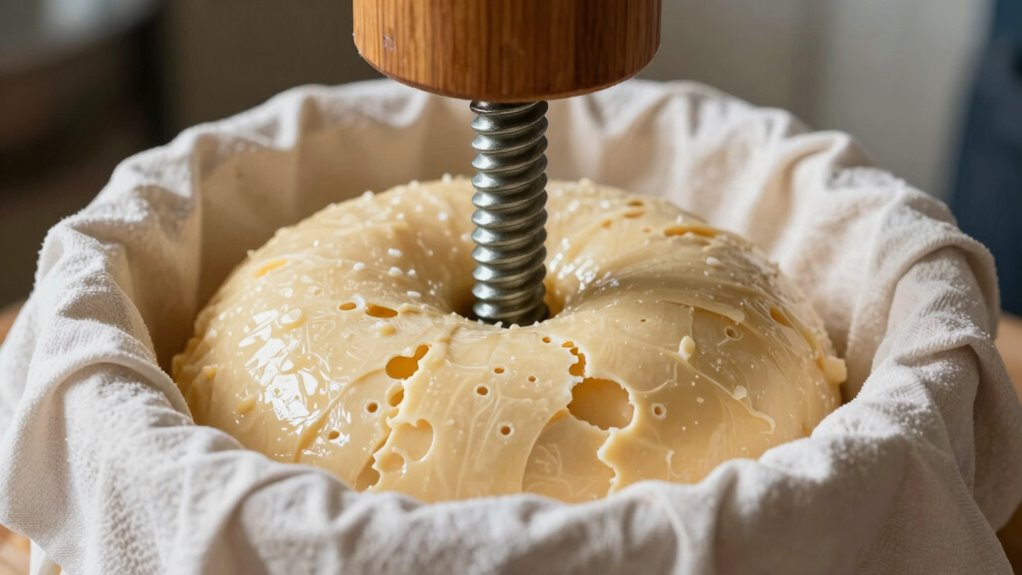
One common mistake in cheese pressing is applying uneven pressure, which can cause inconsistent texture and shape. When pressure isn’t evenly distributed, parts of the cheese may remain softer or develop unwanted cracks, hindering proper cheese aging. This inconsistency affects flavor development, resulting in uneven taste profiles. To avoid this, verify your cheese press is calibrated correctly and that weight is distributed uniformly across the cheese surface. Additionally, pressing too hard can squeeze out essential fats and moisture, negatively impacting flavor and texture. Proper press calibration helps ensure even pressure during the process. Monitor your pressing process closely, adjusting pressure gradually and evenly. Proper technique helps preserve the cheese’s delicate balance, promoting even aging and ideal flavor development. Remember, patience and precision are key to making well-structured cheeses with complex flavors. Understanding wood movement and how pressure affects the cheese can also improve your results by preventing unwanted cracking or deformation. Being aware of pressure distribution, including how to check for uniformity, can help you achieve more consistent and high-quality cheese. Incorporating consistent pressure application techniques can further enhance your cheese-making success. Paying attention to climate conditions in your cheese environment can also influence how well your pressing process works and the final outcome.
Frequently Asked Questions
Can Pressing Too Hard Affect Cheese Aging and Flavor Development?
Pressing too hard can negatively affect cheese aging and flavor development by squeezing out too much moisture, which impacts texture and taste. Your pressing technique should balance moisture removal with preserving enough for proper aging. Over-pressing dries out the cheese, leading to a less complex flavor profile and a tougher texture. To avoid this, apply consistent pressure and monitor cheese moisture levels closely during pressing.
What Tools Can Help Measure Optimal Pressure During Pressing?
You can use tools like press pressure gauges and spring scales to measure ideal pressure during pressing. These tools give you real-time feedback, helping you apply just enough pressure without risking over-pressing. Simply attach the gauge or scale to your press, monitor the readings, and adjust accordingly. This way, you guarantee consistent, gentle pressure that promotes proper curd drainage and preserves cheese quality.
How Does Cheese Type Influence the Ideal Pressing Duration?
Just like each song has its perfect note, each cheese type demands its own pressing duration. Hard cheeses with low moisture need longer pressing to develop rind formation, while soft cheeses with higher moisture require shorter times to prevent over-pressing. Your cheese’s moisture content guides the ideal pressing time, helping you balance rind formation and prevent crushing delicate textures. Pay attention to these nuances for cheese that’s perfectly crafted every time.
Is It Necessary to Flip Cheese During the Pressing Process?
You don’t need to flip cheese during pressing, but it can help guarantee even pressure distribution. Incorporate cheese flipping into your pressing techniques if you’re aiming for uniform texture. Just be gentle when flipping to avoid disrupting the curds or damaging the cheese. Some cheesemakers prefer not to flip at all, focusing instead on consistent pressure and time. Choose a method that suits your cheese type and your desired final product.
What Are Signs of Over-Pressing Beyond Texture Issues?
A stitch in time saves nine, and over-pressing can lead to cheese spoilage. Signs of over-pressing include a crumbly texture, excessive dryness, or a bitter flavor. These symptoms indicate the cheese has been pressed too hard, damaging its structure. Over pressing not only affects texture but can also hinder aging, making your cheese less enjoyable. Always aim for balanced pressure to prevent these issues and guarantee a tasty result.
Conclusion
Think of cheese pressing like tending a delicate garden. Press too hard, and you risk crushing your blooms before they can flourish; press too little, and they may never take root. Finding the right pressure lets your cheese blossom into perfect maturity. With patience and a gentle touch, you nurture your cheese just like a gardener tends their plants—guiding it to develop its best flavor and texture. Trust your instincts, and watch your cheese thrive.