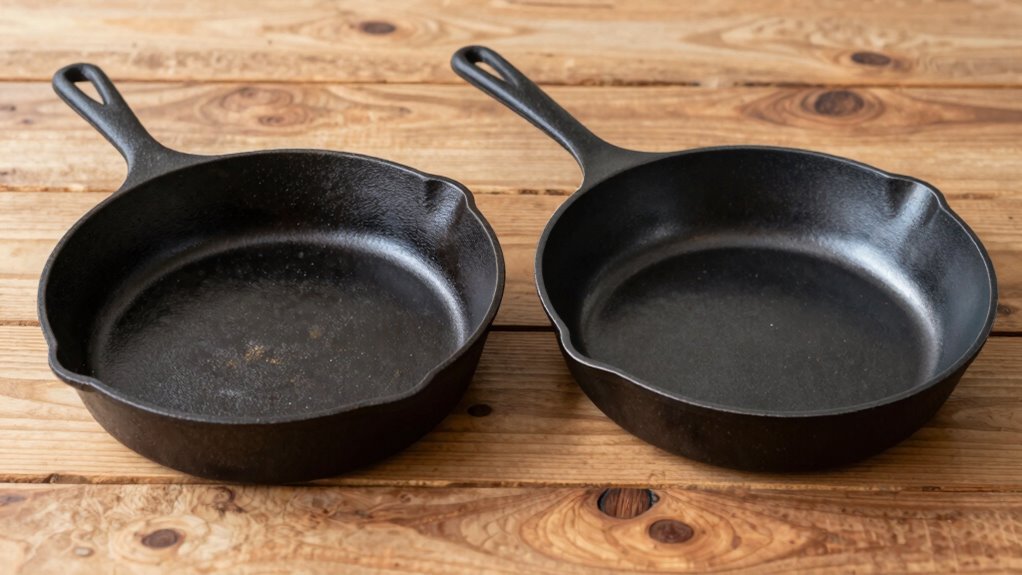
Both cast iron and carbon steel excel in different cooking situations. Cast iron heats slowly, retains warmth longer, and offers steady, even heat perfect for baking and slow-cooking dishes. Carbon steel heats quickly, responds fast to temperature changes, and is ideal for searing, stir-frying, and quick tasks. Understanding these differences helps you choose the best tool for your needs—continue exploring to discover which one truly suits your kitchen style.
Key Takeaways
- Cast iron excels at heat retention and even distribution, ideal for slow cooking and oven baking.
- Carbon steel heats faster, responds quickly to temperature adjustments, perfect for high-precision tasks like stir-frying.
- Cast iron develops a durable, natural non-stick surface over time, while carbon steel quickly forms a smooth, slick finish with regular use.
- Both materials are compatible with induction, but cast iron is heavier and more brittle; carbon steel is lighter and more responsive.
- Maintenance differs: cast iron requires careful seasoning and drying, whereas carbon steel is easier to maintain and develops a non-stick surface faster.
What Are the Main Differences Between Cast Iron and Carbon Steel?
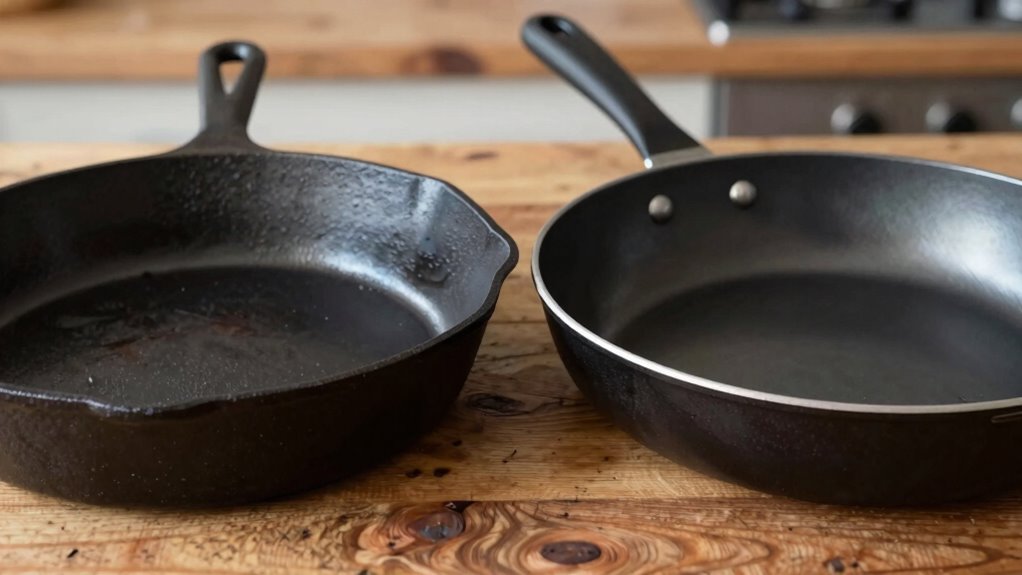
The main differences between cast iron and carbon steel lie in their composition, structure, and properties. Cast iron contains a higher carbon content, making it heavier and more brittle, which influences its seasoning techniques; it requires careful handling to avoid cracking. Carbon steel has less carbon, making it lighter, more flexible, and easier to maneuver. Its material weight allows for quicker heating and more responsive adjustments. When seasoning, cast iron benefits from longer, more consistent application, thanks to its porous surface, while carbon steel develops a slick, smooth finish faster. These differences affect how you cook and maintain each type—cast iron’s weight and porosity demand patience, whereas carbon steel’s lighter nature offers greater agility in your kitchen. Additionally, understanding material properties can help you choose the best cookware for your specific cooking needs and maintenance preferences. Recognizing the heat retention qualities of cast iron versus the quick responsiveness of carbon steel can further inform your selection based on cooking style. Knowing how each material responds to different seasoning techniques can also extend the lifespan and performance of your cookware over time. Furthermore, corrosion resistance varies between the two materials, influencing how you care for your cookware in different environments. A thorough knowledge of durability can help you select cookware that best fits your long-term cooking habits.
How Do Cast Iron and Carbon Steel Perform in Heat Retention and Distribution?
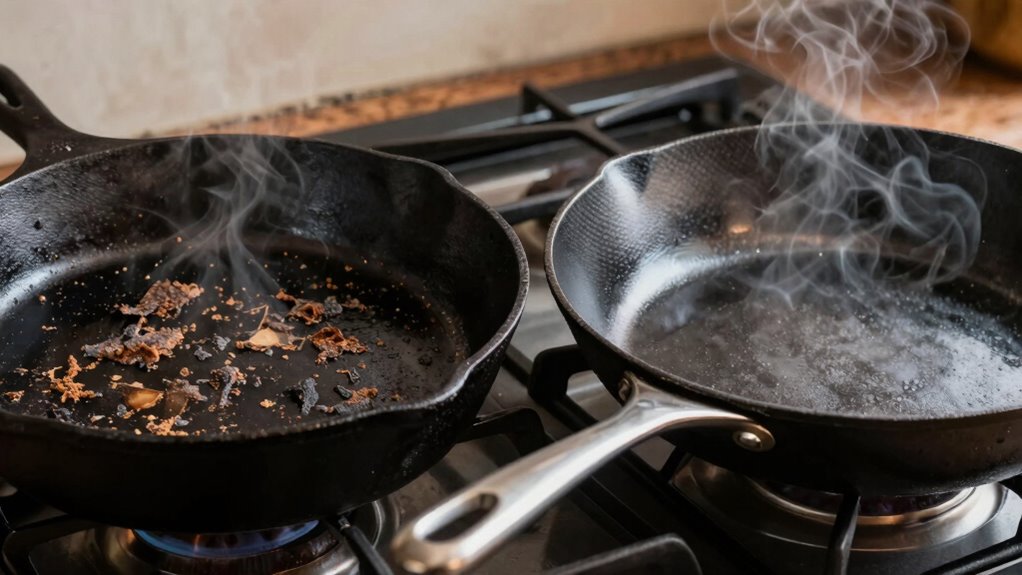
You’ll notice that cast iron retains heat longer and distributes it evenly, thanks to its thick construction. Carbon steel heats up faster and responds quickly to adjustments, making it ideal for precise temperature control. The thickness of each material also influences how well they hold and spread heat during cooking. Additionally, smart home automation can be utilized to monitor and optimize cooking environments, enhancing control and safety. Understanding the different heat retention and distribution properties can help you select the best cookware for your needs and improve your overall cooking performance. Moreover, knowing the material composition of each cookware type can guide you in choosing the right piece for specific cooking techniques.
Heat Retention Capabilities
Cast iron excels at retaining heat, thanks to its dense and thick construction, which allows it to hold warmth for long periods even after you remove it from the heat source. This makes it ideal for dishes that require steady, even cooking. To maintain its heat retention, you need to practice proper seasoning care, which also helps prevent rust and keeps the surface non-stick. A well-seasoned cast iron skillet maintains its thermal properties better and resists corrosion, ensuring consistent performance over time. Additionally, understanding the thermal conductivity of each material can help you optimize cooking techniques for better results. Both materials benefit from proper care, but cast iron’s superior ability to hold heat makes it a favorite for slow-cooked, braised, or crispy dishes. The heat retention capabilities are especially advantageous when preparing dishes that require sustained heat without constant adjustment. Proper heat distribution properties ensure even cooking throughout your dish, preventing hot spots and ensuring consistent results.
Heat Distribution Efficiency
While cast iron and carbon steel both excel at retaining heat, their efficiency in distributing that heat varies considerably. You’ll notice this difference in several ways:
- Carbon steel heats up faster and spreads heat more evenly, helping you achieve consistent grill marks.
- Cast iron heats slowly but maintains steady temperature, ideal for oven compatibility and even cooking.
- Carbon steel’s quick heat response makes it great for searing, while cast iron provides stable heat for slow cooking.
- Both materials excel at heat retention, but cast iron’s slower response can lead to uneven heat distribution if not preheated thoroughly.
Ultimately, carbon steel’s quick, even heat makes it more efficient for precise heat distribution, especially on the stove or grill, while cast iron excels in oven applications.
Impact of Thickness
Thickness plays a vital role in how cast iron and carbon steel perform in heat retention and distribution. Thicker material increases heat capacity, leading to better heat retention and even cooking. A thicker cooking surface maintains steady temperatures, ideal for searing or slow cooking. Conversely, thinner pans heat up faster but can lose heat easily, affecting consistency.
| Material Thickness | Impact on Cooking Surface |
|---|---|
| Thicker | Better heat retention, even heat |
| Thinner | Quick heating, less heat stability |
Choosing the right thickness depends on your cooking style. For precise heat control, a thicker pan offers stability. For quick, responsive cooking, a thinner surface heats faster but may require more attention to temperature changes.
Which Material Is More Durable and Easier to Maintain?
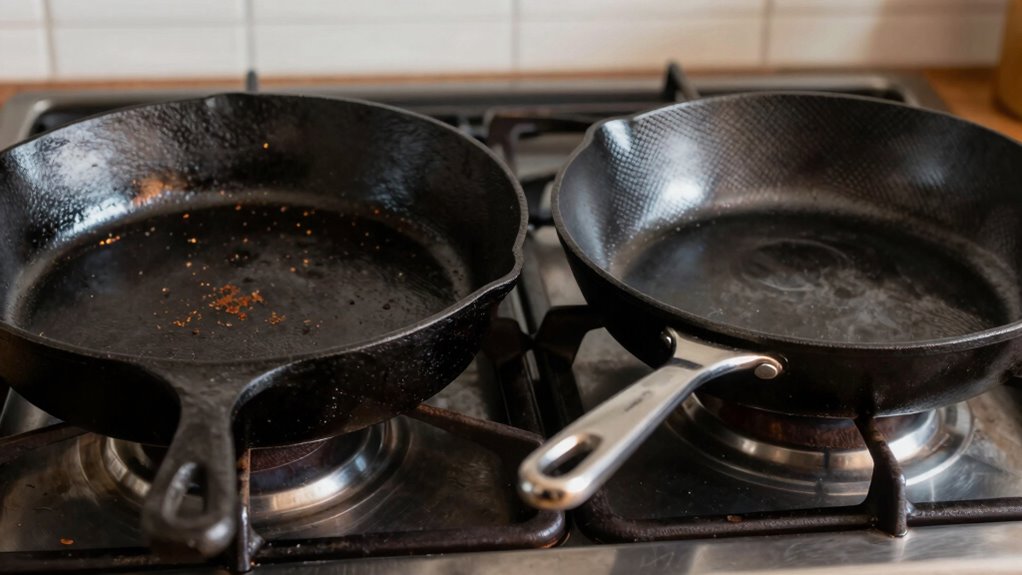
When it comes to durability and ease of maintenance, many cooks wonder which material holds up better over time. Both cast iron and carbon steel are tough, but they differ in key ways. Cast iron is more rust-resistant if properly seasoned, making it easier to maintain long-term. Carbon steel heats faster and develops a natural non-stick surface with regular use, simplifying cleaning. Cast iron requires more careful seasoning and drying to prevent rust, which can be a hassle. Carbon steel is lighter and generally easier to handle, reducing wear and tear over time. Additionally, seasoning layer plays a crucial role in protecting both materials from corrosion and maintaining their performance. Proper care and maintenance and understanding the corrosion resistance of each material ensure their longevity and optimal cooking performance. Regular maintenance routines, such as seasoning and thorough drying, help extend the lifespan of both types of cookware and prevent rust formation. Understanding material properties can help extend the life of your cookware significantly.
What Are the Best Uses for Cast Iron in the Kitchen?
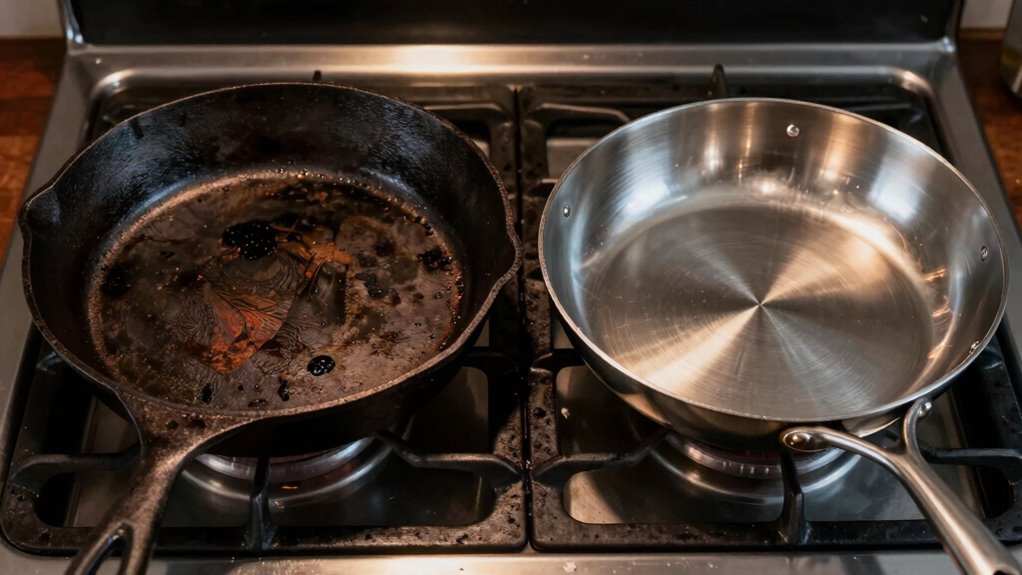
Cast iron is incredibly versatile in the kitchen, perfect for everything from frying to baking. Its excellent heat retention means your dishes stay warm longer and cook evenly. With proper care, your cast iron cookware can last for decades, making it a reliable staple in your kitchen arsenal. Additionally, understanding safe handling techniques can help prevent accidents and ensure a comfortable cooking experience. Knowing how to season and maintain your cast iron properly also extends its lifespan and enhances its non-stick properties. Regularly cleaning and drying your cast iron correctly is essential to prevent rust and preserve its performance.
Versatile Cooking Applications
Cast iron is incredibly versatile in the kitchen, making it a go-to choice for a wide range of cooking tasks. You can use it for everything from searing steaks to baking cornbread. Its durability means you can take it from stovetop to oven seamlessly. Here are some top uses:
- Searing and frying foods with high heat for crispy, flavorful results.
- Baking bread or cobblers, thanks to its excellent heat retention and cookware aesthetics.
- Slow-cooking stews and braises, which benefit from even heat distribution. Understanding heat distribution helps optimize cooking outcomes when using cast iron cookware. Proper seasoning maintenance keeps your cast iron non-stick and prevents rust, while its natural patina adds to its charming look. Additionally, the seasoning process enhances its non-stick properties and overall durability, making it a true kitchen workhorse. Regularly maintaining seasoning ensures your cast iron stays in peak condition and continues to perform well over time. Properly caring for your cast iron also involves preventing rust, which is vital for longevity and performance. A well-seasoned cast iron skillet can last a lifetime with proper care and maintenance.
Longevity and Heat Retention
Thanks to its exceptional heat retention, cast iron is ideal for dishes that benefit from steady, even heat over extended periods. Its ability to hold heat makes it perfect for slow-cooked meals, searing steaks, or frying crispy foods. Proper seasoning maintenance is key to maintaining its longevity and ensuring a non-stick surface, which also helps prevent rust. A well-seasoned pan resists rust and enhances heat retention, making it more durable over time. Because cast iron heats evenly and retains warmth, it’s excellent for recipes that require consistent temperature control. With proper care, your cast iron skillet can last decades, making it a dependable kitchen companion for many years. Its durability and heat retention truly set it apart for serious cooking. Understanding fundamentals such as ergonomics and workflow can make the process of maintaining your cast iron more manageable and enjoyable.
When Should You Pick Carbon Steel Over Cast Iron?

You should choose carbon steel over cast iron when you need a lightweight, more responsive pan that heats up quickly and cools down faster. This makes it ideal for precise cooking techniques or dishes requiring quick temperature adjustments. Consider these situations:
- You prefer easier seasoning maintenance with a less bulky pan.
- You want a sleek, modern aesthetic appeal in your cookware.
- You need a pan that responds rapidly to temperature changes.
- You’re looking for a versatile option that’s lighter for handling and maneuvering.
Carbon steel’s thinner profile allows for quicker heating and cooling, perfect for tasks like searing or stir-frying. Its aesthetic appeal often aligns with contemporary kitchens, and maintaining its seasoning is generally simpler than with cast iron.
How Do Seasoning and Non-Stick Properties of Cast Iron and Carbon Steel Compare?
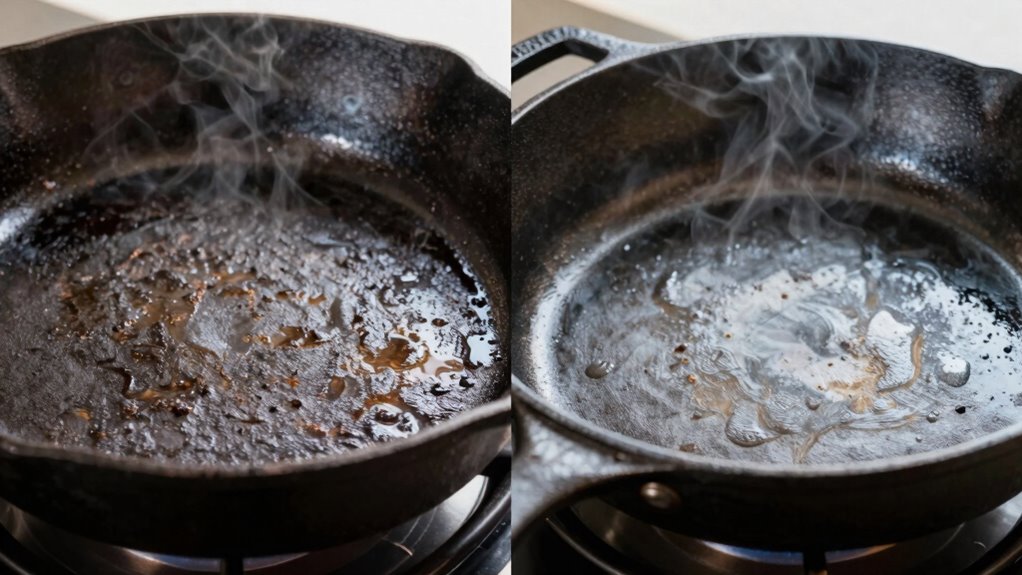
You’ll find that seasoning durability varies between cast iron and carbon steel, affecting how long your non-stick surface lasts. Carbon steel often develops a slicker, more resilient coating with proper care, while cast iron’s seasoning can be more prone to wear. These differences influence their non-stick performance, especially over time and with regular use.
Seasoning Durability Differences
Seasoning durability plays a key role in the non-stick performance of cast iron and carbon steel pans, but they do not behave exactly the same over time. Your seasoning’s longevity depends on how well you maintain it. For example:
- Layer thickness: Proper seasoning builds a strong, durable coating that lasts longer.
- Cleaning habits: Avoid harsh soaps; gentle cleaning preserves seasoning durability.
- Cooking acidity: Acidic foods can wear down seasoning faster, requiring more frequent seasoning maintenance.
- Heat management: Using moderate heat helps protect the seasoning, enhancing its durability.
While both materials can develop a resilient non-stick surface, carbon steel often requires more attentive seasoning maintenance to keep its seasoning durable over time.
Non-Stick Performance Variations
Both cast iron and carbon steel pans develop a seasoned layer that influences their non-stick performance, but they do not behave exactly the same way in everyday cooking. With proper seasoning maintenance, both pans can achieve excellent non-stick properties, though their non-stick longevity varies. Cast iron tends to develop a more durable, smoother surface over time, which enhances its non-stick capabilities. Carbon steel, on the other hand, may require more frequent seasoning to maintain ideal non-stick performance, especially after cleaning. How you care for each pan affects their non-stick effectiveness; neglecting seasoning maintenance can lead to sticking and reduced non-stick longevity. Ultimately, both can offer great non-stick results if you regularly maintain their seasoned layers, but cast iron generally holds up longer without needing as much upkeep.
Are There Any Health or Safety Concerns With Cast Iron and Carbon Steel Cookware?
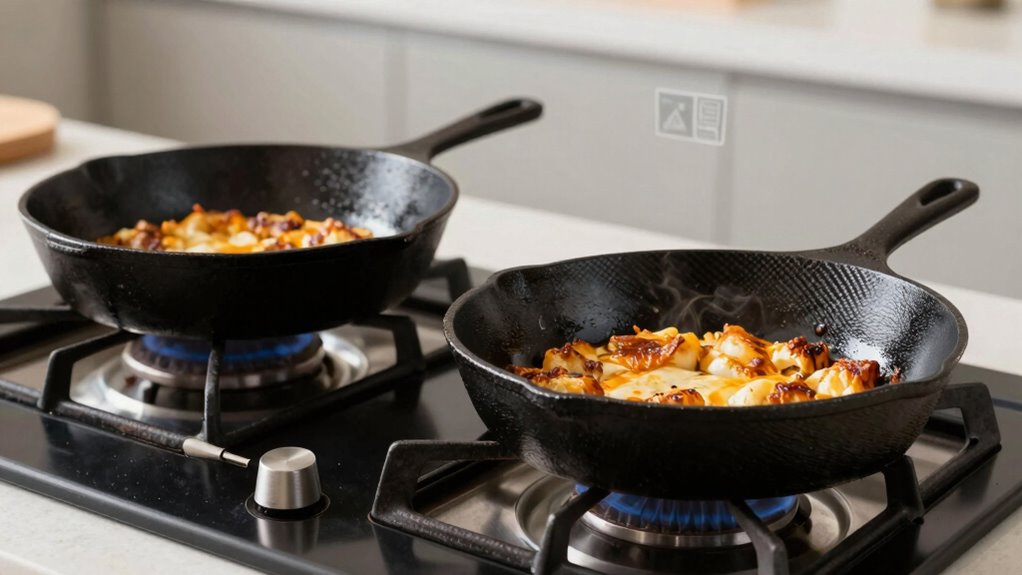
While cast iron and carbon steel cookware are generally safe for everyday use, some health and safety considerations are worth noting. Here are a few points to keep in mind:
Cast iron and steel cookware are safe but require proper cleaning and maintenance.
- Food safety concerns: If not properly cleaned, food residue or rust can develop, potentially affecting safety.
- Iron intake: Cast iron can add small amounts of iron to your diet, which is usually beneficial, but excessive intake may be harmful.
- Surface safety: Avoid using abrasive cleaners that can damage the seasoning, exposing raw metal.
- Allergies and sensitivities: Some individuals might react to metal residues or seasoning compounds, impacting health benefits.
How Do Price and Value Compare for Cast Iron and Carbon Steel?
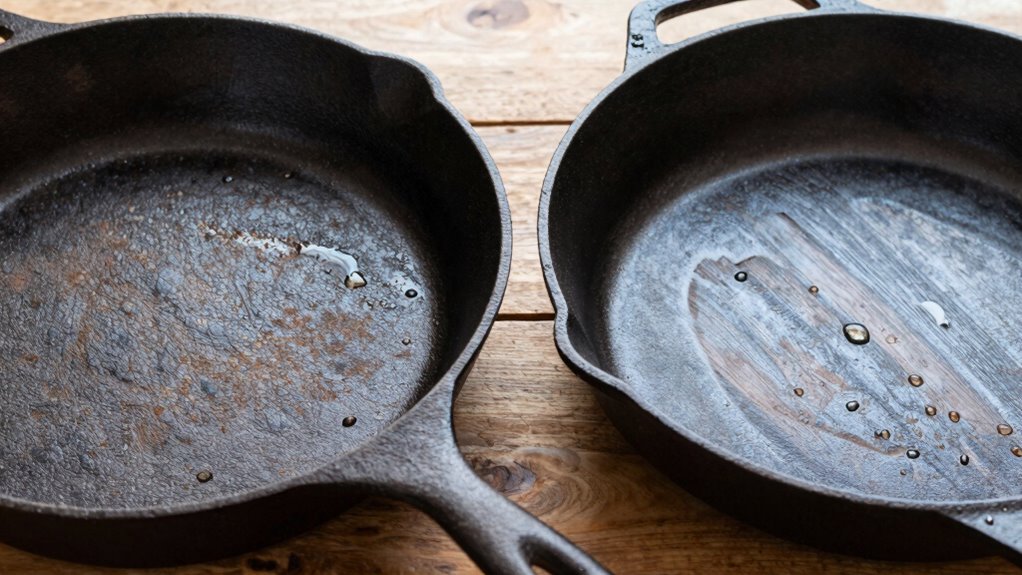
When comparing cast iron and carbon steel cookware, price and value often influence your choice more than you might expect. A thorough price comparison reveals that carbon steel pans generally cost less upfront, making them appealing if you’re budget-conscious. Cast iron, however, tends to be more durable and long-lasting, which can boost its overall value assessment. While cast iron might require a bigger initial investment, its heavy-duty build offers decades of use with proper care. Carbon steel offers a slightly lower price point and lighter weight, providing good performance at a more affordable cost. Ultimately, your decision depends on how you weigh initial expense against longevity and versatility, ensuring you get the best value for your cooking needs.
Can You Use Cast Iron and Carbon Steel on Different Cooktops and Ovens?
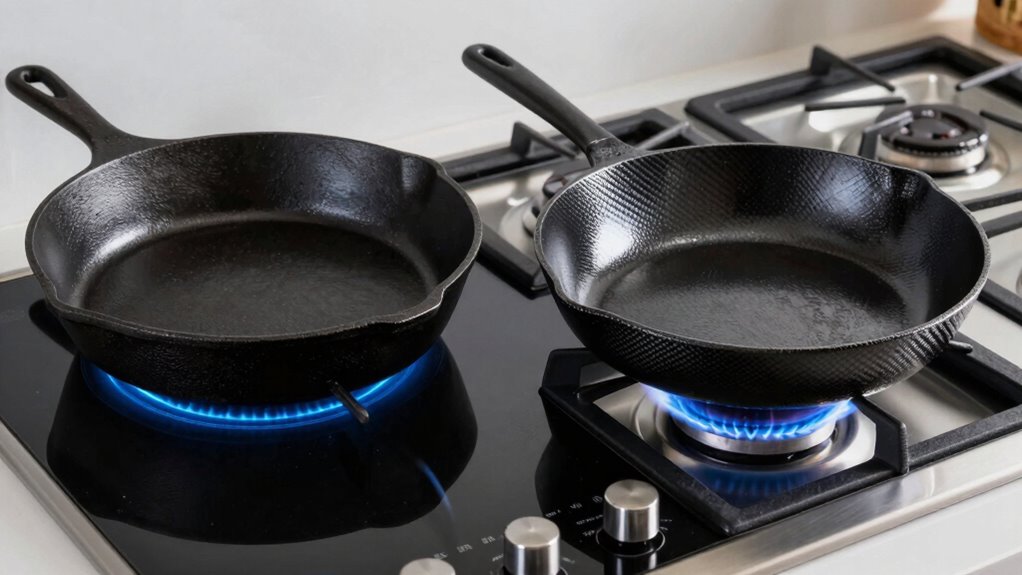
Cast iron and carbon steel cookware are highly versatile and can be used on a variety of cooktops and in ovens, but it’s important to comprehend their compatibility.
- They work well on gas burners, providing even heat and durability.
- Both are compatible with electric and induction cooktops, but you need to confirm your cookware has a ferromagnetic base for induction.
- In ovens, they withstand high temperatures, making them suitable for roasting or baking.
- Avoid using them on glass or ceramic cooktops unless you’re confident they won’t scratch or damage the surface.
While both materials excel on gas and induction cooktops, always check your cookware’s specifications to ensure compatibility. Using them properly maximizes their longevity and performance in your kitchen.
Which Cookware Is Better for Specific Cooking Techniques?

Choosing the right cookware depends on the specific cooking technique you plan to use. For searing steaks or frying, cast iron excels because of its heat retention and even cooking. If you’re looking for easy release, ceramic coatings offer a smooth surface suitable for delicate foods like pancakes or eggs, providing a non stick alternative without synthetic chemicals. When simmering sauces or making risottos, both cast iron and carbon steel work well, but cast iron’s heat retention can prevent temperature fluctuations. For sautéing vegetables or stir-fries, carbon steel heats up quickly and responds faster to temperature changes. If you prefer minimal sticking, ceramic coatings and other non stick alternatives can be helpful, but keep in mind they may wear faster than traditional seasoned surfaces.
Frequently Asked Questions
Which Material Heats up Faster Initially, Cast Iron or Carbon Steel?
Carbon steel heats up faster initially because it has better heat conduction compared to cast iron. Its lower thermal mass allows it to respond quickly to heat changes, making it ideal for rapid cooking. Cast iron, on the other hand, takes longer to heat due to its higher thermal mass, but it retains heat longer once hot. So, if quick heating matters, go with carbon steel.
Can I Use Cast Iron or Carbon Steel Cookware in the Microwave?
You can’t use cast iron or carbon steel cookware in the microwave because they’re not microwave safe. These materials are metal, which can cause sparks and damage your microwave. Instead, look for microwave-safe cookware alternatives like glass, ceramic, or microwave-safe plastic. Always check the manufacturer’s guidelines before use to guarantee safety. Using the right cookware prevents accidents and keeps your appliance in good condition.
How Do Cleaning Methods Differ Between Cast Iron and Carbon Steel?
Cleaning methods for cast iron and carbon steel are like night and day. With cast iron, you’ll want to avoid soap—just scrub with hot water and a brush, then dry immediately to prevent rust. For carbon steel, you can use a tiny bit of soap occasionally, but still, hand wash and dry thoroughly. Both need seasoning maintenance, so avoid harsh scrubbing that strips their non-stick layers. Keep them seasoned, keep them happy!
Are There Any Environmental Impacts of Manufacturing These Materials?
You might be concerned about the environmental impacts of manufacturing cast iron and carbon steel. Both have notable environmental footprints due to mining and processing, but choosing sustainably sourced materials can reduce this impact. Opt for companies committed to sustainable sourcing practices, which minimizes resource depletion and pollution. While manufacturing does affect the environment, responsible sourcing and recycling can considerably lessen the overall ecological footprint of these durable cookware options.
How Do They Compare in Weight and Ease of Handling?
You’ll find that carbon steel is generally lighter than cast iron, making it easier to handle and maneuver. Its weight comparison favors carbon steel for those who prefer less bulk, especially when cooking for long periods or lifting cookware frequently. Handling ease is higher with carbon steel because it heats up quickly, is easier to lift, and feels less cumbersome, giving you a more comfortable cooking experience overall.
Conclusion
Ultimately, choosing between cast iron and carbon steel depends on your cooking style and needs. Think of them as two skilled artists, each with their unique brushstrokes—one holds heat like a warm embrace, while the other offers quick agility. Whichever you select, both promise to elevate your kitchen adventures. With proper care, they’ll serve you well, turning everyday meals into culinary masterpieces that linger like a favorite melody.