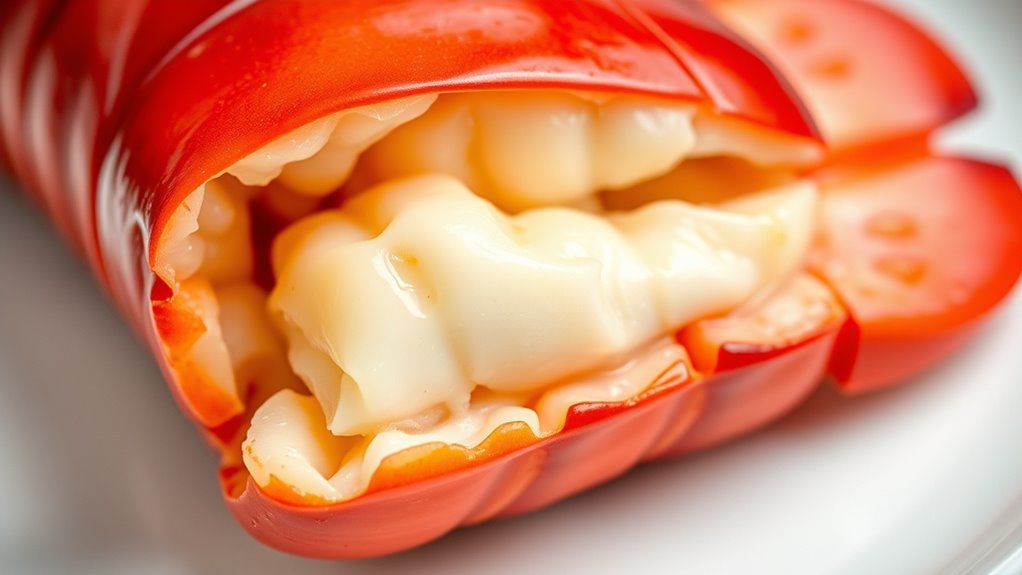

For perfectly tender lobster via sous-vide, aim for a temperature around 140°F (60°C) to get moist, firm, yet delicate meat. Controlling heat precisely relaxes muscle fibers and prevents toughness or rubberiness, while even cooking ensures consistent texture throughout. Infusing butter enhances mouthfeel, making the lobster velvety and luxurious. If you want to master these texture benchmarks, exploring deeper will help you elevate your lobster preparations to elite standards.
Key Takeaways
- Optimal sous-vide temperature for tender, flaky lobster is around 140°F (60°C).
- Gentle, consistent heat preserves lobster’s delicate, moist texture without over-tightening fibers.
- Butter infusion enhances mouthfeel, creating a velvety, rich coating that complements the lobster’s tenderness.
- Overcooking beyond 150°F (65°C) can cause toughness and rubberiness; precise temperature control is essential.
- Uniform water circulation ensures even texture throughout the lobster, avoiding mushy or undercooked sections.
The Science Behind Perfectly Tender Lobster

Achieving perfectly tender lobster begins with understanding how heat affects its delicate muscle fibers. When you cook lobster, maintaining shell integrity is essential; excessive heat causes the shell to crack and toughen the meat, while gentle heat preserves its structure. The shell acts as a natural barrier, influencing butter absorption dynamics—when cooked properly, the lobster absorbs butter evenly, enhancing flavor and tenderness. Overcooking can lead to muscle fibers tightening and becoming rubbery, but precise heat control ensures the fibers relax without breaking down. By understanding how heat interacts with lobster’s shell and muscle tissue, you can optimize tenderness. Additionally, heat distribution plays a crucial role in ensuring an even cook throughout the lobster, preventing overcooking of some parts while undercooking others. Mastering these factors allows you to create a perfectly poached lobster that’s juicy, tender, and flavorful with each bite.
How Temperature Control Influences Texture
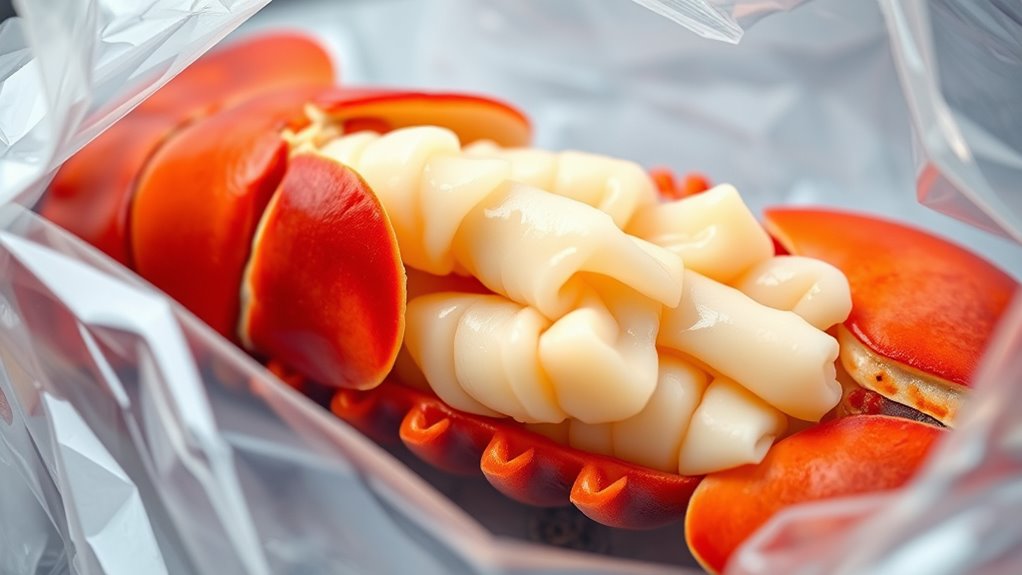
Temperature control is the key to consistently achieving the desired lobster texture. When you maintain precise temperature stability, you prevent overcooking and preserve moisture retention, ensuring tender, succulent meat. Fluctuations can cause uneven textures, making the lobster rubbery or mushy. Using a reliable sous-vide setup helps you keep the water at a steady temperature, optimizing the lobster’s natural qualities. Consider this table for guidance:
| Temperature Range | Resulting Texture |
|---|---|
| 130°F (54°C) | Slightly firm, tender |
| 140°F (60°C) | Firm, moist, delicate |
| 150°F (65°C) | More tender, flaky |
Sticking to these ranges guarantees consistent, high-quality results by controlling moisture retention and texture. Maintaining the correct temperature also helps preserve the lobster’s natural flavors, elevating your culinary experience.
The Role of Butter Infusion in Enhancing Mouthfeel
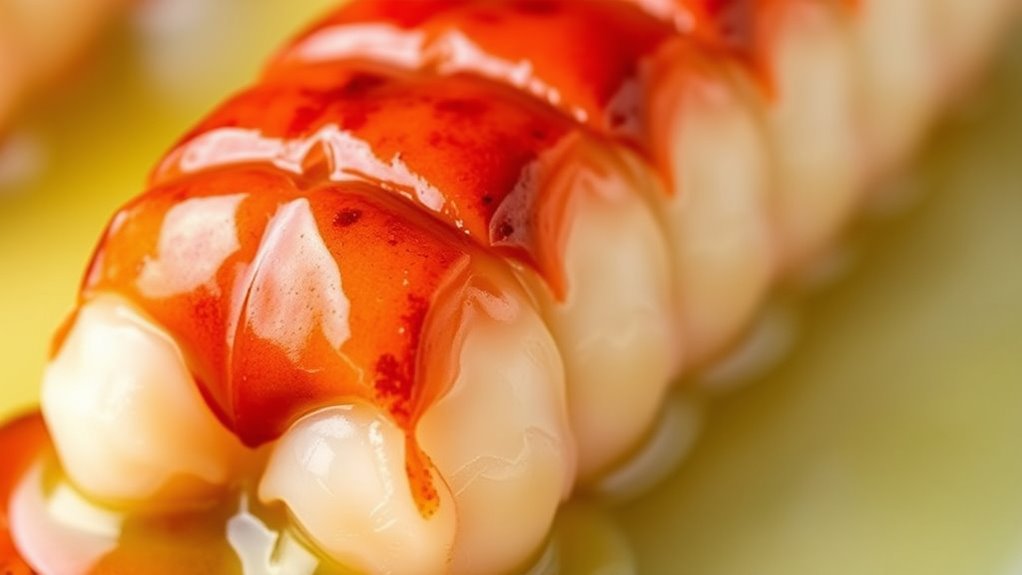
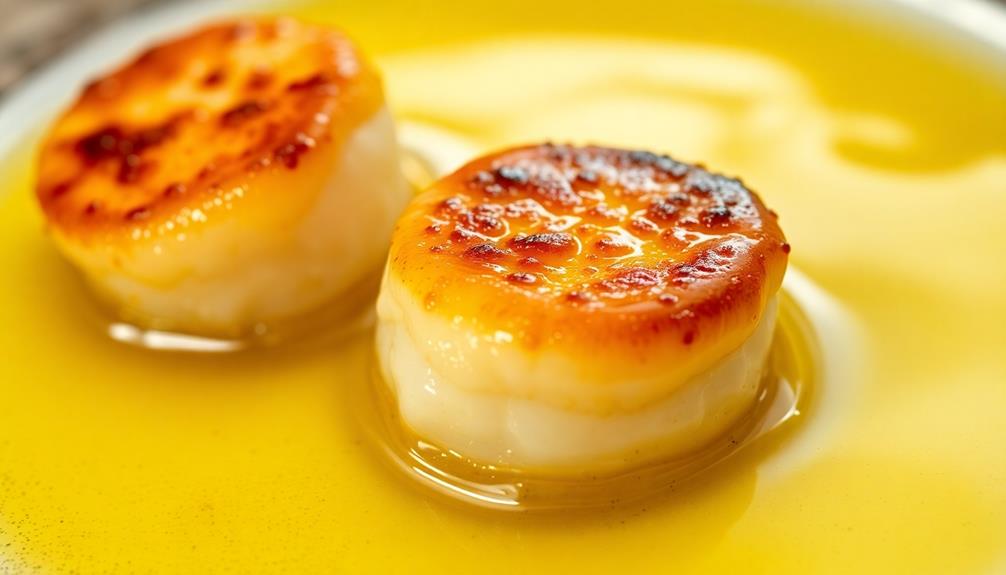
Butter infusion plays a crucial role in elevating the lobster’s mouthfeel, transforming tender meat into a rich, velvety experience. When you infuse butter into the lobster during sous-vide, it enhances the natural butter flavor, creating a seamless, luxurious coating. This process not only boosts flavor but also considerably improves mouthfeel, making each bite smoother and more indulgent. The butter’s fats coat the lobster fibers, adding a silky texture that amplifies the dish’s overall richness. Proper infusion guarantees the lobster absorbs the butter’s essence thoroughly, resulting in a cohesive, luscious bite. By focusing on butter flavor and mouthfeel enhancement, you elevate a simple seafood dish into a sophisticated culinary experience that delights the senses and elevates the eating experience.
Comparing Sous-Vide to Traditional Cooking Methods
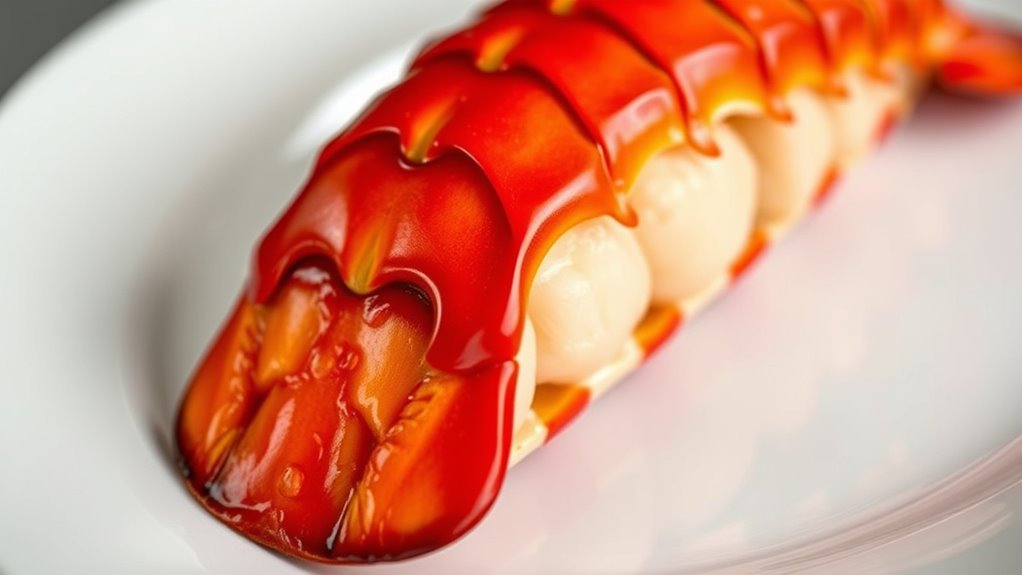
While traditional methods may be quicker, they often sacrifice consistency. Sous-vide allows you to achieve a perfectly cooked lobster every time, making it ideal for those who prioritize quality and passive voice detection over speed.
Tips for Achieving Consistent Texture at Home

Achieving a consistent lobster texture at home hinges on precise control throughout the cooking process. Use a reliable sous-vide setup to maintain a steady temperature, ensuring your lobster cooks evenly. Experiment with seasoning variations to enhance flavor without compromising tenderness; simple herbs, citrus, or butter can add subtle complexity. Pay attention to presentation techniques—careful plating and garnishing can elevate the dish’s appearance and highlight its texture. Keep the lobster fully submerged in the bath to prevent uneven cooking. Avoid overcooking by sticking closely to recommended times, as even slight deviations can affect the delicate texture. Modern cooking appliances can help you achieve precise temperature control for more consistent results. Consistency comes from precision and attention to detail, so double-check your temperature, seasoning, and presentation for the best results every time.
Frequently Asked Questions
What Are the Best Lobster Sizes for Sous-Vide Cooking?
When choosing lobster sizes, consider shell thickness and ideal cook temperature. Smaller lobsters, around 1 to 1.5 pounds, tend to have thinner shells, making them easier to cook evenly and preventing overcooking. Larger lobsters have thicker shells, requiring slightly longer cook times and careful temperature control. For sous-vide, aim for an optimal cook temperature around 140°F to 145°F to ensure tender, juicy meat regardless of size.
How Does Lobster Freshness Affect Sous-Vide Results?
Freshness in lobster is like a breath of ocean air—crisp and vibrant. When you use fresh lobster, your sous-vide results shine with tender, succulent meat, enhancing the overall quality. If your lobster isn’t fresh, expect a loss in flavor and a less desirable texture, which affects sous-vide quality. Always choose the freshest lobster possible to achieve peak tenderness and flavor in your dish.
Can I Use Flavored Butters for Poaching?
You can definitely use flavored butters for poaching, and they add a delicious twist to your dish. Flavored butters work well with various poaching variations, enhancing the lobster’s natural sweetness and texture. Just make certain the butter is melted gently and maintains a consistent temperature, so the flavors meld without overcooking. Experiment with herbs, garlic, or spices in your butters to create unique, tasty variations.
How Long Can Lobster Be Stored After Sous-Vide?
You can store lobster after sous-vide for up to 2-3 days in the refrigerator, but beyond that, spoilage risks increase. Proper storage duration is essential to maintain freshness and prevent bacterial growth. Keep it in an airtight container at or below 40°F (4°C). If you need to keep it longer, consider freezing it, but note that extended storage might affect texture and flavor. Always reheat safely before serving.
Are There Safety Concerns With Sous-Vide Lobster?
Sure, cooking lobster sous-vide seems foolproof, but don’t toss safety out the window. You’re responsible for food safety protocols and proper storage techniques. If you ignore them, you risk bacteria growth or foodborne illnesses—hardly the gourmet experience you want. So, keep your lobster at the right temperature, store it promptly, and enjoy your meal safe and sound. Irony? It’s all about respecting the process for perfect results.
Conclusion
Mastering sous-vide butter-poached lobster lets you consistently achieve tender, flavorful results. For instance, imagine preparing a dinner for friends; your precise temperature control ensures each bite is perfectly cooked and infused with buttery richness. This method not only elevates your cooking but also builds confidence in recreating restaurant-quality dishes at home. So, keep experimenting with temperature and infusion techniques—your perfect lobster dinner is just a sous-vide away.