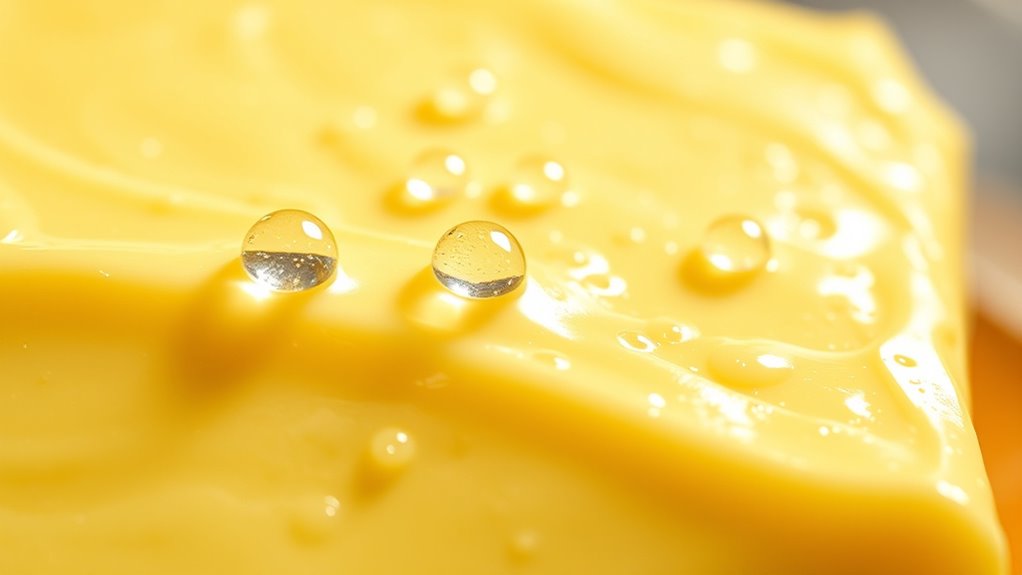

Managing water droplets in butter is essential for achieving the right texture and flavor in your baked goods. When butter’s too warm, droplets migrate and create greasiness. Conversely, cold butter can lead to uneven mixing. For best results, aim for room temperature butter (65°F to 70°F) for ideal moisture distribution. Plus, understanding the moisture content differences between salted and unsalted butter helps maintain consistency. Keep exploring to discover how these factors all come into play in your cooking.
Key Takeaways
- Water droplets in butter significantly influence the texture and rise of baked goods, affecting overall quality.
- Warm butter leads to moisture migration, resulting in greasy textures and uneven baking results.
- Properly controlled room temperature butter promotes even moisture distribution, enhancing baking performance.
- Excess moisture from butter can cause undesirable effects like sogginess or dryness in baked products.
- Understanding water activity levels in butter is essential for achieving desired flavors and textures in cooking and baking.
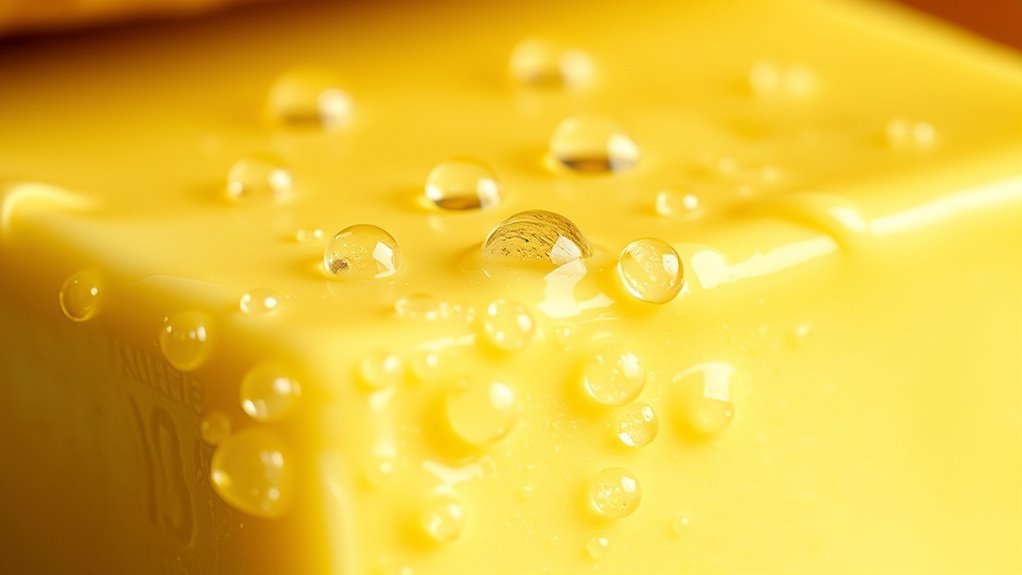
When it comes to baking or cooking, managing butter’s moisture content can make all the difference in your dishes. If you’ve ever experienced a cake that didn’t rise or cookies that spread too much, you know how vital this factor is. The moisture in butter plays a significant role in determining the success of your baked goods. When you understand how to control water activity, you can elevate your culinary creations.
Water activity refers to the amount of water available for chemical reactions and microbial growth in food. In the case of butter, the moisture content directly affects its water activity. Higher water activity can lead to undesired moisture migration, causing your ingredients to either dry out or become too soggy. When you’re baking, the right balance of moisture can create the perfect texture and flavor, so it’s essential to know how to manage it effectively.
Understanding water activity in butter is crucial for achieving the ideal texture and flavor in your baked goods.
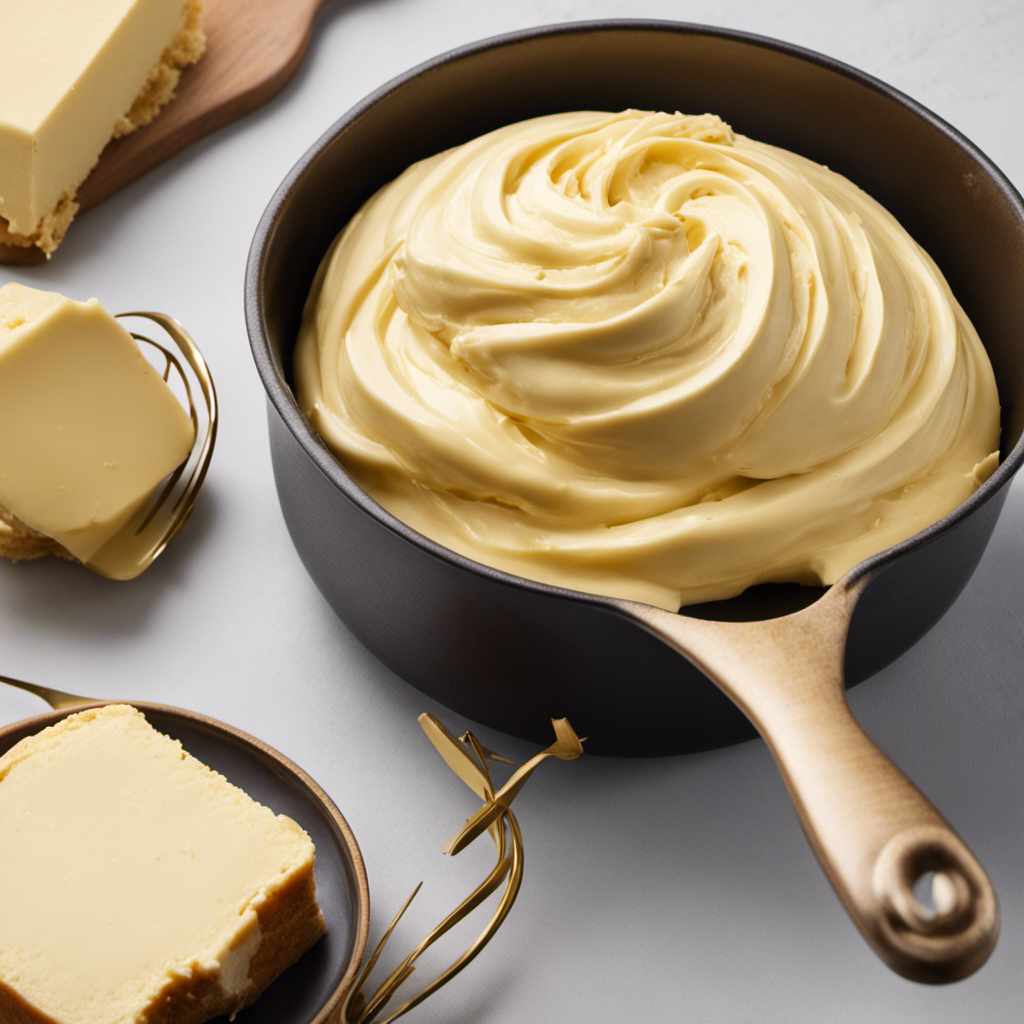
To keep butter’s moisture in check, consider the temperature at which you’re working. If your butter is too warm, the water droplets may migrate, leading to a greasy texture in your final product. On the other hand, if it’s too cold, it could result in uneven mixing, affecting the overall structure of your dough or batter. Aim for room temperature butter, which typically sits around 65°F to 70°F, allowing for ideal moisture distribution without compromising the integrity of your baked goods.
Another tip is to pay attention to the type of butter you’re using. Salted butter contains less moisture than unsalted butter, which can impact your dish’s water activity. If you’re following a recipe that calls for unsalted butter, substituting with salted butter without adjusting the quantities can lead to excess moisture and flavor imbalances. Always read the recipe carefully and make adjustments as necessary to maintain the desired moisture levels.
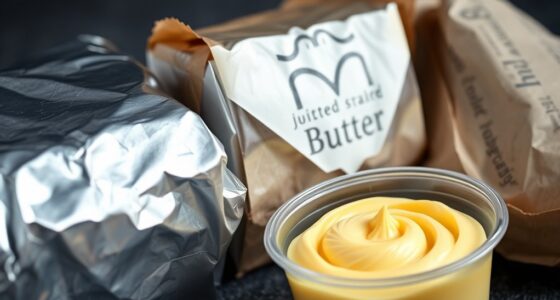
Lastly, be mindful of how you store your butter. Proper wrapping can help minimize moisture migration, protecting it from external factors that could alter its composition. Whether you’re making a rich pastry or a simple sauce, maintaining the right moisture content in your butter is essential for achieving the best results. With these tips in mind, you’ll be well on your way to mastering butter moisture control, ensuring your dishes turn out perfectly every time. Additionally, understanding the role of water activity is crucial for achieving the desired texture and flavor in your baked goods.
Frequently Asked Questions
How Does Temperature Affect Butter Moisture Levels?
Temperature considerably influences butter moisture levels. When you keep butter at a consistent temperature, it helps maintain its moisture content. If the temperature varies, it can lead to moisture evaporation, causing the butter to dry out. On the other hand, if it’s too warm, the moisture might escape faster, affecting its texture and flavor. So, for ideal freshness, make sure you store your butter in a cool, stable environment to prevent moisture loss.
Can I Use Salted Butter for Moisture Control?
Think of salted butter as a shield, guarding your baked goods against dryness. You can absolutely use salted butter for moisture control; it actually aids in moisture retention. The salt not only enhances flavor but also helps bind water molecules, keeping your creations lush and tender. Just remember, it might slightly alter the taste, so adjust your added salt accordingly. Embrace the richness of salted butter for a delightful, moist treat!
What Are the Signs of Over-Hydrated Butter?
You’ll notice several signs of over-hydrated butter. The butter texture becomes soft and greasy, making it difficult to spread. Look for moisture indicators like puddles forming on the surface or a slimy feel when you touch it. Additionally, if the butter separates or appears watery, it’s a clear sign of excess moisture. Using such butter can ruin your baked goods, so keep an eye on these symptoms to guarantee quality.
How Does Butter’s Fat Content Influence Moisture Retention?
You know what they say, “You can’t have your cake and eat it too.” In butter, higher fat content improves moisture retention by enhancing fat emulsification, allowing for better water-fat balance. When the fat content’s just right, it traps moisture effectively, keeping your butter creamy and spreadable. Too much water can disrupt this balance, leading to undesirable changes in texture. So, keeping an eye on the fat content is essential for buttery perfection.
Is Moisture Control Different for Organic Butter?
Yes, moisture control can be different for organic butter. Since it often contains less processing and fewer artificial additives, the moisture regulation might be influenced by natural additives like salt or herbs. These components can help maintain moisture balance while enhancing flavor. You’ll find that organic butter may have a different texture and moisture retention compared to conventional butter, so experimenting with recipes can lead to delightful results in your cooking.
Conclusion
In summary, managing moisture in butter is like juggling delicate glass balls; one wrong move can lead to disaster. By understanding the role of water droplets, you can maintain the ideal texture and flavor, ensuring your butter remains a culinary delight. Keep an eye on moisture levels, and you’ll enhance your dishes while preserving that creamy goodness. With the right balance, your butter will shine in every recipe, making it a staple in your kitchen.