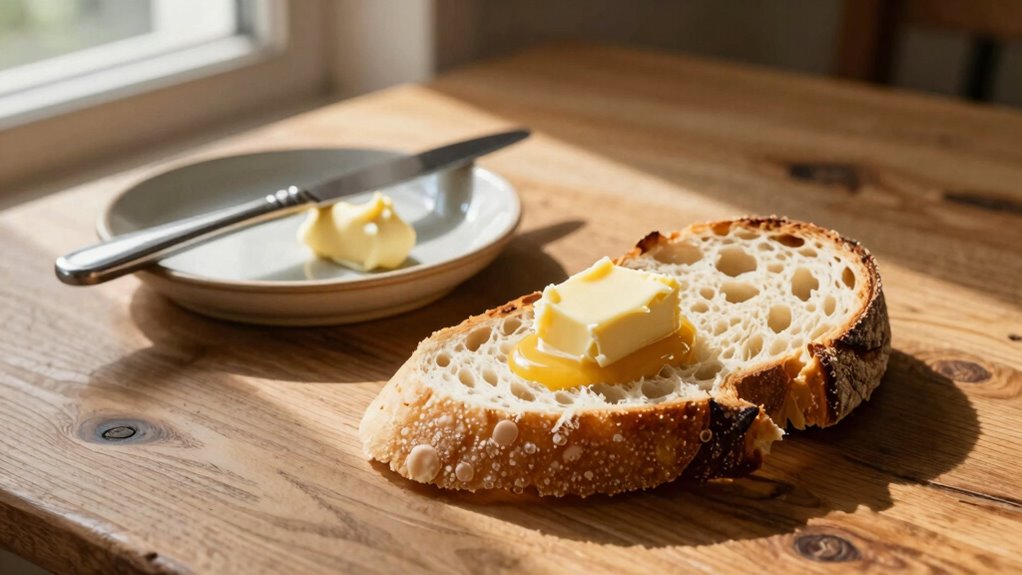

Moderation with butter means using small, intentional amounts to boost flavor without overdoing saturated fat. You can add a teaspoon or a small pat to stir-fries, pasta, or vegetables, keeping it flavorful yet balanced. Instead of cooking with a lot of butter, use it as a finishing touch or flavor enhancer. Being mindful helps you enjoy butter without compromising your health goals. Keep exploring for more tips on enjoying butter responsibly.

Get kitchen staples and gadgets delivered free with Prime
- Fast, free delivery on millions of items
- Prime Video, Amazon Music and more included
- Member-only deals all year
Key Takeaways
- Using a small teaspoon or pat of butter to finish dishes adds flavor without excessive saturated fat.
- Incorporating butter as a seasoning or topping rather than the primary cooking fat promotes moderation.
- Combining butter with herbs or lemon enhances taste using minimal amounts, supporting balanced consumption.
- Limiting butter to specific parts of a meal, like drizzling over vegetables or pasta, prevents overuse.
- Practicing mindful portioning and balancing with healthy ingredients ensures enjoyable, moderate butter intake.
Have you ever wondered if adding butter to your meals is always a bad idea? It’s a common question, especially with all the conflicting nutrition advice out there. The truth is, butter isn’t inherently harmful when consumed in moderation. In fact, butter offers some notable health benefits, such as containing fat-soluble vitamins like A, D, E, and K, which support overall health. It also provides conjugated linoleic acid (CLA), linked to potential weight management and anti-inflammatory effects. The key isn’t avoiding butter altogether, but understanding how to incorporate it wisely into your diet.
When it comes to butter health benefits, quality matters. Opting for grass-fed butter means you’re likely to get higher levels of omega-3 fatty acids and antioxidants compared to conventional butter. These nutrients help promote heart health and reduce inflammation. However, even with these benefits, portion control is essential. A small pat or teaspoon can add flavor and richness without overloading your meal with excess saturated fat. Remember, moderation is about balance, not deprivation.
Knowing butter cooking techniques can also help you enjoy its benefits while minimizing health risks. Sautéing vegetables in a little butter can enhance flavor and improve nutrient absorption, especially for fat-soluble vitamins in your food. When frying or pan-searing, use moderate heat to prevent burning, which can produce harmful compounds. Melting butter over cooked pasta or drizzling it on steamed vegetables is another way to add richness without excessive use. For baking, consider blending butter with healthier oils or reducing the amount slightly, so you still get that desirable texture and taste but with less saturated fat. Incorporating healthy fats into your cooking routine can also promote better overall health and balance. Additionally, understanding nutritional balance can help you make more mindful choices about incorporating butter into meals. Making informed choices about fats in your diet can further support your health goals.
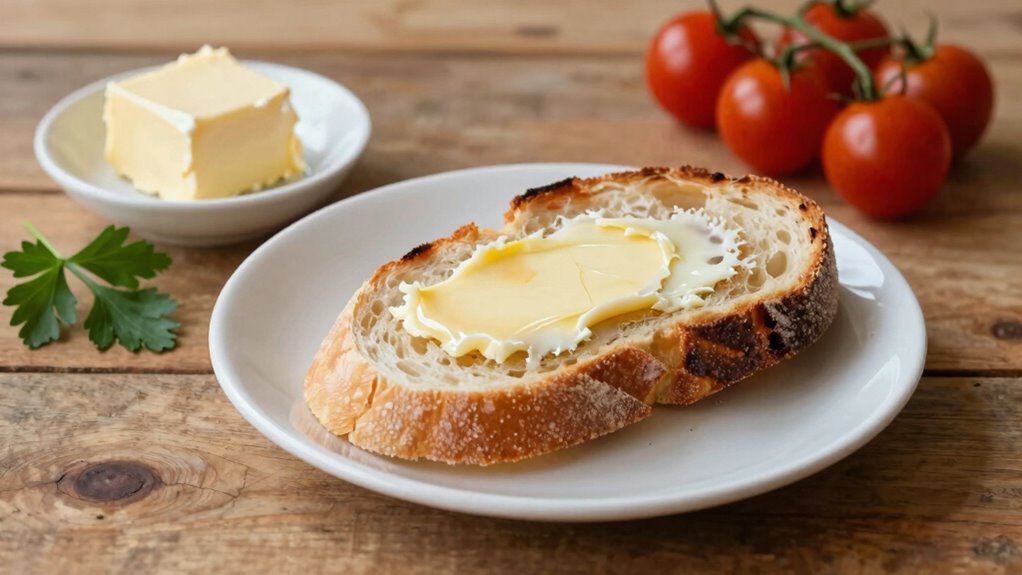
In your everyday meals, think about how butter complements other ingredients. Combining it with fresh herbs, garlic, or lemon can boost flavor without needing to add extra salt or sugar. Using butter as a finishing touch instead of a cooking base can also help you keep the quantity in check. Remember, it’s not about eliminating butter entirely but using it strategically. A teaspoon of butter on your toast or a dollop on your cooked vegetables can elevate your dish without tipping the nutritional scales. Understanding the importance of nutrition balance can help guide better food choices and portion sizes. When you incorporate proper portion control, you can enjoy butter’s rich flavor while maintaining your health goals. By focusing on smaller portions and smart cooking techniques, you strike a balance that allows you to enjoy butter’s flavor and benefits without overdoing it.
Ultimately, moderation with butter in meals means being intentional. You get to savor its rich taste while respecting your health goals. When you understand how to use butter thoughtfully through proper cooking techniques, it becomes an enjoyable part of a balanced diet rather than a nutritional villain.
As an affiliate, we earn on qualifying purchases.
Frequently Asked Questions
Can Butter Be Part of a Low-Calorie Diet?
Yes, butter can be part of a low-calorie diet if you use it sparingly. Focus on small amounts for flavor enhancement rather than large servings. You can add a pat of butter to vegetables or lean proteins to boost taste without overdoing calories. By moderating butter usage, you enjoy its rich flavor while maintaining your diet goals, making your meals more satisfying without excess calorie intake.
How Much Butter Is Safe to Consume Daily?
You can safely consume about one to two tablespoons of butter daily, aligning with daily intake guidelines. Butter composition includes saturated fats, so moderation matters. By sticking to this amount, you enjoy butter’s flavor without exceeding recommended limits. Keep in mind, balancing butter with other fats and maintaining a healthy diet is key. Always consider your individual health needs, and consult a healthcare professional if unsure about your daily intake.
Does Butter Affect Cholesterol Levels Significantly?
Butter can impact your cholesterol levels, mainly through its saturated fats, which may raise LDL (bad) cholesterol. However, the effect varies depending on your overall diet and genetics. If you consume butter in moderation, it’s less likely to cause significant cholesterol spikes. Focus on balancing saturated fats with healthier fats from sources like nuts, seeds, and fish to better manage your cholesterol impact.
Are There Healthier Butter Alternatives for Moderation?
You can try olive oil as a healthier butter alternative for moderation, especially for flavor enhancement and culinary versatility. For example, a home cook replaced butter with olive oil in baking and sautéing, reducing saturated fat intake while still enjoying rich flavors. Olive oil offers healthy fats, making it a smart choice for those seeking to enjoy meals without overdoing it. It’s an easy swap that keeps your dishes delicious and heart-friendly.
Can Butter Be Incorporated Into Vegetarian or Vegan Meals?
Yes, you can incorporate butter into vegetarian or vegan meals by choosing plant-based spreads or dairy-free options. These alternatives mimic the texture and flavor of traditional butter, allowing you to enjoy rich, flavorful dishes without animal products. Use vegan butter or plant-based spreads on bread, for sautéing vegetables, or in baking. They provide a delicious, ethical way to enjoy butter-like qualities while staying aligned with plant-based diets.
Conclusion
As you sprinkle just a touch of butter onto your favorite dish, imagine it melting gently into warm, savory bites. Moderation means savoring that rich flavor without letting it drown your plate. Picture a perfectly balanced meal—where butter enhances rather than dominates—creating a symphony of taste that leaves you fulfilled. With mindful portions, you enjoy the indulgence while nourishing your body, turning each meal into a delightful, harmonious experience.
Halloween Picks
halloween
As an affiliate, we earn on qualifying purchases.