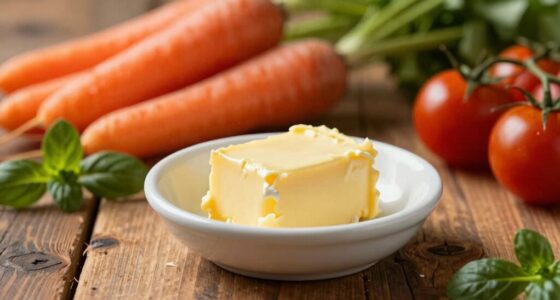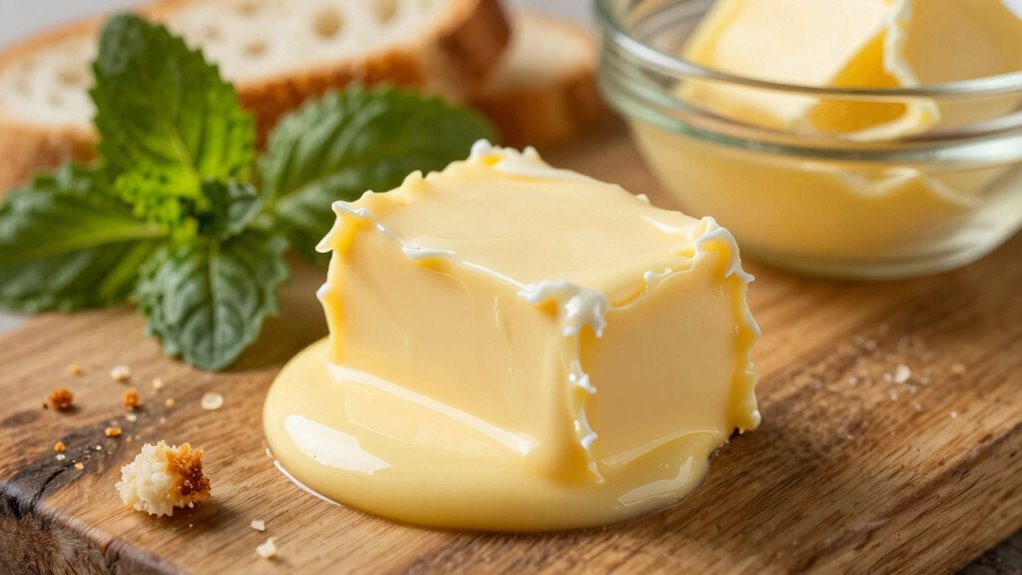

Butter adds rich, warm, and nutty flavors that can elevate your dishes with smooth, inviting notes. It melts seamlessly and creates a silky texture, making baked goods and sauces more appetizing. However, its high saturated fat content raises concerns about cholesterol and heart health if consumed excessively. To enjoy butter’s flavor benefits without compromising nutrition, you can use it in moderation or combine it with healthier fats. Keep exploring to discover how to balance flavor with nutrition effectively.

Get kitchen staples and gadgets delivered free with Prime
- Fast, free delivery on millions of items
- Prime Video, Amazon Music and more included
- Member-only deals all year
Key Takeaways
- Butter enhances flavor with warm, nutty, creamy notes, adding depth and richness to dishes and baked goods.
- It provides essential fat-soluble vitamins A, D, E, and K, contributing to nutritional value.
- The high saturated fat content linked to increased cholesterol can pose health risks if consumed excessively.
- Using butter in moderation allows flavor benefits while managing its impact on heart health.
- Substituting part of butter with healthier fats can balance flavor enhancement with improved nutritional profile.

Have you ever wondered whether butter’s rich flavor outweighs its nutritional drawbacks? If you’re passionate about cooking, you probably already appreciate butter’s creamy richness and culinary versatility. It’s a staple ingredient that can elevate everything from baked goods to savory sauces, thanks to its ability to add depth and smoothness. The flavor butter imparts is warm, slightly nutty, and undeniably inviting, making dishes more appealing and memorable. Its ability to melt seamlessly into ingredients helps create a silky texture that many recipes rely on. But while butter’s flavor and texture benefits are clear, you also need to consider its nutritional impact.
Butter is primarily composed of saturated fats, which have been linked to increased cholesterol levels and potential heart health risks when consumed excessively. It’s calorie-dense, meaning a little goes a long way, and overindulgence can contribute to weight gain and related health issues. Despite these concerns, butter does contain some beneficial nutrients, such as fat-soluble vitamins A, D, E, and K, along with small amounts of conjugated linoleic acid and butyric acid, which may have certain health benefits. Still, these positives don’t outweigh the fact that butter’s high saturated fat content can be problematic if you’re not mindful of your intake.
Butter’s rich nutrients can benefit health, but moderation is key due to its high saturated fat content.
When you’re cooking, you often have to balance flavor with nutrition. Butter’s creamy richness can enhance the taste and texture of many dishes, but relying on it heavily might undermine your health goals. Fortunately, you can manipulate recipes to keep the flavor benefits while reducing the nutritional risks. For example, using butter as a finishing touch rather than a primary cooking fat allows you to enjoy its flavor without overdoing it. Alternatively, blending butter with healthier fats or using smaller amounts can help you achieve the desired richness without excessive saturated fats. Understanding the nutritional composition of butter can help you make more informed choices about its use in your diet. Incorporating healthy fat alternatives can also contribute to a more balanced approach to cooking and eating.
Additionally, exploring healthier fat alternatives can open up options for maintaining flavor while improving nutritional profiles. Incorporating these alternatives can help you enjoy the same culinary benefits without compromising your health. Being aware of the nutritional content of common fats allows for smarter substitution choices in your recipes. Ultimately, butter’s contribution to flavor is undeniable, and its culinary versatility makes it a favorite for many chefs and home cooks. However, you should stay aware of its nutritional drawbacks to make informed choices. Incorporate it thoughtfully, appreciating its ability to add a rich, satisfying taste and texture, but don’t forget to balance it with healthier ingredients and moderation. When used wisely, butter can be part of a balanced diet that celebrates flavor without compromising your health.
As an affiliate, we earn on qualifying purchases.
Frequently Asked Questions
How Does Butter’s Flavor Change With Different Types of Milk?
You’ll notice that butter’s flavor changes with different milk types, creating distinct flavor variations. For example, butter made from cow’s milk has a rich, creamy taste, while goat’s milk butter offers a tangy, slightly gamey flavor. Plant-based milks like almond or soy give butter a nuttier or more neutral profile. These milk types influence butter’s aroma and taste, so your choice impacts the overall flavor experience in your dishes.
Are There Health Benefits to Using Clarified Butter Over Regular Butter?
Using clarified butter offers health benefits you might not expect. Its higher smoke point makes it ideal for alternative uses like high-heat cooking, while its purity reduces dairy proteins and lactose, potentially easing digestion. Culturally, clarified butter holds deep significance in traditions like Indian cuisine and religious rituals. So, switching to it could enhance your health, diversify your culinary skills, and deepen your cultural appreciation—all in one delicious move.
Can Butter Be Part of a Low-Nutrition Diet Without Health Risks?
Yes, butter can be part of a low-nutrition diet if you have dietary restrictions and choose alternative fats wisely. You should moderate your intake to avoid excess saturated fats, which could raise cholesterol. Incorporate healthier options like olive oil or avocado. As long as you’re mindful of portion sizes and balance, butter can be enjoyed without significant health risks, even in a diet focused on lower nutrition.
How Does Butter’s Flavor Profile Vary Across Different Regions?
You’ll notice butter’s flavor profile varies across regions due to regional dairy traditions. For example, European butters often have a rich, complex taste with nutty or grassy notes, influenced by local cows and feed. In contrast, North American butter tends to be milder and creamier. This flavor diversity stems from differences in climate, livestock, and production methods, giving each region’s butter a unique character that enhances culinary experiences worldwide.
What Are the Best Storage Methods to Preserve Butter’s Flavor and Nutrition?
To preserve butter’s flavor and nutrition, you should store it properly. Keep it in an airtight container in the refrigerator at a consistent, cold temperature—ideally between 35-40°F. Use high-quality cream for better flavor, and avoid exposure to light and air, which can degrade its quality. For longer storage, consider freezing butter, wrapping it tightly to prevent freezer burn and flavor loss, ensuring it stays fresh and nutritious.
Conclusion
Think of butter as a charming storyteller at a feast. Its rich flavor tantalizes your senses, much like an engrossing tale, while its nutrition is the sturdy foundation beneath the story’s magic. You get to choose whether to savor the enchanting aroma or appreciate the sturdy backbone supporting your health. Balancing both is like enjoying a story’s thrill while respecting its lessons—delicious and nourishing, each playing an essential role in your culinary adventure.
NFL season / tailgating Picks
team gear
As an affiliate, we earn on qualifying purchases.